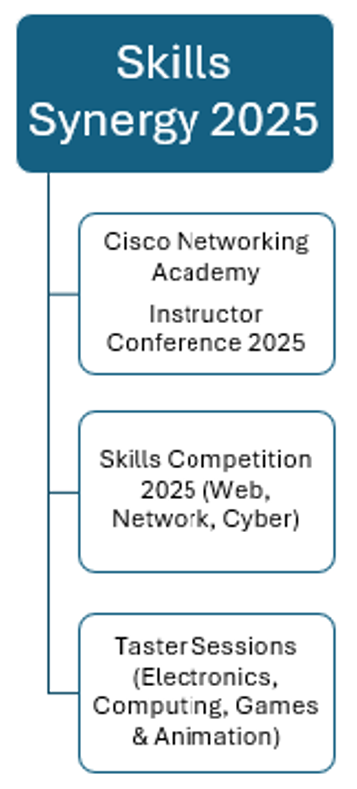
A dynamic day of learning, and competition for students and networking for Teachers. The student events are designed to inspire, challenge, and showcase skills in Web Technologies, Cybersecurity, and Network Systems Administration, tailored for Year 12, Year 13, and Further Education students.
Student Team Competitions:
A taster competition event to give an experience to the participants about the competitions and competition environment.
Students who are interested in one or more than one of the below domains are welcome to register. Students will get a taste of the competition with a briefing about competitions followed by a small competitive activity.
Schools/FE’s can register their students who are interested to get a taste on competitions like Web Technologies, Cybersecurity, and Network Systems Administration.
Limited Registrations. First come First Serve. Register immediately.
Taster Sessions for School Students:
Explore Computing (Cybersecurity, Digital Forensics, Software, Artificial Intelligence, Data Science), Electronics, and Games Design, Development, Animation, VFX in engaging hands-on sessions.
Cisco Instructors Conference:
A parallel session for Head Teachers, Teachers, Lecturers and Cisco Networking Academy Instructors to share best practices, network, and collaborate.
Event Details: Date: 26th March 2025 Time: 09:30 AM – 02.00 PM. Venue: Swansea Arena
For further information and inquiries, please contact Nitheesh Kaliyamurthy via email: n.kaliyamurthy@uwtsd.ac.uk
For further information about Computing & Computer Science courses at UWTSD Swansea, please click here.
This week, Nagaraj Ravinuthala, a DevOps trainer at HCL Technologies Limited and a specialised trainer for WorldSkills UK Squad on Infrastructure Automation, delivered a Guest Lecture on Network Automation and CI/CD to our students.
The lecture began with basic yet powerful concepts of deployment and CI/CD, connecting the dots between writing code, integrating APIs, and automating the process of pushing updates live. The session emphasized simplicity and clarity, presenting CI/CD as a pipeline that automates code testing, integration, and deployment to production environments.
“Think of CI/CD as a conveyor belt for your code,” explained Nagaraj. “You write it, test it, and deploy it—all in a streamlined process that ensures faster delivery and better reliability, which are essential in modern network automation workflows.”
Students were introduced to tools and techniques aligned with Cisco’s CCNA DevNet, providing a glimpse into industry-standard practices. To make deployment relatable, the lecturer drew parallels with the earlier lectures on Python and API during their Network Programmability Module where the students integrated the OpenWeather API creating and running a Python script, and explaining that deployment involves taking code that works locally and making it accessible to users.
The session concluded with an interactive Q&A, where students enthusiastically asked about real-world applications of network automation and the career paths that mastery in CI/CD can unlock.
This guest lecture was an eye-opening experience for students, sparking curiosity and laying the foundation for further exploration in network automation. It was a step toward preparing them for the evolving demands of the industry.
We would like to thank Nagaraj Ravinuthala for taking time to speak and share valuable industry knowledge with our students.
For further information about our courses, please click-here.
Guardian University Guide: #1 in Wales and #20 in UK
We’re thrilled to announce that in the Guardian University Guide 2025, our Computing courses have ranked #1 in Wales 🏆 and #20 in the UK for Computer Science and Information Systems subject area.
This achievement reflects the dedication we bring to delivering hands-on, real-world learning experiences, alongside exceptional support that guides our students every step of the way. Our highly qualified, industry-experienced staff work tirelessly to ensure students are prepared for a future in tech with the practical skills and knowledge they need to excel.
A huge thank you to our outstanding students, dedicated staff, and supportive community for making this recognition possible.
Together, we’re shaping the future of tech in Wales and beyond! 🌍💻
For further information about Computing courses at UWTSD, please click-here.
Introduction/rationale: The motivation behind choosing the project stemmed from the growing need for more structured and standardized approaches to penetration testing and vulnerability assessment. With cyberattacks becoming increasingly sophisticated, organizations struggle to identify and remediate vulnerabilities efficiently.
TECH TERM: Penetration testing, often referred to as ‘pen testing‘, is a cybersecurity practice where ethical hackers simulate cyberattacks on a computer system, network, or web application to identify vulnerabilities that could be exploited by malicious hackers. The main goals of penetration testing is to: 1. Identify security weaknesses 2. Assess the effectiveness of security measures 3. Improve overall security posture: By identifying and fixing vulnerabilities, organizations can strengthen their defenses against potential cyber threats.
The MITRE ATT&CK Framework provides a well-defined structure for understanding adversarial techniques and tactics, making it ideal for enhancing VAPT (Vulnerability Assessment and Penetration Testing) methodologies. This project aimed to leverage MITRE’s capabilities to analyze risk, improve testing scope, and ensure that testing efforts are comprehensive and aligned with real-world threats.
Project overview: In this project, we integrated the MITRE ATT&CK Framework into the traditional VAPT methodology to refine the testing scope and increase effectiveness in detecting vulnerabilities. The steps involved included:
Defining the Scope: The project began by clearly defining the boundaries and goals of the penetration test. Using the MITRE Framework, specific attack vectors and techniques relevant to the organization’s environment were identified.
Conducting Vulnerability Scanning: Automated tools were used to perform initial vulnerability scans, identifying weak points that attackers might exploit.
Simulating Attacks Using MITRE Tactics: We designed attack scenarios based on the tactics and techniques outlined in MITRE ATT&CK, simulating adversarial behavior. This allowed us to target the actual risks that real attackers would exploit, rather than theoretical vulnerabilities.
Analyzing Results and Refining Scope: Post-attack analysis identified network gaps and weaknesses in current defenses. The scope of the testing was iteratively refined based on these findings.
Reporting and Remediation: Finally, comprehensive reports were generated, providing actionable insights for the security team, along with specific recommendations for closing vulnerabilities.
Visual Representation: A flow diagram illustrating the process of integrating MITRE with VAPT in Penetration Testing Stages, is located below:
Project outcome & conclusion: The integration of the MITRE ATT&CK Framework significantly enhanced the scope and depth of the VAPT process. By aligning testing activities with real-world adversarial tactics, the project was able to identify previously overlooked risks and vulnerabilities. The methodology provided a more focused, risk-based approach to penetration testing, ensuring that organizations could better prepare for and mitigate threats. The project demonstrated that using MITRE not only strengthens the identification of vulnerabilities but also offers a more comprehensive understanding of the adversarial techniques that could affect critical systems.
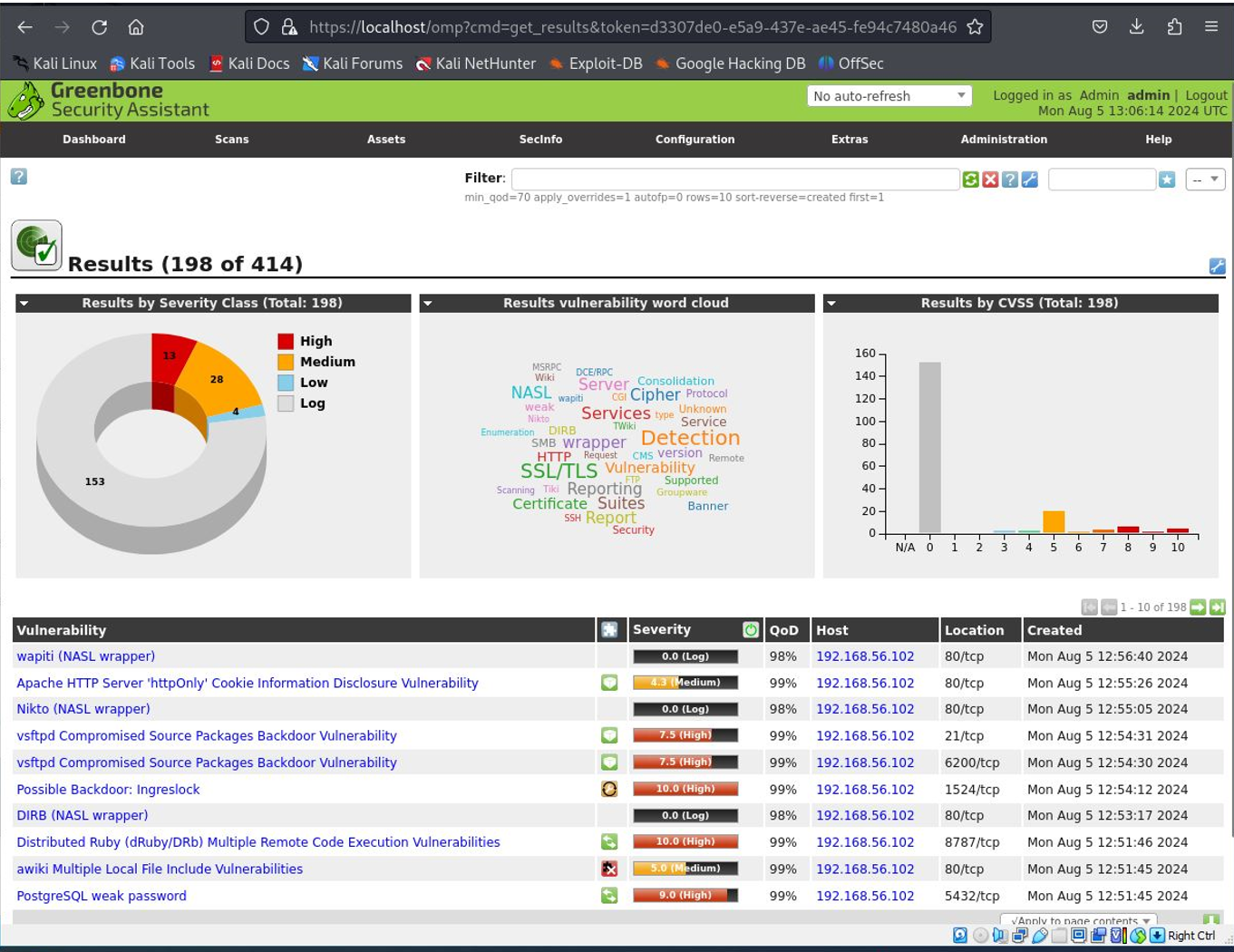
OpenVAS is a full-featured vulnerability scanning tool, that was used for this purposes of this project. An example output of vulnerability findings can be seen below:
Q. What Career and job role are you hoping to move into after graduation? After graduation, I am hoping to pursue a career in cybersecurity, with a specific focus on roles like:
Penetration Tester: Using tools and methodologies (such as MITRE ATT&CK) to identify vulnerabilities in an organization’s IT infrastructure.
Cybersecurity Analyst: Monitoring, analyzing, and defending against cybersecurity threats.
Security Consultant: Advising organizations on how to improve their security posture by implementing effective VAPT practices.
These roles align with my passion for understanding and mitigating cyber risks, particularly in offensive security and ethical hacking.
Q. Please share a top tip/advice for students who are interested in completing a University Degree? My top tip for students is to focus on practical applications of what you learn. Theoretical knowledge is important, but real growth happens when you apply it in real-world scenarios, whether through internships, projects, or labs. Hands-on experience not only solidifies your understanding but also makes you more marketable in the job market.
For further information about Computing courses at UWTSD, please click-here.
Q. Project title: Detection of fusarium head blight on wheat spikelets using a multi-scale feature fusion CNN model.
Q. Introduction/rationale: The motivation for choosing this project stems from the significant impact of fusarium head blight (FHB) on wheat production, which poses a threat to global food security. By leveraging advanced artificial intelligence techniques, this project aims to develop a robust detection system that can assist farmers in early identification of FHB, ultimately contributing to better crop management and yield optimization.
Q. Overview of the practical implementation:
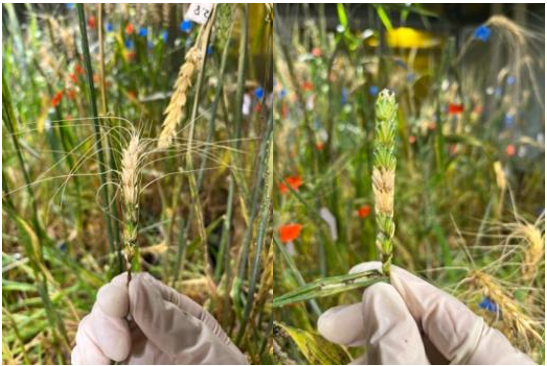
Data Collection: Acquiring a dataset of wheat spikelet images, both healthy and affected by FHB.
Figure 1: Dataset Samples
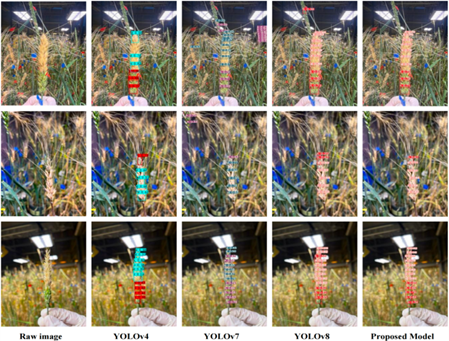
Model Development: Designing a multi-scale feature fusion convolutional neural network (CNN) to analyze the images. Built on the advanced YOLOv9 framework, the model incorporates a Multi-Scale Feature Enhancement and Fusion (MSFEF) module, which plays a critical role in extracting and dynamically enhancing features from various scales. To enhance computational efficiency, as shown in Figure 2, optimized convolutional layers such as RepNCSPELAN and DWConv are used, reducing the overall computational load while maintaining high detection performance.
Figure 2: Proposed network overview
Training and Testing: The model was trained on the dataset using techniques like data augmentation (Mosaic) to enhance its robustness. Testing was conducted to evaluate accuracy and performance.
Figure 3: Training batch samples
Deployment: The final model can be integrated into a user-friendly application for real-time detection, offering researchers and farmers an efficient tool for early disease detection and management.
Figure 4: Model predictions
Q. Overview of outcome/conclusion:
The project successfully demonstrated that the proposed multi-scale feature fusion CNN model can accurately detect fusarium head blight in wheat spikelets, achieving an accuracy of over 90%, which highlights the potential of AI-driven solutions in agriculture, paving the way for future advancements in plant disease management and crop monitoring.
Q. What Career and job role are you hoping to move into after graduation?
After graduation, I aspire to work as a machine learning engineer, focusing on applying AI in agricultural technology. My goal is to contribute to innovations that enhance food security and sustainability through smart farming practices.
Q. Please share a top tip/advice for students who are interested in completing a University Degree?
One essential piece of advice is to stay curious and actively engage with your coursework beyond the classroom. Seek out projects, internships, and collaborative opportunities that apply your knowledge in real-world contexts. Building a strong network and gaining practical experience will significantly enhance learning and career prospects.
For further information about Computing courses at UWTSD, please click-here.
Project title: A Comparative Evaluation of Machine Learning Techniques for Sales Forecasting
/\ Sriskantharaja Mithushan
Rationale:What was the reason/motivation for choosing the project?
The motivation behind choosing this project stemmed from the increasing importance of accurate sales forecasting in business decision-making. Companies rely heavily on predictive models to optimize inventory management, plan marketing strategies, and drive revenue growth. I was particularly interested in how different machine learning techniques could enhance the accuracy of these predictions, compared to traditional forecasting methods. My goal was to explore and compare the effectiveness of various machine learning models in improving sales forecasts, which could have a significant impact on business operations and profitability.
Machine learning (ML) is a branch of artificial intelligence (AI) and computer science that focuses on using data and algorithms to enable machines to learn from experience, much like humans do. In analyzing data, the ML algorithm, processes data multiple times to learn / adjust itself to improve accuracy.
Q. Brief overview of the practical implementation?
The project was conducted in several stages, starting with data gathering, followed by preprocessing, model execution, and evaluation. A rich dataset was collected from various retail and e-commerce platforms, containing sales records, customer demographics, product categories, and revenue figures. This data was cleaned and transformed to handle missing values, normalize scales, and ensure proper formatting for model training.
Five machine learning models were implemented:
Random Forest
Support Vector Regression (SVR)
LightGBM
XGBoost
Gated Recurrent Unit (GRU) Neural Network
Each model was trained on the prepared dataset using Python, with libraries such as Scikit-learn, LightGBM, XGBoost, and TensorFlow.
After training, predictions from each model were compared to the actual sales data. Visualization tools like Matplotlib and Seaborn were used to graphically depict the performance of each model, with side-by-side comparisons of RMSE and MAPE metrics. These visualizations helped to highlight the strengths and weaknesses of the various models.
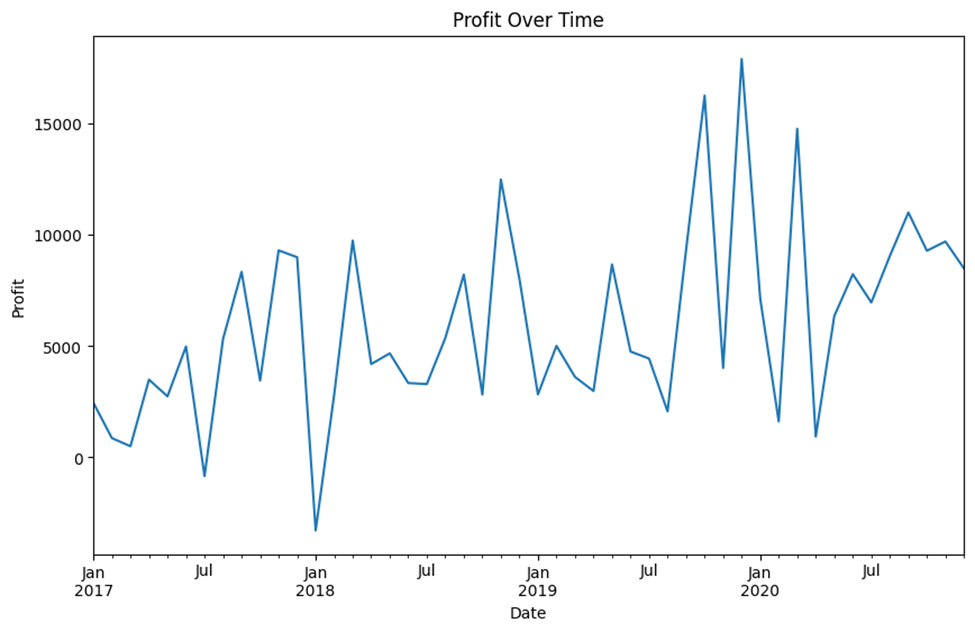
The Profit Over Time graph below, tracks monthly profit trends, providing a clear view of how profitability fluctuates over time. Key insights include: Seasonality and Profit Growth or Decline. For example Seasonality highlights periods of increased or decreased profits, often aligned with sales cycles or specific marketing efforts. This helps in identifying high-profit months and adjusting strategies for low-profit periods.
This visualization is crucial for understanding financial performance, aiding in strategic decision-making, and optimizing resource allocation for long-term profitability.
/\ Profit Over Time: Illustrates monthly profit trends.
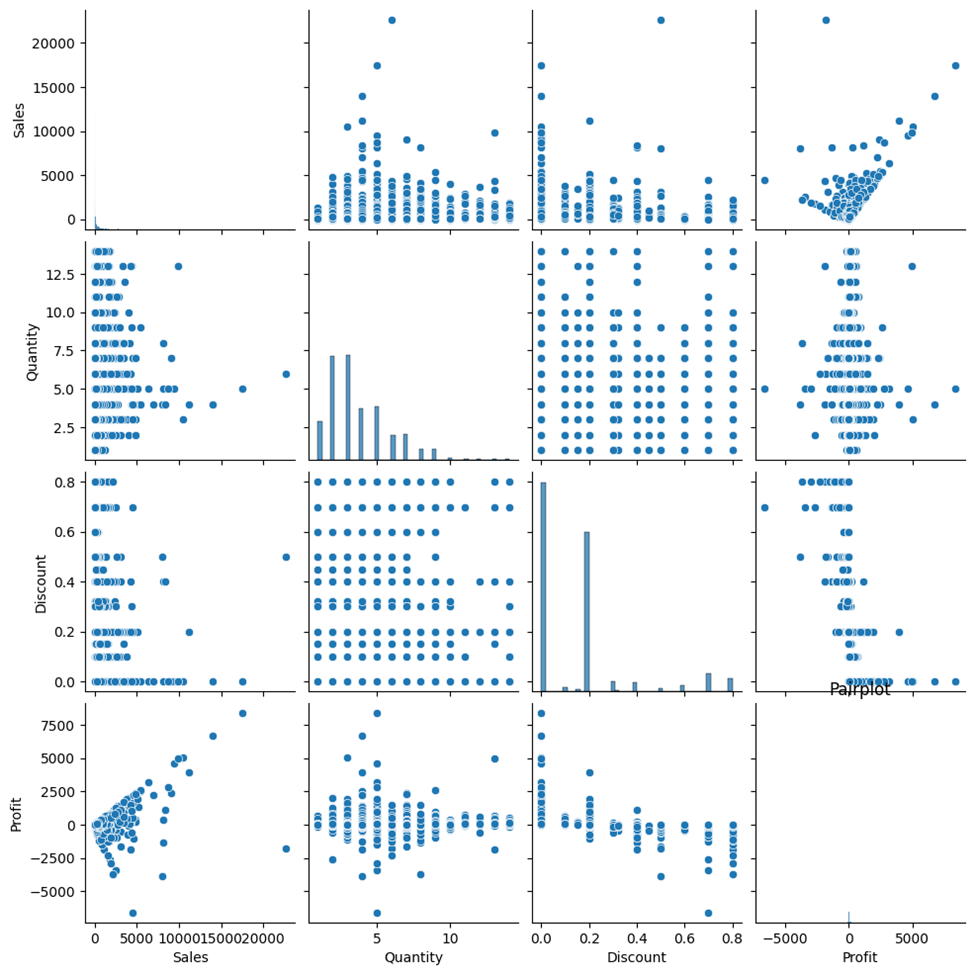
This pairplot chart below, simultaneously shows the distributions (diagonal plots) and relationships (scatter plots) between the key variables: Sales, Quantity, Discount, and Profit. For example the scatter shows a strong positive relationship, confirming that higher sales lead to greater profits. A weak negative trend suggests that offering larger discounts may slightly lower profits. This pair plot provides a comprehensive overview of how these variables relate to each other and how each is distributed, helping in identifying trends, correlations, and potential outliers.
/\ Pairplot: Distributions and Relationships Between Sales, Quantity, Discount, and Profit.
The chart below is a Heat-map. The Heatmap shows the correlations between the key business metrics of Sales, Quantity, Discount, and Profit. The color intensity represents the strength and direction of the relationships, with darker colors indicating stronger correlations. For example, a deep hue between Sales and Profit highlights that as sales increase, profits rise significantly. This visual tool helps identify how these variables interact and guide strategic decisions on pricing, sales, and profit optimization.
/\ Correlation Matrix Heatmap: Sales, Quantity, Discount, and Profit
Q. Overview of outcomes/conclusions?
The project concluded with Random Forest emerging as the top-performing model in terms of prediction accuracy.
The research delved into the use of machine learning techniques for sales forecasting in the retail and e-commerce sectors, with the goal of identifying which models provide the most accurate predictions. The study examined five machine learning algorithms: Random Forest, Support Vector Regression (SVR), LightGBM, XGBoost, and Gated Recurrent Unit (GRU) neural networks. The models were evaluated using metrics such as Root Mean Square Error (RMSE) and Mean Absolute Percentage Error (MAPE).
This study contributes to the understanding of how machine learning can be applied to sales forecasting in retail and e-commerce. It shows that tree-based ensemble methods, particularly Random Forest, are among the most effective techniques. However, deep learning models like GRU also show potential, particularly for capturing temporal dependencies. A balanced approach, combining multiple models and fine-tuning hyperparameters, can lead to more accurate sales predictions. By acting on these insights, retail and e-commerce companies can improve their forecasting accuracy, optimize inventory management, and ultimately enhance customer satisfaction and profitability.
Q. Please share some top tips/advice for students?
Completing a Bachelor of Science (BSc) or a Master of Science (MSc) at a university like the University of Wales Trinity Saint David (UWTSD) can be a rewarding and challenging journey.
The University offers a variety of Computing courses. Ensure you choose a program that aligns with your interests and career goals. During both BSc and MSc, you’ll often have the flexibility to choose elective modules. Select modules that allow you to develop key skills that are in-demand in your field, or that attract your personal interest. Balancing lectures, labs, independent study, and personal commitments is crucial. Use digital tools to organize deadlines, assignment dates, and exam preparation to stay on track. The University also offer career services to help students prepare for employment. Take advantage of these CV workshops, interview practice, and employability training.
For further information about Computing courses at UWTSD, please click-here.
Many thanks to David Jones (Technical Account Manager at RackSpace) and Geraint Williams (Head of Service Evolution & Change at Fujitsu) for visiting us and speaking with our students.
The talk titled ‘the Trends Challenges and Future Technologies’ covered the incredible evolution of IT & Cloud Computing over the last 50 years, highlighting the change & innovation of IT Architecture, current and future trends. A fascinating and very interesting talk enjoyed by all.
Thank you very much for sharing your experience, industry insights and useful information to know now and for the future. Diolch yn fawr iawn. 💻 🌐 😃 👍.
Q. What is your job title and role? My current job title is Product technical lead for the vDoc product of the Vizolution product suite.
Q. What does the role involve? This role involves me being the de-facto technical expert in all aspects of the vDoc product production with the overall goal being to align multiple development teams to delivery and fulfil customer requirements. Daily duties include attending stand-ups, providing estimates for new functionality, ensuring coding standards and providing technical leadership to development teams and steer and provide technical design and architecture for requirements. Also heavily involved in product support and deployments to ensure smooth roll-out and running of the product on a daily basis.
vDoc is an unassisted document sharing solution that allows customers to seamlessly progress their own customer journey through the upload, download or electronic signature of documents via a secure customer portal. http://www.vizolution.co.uk/solutions/vdoc/
Q. Could you briefly describe the organisation you work for? Vizolution is a CX Tech company focused on streamlining difficult customer journeys. The Vizolution suite of digital products streamlines the end-to-end customer journey and supports the omni-channel strategy of our customers across branch, telephony and digital channels. It’s SaaS products are quick and easy to implement. The solutions eliminate breaks in the customer journey to deliver improved compliance, customer service and satisfaction and conversions as well as reduced costs.
Q. Which skills learned at University are helpful to you in your job? Confidence and self-belief, the environment in the university was very open and students were encouraged to interact as much as possible, feedback was always constructive and lecturers often pushed to get the best from me. This really helped with my self-belief and confidence allowing me to step out of my comfort zone and push my self and my abilities. It is this I believe has allowed me to progress to where I am today.
Q. Do you have a typical day and how would you describe it? My days vary quite a lot but usually start with attending stand-ups for the development teams of which there are five that work on the vDoc product. I am then usually attending meetings to either provide high level estimation and technical implementation guidance/design for new functionality. Performing code reviews to ensure code is of a suitable standard and follows our defined coding standards. Assisting other developers with issues or problems and providing technical guidance. Occasionally I have the chance to develop some functionality myself but I am mostly in a hands off type of role now.
Q. What aspects of your job do you enjoy most? It would have the be the problem solving, quite often I am faced with complex issues to which I need to provide technical guidance for, whilst this can be challenging and frustrating at times. The sense of achievement when something you’ve planned turns out how you expected it to or sometimes even better it makes it all worth it. My position can be quite stressful but its taking these small wins and seeing the impact our technology is having is what keeps me motivated
Q. Do you have any advice for students who would like to start a Career? Prepare early, there are going to be hundreds of graduates across the UK in your sector all looking for jobs, be proactive and get your foot in the door first. Look for summer placement work, try and reach out to places where you would like to work to see if they have any openings or what opportunities they have for graduates. Most important be persistent and be strong minded, there will be times where you will be turned down at interview, instead of taking that negatively look for the positives and look for areas to improve and come back stronger. You’ve done the hard work in getting into university and taking your degree so you deserve a good career so just remember that.
You’ve done the hard work in getting into university and taking your degree so you deserve a good career so just remember that.
Q. A Quote that sums up your time at the University? One of the most challenging but at the same time rewarding experiences of my life.
Q. What is your job title and role? I am a junior developer and my role is configuring the companies scripts to match all different client needs.
Q. Could you briefly describe the organisation you work for? The organisation I work for CloudIQ is a Tech Start-up company that was created around 2012, we want our clients to make the most of their e-commerce website by re-marketing old ones and marketing new ones.
Q. Which skills learned at University are helpful to you in your job? I feel the main ones would be business awareness – this was important on adapting to a different situations you may be faced with and being aware of how it’s impacting the business and environment you are in. Another skill that I feel is of high value to me is analytical thinking, this has helped me so much when being faced with a problem or when my code isn’t working, it is having to think of different ways and think out of the box to solve it.
Q. Do you have a typical day and how would you describe it? Every day is different, but will have a similar feel to it, mostly I am writing or editing code to meet the clients needs but I could also be investigating the code and working with the team to try and fix the issues we have.
Q. What aspects of your job do you enjoy most? I enjoy working with the people I work with, but more so I enjoy learning and overcoming the different situations where I may have struggled for a while. I get a real sense of achievement when something works after trying to figure it out for ages.
Q. Do you have any advice for students who would like to start a Career? Be patient and don’t be afraid of changes, if you are unhappy with your working life change it.
Q. A Quote that sums up your time at the University? Challenging but worth it – I’d do it all again!.
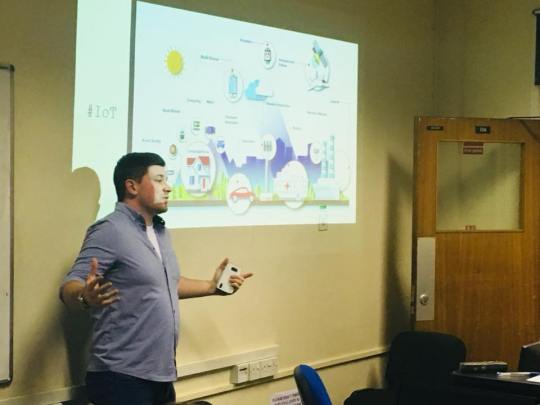
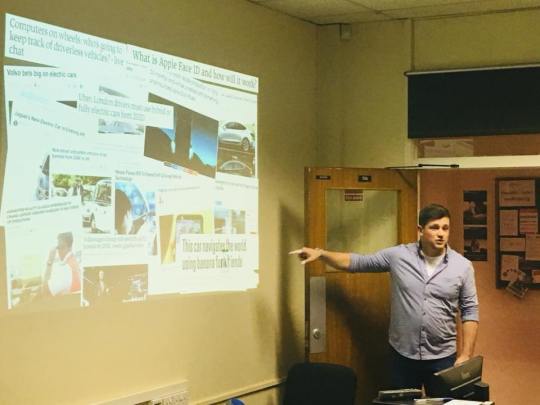
The School of Applied Computing welcomed Digital Architect Rob James from the DVLA in Swansea this afternoon. Rob spoke with students studying the Change Management module on the Business Information Technology and Applied Computing degrees about the ways in which new technology such as VR, AR, AI and The Internet of Things (IOT) is changing the way businesses are being run.
A fascinating insight into how new technology is shaping the future of business!















 UWTSD Applied Computing Blog