Turn On Your Future @ UWTSD's School of Applied Computing & Electronics

Posts tagged ‘Swansea’

Echoes of Absence by Jon Frise
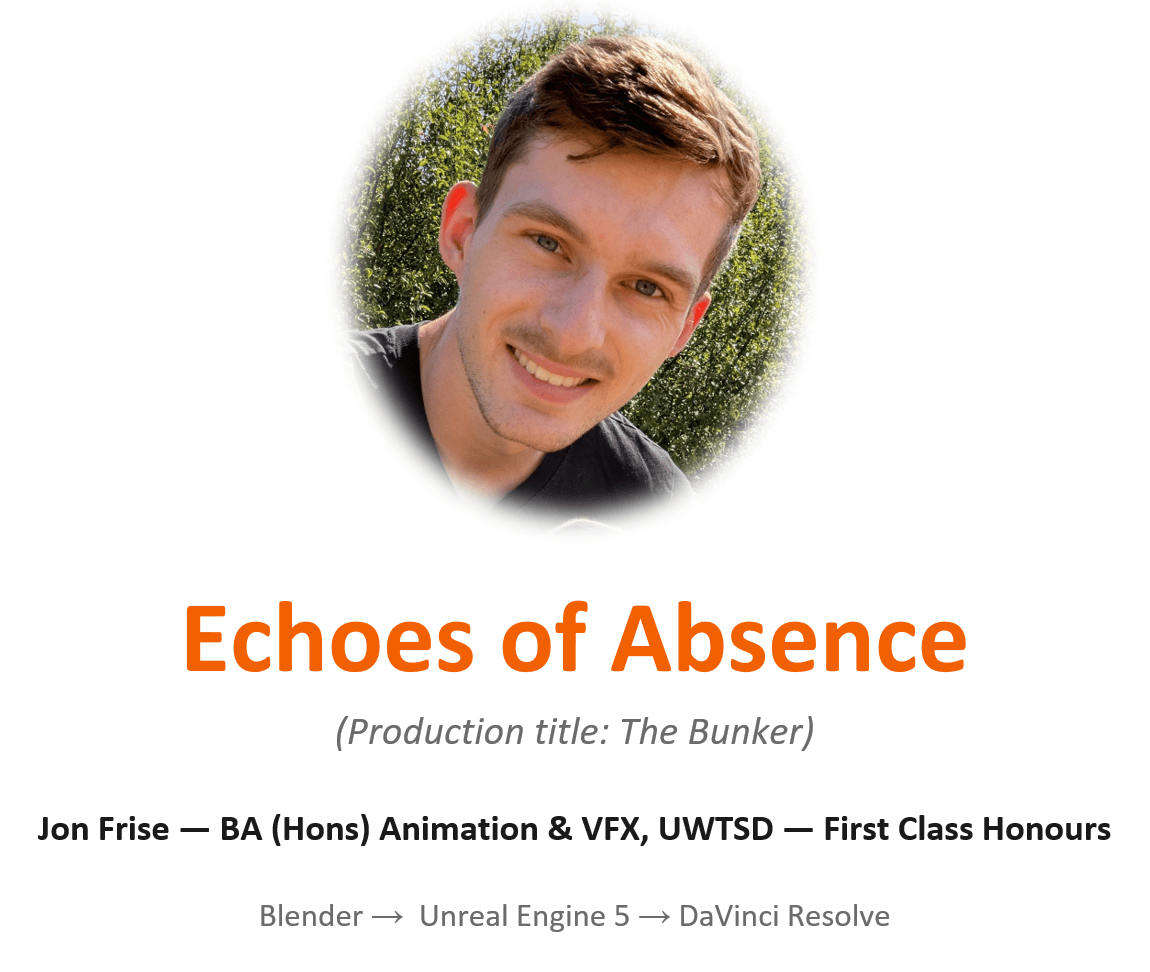
Q.  Name & Course? Jonathan A. Frise, BA (Hons) Animation & VFX at UWTSD

Q.  Project overview & introduction?

Echoes of Absence, production title The Bunker. Is a short characterless 3D animated environment piece, about three minutes. I built it to test whether lighting and sound design alone can make an audience feel like something happened in a place before the camera ever got there. Pipeline was Blender for asset creation and block out, this was my pre-production predominant phase including early testing and pre-viz, Unreal Engine 5 for lighting and final render, DaVinci Resolve for edit, grade and sound.

Q.  What was the motivation for choosing the project?

I’ll be honest, this project started out way bigger than what it ended up being, and that’s actually the most important part of the story. I’d been watching a lot of “liminal space” stuff online, think the Backrooms, POOLS, The Exit 8, that whole corner of the internet, and I kept getting stuck on the same question: why does an empty room unsettle people more than a monster jumping out at them? No character, no dialogue, sometimes barely any visuals at all, and somehow, it works better than most horror films manage.

That question became my dissertation hypothesis: “To what extent can lighting and sound design alone shape an audience’s interpretation of a preceding event in a characterless 3D animated environment?”

Originally this was going to be a proper first-person sci-fi piece, following a character called Jim and a little robot called Chips. Halfway through planning I made the call to cut the character completely. Not because the idea was bad, but because I realised I was about to spend a whole year juggling character animation, rigging, performance, environment art and sound design, and something was going to suffer for it. So I cut it back to the one thing I actually cared about most, and the project got better for it, not worse.
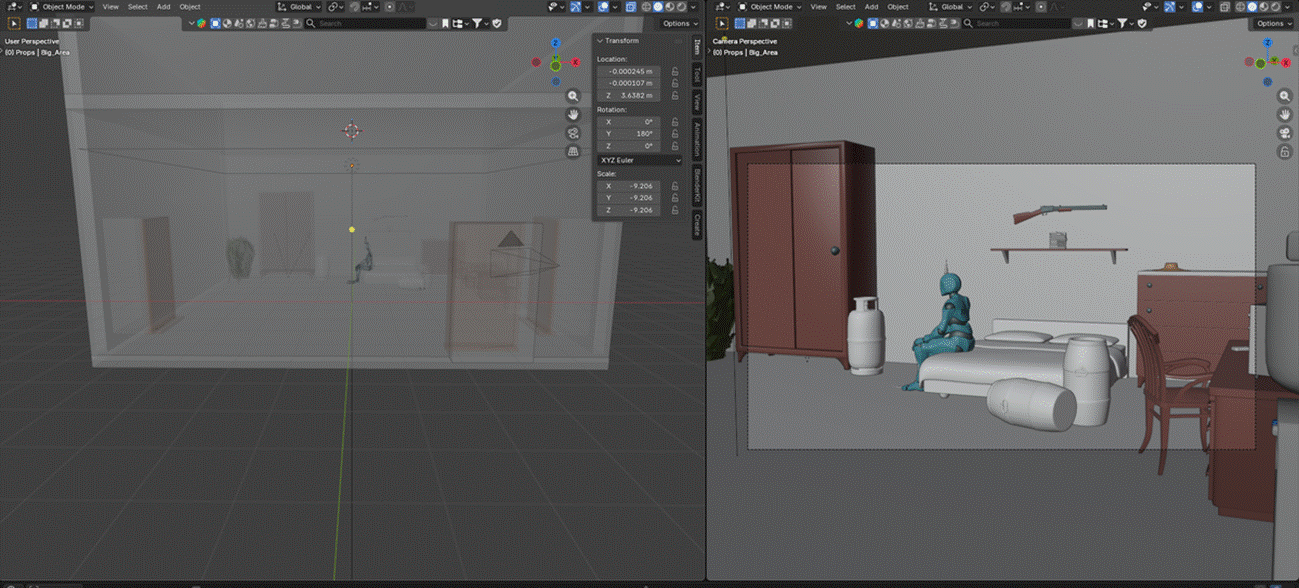
Fig.: Jim, before I cut him: An early blockout in Blender and Unreal, back when this still had a character in it.

Q.  Overview of the practical implementation?

The whole film hangs off one contrast. A flashing red alarm light throws long shadows down a corridor while Harry Nilsson’s relentlessly upbeat “Gotta Get Up” loops on a dying radio in the room beyond, happy sound against a horrible scene. I didn’t just trust that it would work though, I actually ran the experiment first. I stripped the audio off WALL-E’s opening in Adobe Audition and rebuilt it twice: once with nothing but wind and dust, once with the cheerful music dropped back in. Silence made it horror. Music made it tragic. That one test is basically why the whole radio idea survived into the final film.

Fig.: The radio itself. Everything in this film is built around this prop.
Fig.: The radio’s material graph. That worn black and orange finish didn’t happen by accident.

The radio sits at the centre of the film, but it only works because the room around it feels real. I didn’t just invent the bunker layout, I researched actual Cold War bunker floor plans and based the whole thing on one, keeping the same room logic: dorms, control room, comms room, rec and dining, a generator room, filtration and decontamination.

Fig.: The real Cold War bunker schematic I based the layout on.

The first version genuinely felt like a normal hallway, not a bunker, so I dropped in a 1.8m human reference cube and rebuilt everything around it, lowering ceilings and narrowing corridors until it actually felt claustrophobic instead of game-like. I sourced some assets ethically from FAB, Freesound and Pixabay rather than modelling everything from scratch, so I could spend more time on the two things the project was actually about: lighting and sound.
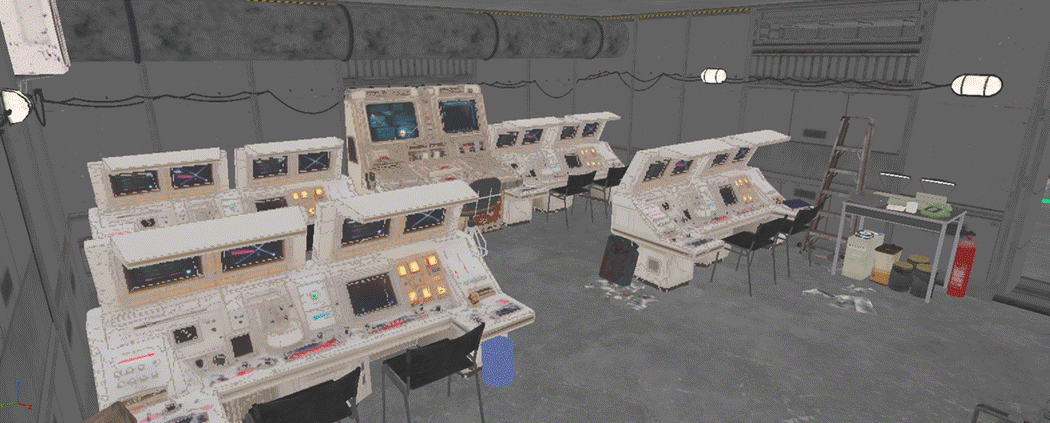
Fig.: The control room, built out one shift at a time

Q.  Most significant challenges and how you overcame them?

Two problems nearly wrecked it. First, Lumen’s global illumination really doesn’t like low-light scenes, and my dark corners came out grainy and unstable. I fixed it with a post-process volume, manually clamped the exposure, and bumped up the final gather quality until the shadows actually looked intentional instead of broken. Second, the radio’s sound was passing straight through solid walls, which killed the “finding the source” tension the whole scene depends on. I tried two fixes side by side, tweaking Unreal’s attenuation and occlusion settings versus building the spatial audio properly in DaVinci’s Fairlight, and ended up shifting the mix into post because it gave me way finer control.

I also kept everything religiously organised in the outliner and content browser as it grew. On a solo project, if a file goes missing or a save corrupts, there’s no one else around to bail you out.
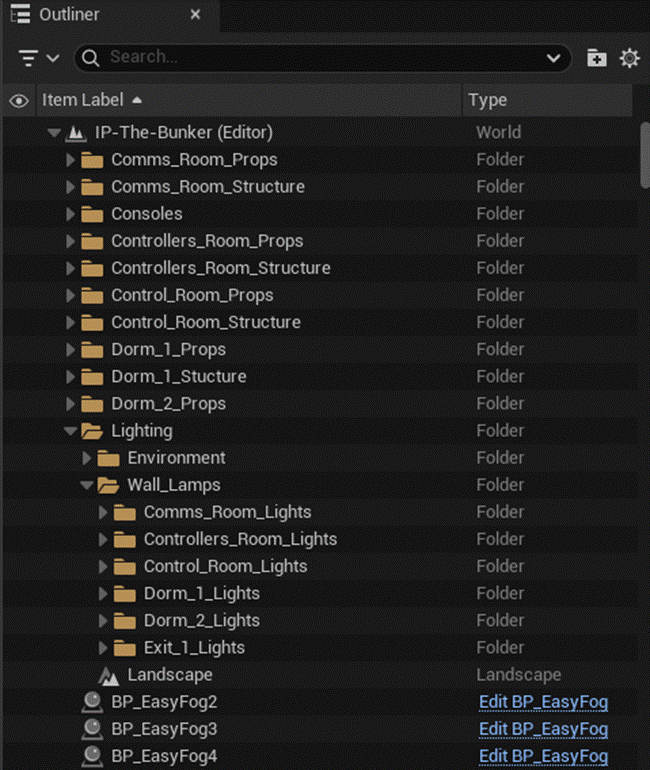
Fig.: The actual outliner. Every room gets its own folder, nothing left loose.

Q.  Most significant features?

My conclusion, honestly? Yeah, it held up. Sound and lighting on their own genuinely carried the weight of a missing character, to a significant extent anyway. I’m not going to pretend it’s bulletproof, the technique still needed some visual context, the physical bunker itself, to actually land. I’m also proud that I didn’t invent the bunker layout, I matched a real one room for room, and that I had the discipline to cut the project’s scope down to the one thing that mattered most instead of spreading myself across character animation, world-building and sound all at once.

Separately, before I cut the character, I actually built a physical prototype of Chips. I started with a cheap retro desk toy called LankyBot, stripped it right down and repainted it into a dull, aged copper finish instead of the factory chrome, then rebuilt the inside properly: real capacitors, exposed wiring with spade connectors, an old multimeter dial bolted to the side, a coiled copper aerial sticking out the top, and a dead iPhone mounted behind the screen panel as its actual display. It never made it into the final film, but it’s still sat on my desk, and I want to 3D scan it for a future project.
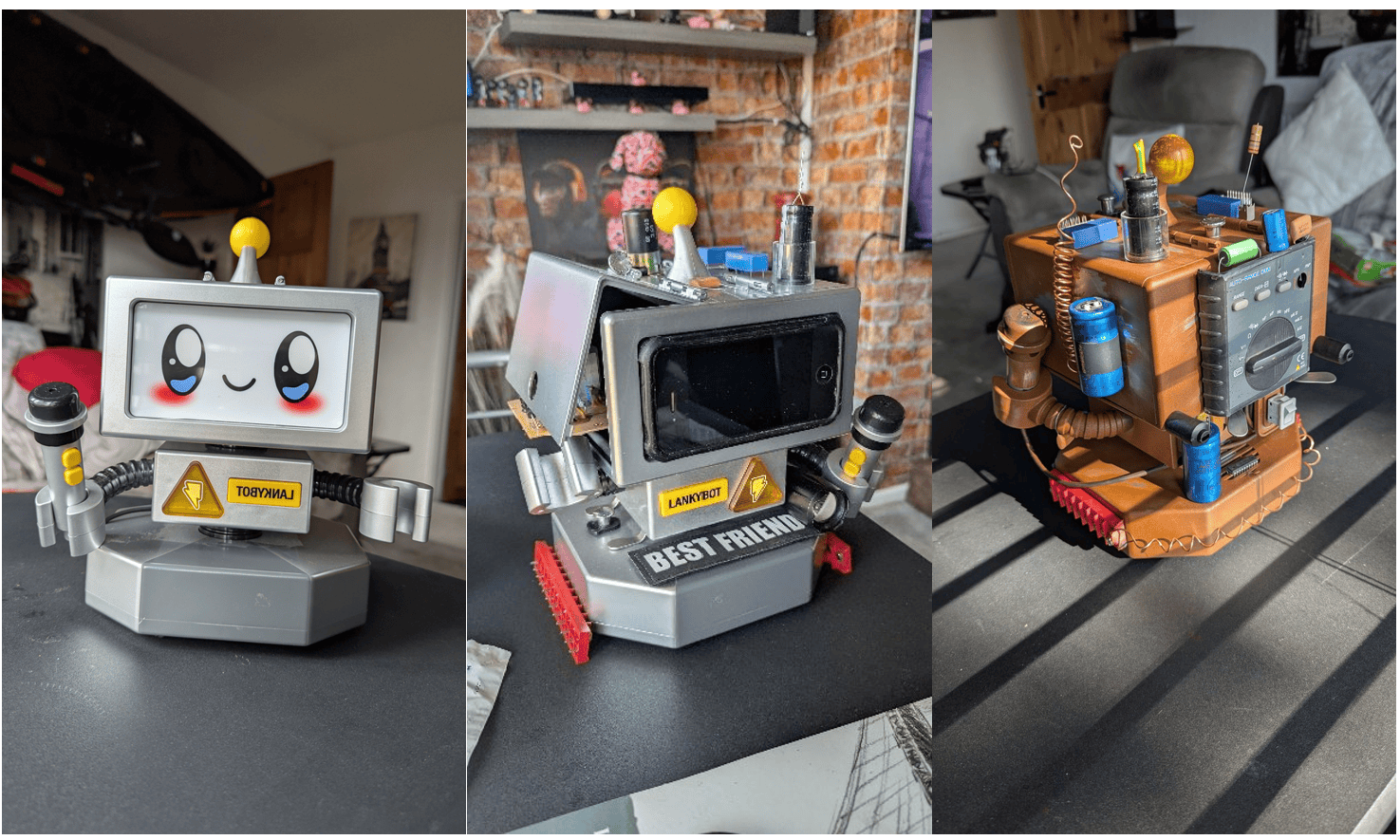
Fig.: Chips, the physical prototype I hand-built before cutting the character. Real electronics, real wear, real weight to it

Q.  Does your project have an online presence?

Yes. The final film, “The Bunker: ECHOES OF ABSENCE,” is on my YouTube channel JAF Games: https://youtube.com/watch?v=8BzGyFVEwbY. The full project write-up and blog also lives on a Notion page I built. You can also read the full dissertation this project came out of here (PDF).

Q.  Top tip/advice for students interested in completing a project?

Cut your scope before it cuts you. I started this project trying to do character animation, world-building and sound design all at once, from a much bigger concept, I even went as far as writing full feature-length scripts covering all sorts of facets. The second I admitted that was too much and dropped the character entirely, the project actually got good. It narrowed down into a specific area I could test methodically and actually had time to iterate on. Pick the one thing you care about most and go deep on that, it’ll show.

Stay open-minded, learn from others, and give it your all, because as cheesy as it sounds, that’s all any of us can do. And on AI specifically: I used it for structure and research, never for the actual creative thinking. If you can’t explain why you made a decision in your own words, you haven’t actually made the decision.

~

For more information about Computing & Digital courses at UWTSD please click-here.

🏆 Celebrating Our Innovation Competition Winners 2026

Last week we were delighted to bring together UWTSD Computing students, staff and industry partners for our Changemakers Innovation Competition 2026 Award Presentation, followed by a Movie Night at the UWTSD Dylan Thomas Centre on our SA1 Campus in Swansea.

Organised by James Williams (Senior Lecturer at the School of Applied Computing) the evening provided a wonderful opportunity to celebrate the creativity, innovation and achievements of our students, recognise the invaluable contribution of our industry partners, and then relax together 😊 with a movie, popcorn and treats 🍿🎬

💡 Celebrating Innovation and Positive Social Impact

The Changemakers Innovation Competition forms part of our Year 2 Changemakers: Creativity & Value Creation module across our Computing programmes (The module is taught by Computing Lecturers James Williams & Ewa Kazimierska). The module encourages students to develop innovative ideas and practical solutions that create a Positive Social Impact (PSI), while developing the technical, professional and ethical skills they will need throughout their future careers.

“Our students demonstrate the remarkable potential of human creativity and technology to make a positive contribution to society, and this year’s projects were another fantastic example of that potential come to life. The competition was completed by all Year 2 students split into 2 groups, with industry representatives helping us identify and celebrate the strongest projects from across the cohorts.” – James Williams

Group 1 Winners:

🥇 1st Place: Tonio George

Project: CyberGuard Pro: Network Security Tool – Tonio developed a network security and analysis tool capable of directly identifying vulnerabilities and providing evidence of security risks. The project demonstrated strong technical understanding, effective problem solving and excellent technical delivery.
Award: Changemakers Networking & Cybersecurity Innovation Award
Prize: £750 + Award Certificate

Tonio George & David Jones (Fujitsu)

🥈 2nd Place: Olivia Collins

Project: Wear the Weather / WearWise AI – Olivia produced a highly polished, tested and fully functioning system with a very clear concept and strong implementation. The project was recognised as the most complete and well-engineered system within its group.
Award: Changemakers Development Innovation Award
Prize: £500 + Award Certificate


Olivia Collins & David Jones (Fujitsu)

🥉 3rd Place: Daniel Leone

Project: The Human Firewall: An Educational Cybersecurity Themed Game – Daniel’s project used gamification to address the increasingly important real-world challenge of cybersecurity awareness. The project was particularly recognised for its excellent structure, analysis and consideration of social impact.
Award: Changemakers Social Impact Innovation Award
Prize: £250 + Award Certificate

Daniel Leone & David Jones (Fujitsu)

Group 2 Winners

🥇 1st Place: Edward Lloyd

Project: NHS Future Workforce Simulator – Edward developed a workforce forecasting solution designed to support longer-term NHS workforce planning. The project demonstrated an outstanding end-to-end development lifecycle, progressing from a clearly defined organisational challenge through to a technically sophisticated solution supported by quantitative validation and analytical thinking. The project demonstrated the highest level of technical depth and academic rigour within the group.
Award: Changemakers Innovation Award
Prize: £750 + Award Certificate

Edward Lloyd & David Jones (Fujitsu)

🥈 2nd Place: Molly Thomas

Project: Intelligent Knowledge Base Helpdesk Agent for IT Service Desk Support – Molly addressed a highly relevant workplace challenge through an innovative application of Artificial Intelligence. Her solution demonstrated a mature and realistic approach to enterprise AI, alongside careful consideration of governance, support processes and longer-term deployment. It was recognised as the group’s strongest business-ready AI solution.
Award: Changemakers Innovation Award
Prize: £500 + Award Certificate

Molly Thomas & David Jones (Fujitsu)

🥉 3rd Place: Tia Willock

Project: Trackogram: A Mobile Health and Wellbeing Application – Tia’s project combined physical health tracking with mental wellbeing support within a single platform. Her work demonstrated strong practical development skills, testing across different device sizes, troubleshooting and effective use of feedback to continually refine the application. It was recognised as the strongest mobile application prototype within the group.
Prize: £250 + Award Certificate

Congratulations to Tonio, Olivia, Daniel, Edward, Molly and Tia 👏🎉

SHIPMAX Professional Innovation Award⚙️🏆

There was one further Professional Industry Award to present on the evening by our industry partner Phil Rees, CEO of ShipMax Ltd, who selected:

🌟 Tonio George: CyberGuard Pro

as the winner of the SHIPMAX Professional Innovation Award 2026.

The project was recognised for its stakeholder engagement, user-centred design, technical implementation and realistic commercial potential, together with Tonio’s ability to reflect professionally on the challenges and lessons encountered during development.

The award included: Industry work experience, an Amazon voucher and a LinkedIn recommendation

Tonio George & Phil Rees (CEO SHIPMAX Ltd)

Congratulations again to Tonio on receiving this additional industry recognition.

🤝 A Huge Thank You to Our Industry Partners

An important part of the Changemakers module is giving students opportunities to engage directly with successful and professional people working within industry. We are extremely grateful to the industry representatives who have generously shared their time, professional experience, knowledge and advice with our students:

  • Adam Curtis, CEO of Hoowla
  • Edd Turtle, Senior Software Developer at Hoowla
  • David Jones, Principal Consultant at Fujitsu
  • Geraint Williams, Director of Mission Control at Fujitsu
  • Phil Rees, CEO of ShipMax Ltd
  • Mathew Marl, Executive Head of IT Systems at UWTSD

A particular thank you goes to David Jones and Geraint Williams from Fujitsu, who have supported our students through a series of guest lectures and direct support for their projects, and who helped us present the winning awards on the evening.

We are also extremely grateful to Phil Rees CEO of ShipMax Ltd for his continued support through guest lectures, work experience and internship opportunities, mentoring and student prizes.

🌟 A Special ‘Thank You’ to ESBF

A very special thank you goes to the Engineers and Scientists in Business Fellowship (ESBF) for generously supporting the Changemakers Innovation Competition and providing the funding for our student prizes. Their support helps us encourage our students to develop the enterprise, business and leadership skills that can help them take innovative ideas beyond university, into wider society and to become the Leaders of tomorrow and to make a positive difference in the world.

Thank you for your continued support of our students.

🎬 And Then… Movie Time! 🍿

After all the awards, applause and photographs, it was time to relax. Students, staff, alumni, friends and industry colleagues settled down together for our Computing Movie Night, complete with popcorn, sweets and drinks. Events like this are not only about recognising academic achievement. They also give our Computing community an opportunity to come together, celebrate, socialise and have a bit of fun at the beginning of a new academic year.

👏 Diolch & Da Iawn i Chi

Selecting winners from such a strong range of projects is never easy, and the innovation, creativity and technical ability demonstrated across both cohorts gives us plenty to be excited about for their futures. A Well done to all of our students who took part in the competition. Technology continues to evolve at an incredible pace, but ultimately it is human creativity, imagination and our ability to use technology positively that will determine the difference it makes in the world. Our students have already demonstrated their potential to be part of that future. 💡🚀

A huge thank you and congratulations to all of our: 🎓 Students, 👨‍🏫 Academic colleagues & 🤝 Industry representatives and partners, who contributed to the Changemakers Innovation Competition and Award Presentation.

Da iawn chi bawb! Well done everyone! ❤️🎉

For further information about our Computing courses please click-here.
Industry Speaker: Phil Rees, CEO of SHIPMAX Ltd

Our students were recently joined by Phil Rees, CEO of SHIPMAX Ltd, for an ‘Industry Guest Lecture’ that focused on AI, e-commerce, innovation and what really matters in the world of industry.

Phil Rees is the founder and CEO of SHIPMAX Ltd, a Swansea-based, AI‑native logistics consultancy, helping e‑commerce brands expand internationally while reducing the cost, complexity, and risk of going global.

Framed around the idea of “building innovation that ships”, Phil began by reminding students that the process they have just been through in their University ‘Innovation & Project Management’ module, included important steps: ideation, design, build, and ship, is not an academic exercise. It’s the same arc used by real Tech & SaaS companies and digital consultancies.

Phil’s session challenged students to think about the qualities he & employers looks for. The takeaway was simple but powerful:

The frameworks you’re using now are not practice for the job: They are the job.

What actually makes an innovation project stand out? At the heart of the lecture were four pillars Phil uses when judging innovation projects, the same criteria used by founders, investors, and employers:

  1. A real problem, for a real user: Evidence of even a handful of genuine user conversations beats pages of assumptions. Winning projects show how user insight actively shape design decisions.
  2. Credible execution: Not just can it work, but can it survive? Students were encouraged to reflect on scalability, support, and  importantly: what they deliberately chose not to build.
  3. Commercial or strategic logic: Every project needs a clear ‘so what?’. Who pays? Who adopts it? Why does it matter now? And why is it credible?
  4. Clear differentiation: In a world where software can be built faster than ever, the key question is no longer can you build it? but what makes this hard to copy?

A real-world pivot from SHIPMAX:
One of the most valuable moments came when Phil shared a SHIPMAX ‘war story’, a SaaS idea he was close to funding, before pulling the plug.

As AI‑driven development tools rapidly lowered the cost of building software, the competitive ‘moat’ or distance has disappeared. Rather than pushing ahead with a product that could be copied in a weekend, Phil chose not to build that time, quickly pivoting resources and expertise into new projects that would yield sustainable and strategic growth for his company.

While staying at the cutting edge and adopting the latest tech developments has greatly benefited the expansion of Phil’s company, his experience and expertise creates a self-trust that brings an agility and discernment to focus his time and energy where it matters most. = A recipe for Success.

Phil also highlighted patterns he sees repeatedly in student and early‑stage projects:

  • Feature creep instead of focus
  • Claims of user demand without evidence
  • No clear distribution or discovery strategy
  • Strong work undermined by weak storytelling

His advice? Treat the narrative as part of the product. Innovation isn’t just what you built, it’s how you explain why you built it.

AI, data, and the new baseline for graduates:
Drawing on insights from a recent AI conference at MIT, Phil warned against chasing models and tools without first getting the foundations right.

Clean, well‑structured data, he argued, is becoming a genuine competitive advantage. At SHIPMAX, AI is already used to compress hours of research into minutes, not by magic, but through disciplined data handling and clear workflows.

For students entering the tech industry in 2026, the message was clear:

  • “Can you build it?” is now table stakes (the minimum requirements)
  • Judgement beats raw technical ability
  • Data quality compounds over time

Phil closed with a challenge to students shortlisted for the Best Innovation Project 2026, sponsored by SHIPMAX:

“If your project lands on my desk, I’ll read every word. Make it worth my reading time.”

Phil’s talk was open and authentic, confidence‑building, less about perfection, more about honesty, refreshingly aligned with how modern digital work really gets done and very valuable to our students.

The Academic team at UWTSD’s School of Applied Computing would like to thank Phil for taking the time to speak with our students and for sharing his valuable experience, industry knowledge and insights 👏. Diolch yn fawr iawn 😊. Thank you Phil, we look forward to future collaborations 👍

Graduate profile: Dale Warner

Graduate profile for Dale Warner, a Solutions Engineer at Cisco.

"Exposure to new and challenging events is critical. Everyone is winging it; no one can know it all."

"Creativity requires play, and play can be messy. Embrace the cluttered desk!"

"My days can range from face-to-face customer meetings across the UK, building high level plans/designs/BoMs from my home office, or turning my time to study so I can stay on-top of the latest technology trends."

Q. Name: Dale Warner

Q. What was your university course: BSc (Hons) Computer Networks

Q. Job title and role? Solutions Engineer at the Central Government Team at Cisco

Q. Briefly describe the organization you work for? Cisco are the market leader when it comes to networking. They also provide cutting edge technologies and services across a wide range of areas; Security, collaboration, observability, to name a few.

Q. Which skills learned at university are helpful to you in your job? While at university the most important skill I learned was how to concisely present a complex idea or solution. Being able to do so allows me to talk and explain new products and ideas to customers, cutting out all the unnecessary fluff.

Q. A typical day and how would you describe it? Like any engineer, two days are very rarely the same. But I talk with customers about their technical issues and look to provide Cisco solutions to bridge the gap. This requires me having a board understanding of a range of technologies and where/how Cisco products can be used. My days can range from face-to-face customer meetings across the UK, building high level plans/designs/BoMs from my home office, or turning my time to study so I can stay on-top of the latest technology trends.

Q. What aspects of your job do you enjoy most? I enjoy meeting customers, understanding their needs, and proposing suitable solutions. This, alongside learning on the latest technologies and having a future vision of the technology industry.

Q. Advise for students who would like to start a Career? It’s okay not to have an end goal, so long as you know what you want to do next. When your end destination isn’t set you can put all your effort into achieving your next goal. Exposure to new and challenging events is critical. Everyone is winging it; no one can know it all.

Q. A quote that you like / live by / inspires you?
My favorite quote is a quip from Albert Einstein “if a cluttered desk is a sign of a cluttered mind, of what, then, is an empty desk a sign?” I’d like to add – creativity requires play, and play can be messy. Embrace the cluttered desk!


Thank you for your profile Dale, it will help to inspire current and future students.
We are most grateful. We hope to see you at future alumni events.
Well done and Congratulates on your success Dale.
Da iawn a llongyfarchiadau Dale

~

University Guide: UWTSD Computing #1 in Wales

We’re thrilled to announce that in the Guardian University Guide 2026, our courses have ranked 1st in Wales & 9th in the UK for Animation & Games Design and 1st in Wales & 11th in the UK for Computer Science and Information Systems. 🎉🎊

This achievement reflects our dedication to delivering hands-on, real-world industry relevant learning experiences, with exceptional student support. Our highly qualified, industry-experienced staff work hard to ensure students are prepared for a successful future with the practical knowledge & employability skills they need to excel.

A huge thank you to our students, staff, and supportive community for making this recognition possible. 🙏👍

For information about our courses, please click-here.

Student profile: Hamza Qasim

Name: Hamza Qasim

What University course are you doing? MA Masters in Animation at UWTSD.
This follows my completion of a BA in Computer Games Design at UWTSD, where I spent 3 fulfilling years building my foundation in digital arts and game development.

What truly inspires me about animation and the broader field of digital arts is the unlimited creative potential it offers. I have a genuine passion for games, animation, VFX, and CGI, particularly the captivating effects seen in Marvel movies. The ability to bring ideas to life through digital mediums and create immersive experiences that can transport viewers into different worlds is incredibly motivating.

Video below: BA Game Design animation by Hamza Qasim

Beyond the creative aspects, I’m inspired by how this field connects to my other interests, especially automotive design. The intersection of technical precision and artistic vision in CGI, particularly in automotive visualisation, represents the perfect blend of my passions. What makes this journey even more inspiring is the supportive environment at UWTSD, where I feel encouraged to explore emerging technologies and push the boundaries of what’s possible in animation and interactive media.

Video below: Portfolio from BA Games Design Yr.3 by Hamza Qasim

Throughout my Masters program, I’ve been developing a diverse range of technical and creative skills. On the technical side, I’ve advanced my proficiency in 3D modelling, animation, texturing, and rendering using various versions of Blender (4.0, 4.2, and 4.4). I’ve also expanded into video editing and composition using Wondershare Filmora 13, along with comprehensive sound design capabilities.

Video below: Cans by Hamza Qasim

Video below: Koi by Hamza Qasim

Recently, I’ve ventured into VR development using Unreal Engine 5.5, where I’ve learned to create custom blueprints for asset switching, material switching, and targeted interactions. One of my proudest achievements has been developing a real-time sun movement system that enhances environmental immersion in VR experiences.

Video below: Material Switching & Sun Movement by Hamza Qasim

Beyond technical skills, I’ve been developing crucial soft skills through modules like Leadership, Management and Ethics. This module, though different from animation, has taught me about various leadership styles, management approaches, and proper research methodologies, skills that are invaluable for any creative professional.

Favourite Technology: My current favourite tool is definitely Blender. While we also learn Maya at University, I’ve found that the modelling and animation skills transfer seamlessly to Blender, and it offers several advantages that make it exceptional for independent learning and creative work. What I love most about Blender is its comprehensive nature, I can model, sculpt, texture, animate, composite, and render all within a single application.

The fact that it’s completely free removes financial barriers to learning, and the extensive community support through YouTube tutorials and forums means that virtually any problem I encounter has likely been solved by someone else. The accessibility and community aspect of Blender have been game-changing for my learning process. While Maya still has some advantages, particularly for UV unwrapping, the plugins available for Blender help bridge most gaps, making it an incredibly versatile tool for independent artists and students.

Video below: Liminal Spaces using Advanced Techniques by Hamza Qasim

After you Graduate?
My career aspiration is to work as a CGI Artist at an automotive company, with Mercedes-Benz being my preferred destination. This goal is informed by my previous experience working there before enrolling at UWTSD, which gave me valuable insight into the industry and confirmed my passion for automotive visualisation.

Video below: Car in motion by Hamza Qasim

The automotive industry’s increasing reliance on high-quality CGI for marketing, design visualisation, and virtual showrooms aligns perfectly with my skills in 3D modelling, animation, and rendering. My experience with both traditional animation techniques and emerging technologies like VR positions me well for the evolving demands of automotive CGI, where immersive experiences are becoming increasingly important.

Video below: Cloth Reveal by Hamza Qasim

Advice for students?
My most important advice is simple but crucial: do something that you truly enjoy. Don’t choose a course based on others’ expectations or perceived prestige, choose it for yourself and your genuine interests.

I love what I study because it encompasses everything I’m passionate about: games, animation, VFX, CGI, and automotive design. This genuine enthusiasm makes the work feel less like a chore and more like an exciting challenge. When you’re passionate about your subject, you naturally strive for excellence and find yourself more resilient when facing difficulties.

Fig.: Digital Arts image

Another key lesson I’ve learned is about perfectionism and deadlines. As an artist, I’ll always strive for perfection, but I’ve come to understand that sometimes you need to aim for the best work possible within tight deadlines rather than perfect work that never gets completed. It’s better to submit a strong, complete project than to miss deadlines chasing an impossible ideal of perfection. The balance between ambition and pragmatism is essential for success in any creative field.

Experience at UWTSD?
My experience at UWTSD has been absolutely transformative and couldn’t have been better. The support system here is extraordinary, from Richard Morgan in the Games Design department, who has been my rock throughout my three-year BA journey, to lecturers like Nabeel Masih, Adam Head, Philip Organ, and James Williams, who have consistently encouraged my growth and exploration of emerging technologies. The university’s holistic approach to student support extends beyond academics. The well-being department has been incredibly supportive during challenging times with my mental health, and the entire campus environment, from reception and canteen staff to lecturers, creates an atmosphere that feels genuinely supportive and nurturing.

I’ve had numerous opportunities for leadership and community involvement, serving as Student Representative for both my BA and MA courses and participating in the UWTSD Esports Committee, where we organised events and created lasting memories. The university even pushed me toward pursuing my Masters degree when I wasn’t initially planning to continue, a decision that has proven invaluable. The collaborative environment has allowed me to form lasting friendships with both staff and students, and I’ve been able to contribute through graphic design work for various university projects. If I could change anything about my university experience, it would be nothing, every aspect has been beneficial and has contributed to my growth as both a person and a professional.

~

For further information about Computer Games & Animation courses at UWTSD, please click here.

Project profile: James Frew

Fig.: James Frew

Name: James Frew

Course: BSc (Hons) Software Engineering

Project Title: An affordable device for monitoring noise levels in home studio environments to warn users of duration-based hearing damage.

Purpose: As a drummer and someone who regularly practises in home studio environments, I quickly became aware of how easily you can be exposed to loud sounds for long periods. Many people only think about hearing damage in terms of volume, but in fact, long durations of noises that aren’t excessively loud can be just as dangerous. I wanted to build a simple and affordable device that could help raise awareness of this overlooked danger and help people protect their hearing.

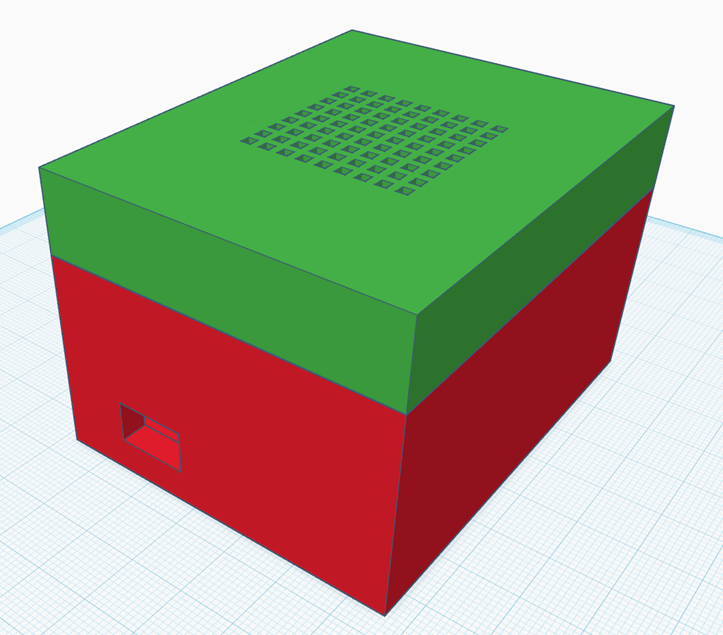
Fig.: Design

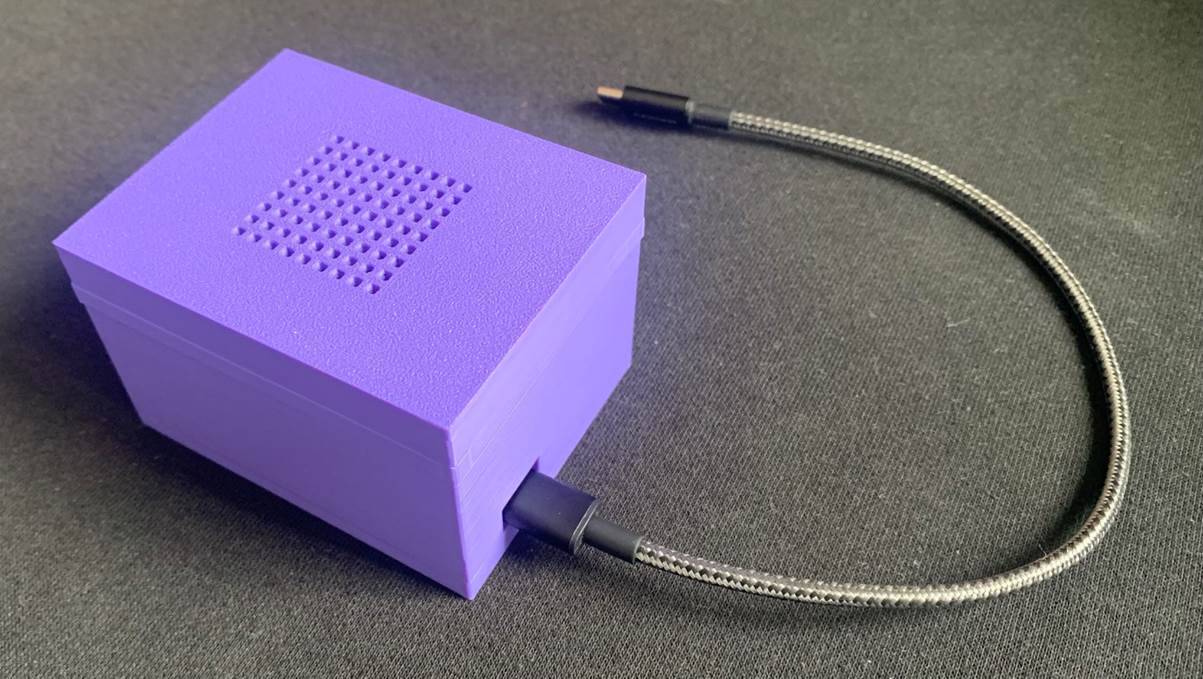
Implementation: The system consists of a small microphone and microcontroller, both housed in a compact 3D-printed case. The device connects to a desktop application built in Python. It monitors the noise in the room in real time, calculates how long it’s safe to be in that environment based on the current sound levels, and sends a warning when the average noise levels since starting the application reach a point where it becomes dangerous to continue listening.

Fig.: Case implementation

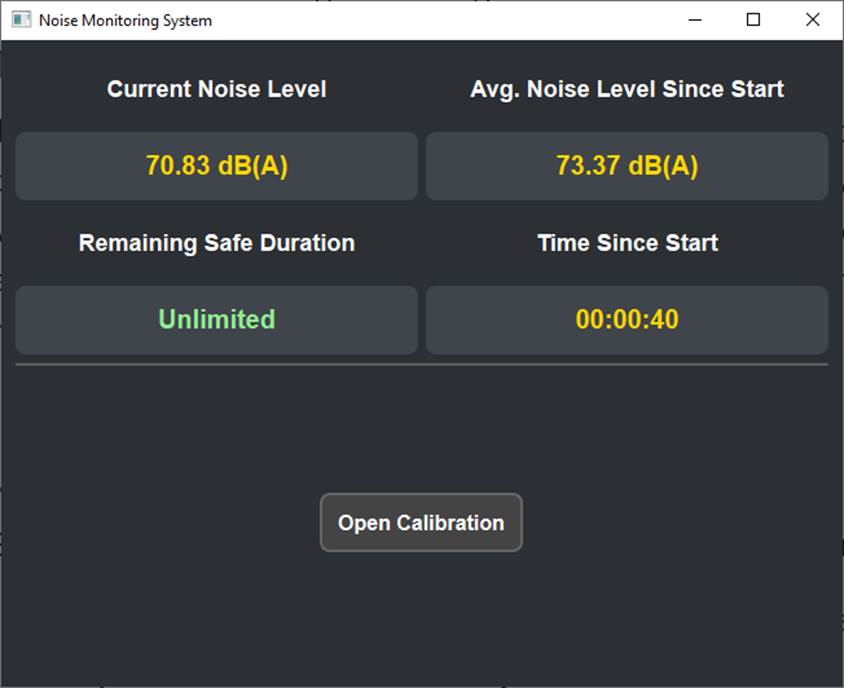
The GUI displays current noise levels, the average levels since starting, the time remaining before risk becomes high, and how long the app has been running. The system was built for under £20 and was tested with real users, receiving very positive feedback for its usability and clarity.

Fig.: Application

Conclusion:
The final product was a reliable, accurate tool that helped users understand their sound environment better. It successfully raised awareness of long-term hearing risks and provided clear, real-time feedback. The project met all its core goals and achieved an excellent System Usability Scale (SUS) score of 89.5. It also received valuable suggestions from users, which could shape future improvements, such as wearable versions and mobile app integration.

Next steps: I’m hoping to move into a role that allows me to work with people and ideally in music or creative environments. I’m particularly interested in opportunities that combine practical problem-solving with collaboration. My degree in Software Engineering has given me a strong foundation in project planning, technical thinking, and building things that work in the real world – skills that will be useful in many industries, not just computing.

Advice for students: Your time and energy are limited, so it’s important to prioritise your studies and project work, especially in your final year. Balancing other commitments is part of life, but giving focused attention to your degree when it counts will really pay off. Also, don’t be afraid to use the tools available to you – make use of AI, but without breaching academic standards. Do use it to help guide research and explore ideas related to your studies, don’t use it as a copy-and-paste tool to blindly research information. AI isn’t going to go away, so it’s important you learn how to use it to assist your studies as early as possible in your degree. Good luck with your studies!

~

For further information about Computing & Computer Science courses at UWTSD, please click here.

Graduate profile: Myles Anderson

Fig.: Graduate – Myles Anderson

Q. Name: Myles Alexander Anderson

Q. University course: BSc (Hons) Business Computing at UWTSD

Q. Job title and role: BT Group (EE/BT) Team Lead

Additional Occupation: Redevelopment Business Director

Q. The organisation you work for?

The BT and EE group is the UK’s largest residential Internet Service Provider, in addition to being the UK’s largest mobile phone network provider.

cc-fig.: BT EE

Additionally, I am the director of my own company, focusing on the redevelopment of properties and converting them into environmentally conscious, sustainable student lets. (Known officially as HMOs, Houses of Multiple Occupation.) 


Fig.: Pre-renovation

Fig.: Post-renovation

Q. Which skills learned at University are helpful to you in your job?

As part of my undergraduate degree, I undertook modules such as ‘Managing People and Change’ and ‘Usability Engineering’. These modules provided me with real-world insight into how to lead and manage teams of individuals in my professional career. Additionally, usability engineering directly aided me in developing contemporary business plans and product/marketing strategies.

Q. What aspects of your job do you enjoy most?

Money.. Jokes aside, there is something incredibly satisfying in helping others achieve heights they once thought impossible. Turning low-confidence, underperforming team members into smiling, highly productive employees helps both the individual and the wider business achieve the goals and targets set before them.

The same satisfaction is directly correlated to the real-estate projects, as turning unloved, dilapidated properties into homes for multiple students allows me not only to see a project develop from its infancy until its final stage, but it also provides high-quality, lower-cost accommodation for individuals who are trying to achieve more for themselves. 

Q. What opportunities has University opened up and supported you in pursuing?

Upon my graduation, the university kindly offered me the opportunity to pursue further study, such as PHD Doctoral support, and whilst at this stage I have not taken up this offer, the fact that this is available for high-achieving graduates illustrates how UWTSD is willing to invest and support in home-grown talent.

In addition, the network I built during my time at the university has proved invaluable, with friends who have become Mortgage Brokers (aided in real estate) and Openreach Engineers (Helped in my BT teams roll-out of FTTP in South Wales).

cc-fig.: BT Towers in Swansea (Wales) & London (England)

Q. Do you have any advice for students who would like to start a Career?

Do not be afraid to take risks. Through personal travel, I have visited nations where ‘real’ abject poverty is unavoidable. This reality check gave me a major perspective shift on the country we call home. 

We are incredibly lucky to live in a country with such a strong safety net, so if you’re ambitious and have a business idea you really want to try, plan it out properly and then give it a go! Worst case scenario, you’re back where you started. Best case? Skies the limit.

Fig.: Myles Anderson – 12,000ft above Sea-level in Taiwan.

Q. A Quote that sums up your time at the University?

“Do. Or do not. There is no try.” – Yoda

cc-fig: Yoda
(Legendary Jedi Master)

~

For more information about Computing courses at UWTSD click-here.

Skills Synergy 2025

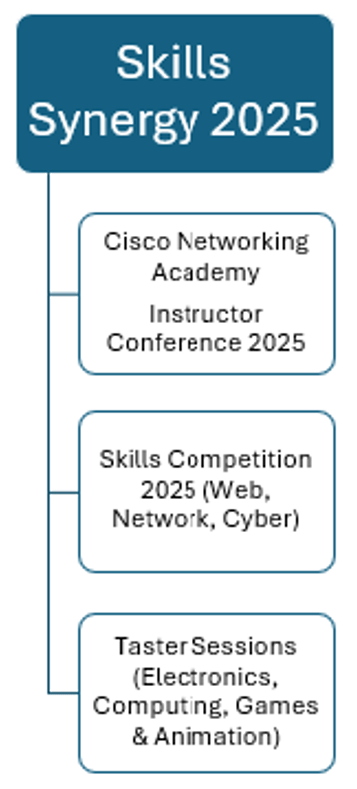
The School of Applied Computing at University of Wales Trinity Saint David are thrilled to announce the annual ‘Skills Synergy 2025‘ event hosted at Swansea Arena.

A dynamic day of learning, and competition for students and networking for Teachers. The student events are designed to inspire, challenge, and showcase skills in Web Technologies, Cybersecurity, and Network Systems Administration, tailored for Year 12, Year 13, and Further Education students.

Student Team Competitions:

A taster competition event to give an experience to the participants about the competitions and competition environment.

Students who are interested in one or more than one of the below domains are welcome to register. Students will get a taste of the competition with a briefing about competitions followed by a small competitive activity.

Schools/FE’s can register their students who are interested to get a taste on competitions like Web Technologies, Cybersecurity, and Network Systems Administration.

Limited Registrations. First come First Serve. Register immediately.

Taster Sessions for School Students:

Explore Computing (Cybersecurity, Digital Forensics, Software, Artificial Intelligence, Data Science), Electronics, and Games Design, Development, Animation, VFX in engaging hands-on sessions.

Cisco Instructors Conference:

A parallel session for Head Teachers, Teachers, Lecturers and Cisco Networking Academy Instructors to share best practices, network, and collaborate.

Event Details:
Date: 26th March 2025
Time: 09:30 AM – 02.00 PM.
Venue: Swansea Arena

For further information and inquiries, please contact Nitheesh Kaliyamurthy via email: n.kaliyamurthy@uwtsd.ac.uk

For further information about Computing & Computer Science courses at UWTSD Swansea, please click here.

– — — — — — — — –

Guest Lecture: Network Automation and CI/CD

Guest Lecturer:
Nagaraj Ravinuthala

This week, Nagaraj Ravinuthala, a DevOps trainer at HCL Technologies Limited and a specialised trainer for WorldSkills UK Squad on Infrastructure Automation, delivered a Guest Lecture on Network Automation and CI/CD to our students.

The lecture began with basic yet powerful concepts of deployment and CI/CD, connecting the dots between writing code, integrating APIs, and automating the process of pushing updates live. The session emphasized simplicity and clarity, presenting CI/CD as a pipeline that automates code testing, integration, and deployment to production environments.

“Think of CI/CD as a conveyor belt for your code,” explained Nagaraj. “You write it, test it, and deploy it—all in a streamlined process that ensures faster delivery and better reliability, which are essential in modern network automation workflows.”

Students were introduced to tools and techniques aligned with Cisco’s CCNA DevNet, providing a glimpse into industry-standard practices. To make deployment relatable, the lecturer drew parallels with the earlier lectures on Python and API during their Network Programmability Module where the students integrated the OpenWeather API creating and running a Python script, and explaining that deployment involves taking code that works locally and making it accessible to users.

The session concluded with an interactive Q&A, where students enthusiastically asked about real-world applications of network automation and the career paths that mastery in CI/CD can unlock.

This guest lecture was an eye-opening experience for students, sparking curiosity and laying the foundation for further exploration in network automation. It was a step toward preparing them for the evolving demands of the industry.

We would like to thank Nagaraj Ravinuthala for taking time to speak and share valuable industry knowledge with our students.

For further information about our courses, please click-here.