Graduation 2026
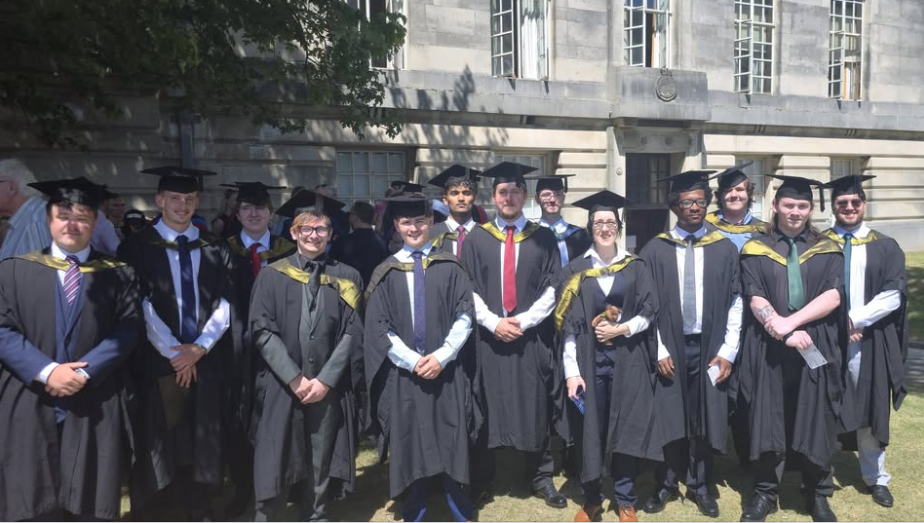
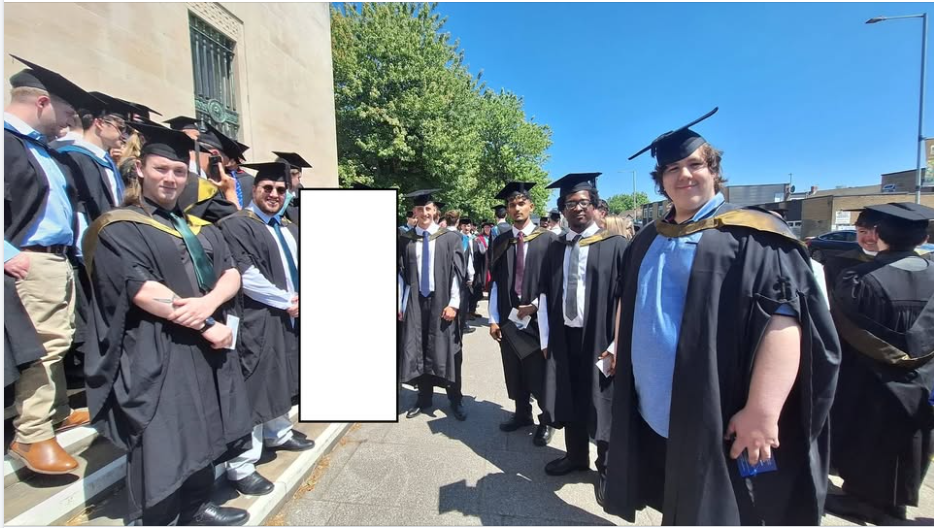
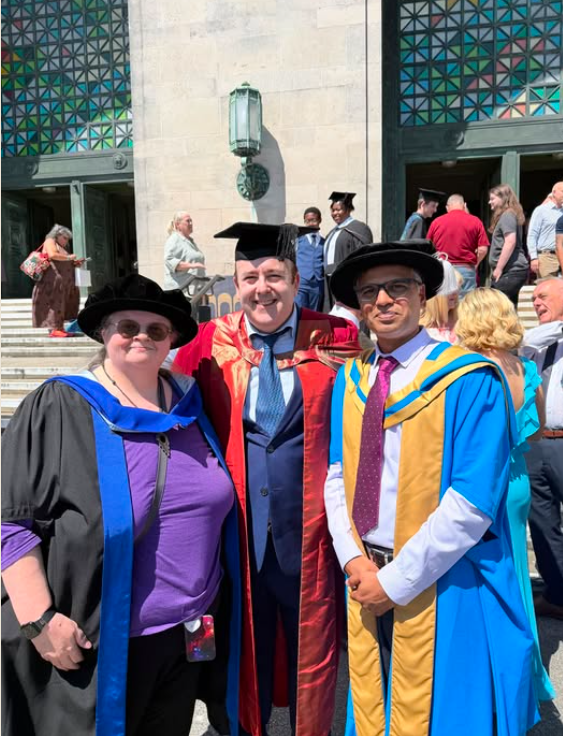
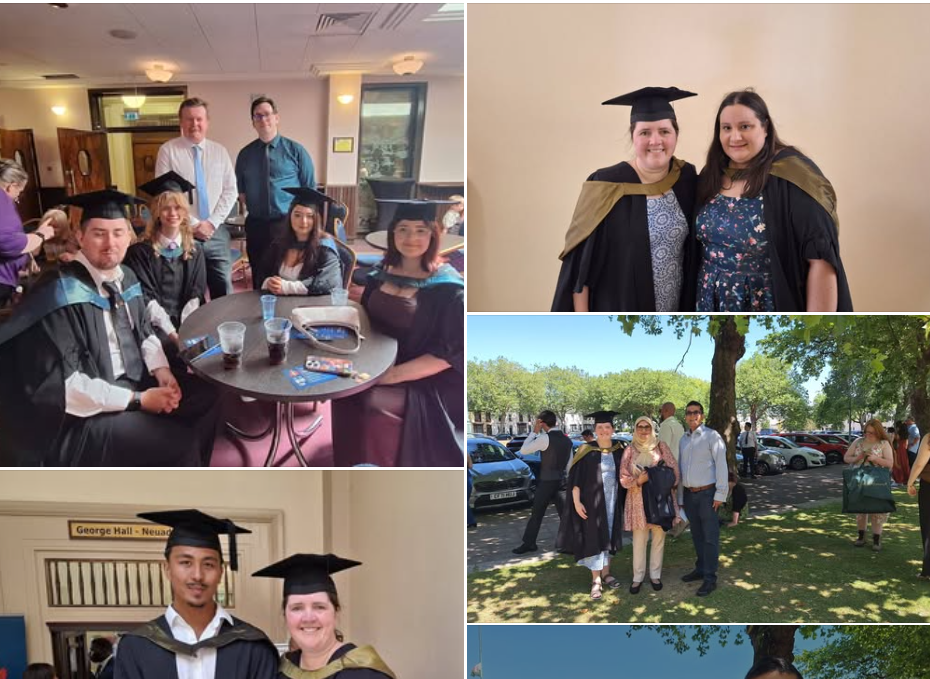
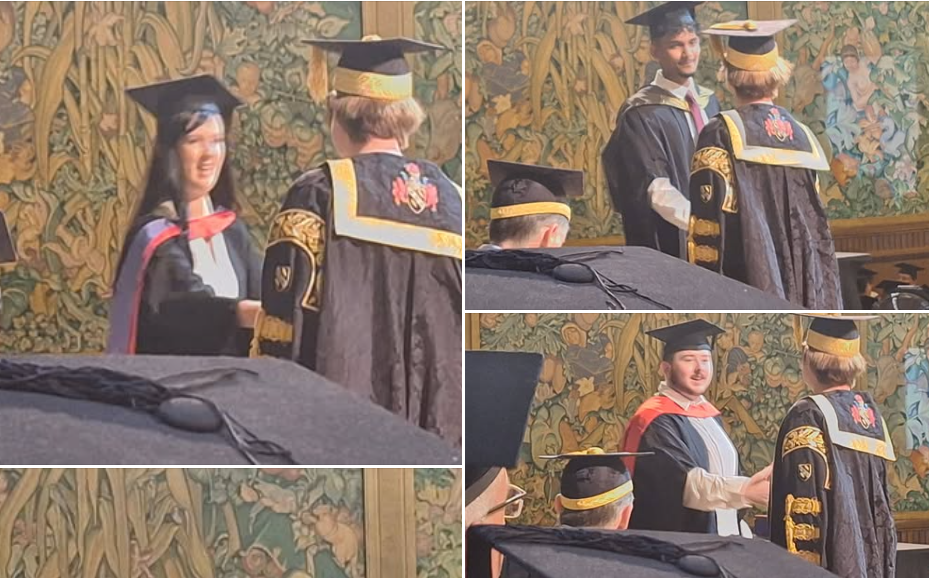
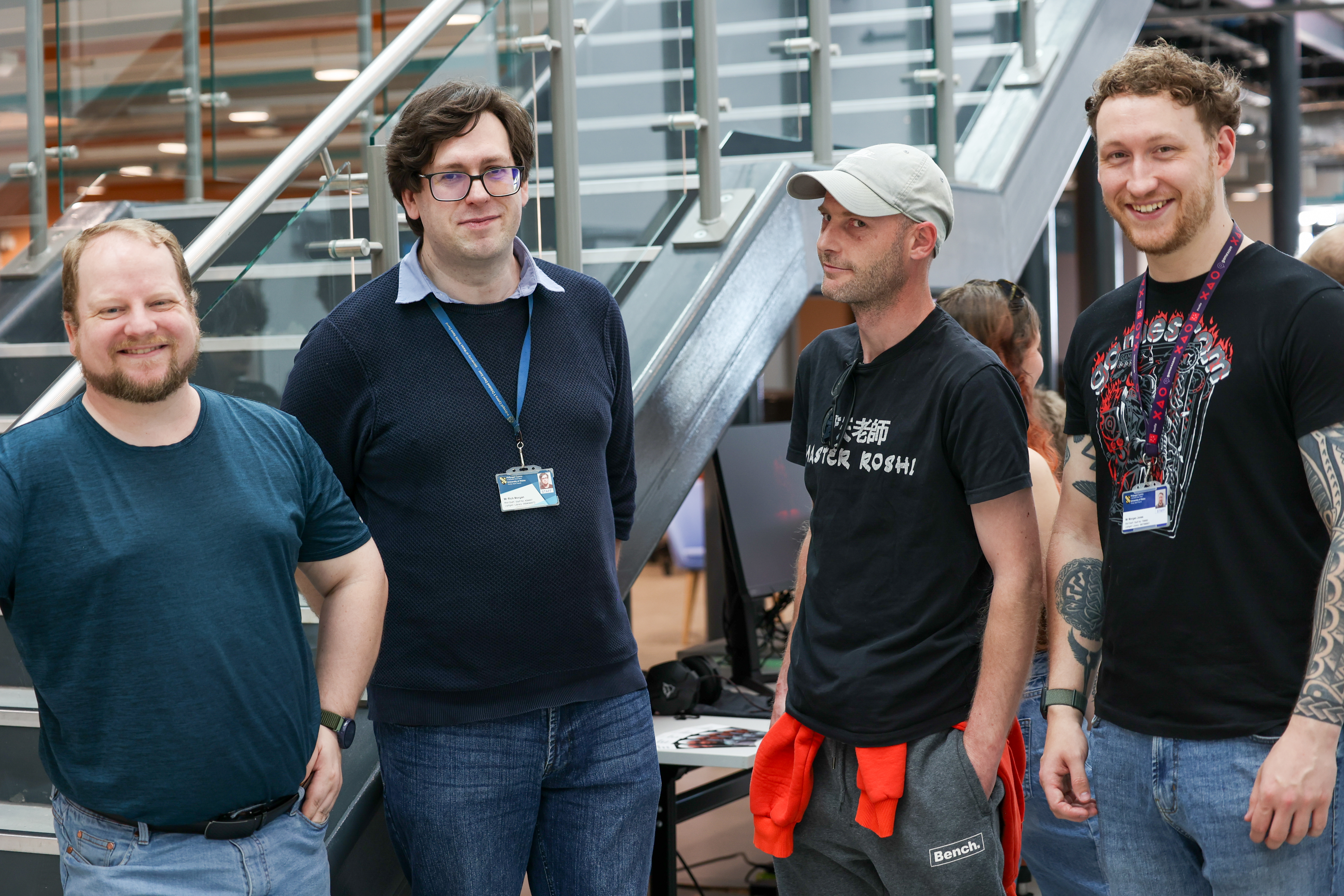
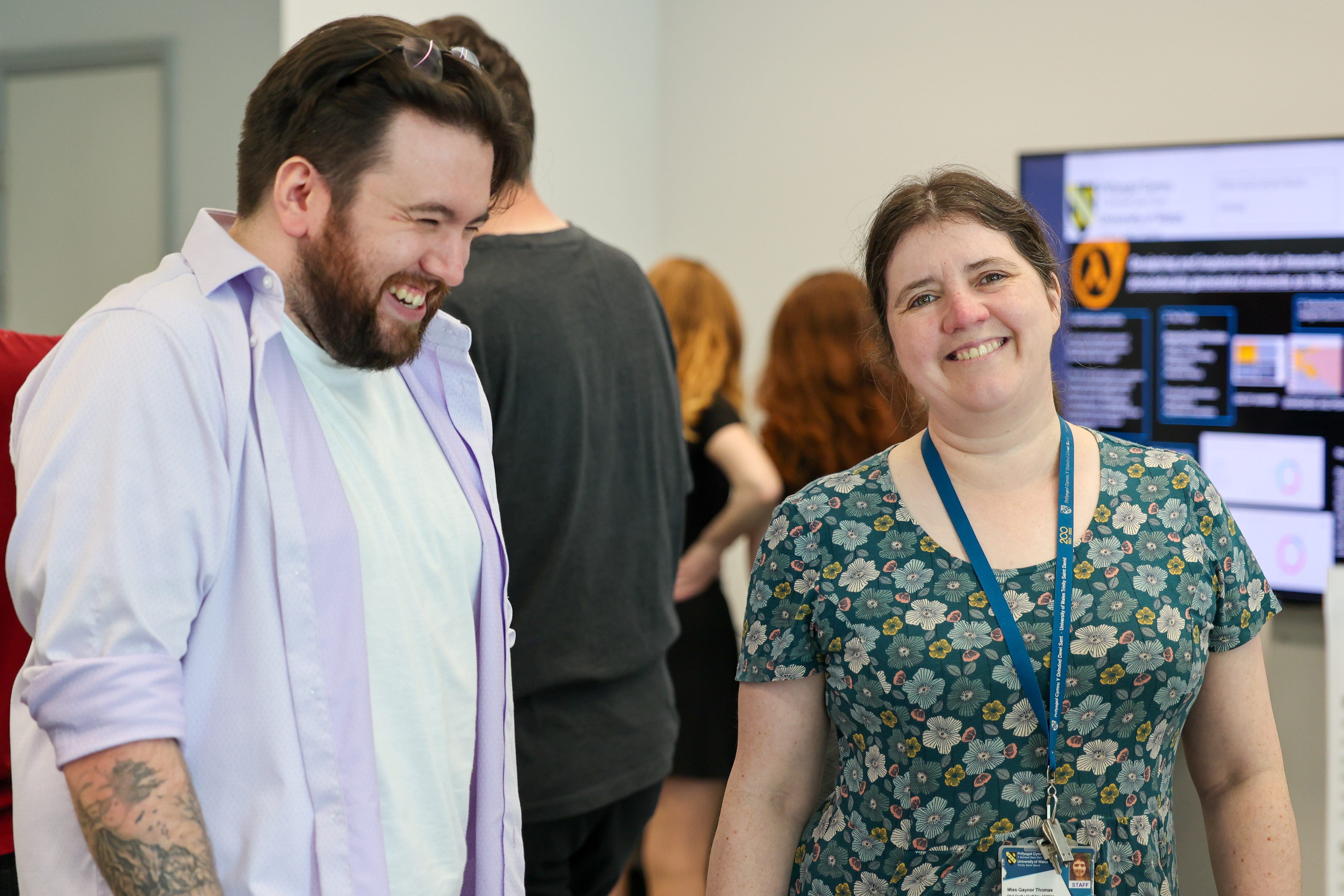
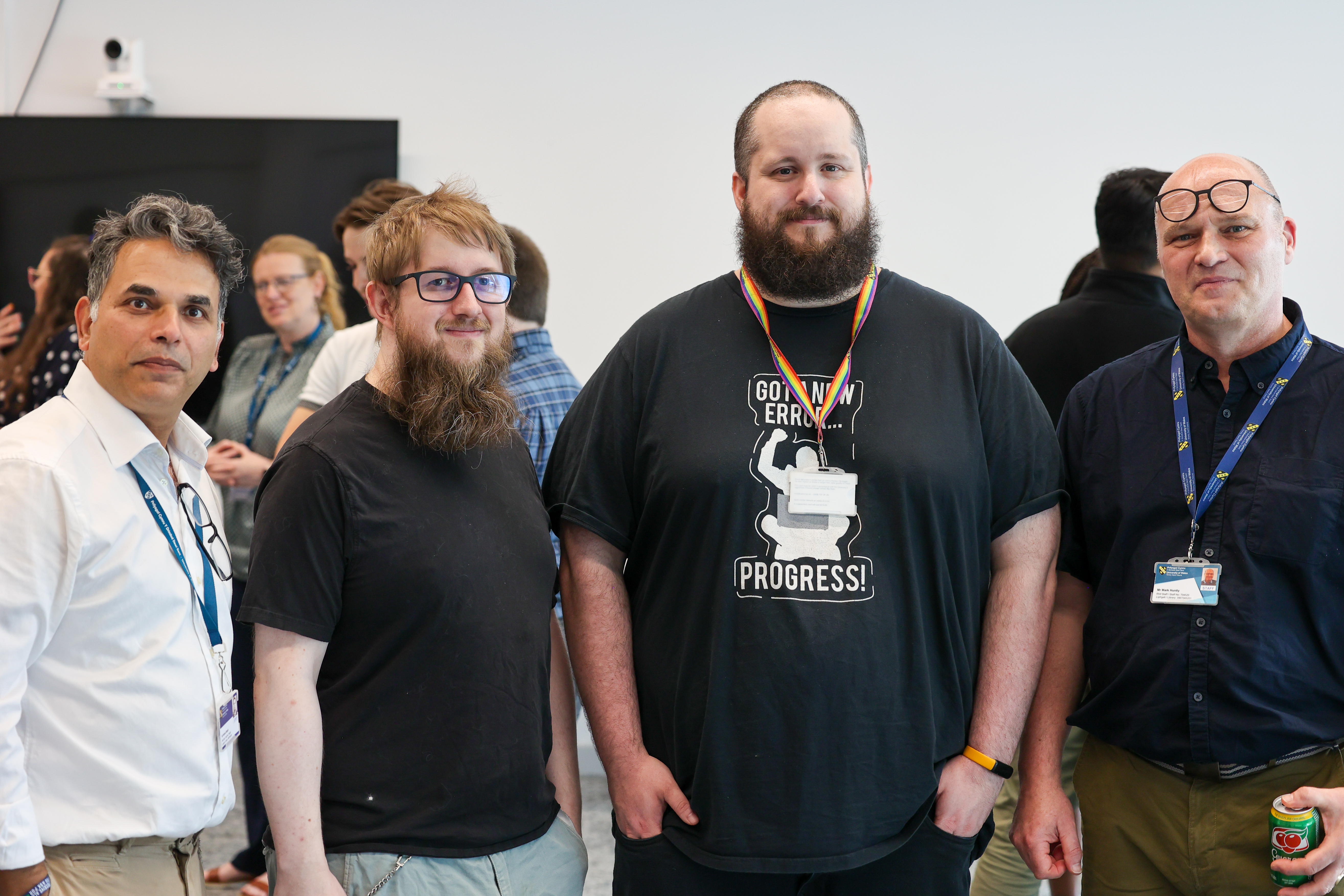
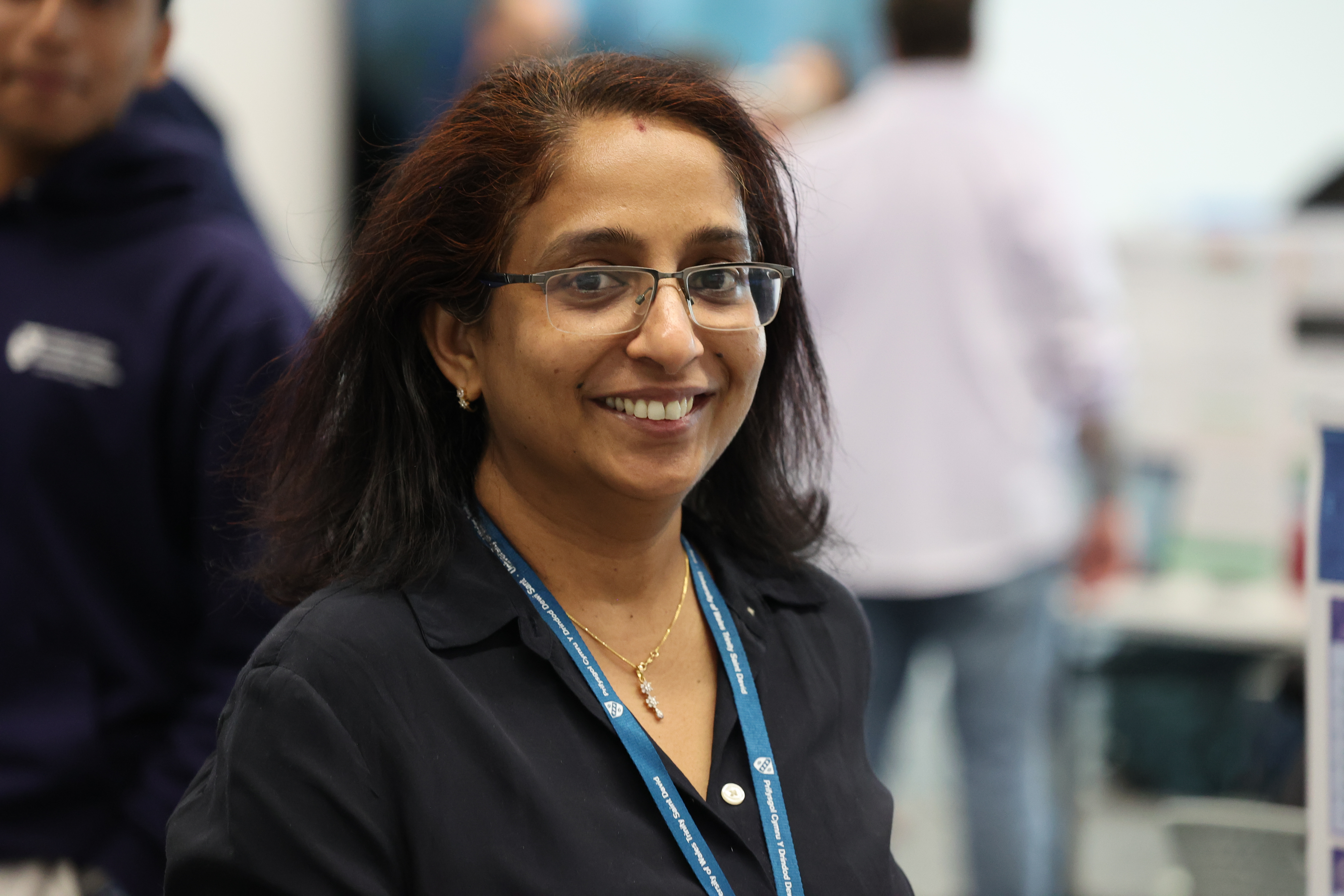
Congratulations to all our Graduating students 👏🎉🥳.. To view the Graduation 2026 images please click-here, a small sample is below:


To view the Graduation 2026 image album please 📸 click-here 👏🎉🥳
Congratulations to all our Graduating students 👏🎉🥳.. To view the Graduation 2026 images please click-here, a small sample is below:


To view the Graduation 2026 image album please 📸 click-here 👏🎉🥳

We are delighted to announce the ‘Group 1’ Winners of the Changemakers Innovation Competition 2026. This competition empowers our students to design and develop innovative, real-world solutions that create Positive Social Impact (PSI) while building essential technical, professional, and ethical skills.
The Competition is part of a ‘Year 2 Computing Innovation module’ delivered across all our BSc Computing programmes with two separate cohorts of students:
* Group 1 (Semester 2): February – May
* Group 2 (Semester 3): May – July
Students progress through key stages of project development, transforming ideas into practical solutions that could be launched as new business ventures or implemented within large organisations.
Each group competes for Certificates of Achievement & Prizes across three categories:
In addition, our industry partners from Fujitsu select the top three overall projects in each group, with generous prize funding provided by the Engineers and Scientists in Business Fellowship (ESBF): Final prize placements will be announced at a special award event in September 2026.
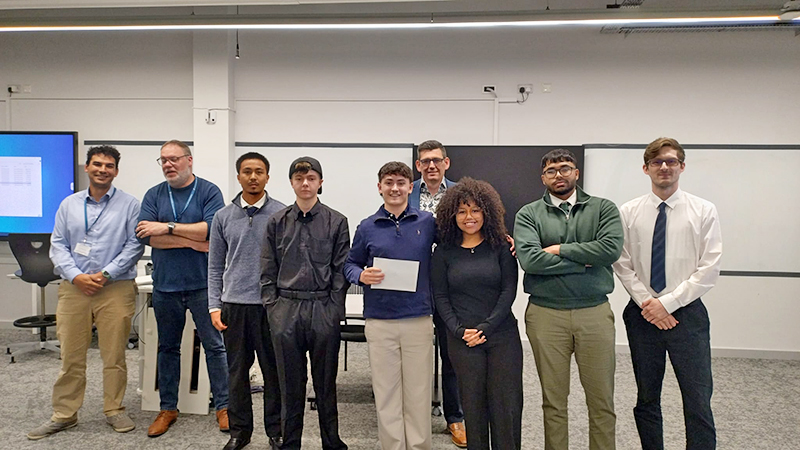
We are excited to announce the Group 1 category winners, selected by our industry partners from Fujitsu following an exceptionally high standard of submissions:
🌍 Social Impact Innovation Award: Daniel Leone
The Human Firewall: An Educational Cybersecurity-Themed Game. Recognised for an excellent, well-structured project using gamification to address a growing real-world cybersecurity challenge.💻 Development Innovation Award: Olivia Rose Collins
WearWise AI (Wear the Weather). Awarded for a highly polished, fully functional solution with clear concept validation and strong technical implementation.🔐 Networking & Cyber Security Innovation Award: Tonio George
CyberGuard Pro: Network Security Tool. Recognised for a robust network-level solution that identifies vulnerabilities directly and provides clear, evidence-based risk analysis.🎉 Congratulations to all three winners – an excellent achievement!
We are also pleased to announce the ShipMax Innovation Award, selected by Phil Rees (CEO, ShipMax Ltd) which goes:
🏅 Tonio George – CyberGuard Pro
This award includes:
The final prize rankings (1st, 2nd, and 3rd place) for Group 1 will be revealed at our upcoming:
📍 Presentation & Movie Night
📅 Thursday 24th September 2026
📌 Dylan Thomas Centre, Swansea
All students will be invited to attend and celebrate the fantastic work achieved across the module.
All winning students will receive:
The judging panel highlighted the exceptionally high quality of submissions, noting how challenging it was to select just three winners. Special recognition goes to the following students, whose work was strongly considered for the top 3 Winning places:
👏 Well done to all students for your creativity, innovation, and hard work.
We extend our sincere thanks to our industry partners for their invaluable on-going support:
Your contributions are greatly appreciated and continue to enrich the student experience by bringing up-to-date industry insights into the University for our stuents to benefit from which greatly enhances their skills, knowledge and employability. Diolch yn fawr iawn.
While Group 1 has now completed the module, Group 2 students are currently progressing through their projects, we wish them the best of luck and look forward to celebrating their achievements soon.
Da iawn chi – Well done everyone!
Diolch yn fawr iawn – Thank you to all our partners and students.
We look forward to celebrating together in September.
👏🎉
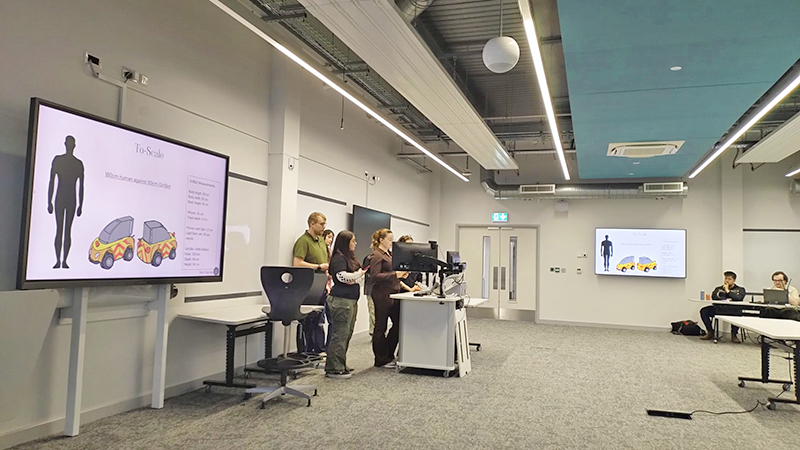
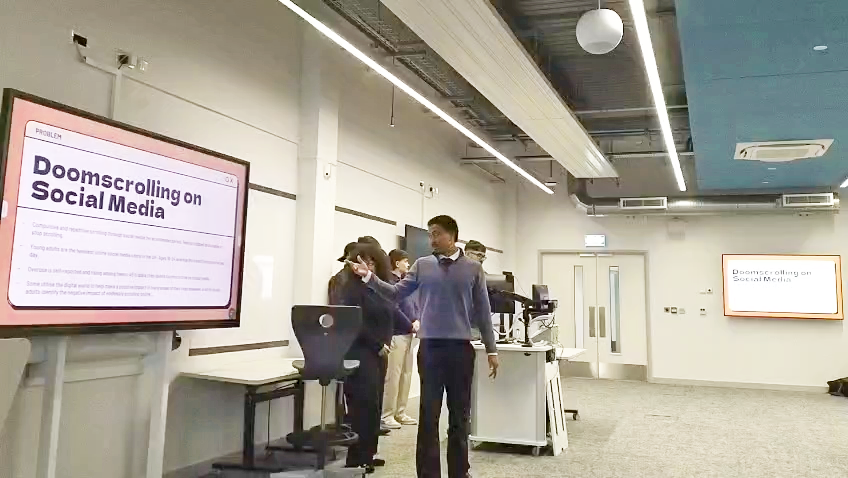
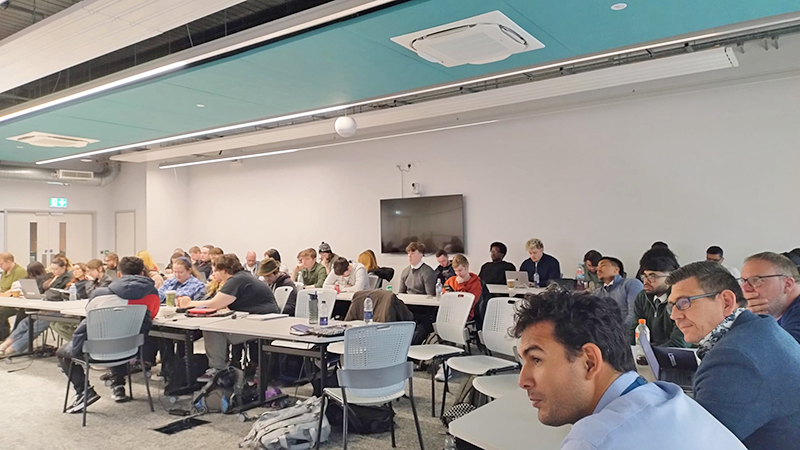
What an inspiring day at the UWTSD Emerging Trends Hackathon 2026, delivered by our Final Year Computing students from the School of Applied Computing. 💻⚙️
Throughout the day, students presented innovative ideas addressing real-life challenges using emerging trends and technologies. The topics explored showed creativity, social awareness, technical thinking, and a strong understanding of how computing can make a positive impact. 💡🚀🌍
This year, our students addressed a wide range of important issues, including:
🎮 Safeguarding children in online video games
♿ Accessibility mapping and navigation for disabled travel
🤖 The Grit Bot – An automatic pavement gritting solution
📚 Supporting students below their expected reading and literacy level
💊 SIDEKICK – A smart medication management application
📶 Public WiFi trust and security challenges
🚗 UWTSD ShareRide App
📱 Doomscrolling and Social Media Well-being
🏠 Assistive robots for home environments
A huge well done to all the teams for their hard work, creativity, teamwork, and professional presentations. It was fantastic to see students identify meaningful problems and thoughtful technology-driven solutions. 👏
Thank you to Elliott Atkins, Matt Davies, Koi Merebark for judging and making the Hackathon a successful and engaging event. 🙏👍
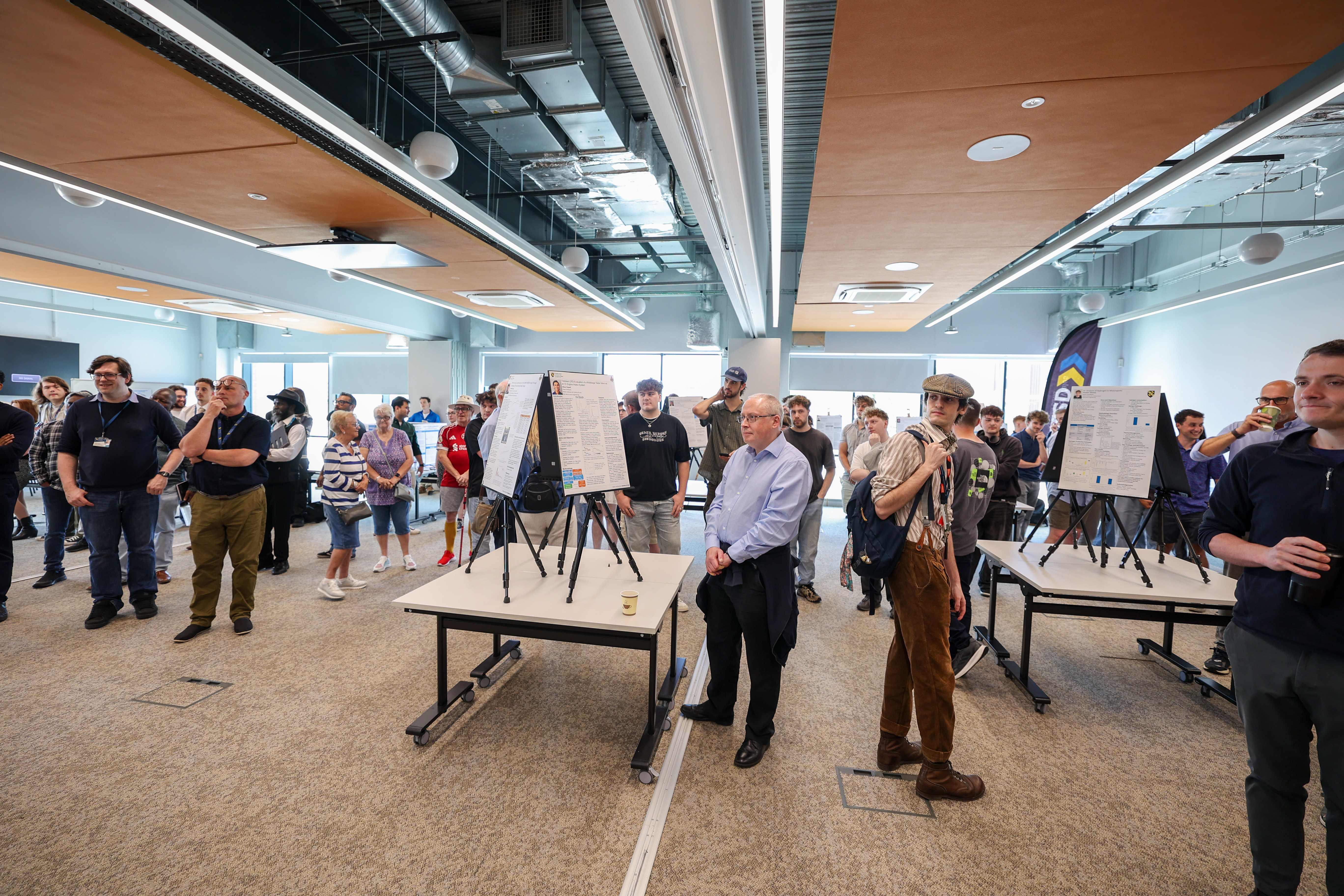
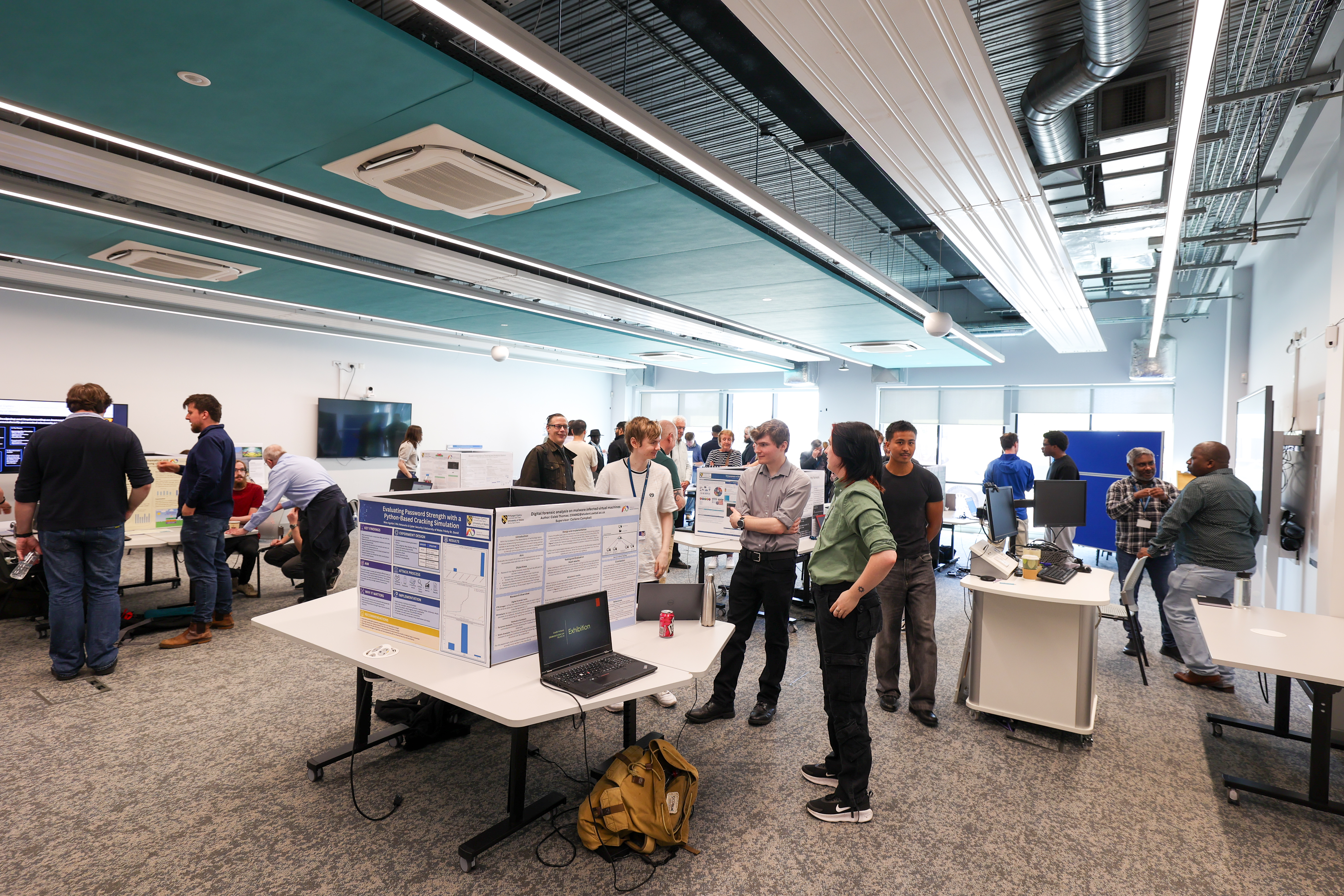
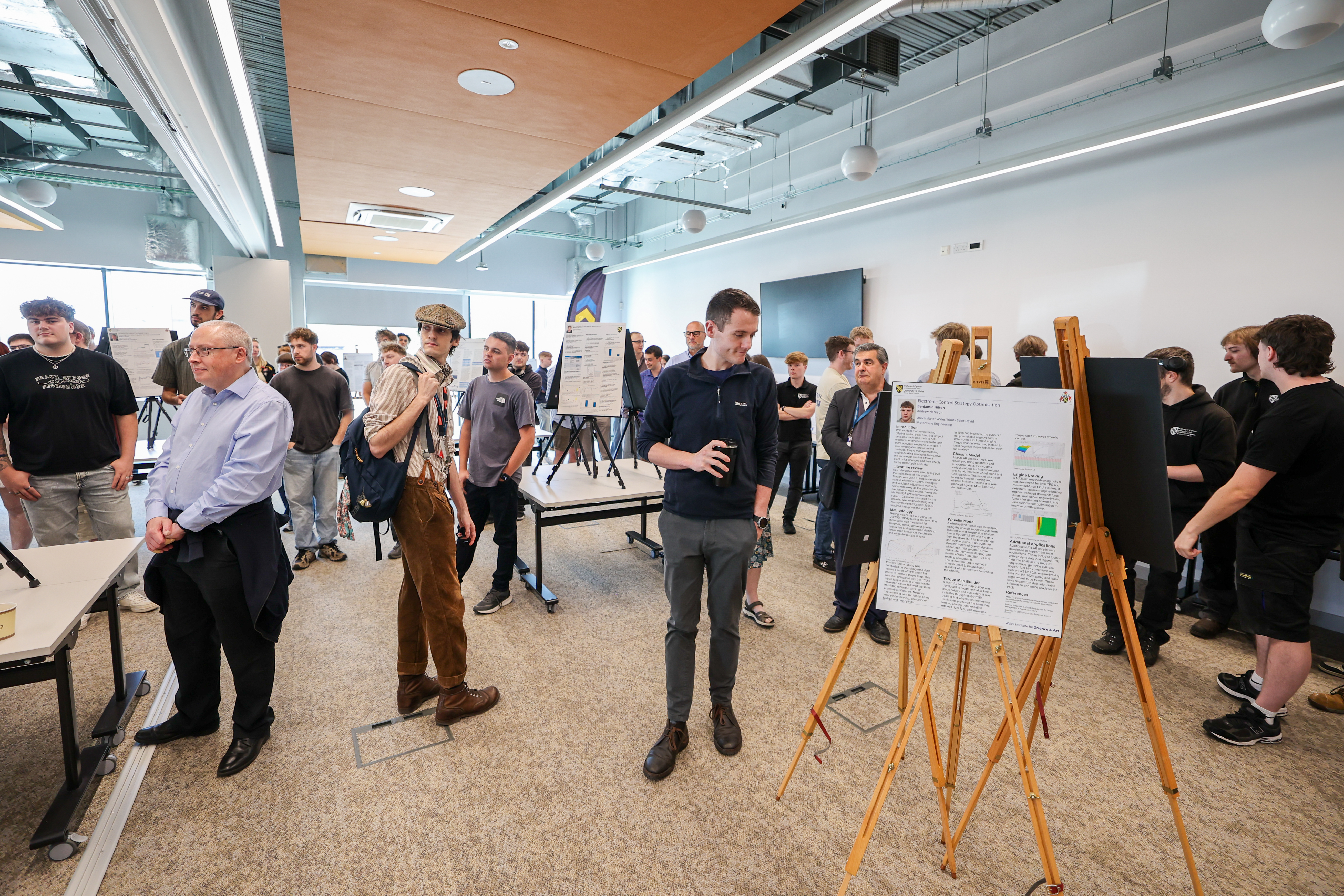
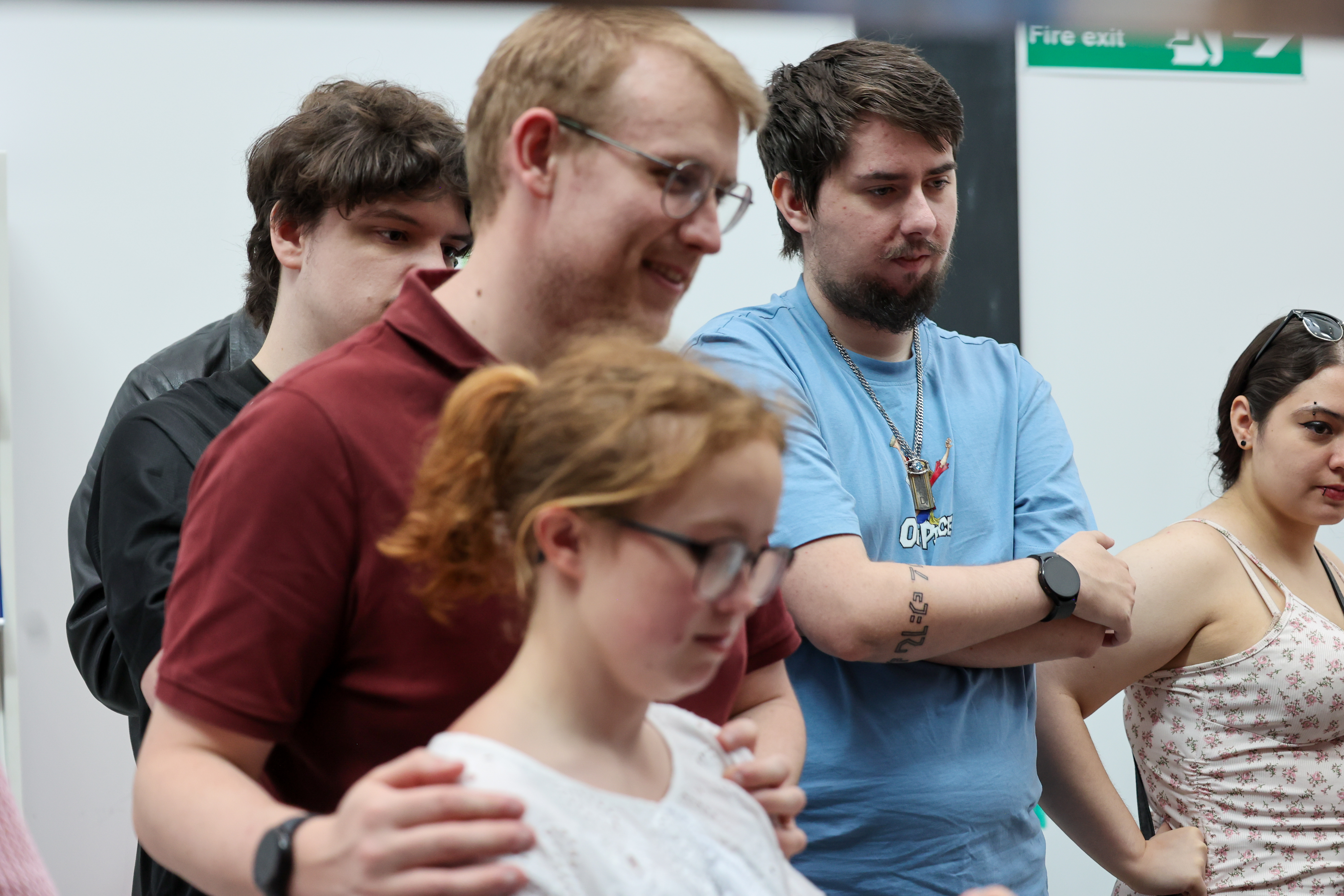
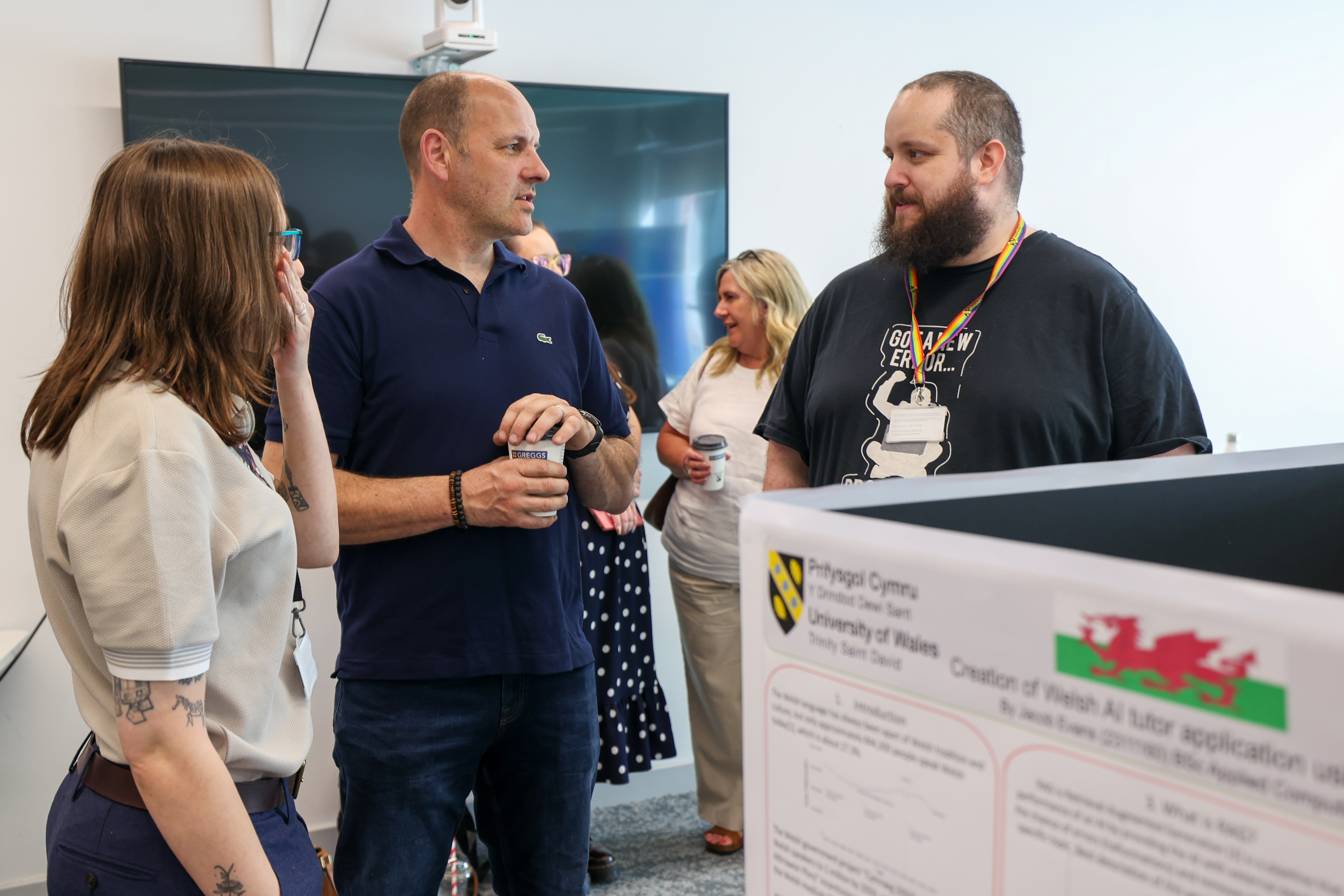
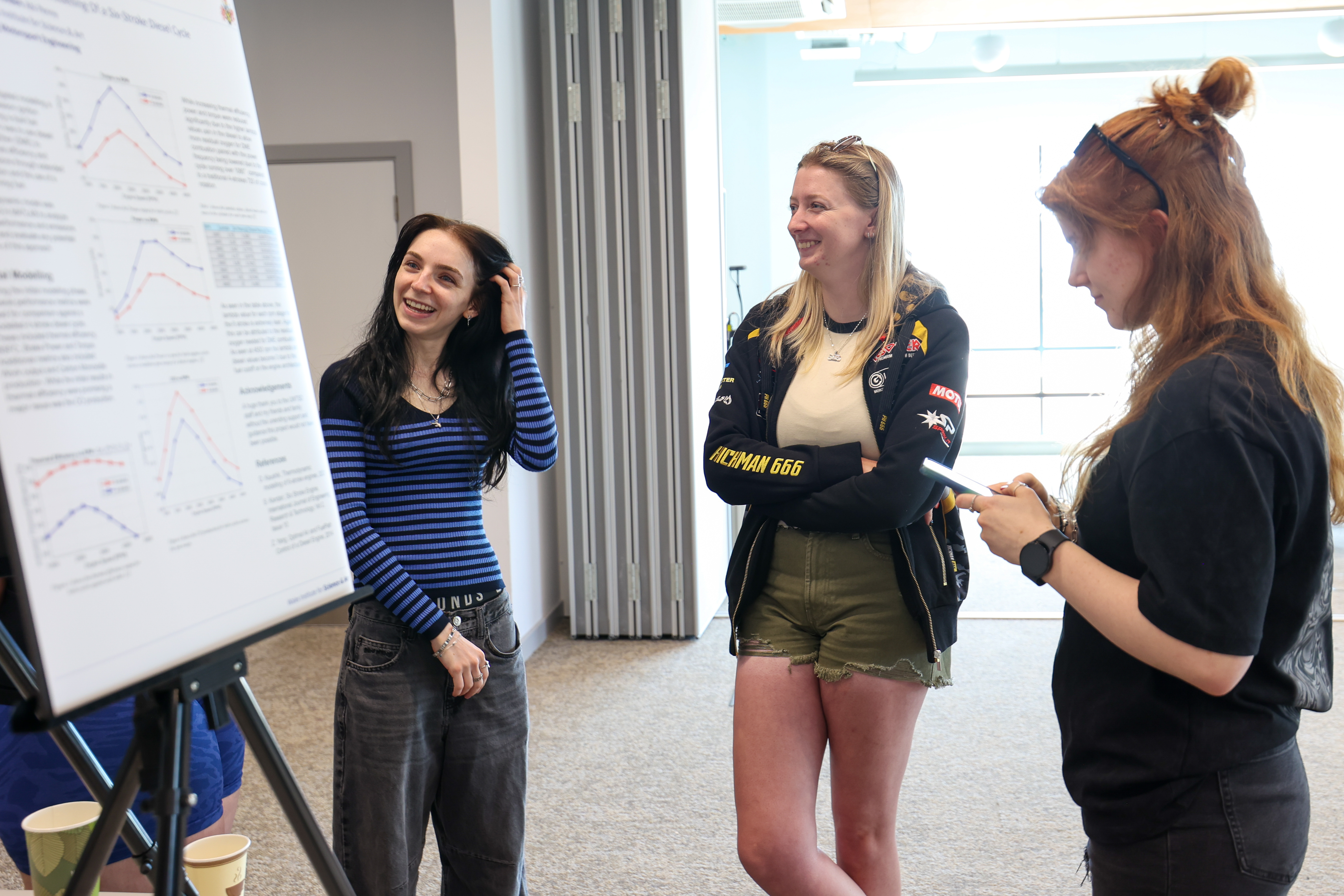
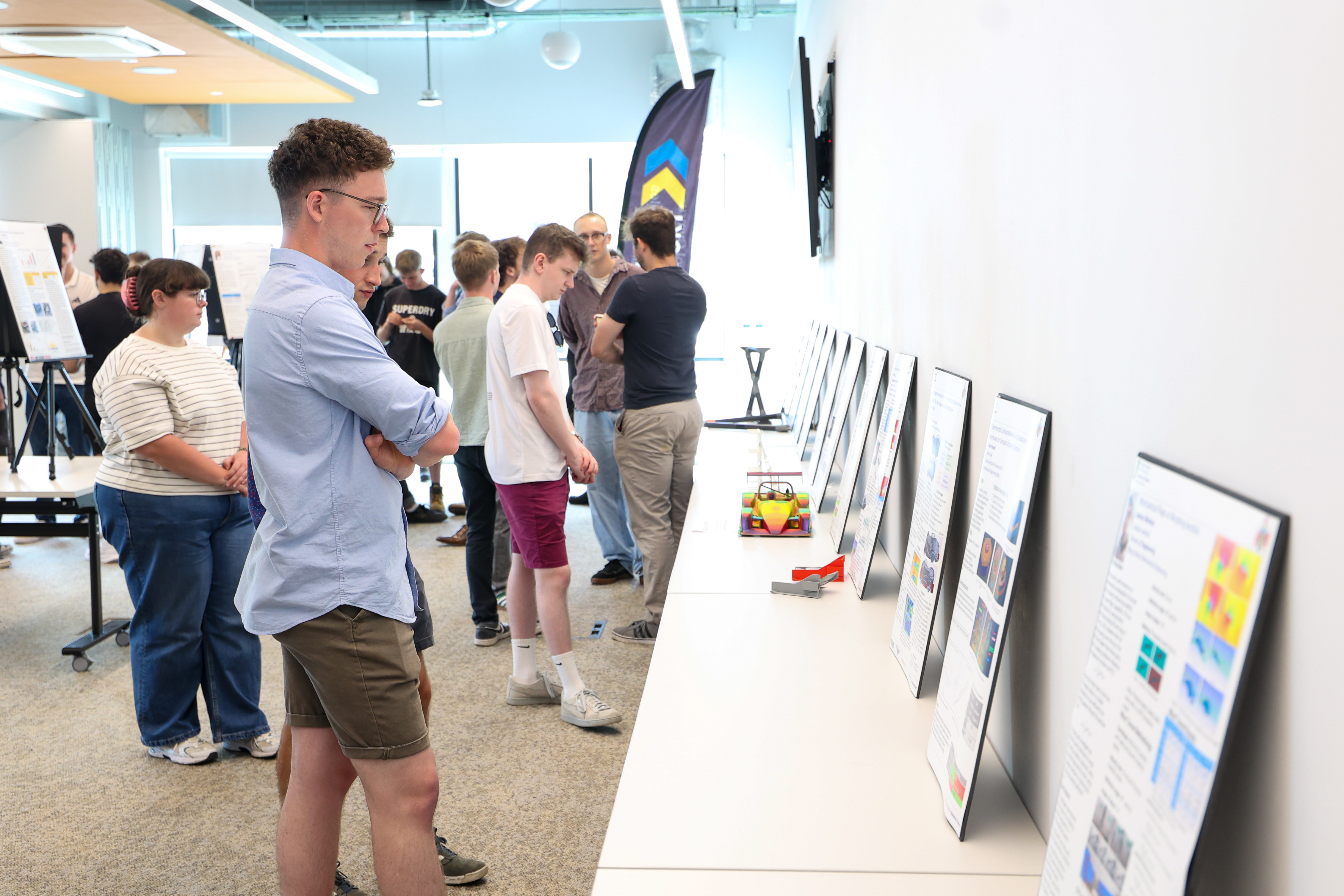
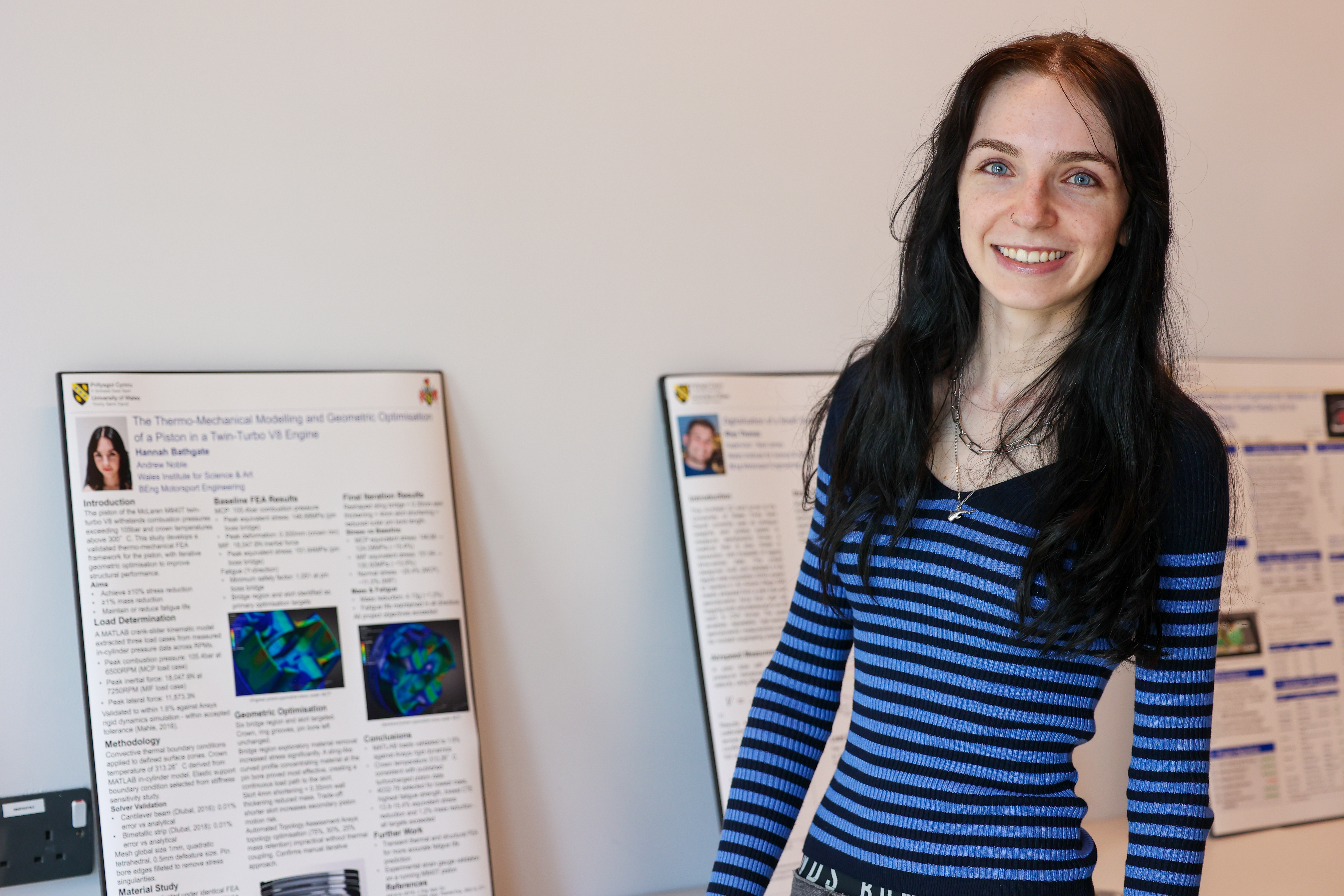
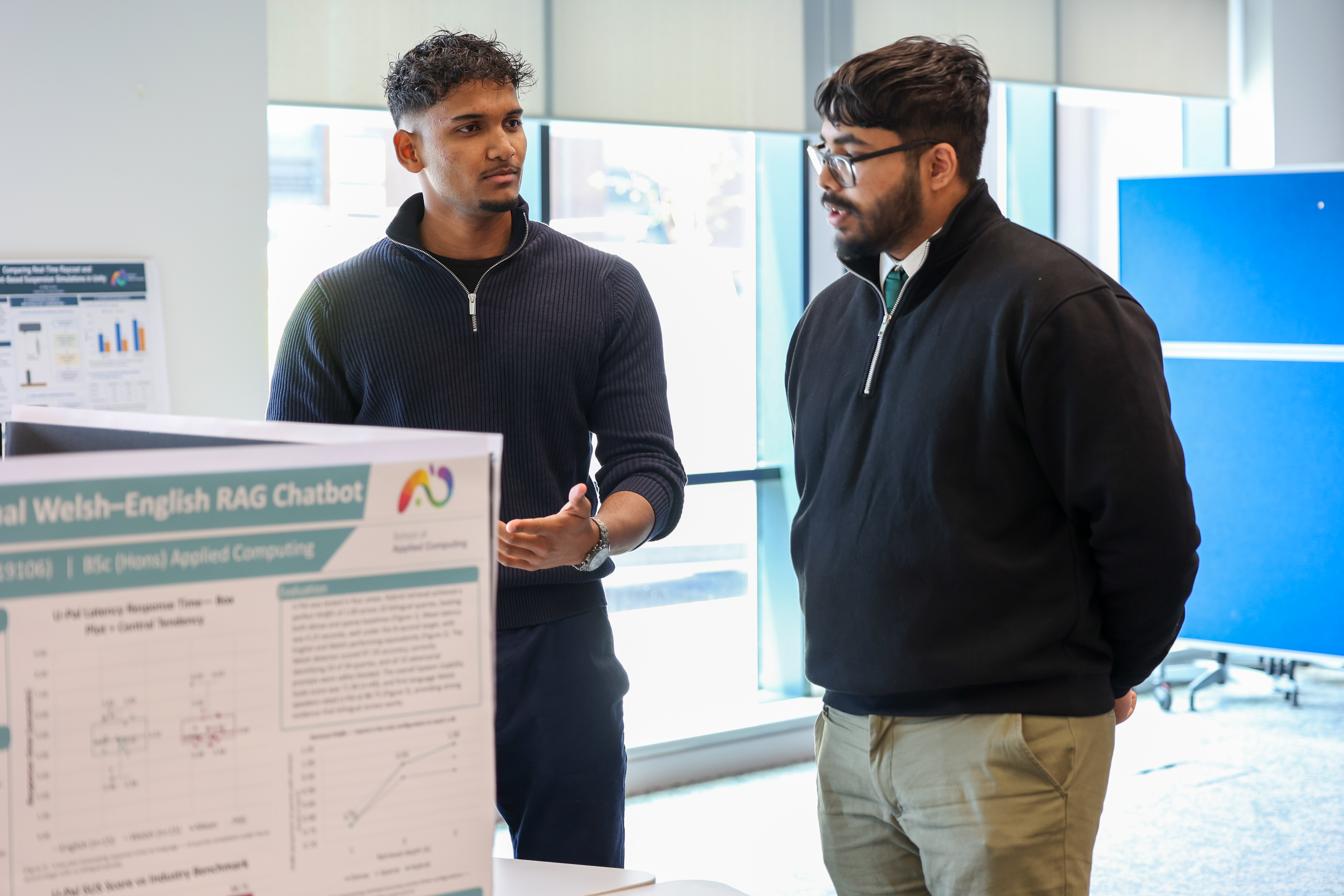
The University’s Annual STEM Degree Exhibition at UWTSD’s iconic IQ building on the SA1 waterfront campus was a great success bringing together the work of the Computing, Software Engineering, Networking & Cybersecurity, Games Design, Games Development, Animation, Electronics and Electrical Engineering students as well as the work of the Manufacturing and Engineering students in a fantastic display of project posters and real-life demonstrations. 🤩


Over sixty students displayed their project work including interactive virtual reality, show reels and interactive sound applications as well as web applications, networking & cybersecurity technology and Machine Learning technology. There was a great buzz around the building as students proudly demonstrated their brilliant final year projects to visitors from industry. ⚙️💻🦾👨🏻💻


Congratulations and well done to all our final year students for their hard work and for displaying their projects at the exhibition – Llongyfarchiadau a da iawn i chi gyd 🎉 👏
And finally: Well done to all our dedicated staff who teach and support our students to flourish and actualise their potential. 👏🙏


Q. Final Year Student: Sohaan Sureshkumar
Q. Course: BSc Hons Computing (Software Engineering)
Q. Project title: Virality-to-Profit Dashboard: A Business Intelligence Tool for Organic E-Commerce Sellers
Q. Motivation for choosing the project: I run an organic e-commerce Brand called WaxAwayCo alongside my studies, selling products through Shopify with all marketing done organically on Instagram no paid ads, just content creation. I kept hitting the same wall where I could see my Instagram views in one app and my Shopify profit in another, but there was no way to connect them.
Paid advertisers have metrics like CPA (Cost Per Acquisition) and ROAS (Return on Ad Spend) built into their platforms. Organic sellers have nothing. After a viral post, I’d spend hours on spreadsheets trying to answer: “How much profit did that video actually make me?”. My literature review with over 50 academic sources confirmed this wasn’t just my problem it’s a genuine gap across the entire organic social commerce industry. I decided to build the tool I wished existed.
Q. Overview of the practical implementation:
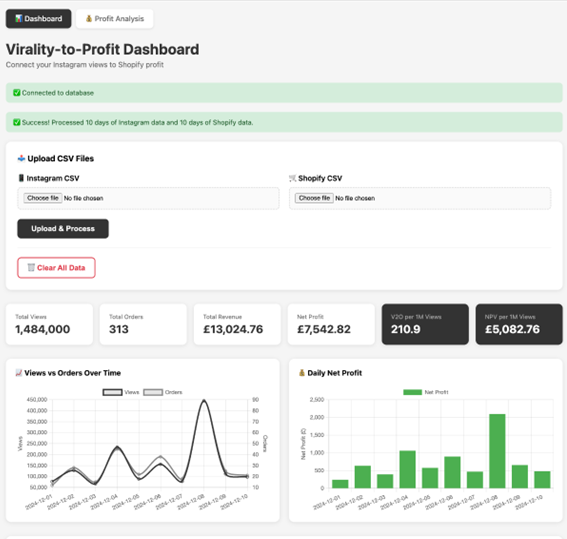
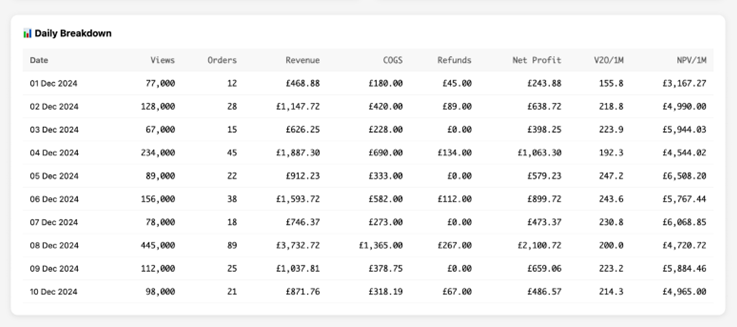
The dashboard is a web application built with PHP 8.3, MySQL, and Chart.js. Users upload two CSV files: Instagram Insights and Shopify Orders and the system processes them through an ETL pipeline:
The core innovation is two new metrics I created specifically for organic e-commerce:
The main dashboard is where users upload their Instagram Insights and Shopify Orders CSV files. Once processed, the page displays six KPI cards summarising total views, orders, revenue, net profit, and the two novel metrics, V2O and NPV. Below the cards, a dual-axis line chart plots views against orders over time, revealing how content performance correlates with sales. A daily profit bar chart uses conditional colouring to show profitable days in green and loss-making days in red.
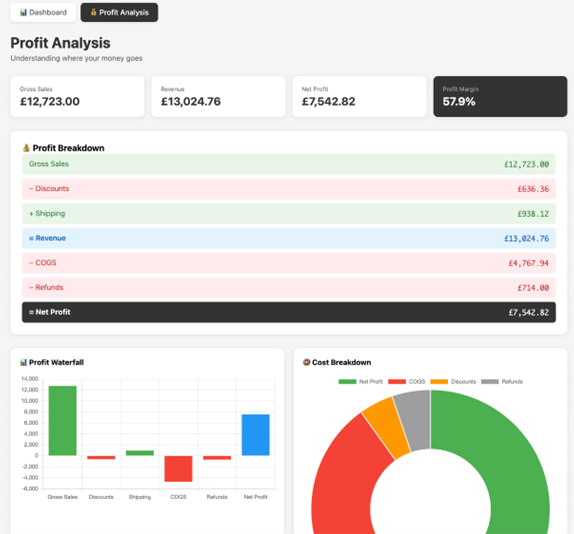
This page provides a deeper breakdown of profitability. The waterfall chart visualises how gross sales reduce to net profit step-by-step, showing exactly how much is lost to cost of goods sold, shipping, payment fees, and refunds. A doughnut chart displays cost proportions at a glance.

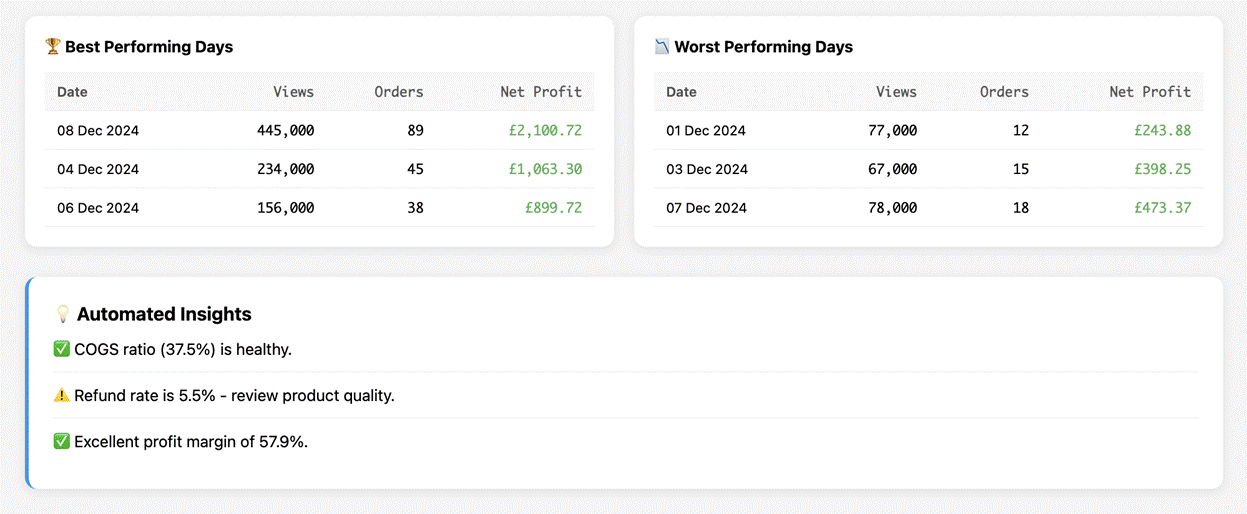
The best and worst performing days are ranked by net profit, the day with the highest net profit appears as the best performer, while the day with the lowest (or most negative) net profit is flagged as the worst. This helps sellers quickly identify what’s working and what isn’t.
The automated insights analyse the actual data and generate contextual recommendations. If cost of goods sold exceeds 50% of revenue, it suggests reviewing supplier pricing. If the refund rate exceeds 5%, it flags a potential product quality issue. If shipping costs are disproportionately high, it recommends exploring alternative fulfilment options. These thresholds are based on standard e-commerce benchmarks, giving sellers actionable guidance without needing to interpret the numbers themselves.
Q. Overview of the outcome/conclusion:
The system was tested with 28 test cases achieving 100% pass rate, with calculations verified against manual spreadsheet checks. User evaluation with five organic e-commerce sellers from my target audience produced strong results:
User feedback was particularly encouraging. One participant called V2O:
“Genius, I can finally see how many views I need to generate sales.”
Another said the waterfall chart “makes accounting simple to understand.”
The project demonstrates that standardised efficiency metrics for organic social commerce equivalent to what paid advertisers have had for years are both achievable and genuinely valued by sellers.
Q. Advice for students who are interested in completing a University Degree & Final Year project?
~
Our students were recently joined by Phil Rees, CEO of SHIPMAX Ltd, for an ‘Industry Guest Lecture’ that focused on AI, e-commerce, innovation and what really matters in the world of industry.
| Phil Rees is the founder and CEO of SHIPMAX Ltd, a Swansea-based, AI‑native logistics consultancy, helping e‑commerce brands expand internationally while reducing the cost, complexity, and risk of going global. |
Framed around the idea of “building innovation that ships”, Phil began by reminding students that the process they have just been through in their University ‘Innovation & Project Management’ module, included important steps: ideation, design, build, and ship, is not an academic exercise. It’s the same arc used by real Tech & SaaS companies and digital consultancies.
Phil’s session challenged students to think about the qualities he & employers looks for. The takeaway was simple but powerful:
The frameworks you’re using now are not practice for the job: They are the job.
What actually makes an innovation project stand out? At the heart of the lecture were four pillars Phil uses when judging innovation projects, the same criteria used by founders, investors, and employers:
A real-world pivot from SHIPMAX:
One of the most valuable moments came when Phil shared a SHIPMAX ‘war story’, a SaaS idea he was close to funding, before pulling the plug.
As AI‑driven development tools rapidly lowered the cost of building software, the competitive ‘moat’ or distance has disappeared. Rather than pushing ahead with a product that could be copied in a weekend, Phil chose not to build that time, quickly pivoting resources and expertise into new projects that would yield sustainable and strategic growth for his company.
While staying at the cutting edge and adopting the latest tech developments has greatly benefited the expansion of Phil’s company, his experience and expertise creates a self-trust that brings an agility and discernment to focus his time and energy where it matters most. = A recipe for Success.
Phil also highlighted patterns he sees repeatedly in student and early‑stage projects:
His advice? Treat the narrative as part of the product. Innovation isn’t just what you built, it’s how you explain why you built it.
AI, data, and the new baseline for graduates:
Drawing on insights from a recent AI conference at MIT, Phil warned against chasing models and tools without first getting the foundations right.
Clean, well‑structured data, he argued, is becoming a genuine competitive advantage. At SHIPMAX, AI is already used to compress hours of research into minutes, not by magic, but through disciplined data handling and clear workflows.
For students entering the tech industry in 2026, the message was clear:
Phil closed with a challenge to students shortlisted for the Best Innovation Project 2026, sponsored by SHIPMAX:
“If your project lands on my desk, I’ll read every word. Make it worth my reading time.”
Phil’s talk was open and authentic, confidence‑building, less about perfection, more about honesty, refreshingly aligned with how modern digital work really gets done and very valuable to our students.
The Academic team at UWTSD’s School of Applied Computing would like to thank Phil for taking the time to speak with our students and for sharing his valuable experience, industry knowledge and insights 👏. Diolch yn fawr iawn 😊. Thank you Phil, we look forward to future collaborations 👍
Today’s blog looks back at two recent industry talks organised by our colleague Professor (Associate) Carlene Campbell, who organised two talks to allow our students to gain a deeper understanding of the contemporary challenges in Cybersecurity, data governance, and regulatory compliance. Exploring how modern cyberattacks operate and how organisations can prevent and respond to them.
Both sessions emphasised practical examples, case studies, and interactive discussion to help our students better understand the real nature of the topics in industry and their future professional responsibilities.
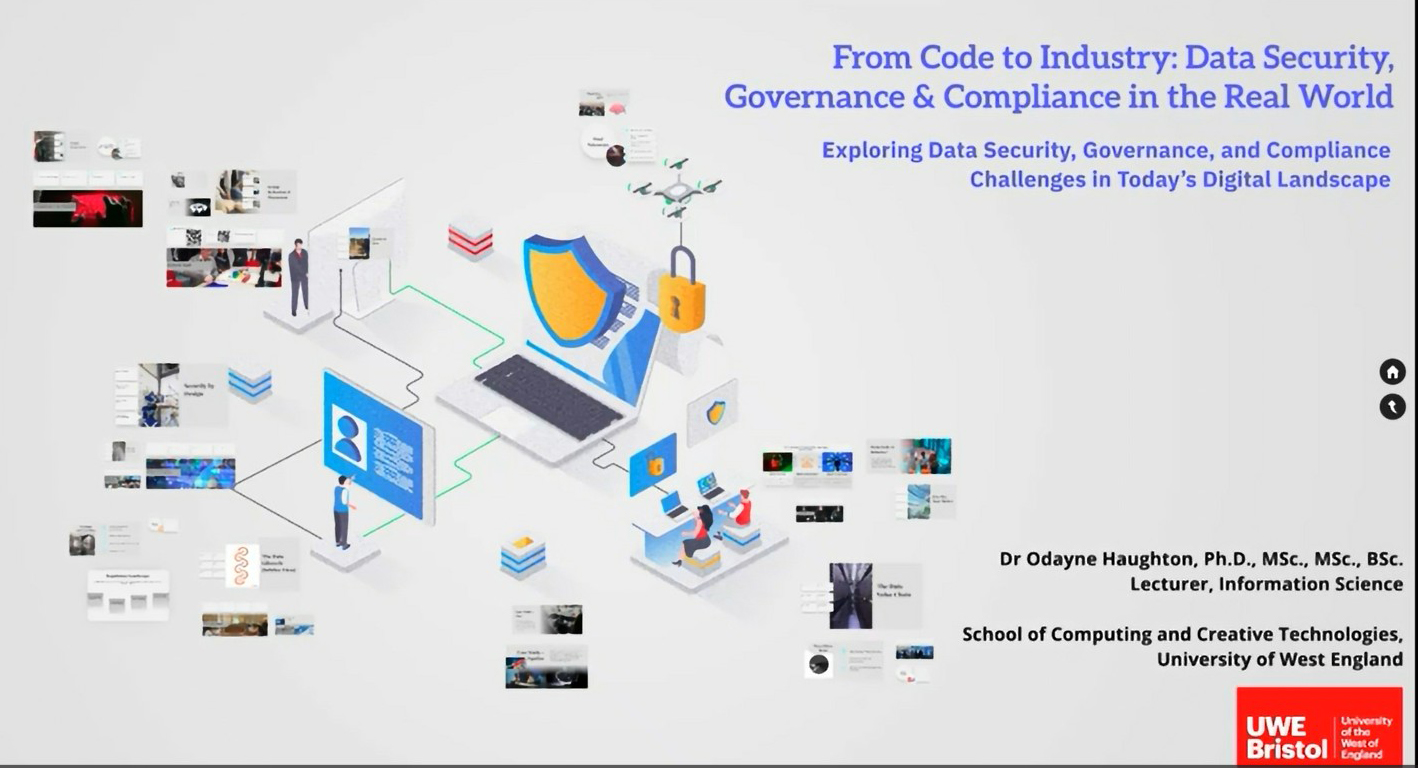
Delivered by Dr Odayne Haughton, Lecturer in Information Science at the School of Computing & Creative Technologies (University of West England)
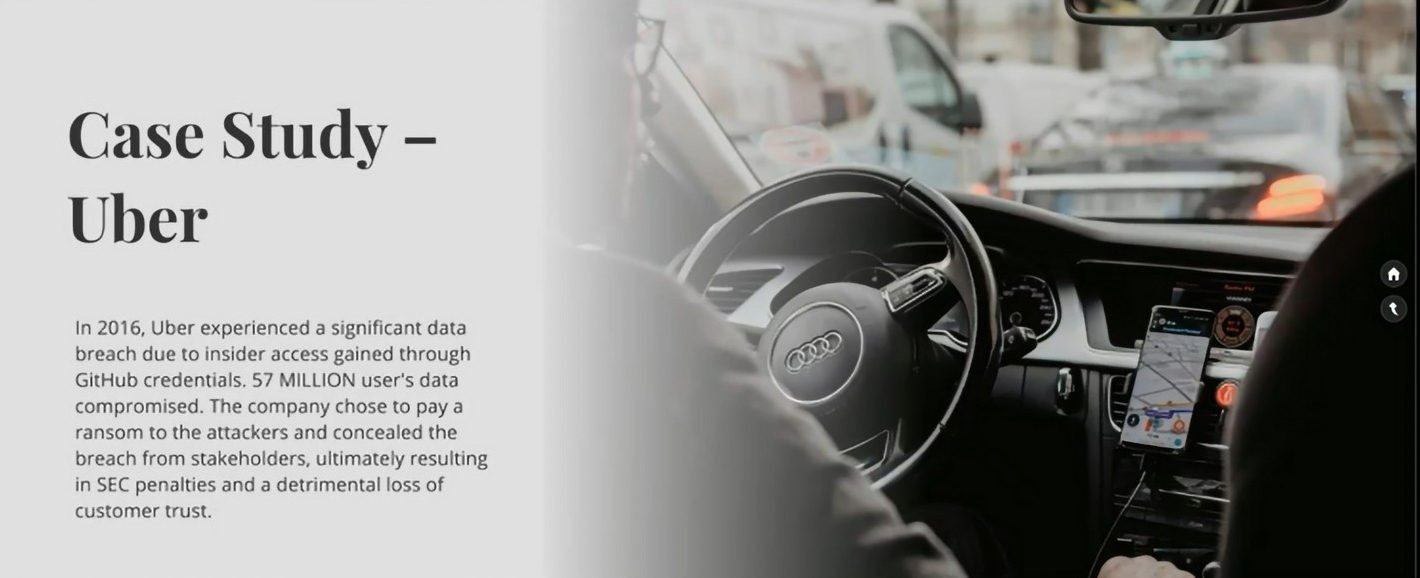
This talk introduced students to the practical realities of managing data securely and responsibly within modern organisations. Rather than viewing security incidents solely as technical failures, the session highlighted how many major data breaches are rooted in weak governance structures, unclear accountability, and poor compliance practices.


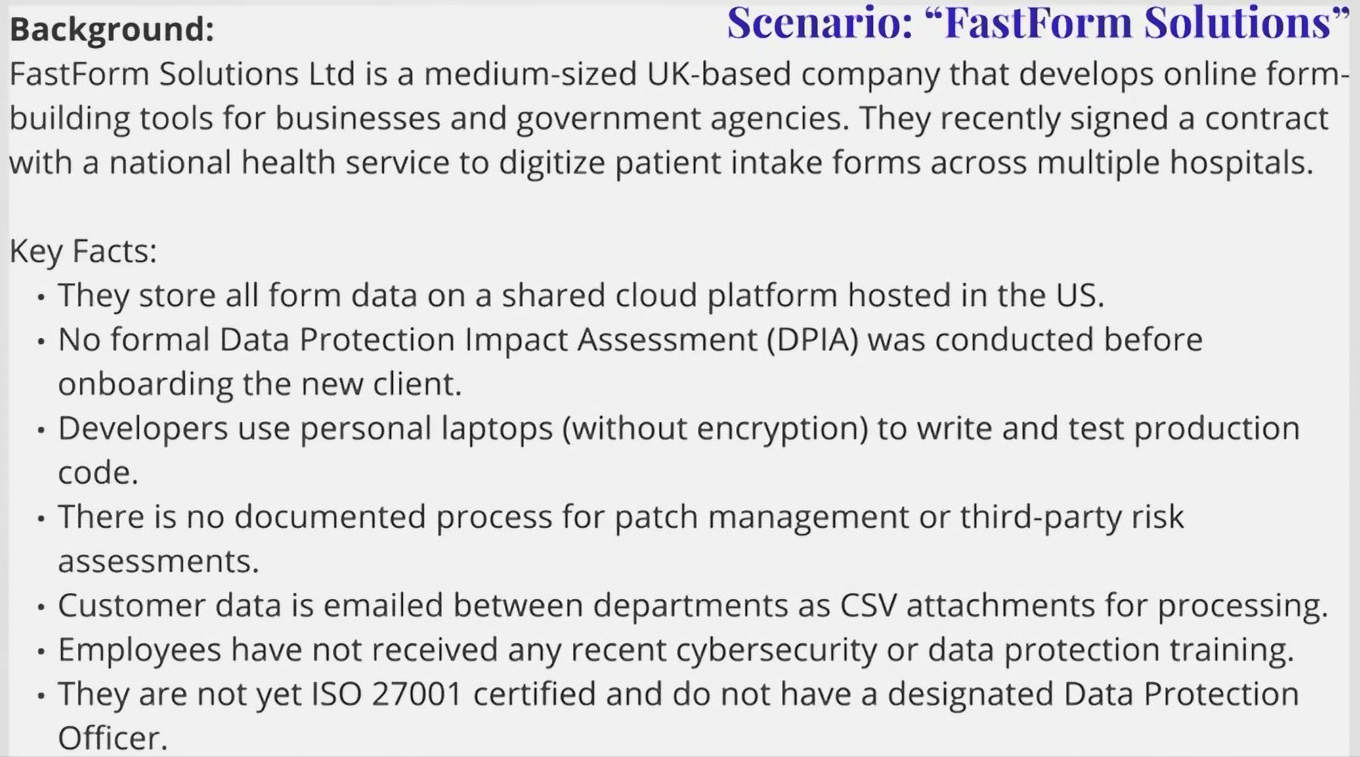
A group‑based scenario formed a central part of the session. Students worked through a simulated cloud‑services breach, taking on roles such as Data Protection Officer, Security Lead, Developer, and Product Owner. The exercise required them to identify governance failures, compliance violations, and immediate remediation steps, reinforcing the need for cross‑functional collaboration.
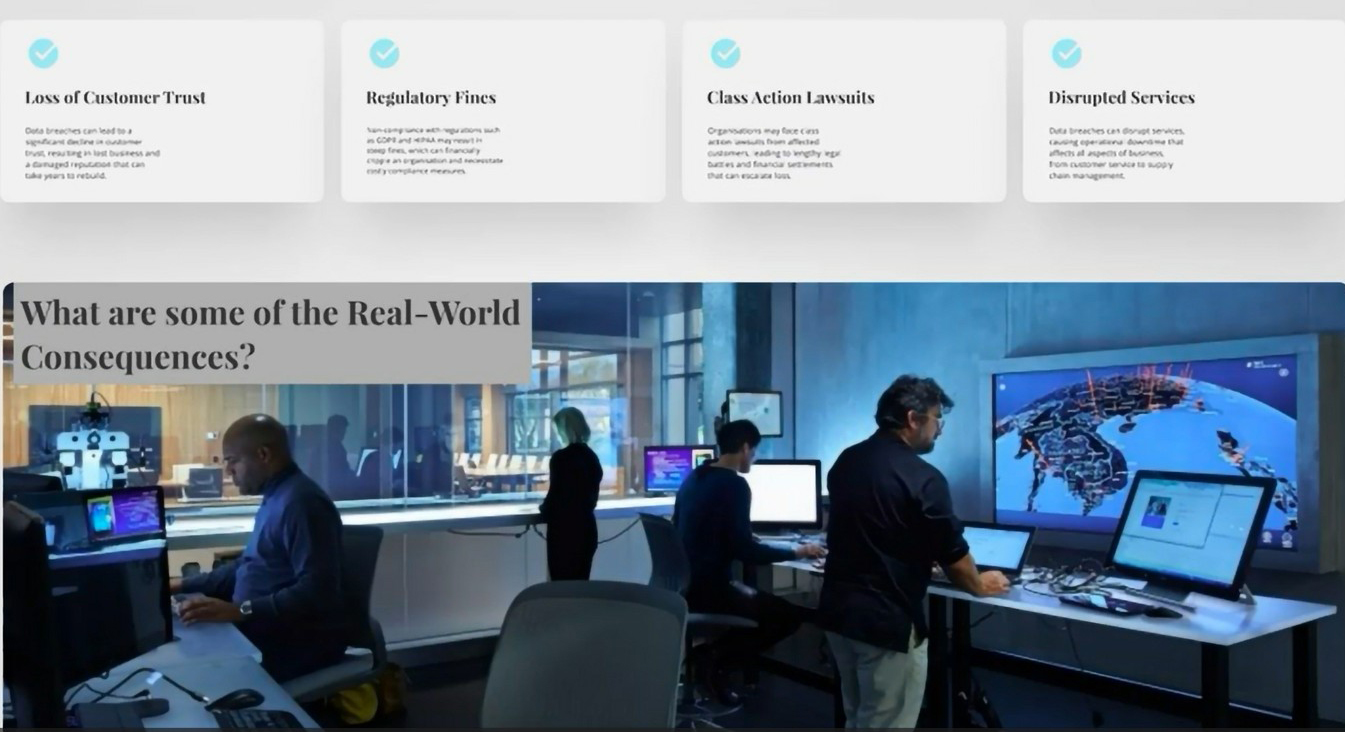
Students left the session with the understanding that data breaches are rarely caused by code alone. Effective data protection depends on governance structures, organisational culture, and shared responsibility across technical and non‑technical roles, and failures in these areas can have lasting legal, financial, and reputational consequences.
“The Guest Lecture introduced students to the practical realities of managing data security, governance, and regulatory compliance in modern computing environments. With a strong focus on real-world breaches, emerging global standards, and compliance requirements. The session bridged the gap between academic learning and professional responsibilities in industry.” – Carlene Campbell (Professor (Associate) at UWTSD’s School of Applied Computing.
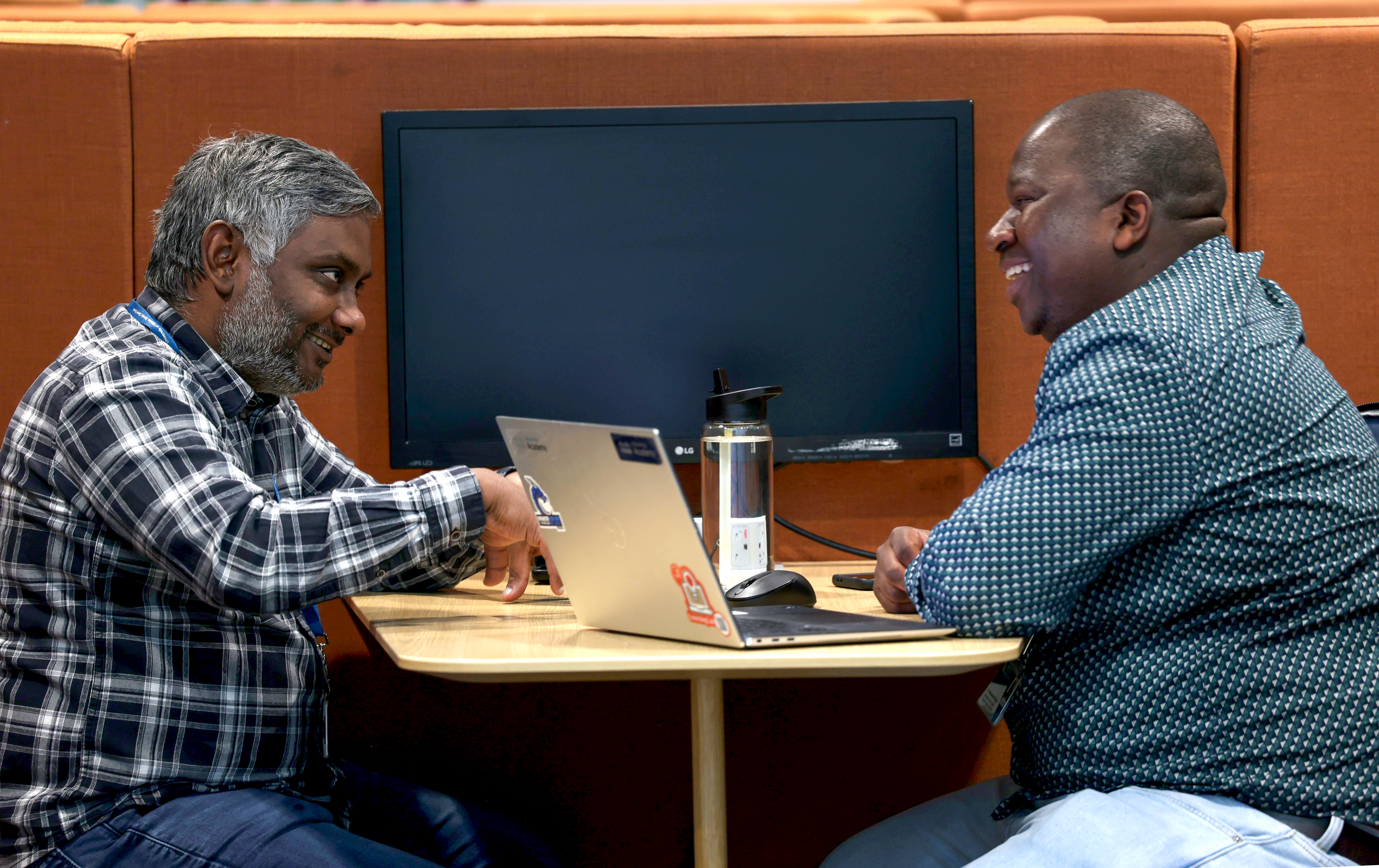
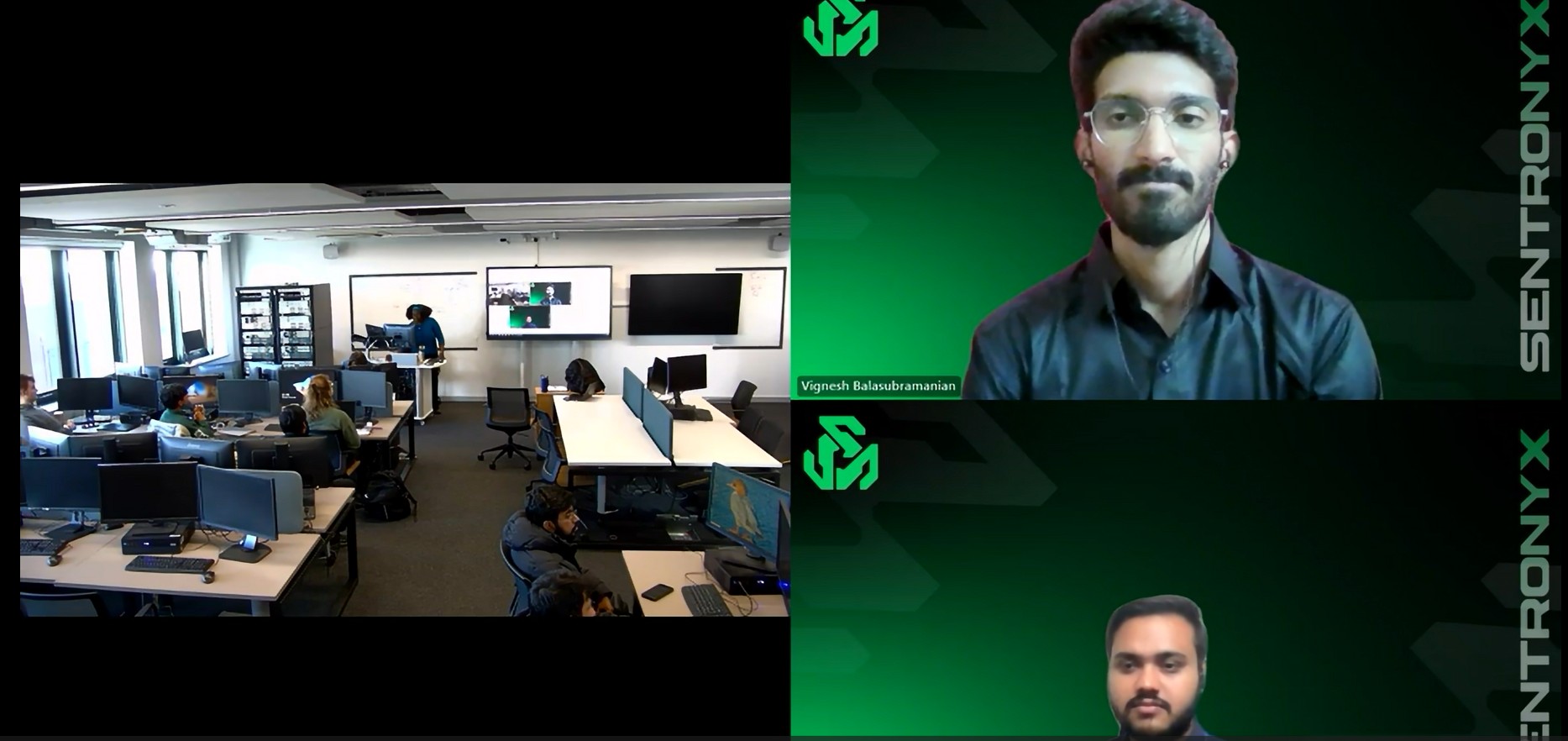
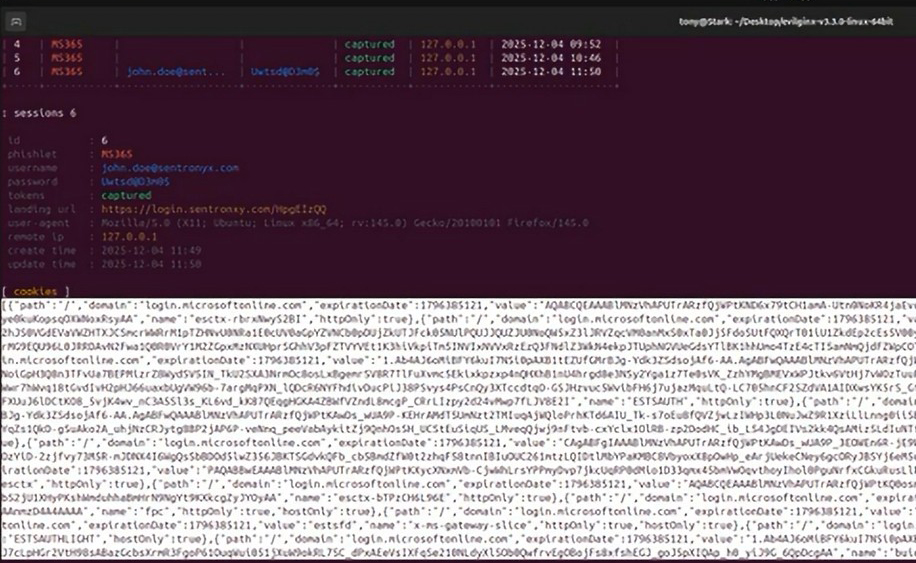
Delivered by Vignesh Balasubramanian (Director and co-founder of Sentronyx Technologies Pvt. Ltd) and Amit Shrivastav (A Cybersecurity professional & Senior Security Analyst at Sentronyx Technologies)
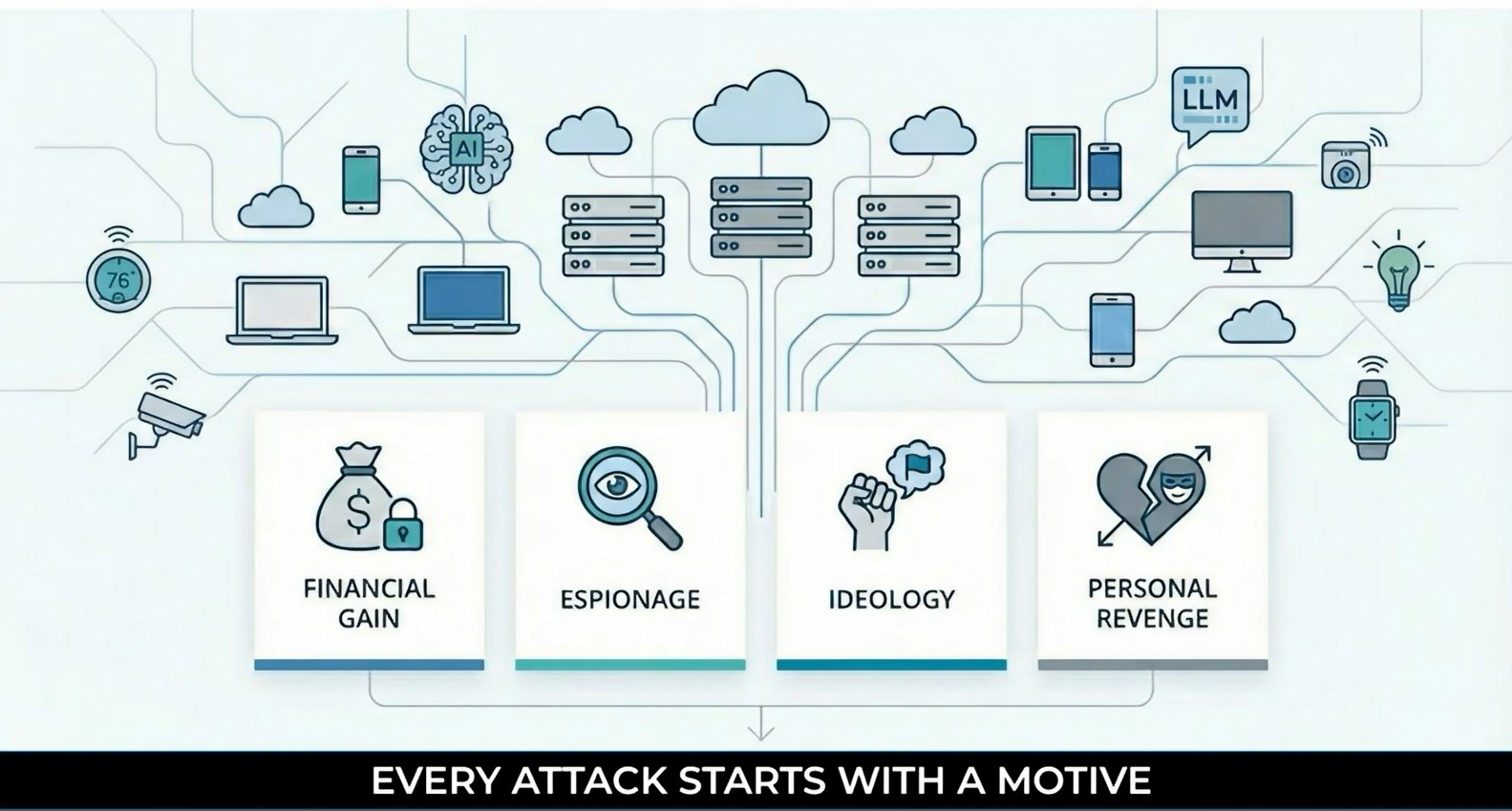
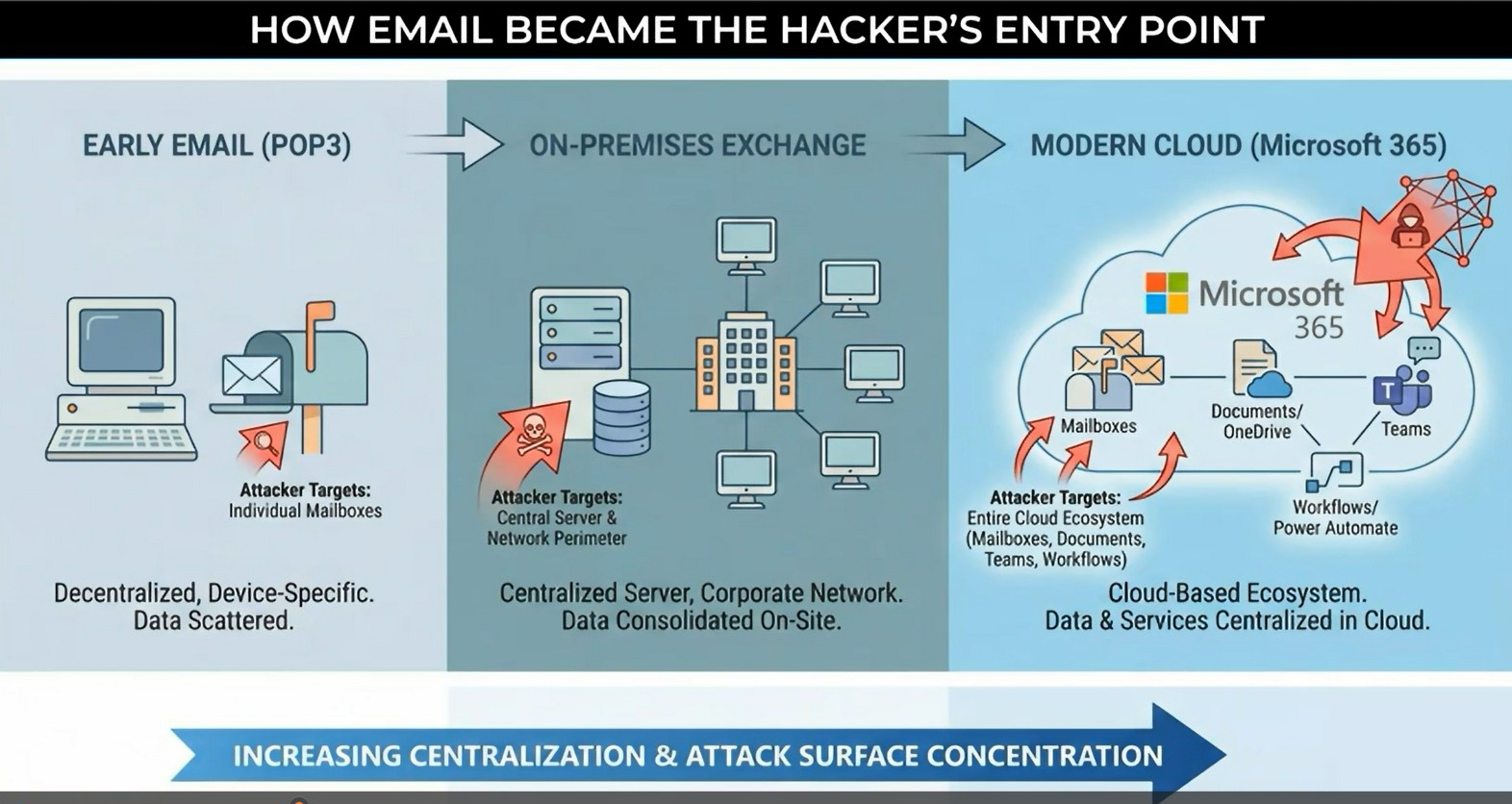
The second talk focused on helping students understand how and why modern cyberattacks occur, and how organisations attempt to defend against them. Framed within the realities of cloud adoption, hybrid working, and AI‑enabled tooling, the session positioned cybersecurity as both a technical and human challenge.


The session included open Q&A and practical discussion, allowing students to explore topics such as phishing detection, threat simulation, and attack surface analysis in a real‑world context.
Students gained a clearer picture of cybersecurity as an ongoing contest between attackers and defenders, where technology alone is insufficient. Awareness, collaboration, and informed leadership are essential to building resilient organisations in a rapidly evolving threat landscape.
“This guest lecture used a number of live demonstrations to help students understand how and why modern cyberattacks occur, how attackers evolve to bypass defenses, and how ethical hacking contributes to stronger cybersecurity. It explored real-world attack techniques, and the critical role of offensive and defensive security activities in building resilient organizations.” – Carlene Campbell (Professor (Associate) at UWTSD’s School of Applied Computing.
Final Remarks:
Both talks strengthened our students exposure to real‑world practice, offered a complementary view of modern digital risk, from governance and regulatory responsibility to the tactics used in real‑world cyberattacks. By grounding theory in industry practice and interactive learning, the sessions reinforced the importance cybersecurity and data protection as imperative organisation‑wide concerns.
For more information about our Computing & CyberSecurity courses please click here: Computing | University of Wales Trinity Saint David
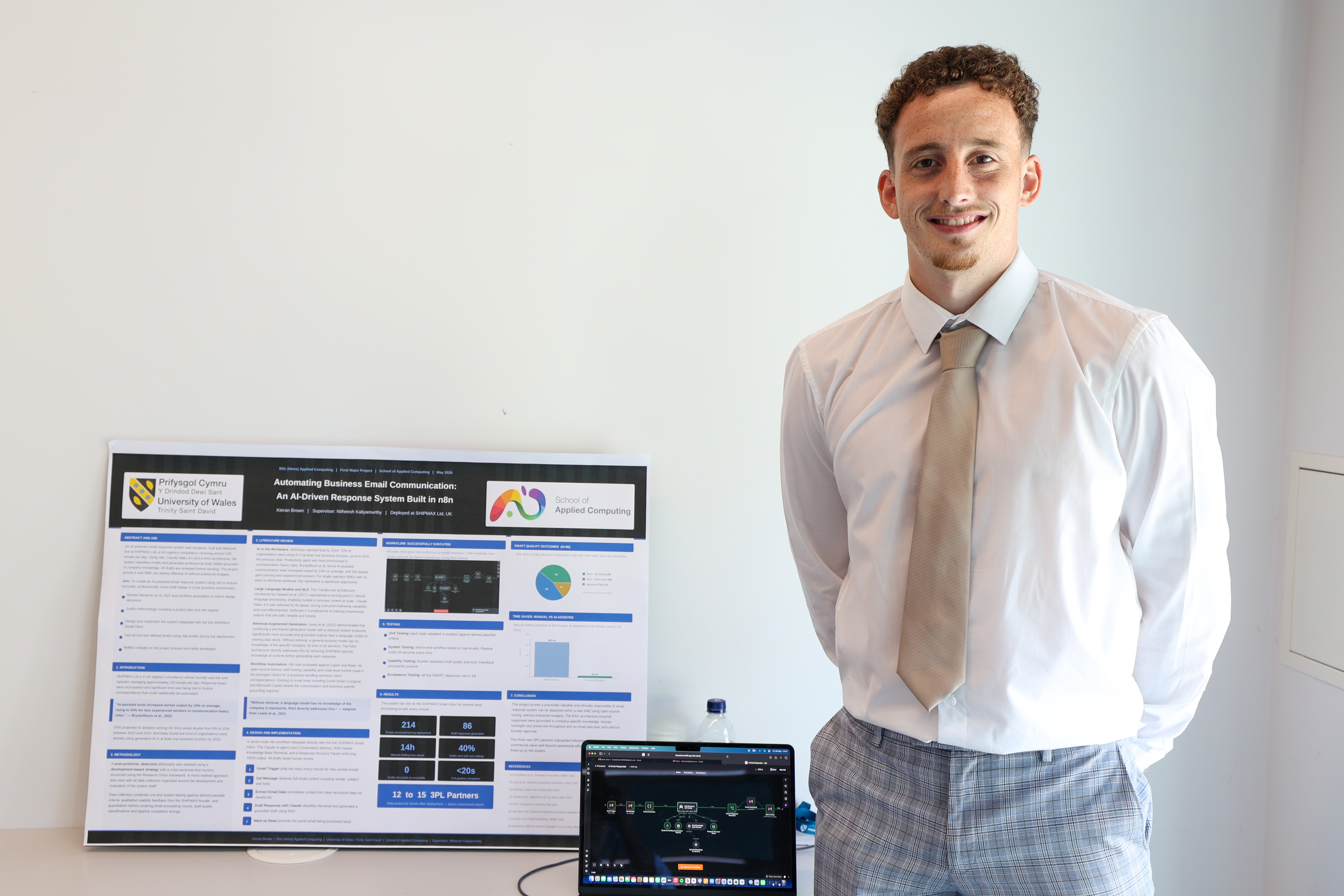
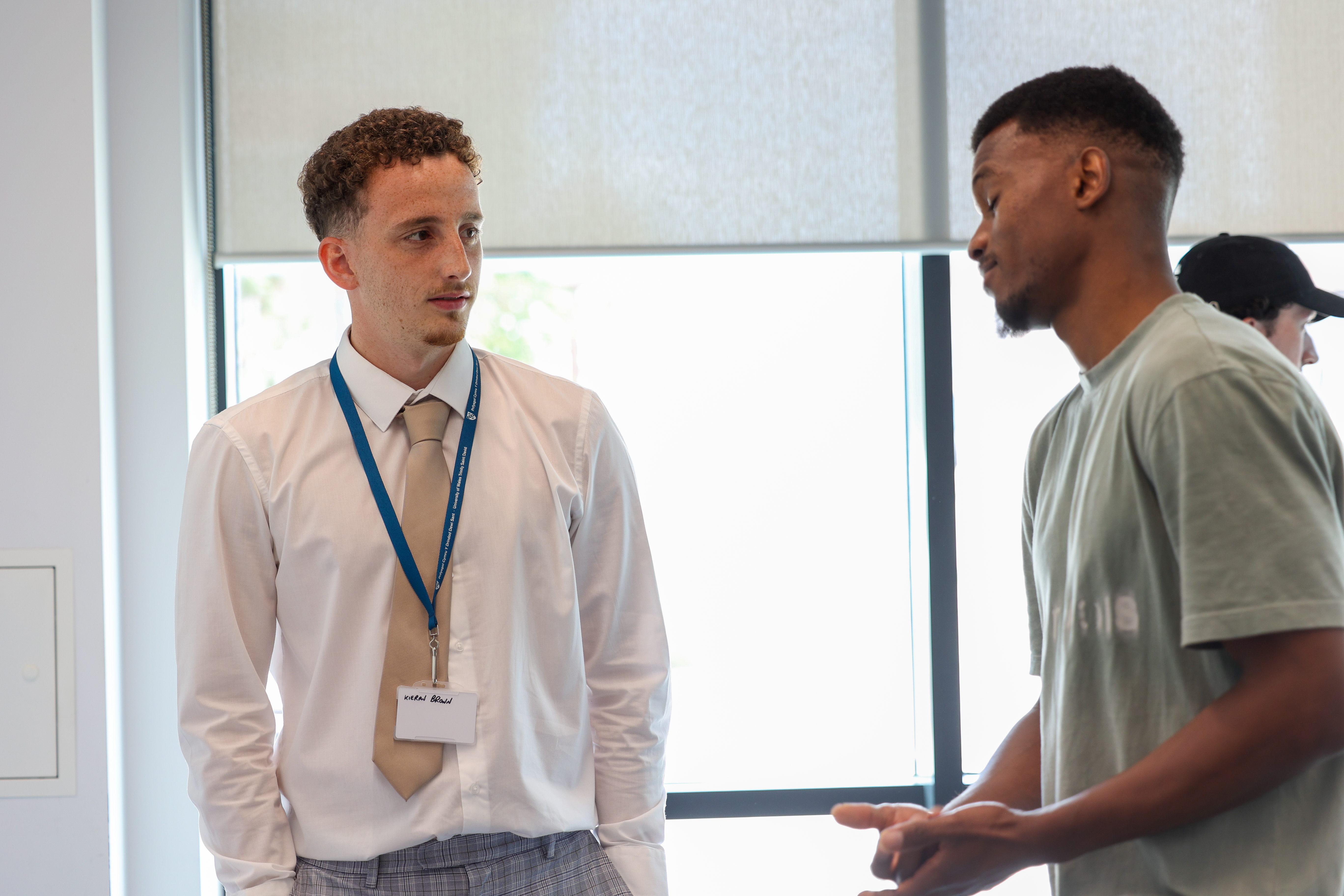
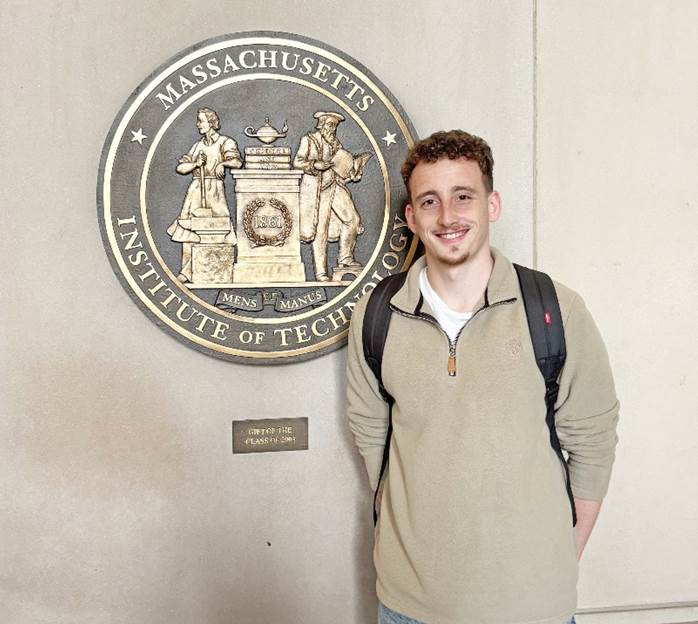
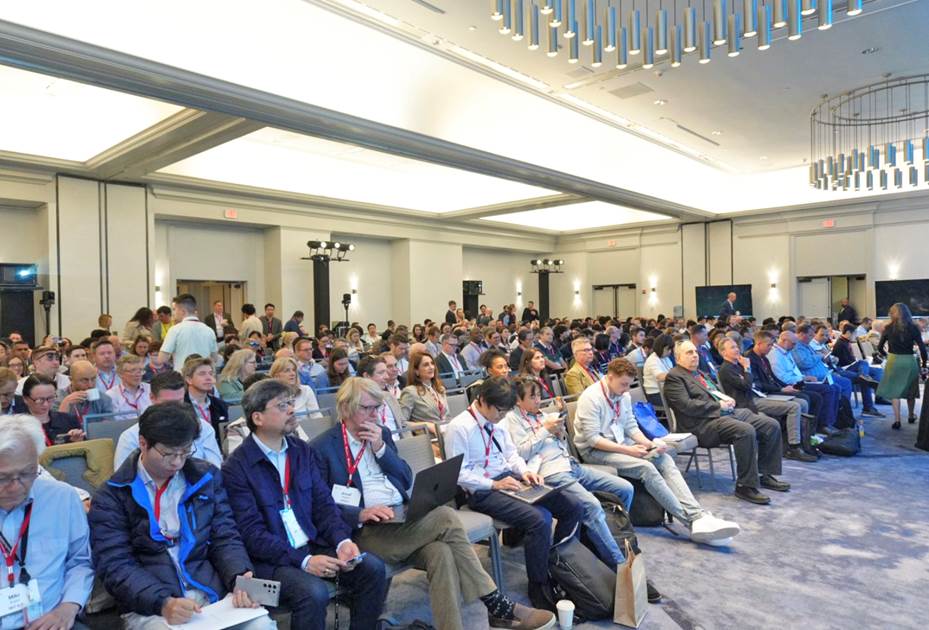
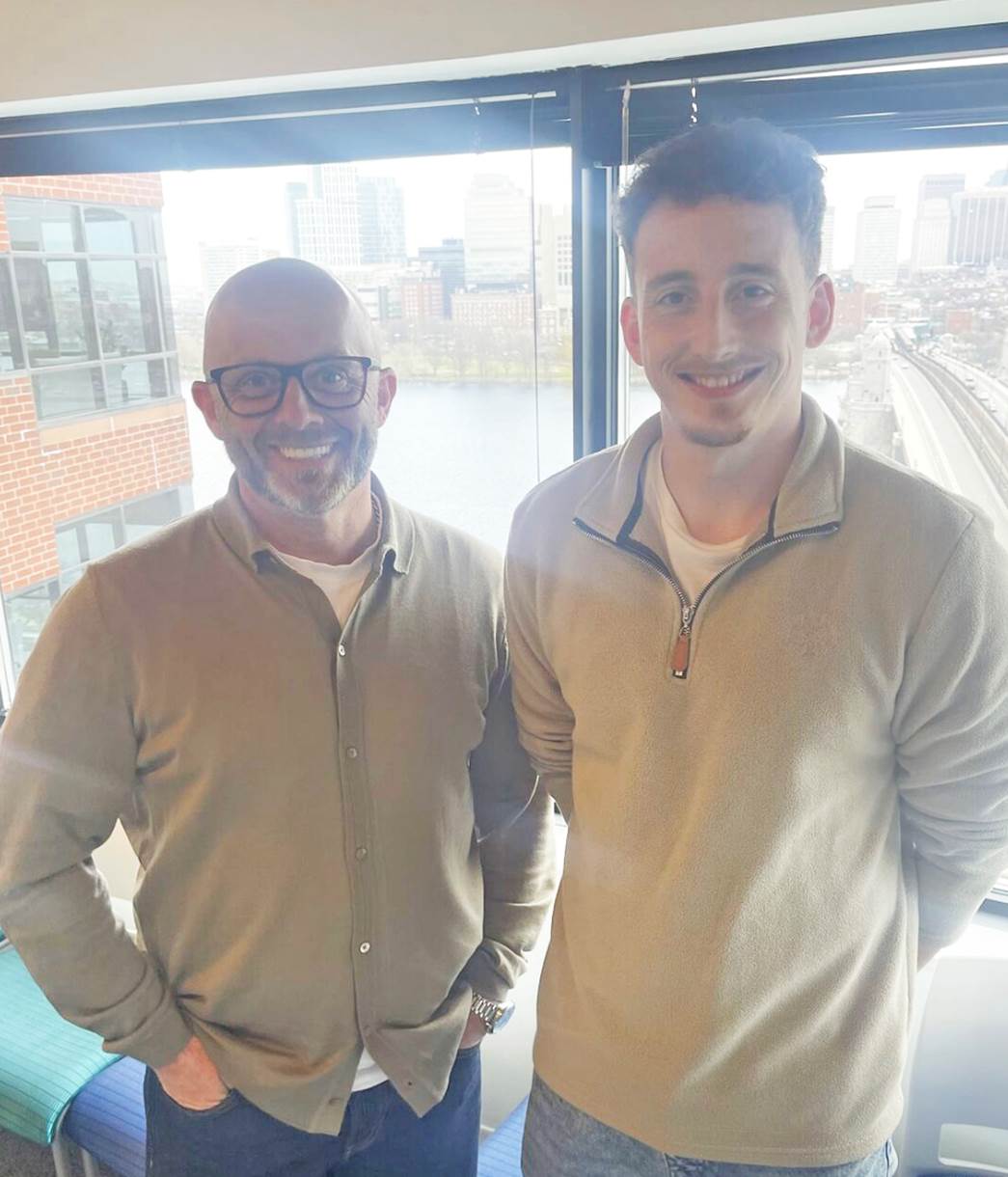
One of our final year students ‘Kieran Brown’ pictured above, recently visited the MIT Industrial Liaison Program (ILP) Conference 2026 in Boston Massachusetts, held from 12–16 April 2026.
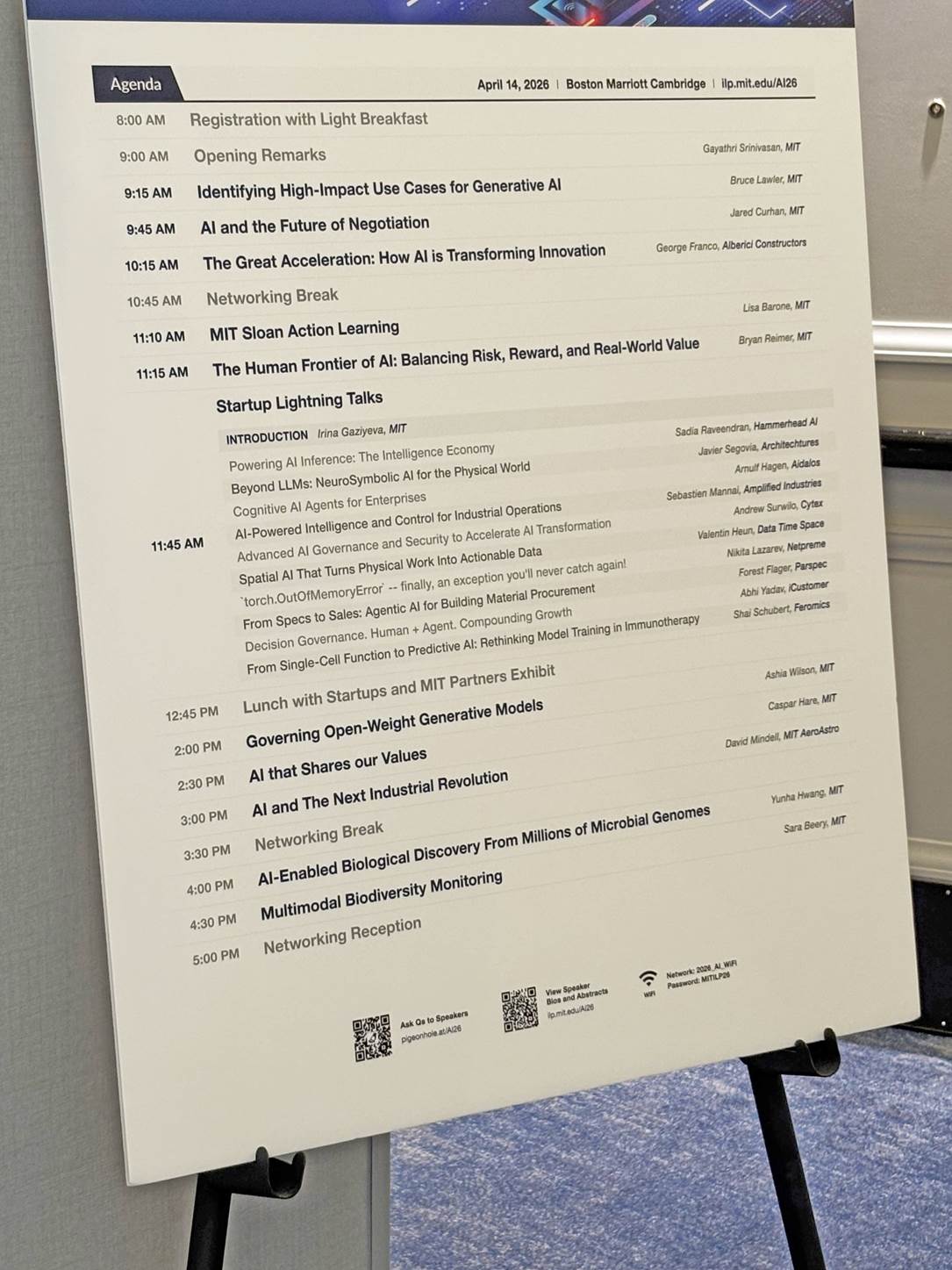
The Conference brought together industry leaders, researchers, and innovators to engage with cutting‑edge developments emerging from the Massachusetts Institute of Technology. The conference also served as a forum for collaboration between academia and industry, supporting the translation of the latest research into practical, real‑world applications.
Massachusetts Institute of Technology (MIT) is a world‑leading private research university located in Cambridge, Massachusetts, founded in 1861 with a mission to advance knowledge and educate students in science, technology, engineering, and other fields to address global challenges. Renowned for its emphasis on hands‑on learning, innovation, and interdisciplinary research, MIT has made significant contributions across areas such as artificial intelligence, engineering, economics, climate science, and entrepreneurship, and maintains close partnerships with industry, government, and international institutions.
Kieran provides a wonderful overview of the trip below:
“From April 12th–16th, I had the opportunity to attend the MIT Industrial Liaison Program Conference 2026 in Boston, an experience part-funded by the Welsh Government in collaboration with my current internship company, SHIPMAX.
The programme connects businesses with MIT’s world-leading research, startup ecosystem, and innovation networks, giving companies insight into emerging technologies and future industry challenges. During the conference, MIT graduates, alumni, lecturers, and industry professionals shared valuable insights into the startups they have founded and the transformative role of AI within their businesses.
Through a series of talks and lectures (some of which are outlined below), we explored emerging trends in artificial intelligence and gained exposure to practical tools and recommendations shaping the future of the field.
The experience connected Welsh businesses with world-leading innovation and gave me a broader perspective on how AI can be applied in industry. As a result, I am now applying the knowledge and insights gained at MIT within my role at SHIPMAX, and I am pleased to have secured a full-time position with the company, which I will begin upon completion of my Applied Computing degree in June 2026.”
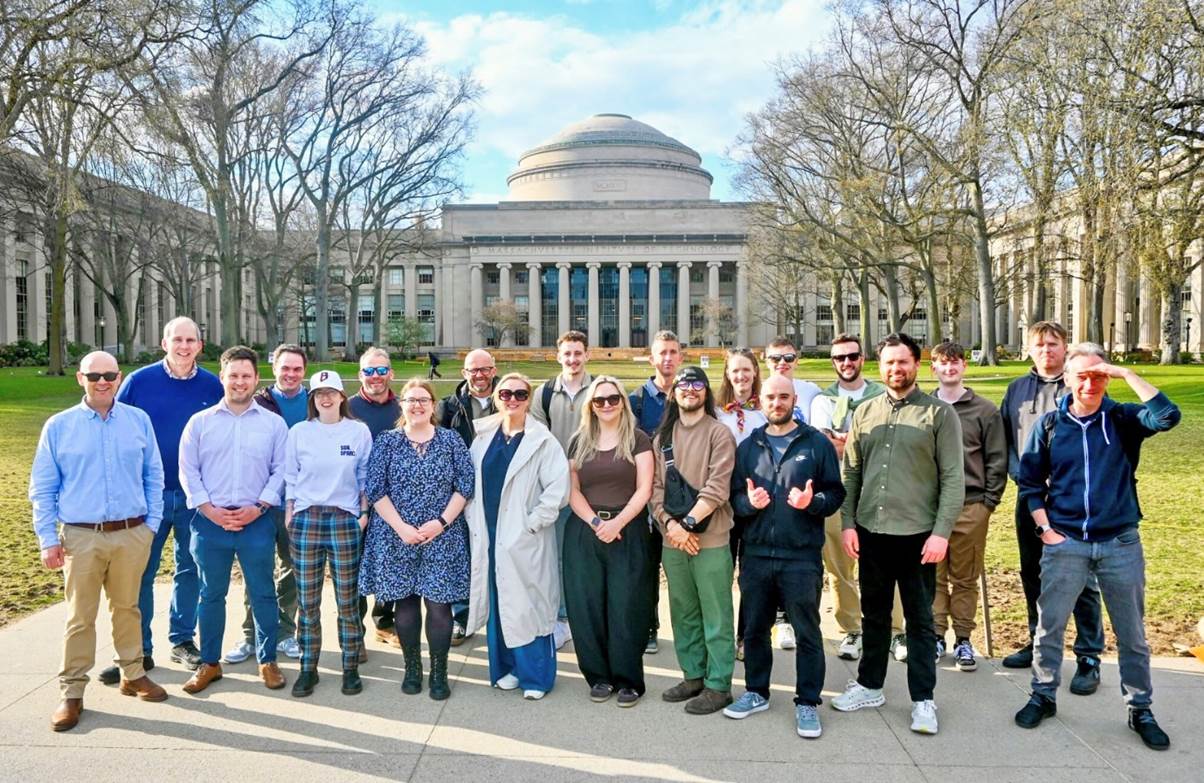
Nice to see that Kieran was also able to enjoy the sites and have some fun too (below:)


UWTSD’s Associate Professor Dr. Tim Bashford, research Lead at the Wales Institute of Digital Information (WIDI), is a prominent voice in artificial intelligence approaches across public services, healthcare, and education. With his background spanning digital innovation, applied research, and skills development, Tim’s work bridges the gap between policy, practice, and emerging technology.
Tim recently contributed to a podcast for Business News Wales, expanding on themes from his guest column ‘AI Readiness Depends on Scale, Not Sector‘. Below is a summary of the ideas underpinning the discussion.
AI Readiness: A Question of Scale and Maturity:
Tim highlight’s the narrative that the public sector lags behind the private sector in AI adoption simply doesn’t hold up under scrutiny. Instead, the real divide lies between: Large, digitally mature, well‑resourced organisations, and Everyone else, particularly smaller organisations with limited capability. This insight reframes the conversation: readiness for AI is not determined by sector, but by institutional scale, digital maturity, and capacity to invest. Contrary to popular belief, Wales’ public services demonstrate:
However, legacy systems and uneven digital capability remain ongoing challenges. While some large Fintech and Medtech companies are rapidly advancing, many SMEs are no more AI‑ready than the least mature public organisations. They often struggle with:
Tim argues that this ‘long tail’ of SME under‑preparedness is one of the biggest obstacles to Wales’ overall digital readiness. Tim goes on to emphasise that universities are not just “homes of the complex algorithmic work”, that their most significant contribution may actually be:
This positions institutions like WIDI and UWTSD as central pillars of Wales AI ecosystem.
To hear Tim expand on these themes, explore practical implications for organisations, and discuss how Wales can build AI capability across sectors, listen to the podcast here: Public Sector Social Value Podcast Guide.
To explore more about Tim’s work and background please visit:
* UWTSD News (AI Edu. Conference 2025): https://www.uwtsd.ac.uk/news/uwtsd-host-welsh-collective-ai-education-conference-2025
* ResearchGate: https://www.researchgate.net/profile/Tim-Bashford
~
Name: Farley Staines
Course: BSc (Hons) Computing (Data and Information Systems)
Project title: A comparative analysis of driving performance and styles across simulators and real-world scenarios
Brief overview: The project focused on creating a telemetry program that can display and overlap data from both the car simulator and real-life cars.
| Key term: Telemetry is the automated, remote collection and wireless transmission of data from sensors to a central system for monitoring, analysis, and optimization. It is widely used across aerospace, IT, healthcare, and manufacturing to track metrics like temperature, speed, or system performance, enabling real-time decision-making. [r: ibm.com] |
The project was written in Python and contains multiple user interfaces for different functionality. It supports both real-world and simulator data sources from Motec and ViGrade formats. It imports this data as a CSV and converts it into an SQLite database.
| Key term: Motec (MoTeC) and VI-grade (ViGrade) represent two different, often complementary, sides of automotive simulation and data analysis, specializing in data logging and virtual testing. * MoTeC is a world leader in motorsport data acquisition (loggers, ECUs, dash displays). Their data format is designed to record vehicle performance data in real-time. MoTeC creates proprietary “log files” (usually with .ld or .ldx extensions) generated by their i2 (Interpreted) Data Analysis software. * VI-grade is a leading company specializing in driving simulators and virtual testing solutions for the transportation industry. VI-grade provides software for offline simulation (predicting performance) and real-time simulators (driver-in-the-loop). Their formats are designed for high-performance vehicle modelling (handling, ride, NVH), enabling engineers to simulate cars and race tracks before building a physical prototype. |
The project’s program features include displaying data on various types of graphs (click below to enlarge), identifying and visualising specific laps from the data, being able to group similar data together and plotting them onto the same graph, and supporting multiple databases being loaded at the same time.


Project Conclusion: Based on the feedback received, the strengths include effectively managing multiple sources of data, custom grouping capabilities, improved workflow, all packaged in a single file.
After graduation: After graduation I aim to move into a motorsports career as a Data Engineer.
| Key term: A ‘Data Engineer’ builds and maintains a data infrastructure including the pipelines, databases, and processing computer systems, that converts raw data into actionable information. A Data Engineer ensures the data is accessible, clean, and secure, utilizing tools such as SQL, Python, and cloud platforms (AWS, Azure) to aid decision-making. |
A top tip/advice for students: Manage your work by doing little bits at a time and not leaving it right to the end.
For further information about Computing courses at UWTSD, please click-here.
~