Turn On Your Future @ UWTSD's School of Applied Computing & Electronics

Posts tagged ‘Higher Education’

Industry talks: Cybersecurity & Governance

Today’s blog looks back at two recent industry talks organised by our colleague Professor (Associate) Carlene Campbell, who organised two talks to allow our students to gain a deeper understanding of the contemporary challenges in Cybersecurity, data governance, and regulatory compliance. Exploring how modern cyberattacks operate and how organisations can prevent and respond to them.

Both sessions emphasised practical examples, case studies, and interactive discussion to help our students better understand the real nature of the topics in industry and their future professional responsibilities.

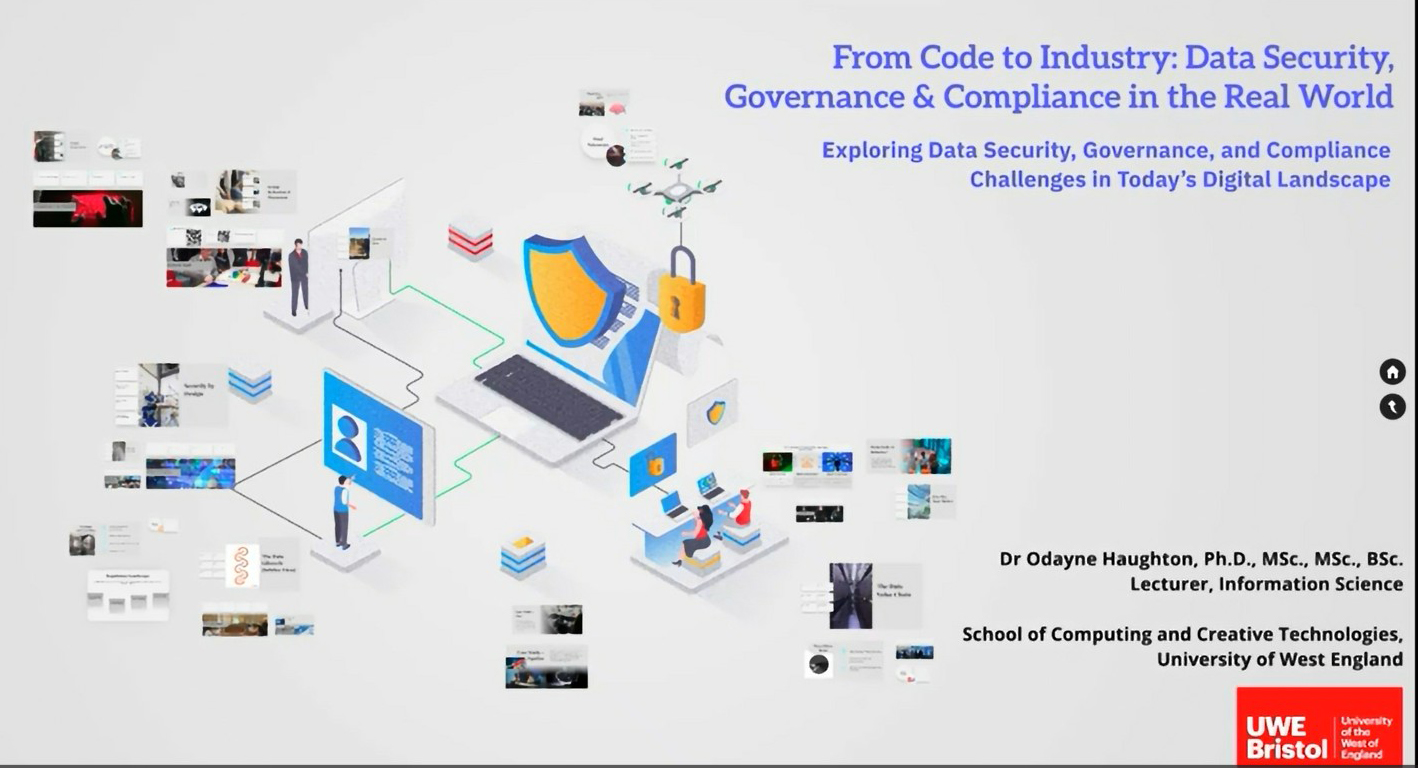
Talk 1: From Code to Industry: Data Security, Governance and Compliance in the Real World

Delivered by Dr Odayne Haughton, Lecturer in Information Science at the School of Computing & Creative Technologies (University of West England)

This talk introduced students to the practical realities of managing data securely and responsibly within modern organisations. Rather than viewing security incidents solely as technical failures, the session highlighted how many major data breaches are rooted in weak governance structures, unclear accountability, and poor compliance practices.

Key themes and topics:

  • The three pillars of data responsibility: clear differentiation between data security, data governance, and regulatory compliance, and why none of these can operate effectively in isolation.
  • Breaches as governance failures: analysis of real‑world incidents such as Equifax and Uber to demonstrate how cultural, procedural, and oversight issues often underpin technical compromise.
  • Regulatory and standards landscape: introduction to GDPR and UK GDPR, ISO/IEC 27001 and 27701, and the NIST Cybersecurity Framework, with a focus on what these mean in day‑to‑day professional practice.
  • Ethical implications: discussion of how poor compliance can result in misuse of personal data, bias, and long‑term damage to public trust.
  • Security by design and compliance by default: embedding governance into the software development lifecycle using logging, encryption, audit trails, access control, MFA, and management of third‑party risk.

Interactive Activity:

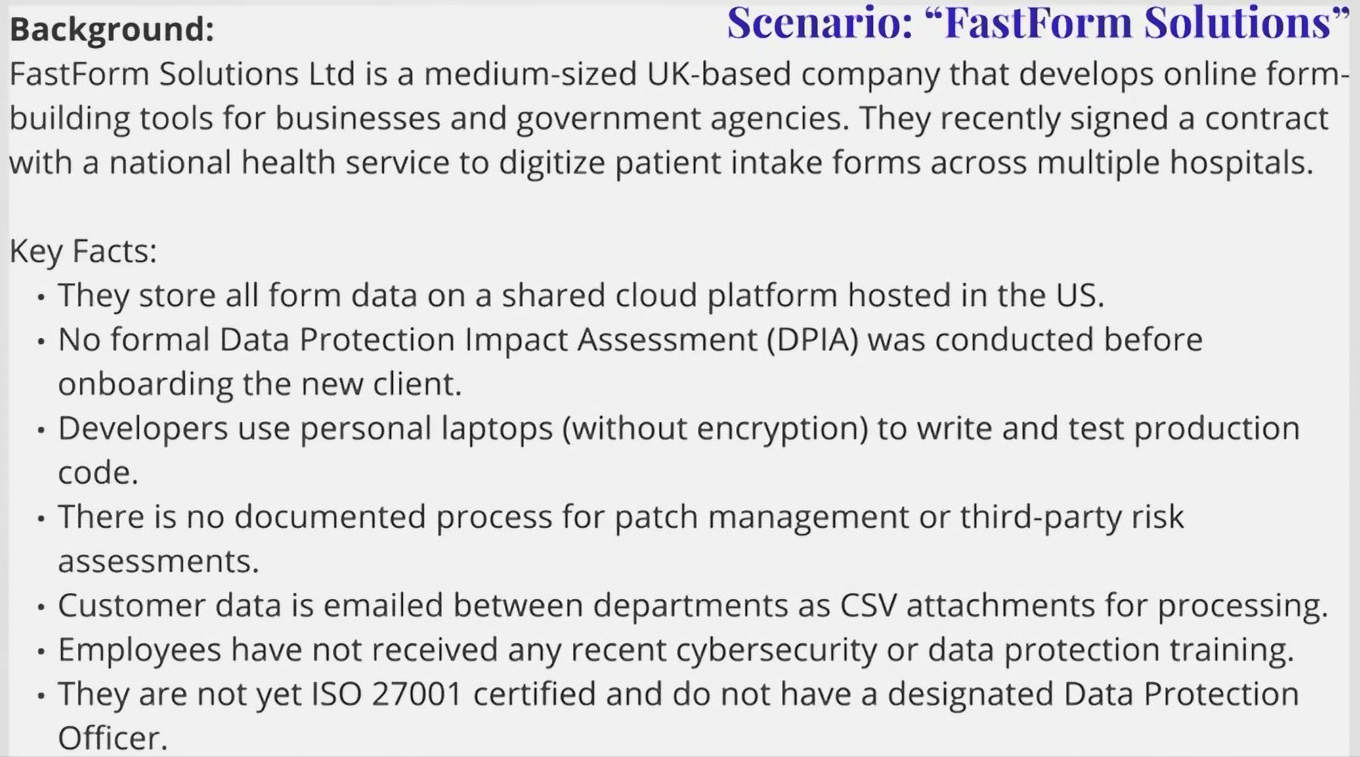
A group‑based scenario formed a central part of the session. Students worked through a simulated cloud‑services breach, taking on roles such as Data Protection Officer, Security Lead, Developer, and Product Owner. The exercise required them to identify governance failures, compliance violations, and immediate remediation steps, reinforcing the need for cross‑functional collaboration.

Key takeaway:

Students left the session with the understanding that data breaches are rarely caused by code alone. Effective data protection depends on governance structures, organisational culture, and shared responsibility across technical and non‑technical roles, and failures in these areas can have lasting legal, financial, and reputational consequences.

“The Guest Lecture introduced students to the practical realities of managing data security, governance, and regulatory compliance in modern computing environments. With a strong focus on real-world breaches, emerging global standards, and compliance requirements. The session bridged the gap between academic learning and professional responsibilities in industry.” – Carlene Campbell (Professor (Associate) at UWTSD’s School of Applied Computing.

Talk 2: Cybersecurity Awareness in the Modern Era
– Understanding how modern Cyber attacks happen and how we stop them

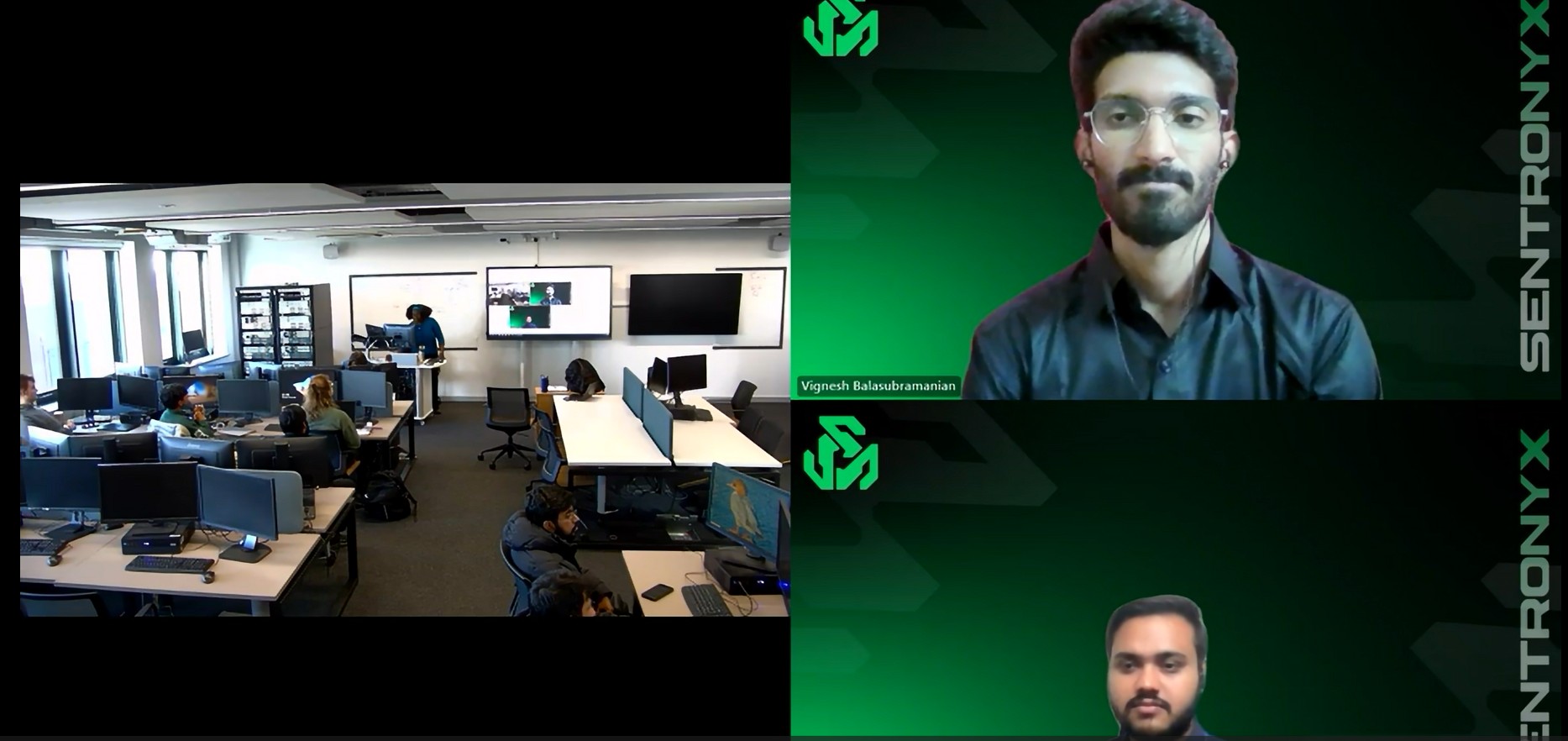
Delivered by Vignesh Balasubramanian (Director and co-founder of Sentronyx Technologies Pvt. Ltd) and Amit Shrivastav (A Cybersecurity professional & Senior Security Analyst at Sentronyx Technologies)

The second talk focused on helping students understand how and why modern cyberattacks occur, and how organisations attempt to defend against them. Framed within the realities of cloud adoption, hybrid working, and AI‑enabled tooling, the session positioned cybersecurity as both a technical and human challenge.

Key themes and topics:

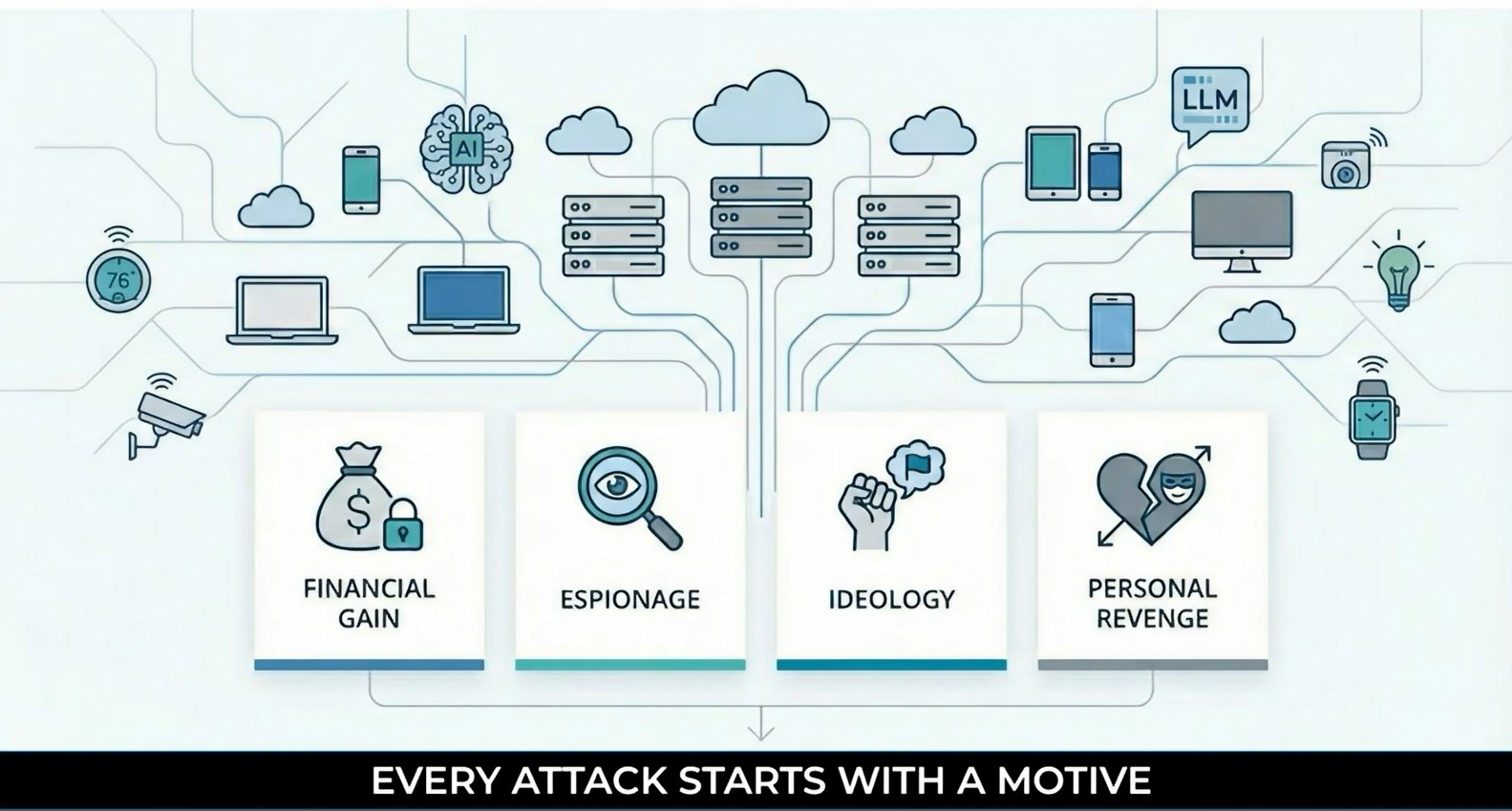
  • Why cyberattacks happen: exploration of attacker motivations including financial gain, disruption, revenge, and curiosity, and how these motivations shape attack strategies.
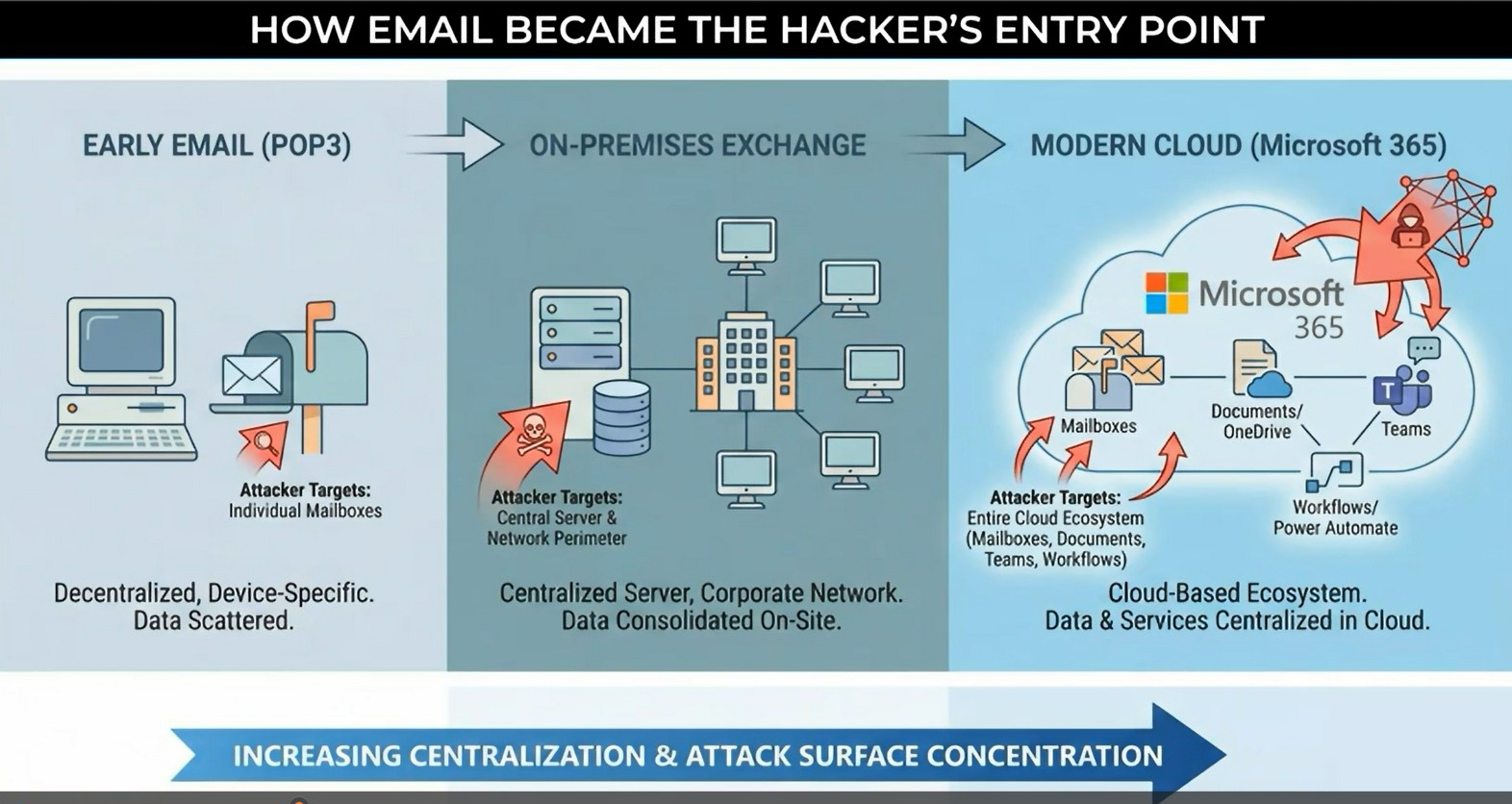
  • Modern business infrastructure: overview of contemporary environments including cloud platforms, identity systems, endpoints, and collaboration tools, alongside the role of human behaviour in security outcomes.
  • Evolution of authentication: progression from passwords to MFA, biometrics, and adaptive authentication, and the parallel evolution of attacker techniques such as phishing kits, token theft, session hijacking, and MFA bypass.
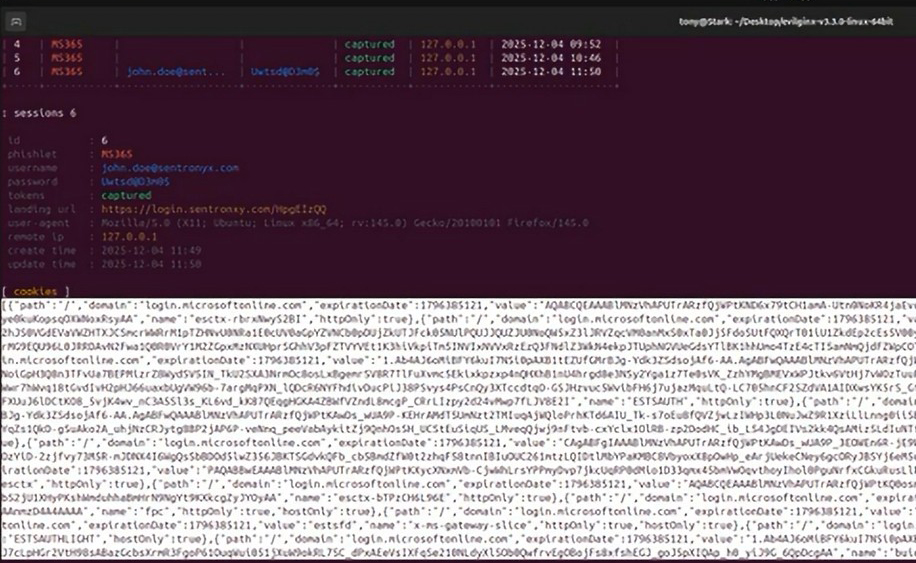
  • Applied attack case study: detailed examination of Microsoft 365 MFA bypass frameworks, providing real‑world examples of account takeover and the global implications for organisations.
  • Defence in depth: discussion of countermeasures including secure authentication design, user awareness, zero‑trust principles, and detection strategies.
  • Offensive and defensive collaboration: the role of red and blue teams, and how leadership decisions shape an organisation’s overall security posture.

Interactive discussion:

The session included open Q&A and practical discussion, allowing students to explore topics such as phishing detection, threat simulation, and attack surface analysis in a real‑world context.

Key takeaway:

Students gained a clearer picture of cybersecurity as an ongoing contest between attackers and defenders, where technology alone is insufficient. Awareness, collaboration, and informed leadership are essential to building resilient organisations in a rapidly evolving threat landscape.

“This guest lecture used a number of live demonstrations to help students understand how and why modern cyberattacks occur, how attackers evolve to bypass defenses, and how ethical hacking contributes to stronger cybersecurity. It explored real-world attack techniques, and the critical role of offensive and defensive security activities in building resilient organizations.” – Carlene Campbell (Professor (Associate) at UWTSD’s School of Applied Computing.

Final Remarks:

Both talks strengthened our students exposure to real‑world practice, offered a complementary view of modern digital risk, from governance and regulatory responsibility to the tactics used in real‑world cyberattacks. By grounding theory in industry practice and interactive learning, the sessions reinforced the importance cybersecurity and data protection as imperative organisation‑wide concerns.

For more information about our Computing & CyberSecurity courses please click here: Computing | University of Wales Trinity Saint David


Two inspiring UWTSD journeys

Today’s blog post features 2 inspiring UWTSD journeys, that show the power of creative and technical education in supporting and transforming peoples lives & futures.

Mia Harries is turning her passion for computer games into a creative career, growing in confidence and industry readiness through hands‑on learning, professional networking, and her long‑standing involvement with Yr Egin.

Meanwhile, Adam Moore has reshaped his career through UWTSD’s Digital Degree Apprenticeship in Computing, progressing from NHS data analyst to an emerging researcher developing AI tools that support clinical decision‑making. Together, their stories showcase how UWTSD empowers learners of all backgrounds to thrive, whether in the world of game design or Computer Science & groundbreaking healthcare innovation.

Mia Harries
> BA Computer Game Design

Mia Harries is turning a passion into a Creative Career. Mia’s time on UWTSD’s BA Computer Game Design course has helped her grow in confidence, creativity, and professional readiness.

Supported by a practical, industry‑focused learning environment, her wide-ranging course experience, combined with meaningful industry contact and her long-standing involvement with Yr Egin – where she has led workshops, built technical skills, and expanded her professional network, has shaped her into a confident emerging game designer. 🎮🎨

Mia now looks ahead to securing a role in a Welsh games studio while continuing freelance work, grateful for the skills, friendships, and guidance that have prepared her for the industry.

To read the full article, please click here:
* https://www.uwtsd.ac.uk/news/mia-harries-turns-passion-creative-career

To learn more about the University’s Computer Games Design Degree please click here.

\/

Adam Moore
> Digital Degree Apprenticeship

Adam Moore, a Data Scientist from Narberth, credits the University of Wales Trinity Saint David’s Digital Degree Apprenticeship in Computing (Data and Information Systems) with transforming his career and opening the door to advanced work in Artificial Intelligence (AI) and healthcare. While working at Hywel Dda University Health Board, Adam discovered a strong affinity for maths and data, and with encouragement from colleagues, he enrolled in the apprenticeship. This opportunity allowed him to study while working full‑time, supporting his family, and progressing professionally.

Throughout the four‑year programme, Adam successfully balanced academic study with full‑time employment, during which he got married, welcomed two children, and earned three promotions. The apprenticeship equipped him with the skills and confidence to excel in postgraduate study. Now undertaking doctoral research in AI and healthcare, he aims to contribute to innovations that enhance patient care and shape the future of digital health services.

Adam is a strong advocate for UWTSD’s apprenticeship route, praising it’s accessibility and the exceptional support offered by the university. UWTSD leaders emphasise how his journey reflects the programme’s impact across Wales, while colleagues at Hywel Dda describe him as a highly valued staff member whose AI work is already making a meaningful difference in clinical decision‑making.

“I want to play an active role in using AI to revolutionise healthcare and improve patient outcomes,” he said. “The apprenticeship was the foundation that made all of this possible.”

Adam continues to advocate for UWTSD’s Degree Apprenticeship route and encourages others to take advantage of the opportunity.

“It’s an incredible pathway for anyone looking to progress in their career,” he said. “It’s open to professionals of all ages who want to develop their skills and the support from the UWTSD team is exceptional.”

To read the full article, please click here:
* UWTSD Degree Apprenticeship Launches Pembrokeshire Data Scientist on Groundbreaking AI Career Path

To learn more about the University’s Degree Apprenticeships please click here:
* UWTSD Degree Apprenticeship programmes in Computing  

~

MSc Project: LSTM Networks

Project title: Development of Stock Price Prediction Model using LSTM Networks

Course: MSc / Master of Science in Data and Artificial Intelligence

Student name: Mohammed Talha Sajidhusein Vasanwala

Rationale: What was the reason/motivation for choosing the project?

The volatility of stock markets presents a major challenge in financial forecasting. Traditional methods, while effective in some cases, struggle to capture the inherent complexities of financial data, such as time dependencies, trends, and market shocks. Tesla’s stock prices, which are known for their rapid fluctuations, piqued my interest for this project. The motivation behind choosing this project was twofold:

  1. To explore how Long Short-Term Memory (LSTM) networks can be optimized to capture and predict the volatile patterns in stock price data.
  2. To address the limitations of traditional models and highlight the potential of LSTM models for accurate financial forecasting, especially in dynamic environments like stock trading.

Q. Brief Overview of the Practical Implementation (Text Description and a Few Images)

The practical implementation of this project involved multiple stages, including data preprocessing, building and testing LSTM models, and evaluating the models’ predictive performance. Here’s a breakdown of the key steps:

Data Preprocessing:

  • Tesla’s historical stock data (specifically ‘Close’ prices) was collected and cleaned.
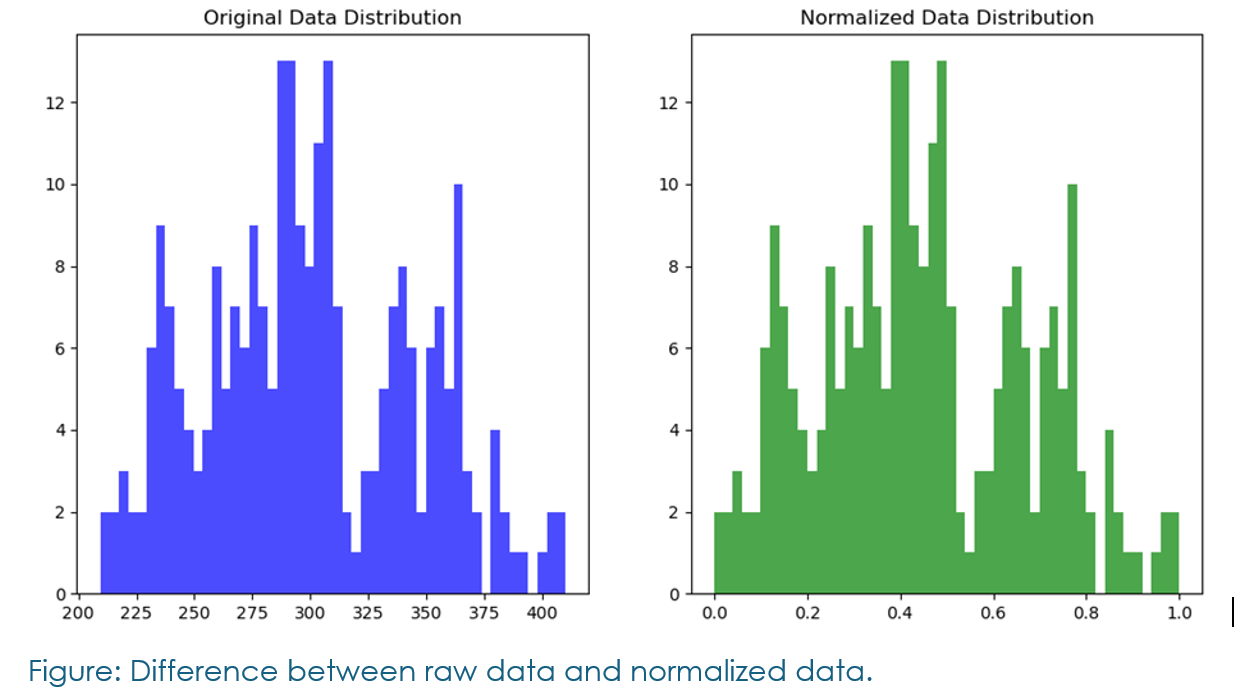
  • The data was normalized using MinMaxScaler, which is crucial for speeding up the LSTM training process.
  • The dataset was then split into training and testing sets, ensuring proper chronological order for the time-series data.

Model Building:

  • Thirty different LSTM configurations were tested, focusing on adjusting layers, units, activation functions, and learning rates.
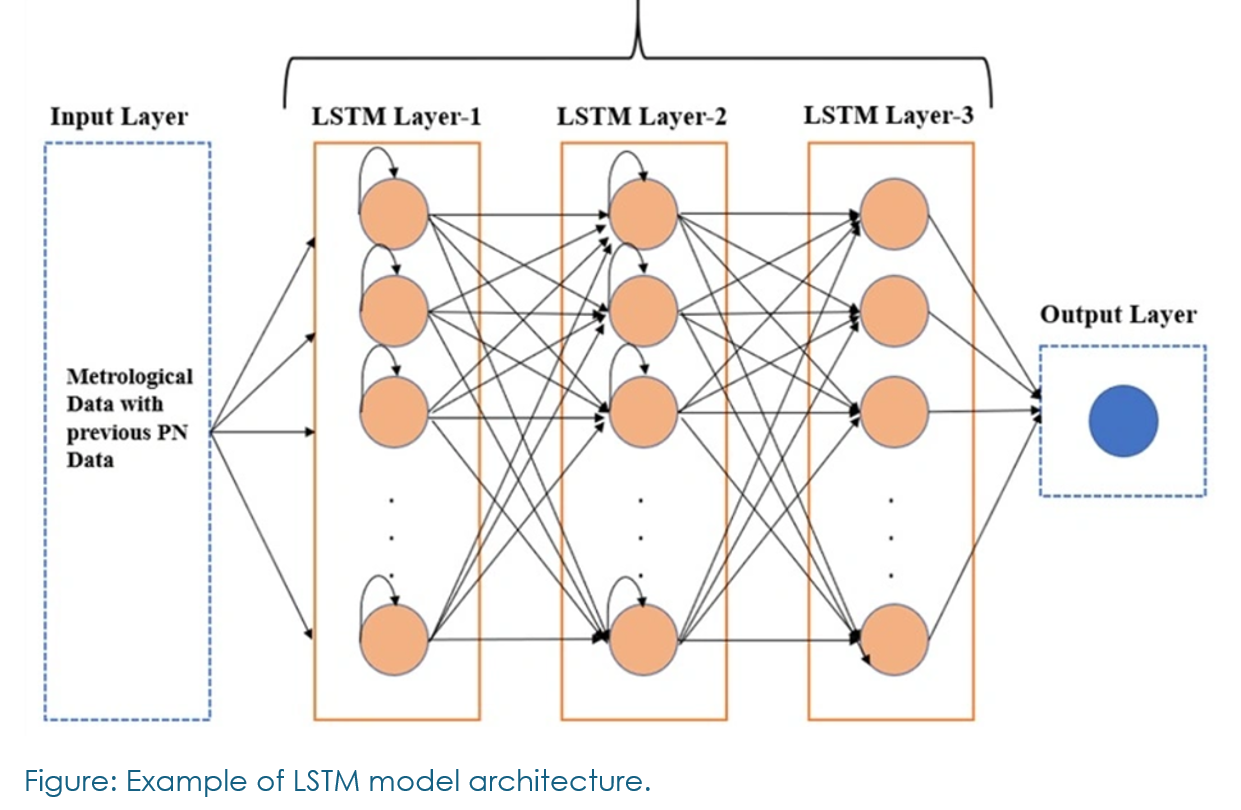
  • The final best-performing model consisted of three LSTM layers, each with 64 units and ‘tanh’ activation functions. The model also used the ReduceLROnPlateau and EarlyStopping callbacks to optimize training and prevent overfitting.

Training and Evaluation:

  • The models were trained with RMSE, MAE, MSE, and R² score as key evaluation metrics.
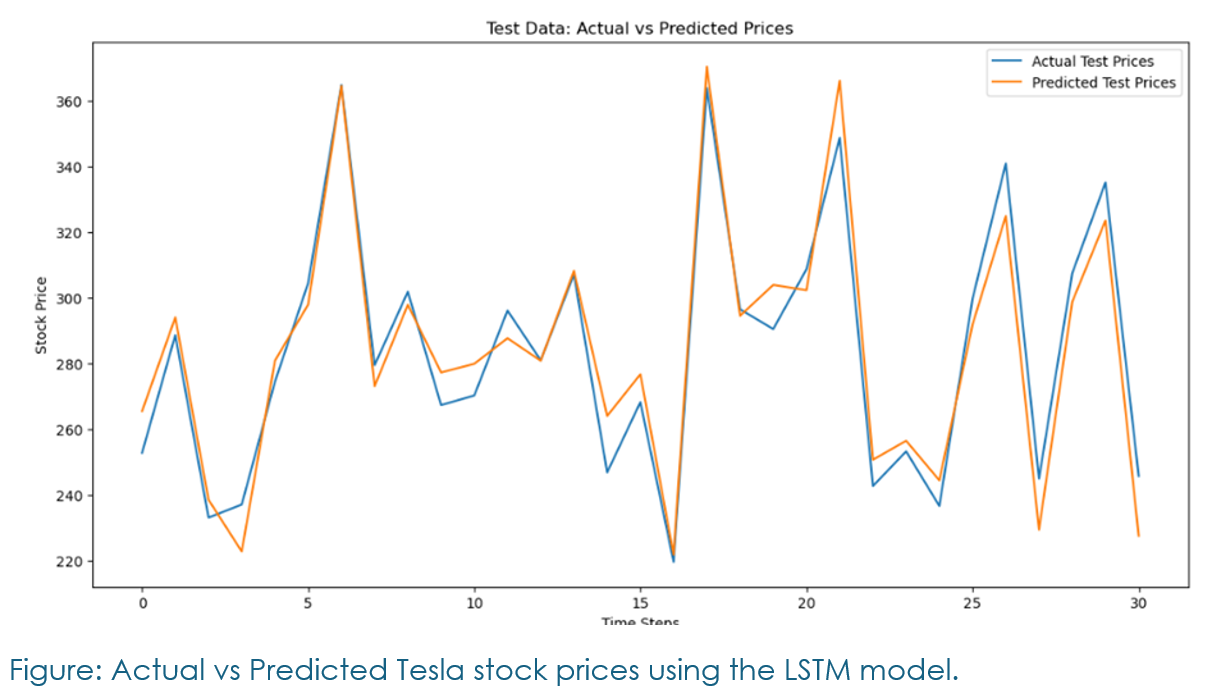
  • The best model achieved an RMSE of 0.0456 and an R² score of 0.944, demonstrating its high accuracy.

Q. Overview of Outcomes/Conclusions

The project successfully developed an optimized LSTM model that significantly outperformed traditional forecasting methods. The model was able to capture the temporal dependencies in Tesla’s stock price data and deliver highly accurate predictions. Some key outcomes include:

High predictive accuracy: The final model achieved a strong RMSE of 0.0456 and an R² score of 0.944, reflecting its superior performance in predicting Tesla’s stock prices.

Overcoming common challenges: Issues such as overfitting were effectively addressed using advanced regularization techniques and dynamic learning rate adjustments.

Despite the success, the study recognized the limitation of relying solely on historical data. Incorporating real-time data such as news sentiment and company-specific updates could further improve the model’s performance in capturing sudden market changes.

Q. Top Tips/Advice for Students Interested in completing a University BSc/MSc Degree:

Start Early: Begin your project as soon as possible, especially right after submitting your research proposal. This will give you ample time to explore different ideas, refine your methods, and address unexpected challenges along the way.

Be Proactive in Securing Data: Data accessibility can sometimes be a bottleneck. Make sure you identify and secure the necessary datasets early in your project, even if they require permissions or payments.

Iterate and Experiment: Machine learning projects, especially those involving deep learning models like LSTMs, benefit greatly from iterative experimentation. Small changes in hyperparameters can have a significant impact on model performance, so don’t hesitate to test various configurations.

Understand your Tools: Take time to thoroughly understand the libraries and tools you’re using. In my case, libraries like Keras and TensorFlow were vital for building LSTM models. Understanding how to efficiently use these tools sped up my development process.

Consult your Supervisor Regularly: Keep in close contact with your supervisor. Their feedback is invaluable, especially when it comes to refining your methodology and solving challenges related to your project. Stay Resilient: Research can be unpredictable. You might face challenges like overfitting, lack of data, or even model failure. The key is persistence and a willingness to adjust your approach as needed.

For further information about Computing courses at UWTSD, please click-here.

MSc Project: Machine Learning (ML)

Student name: Sriskantharaja Mithushan

Course: MSc in Data Science and Analytics

Project title: A Comparative Evaluation of Machine Learning Techniques for Sales Forecasting

/\ Sriskantharaja Mithushan

Rationale: What was the reason/motivation for choosing the project?

The motivation behind choosing this project stemmed from the increasing importance of accurate sales forecasting in business decision-making. Companies rely heavily on predictive models to optimize inventory management, plan marketing strategies, and drive revenue growth. I was particularly interested in how different machine learning techniques could enhance the accuracy of these predictions, compared to traditional forecasting methods. My goal was to explore and compare the effectiveness of various machine learning models in improving sales forecasts, which could have a significant impact on business operations and profitability.

Machine learning (ML) is a branch of artificial intelligence (AI) and computer science that focuses on using data and algorithms to enable machines to learn from experience, much like humans do. In analyzing data, the ML algorithm, processes data multiple times to learn / adjust itself to improve accuracy.


Q. Brief overview of the practical implementation? 

The project was conducted in several stages, starting with data gathering, followed by preprocessing, model execution, and evaluation. A rich dataset was collected from various retail and e-commerce platforms, containing sales records, customer demographics, product categories, and revenue figures. This data was cleaned and transformed to handle missing values, normalize scales, and ensure proper formatting for model training.

Five machine learning models were implemented:

  • Random Forest
  • Support Vector Regression (SVR)
  • LightGBM
  • XGBoost
  • Gated Recurrent Unit (GRU) Neural Network

Each model was trained on the prepared dataset using Python, with libraries such as Scikit-learn, LightGBM, XGBoost, and TensorFlow.

After training, predictions from each model were compared to the actual sales data. Visualization tools like Matplotlib and Seaborn were used to graphically depict the performance of each model, with side-by-side comparisons of RMSE and MAPE metrics. These visualizations helped to highlight the strengths and weaknesses of the various models.

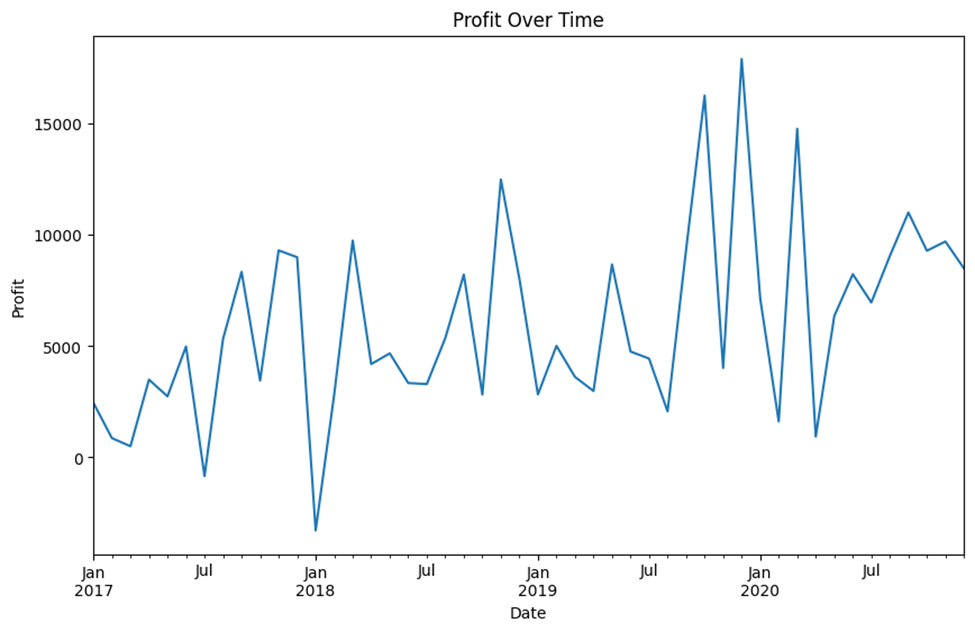
The Profit Over Time graph below, tracks monthly profit trends, providing a clear view of how profitability fluctuates over time. Key insights include: Seasonality and Profit Growth or Decline. For example Seasonality highlights periods of increased or decreased profits, often aligned with sales cycles or specific marketing efforts. This helps in identifying high-profit months and adjusting strategies for low-profit periods.

This visualization is crucial for understanding financial performance, aiding in strategic decision-making, and optimizing resource allocation for long-term profitability.

/\ Profit Over Time: Illustrates monthly profit trends.

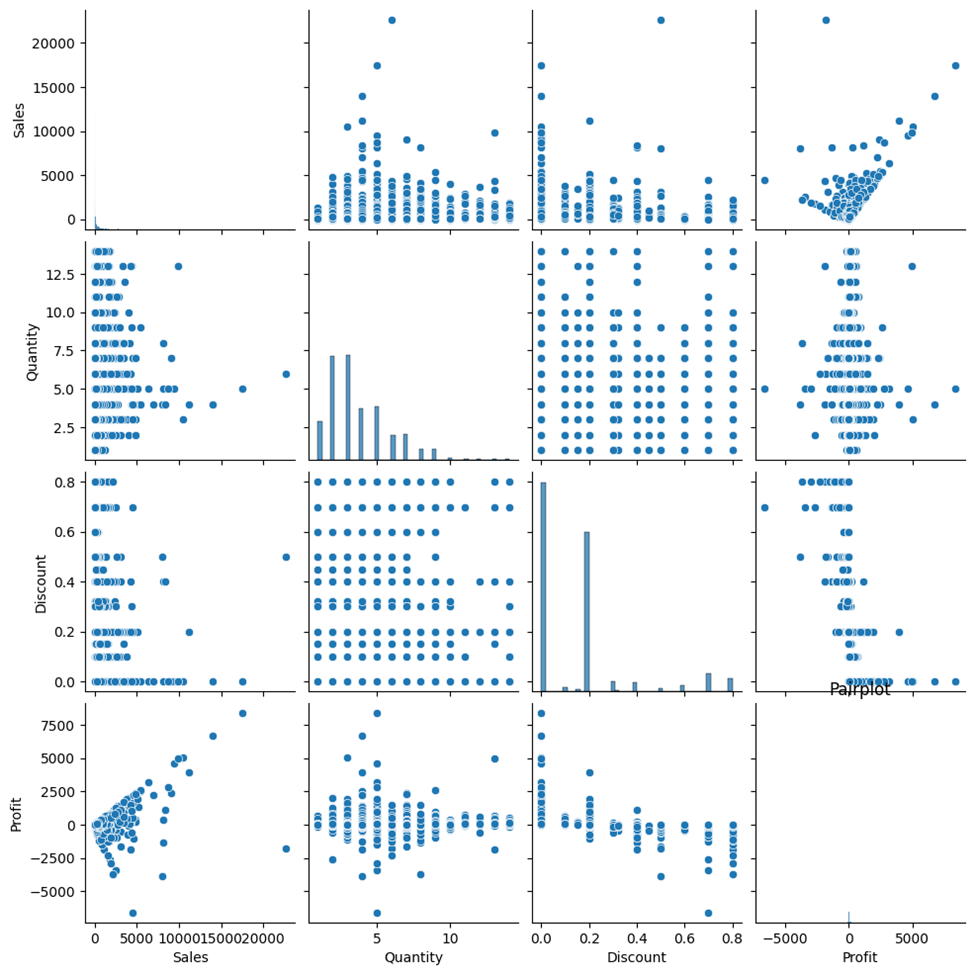
This pairplot chart below, simultaneously shows the distributions (diagonal plots) and relationships (scatter plots) between the key variables: Sales, Quantity, Discount, and Profit. For example the scatter shows a strong positive relationship, confirming that higher sales lead to greater profits. A weak negative trend suggests that offering larger discounts may slightly lower profits. This pair plot provides a comprehensive overview of how these variables relate to each other and how each is distributed, helping in identifying trends, correlations, and potential outliers.

/\ Pairplot: Distributions and Relationships Between Sales, Quantity, Discount, and Profit.

The chart below is a Heat-map. The Heatmap shows the correlations between the key business metrics of Sales, Quantity, Discount, and Profit. The color intensity represents the strength and direction of the relationships, with darker colors indicating stronger correlations. For example, a deep hue between Sales and Profit highlights that as sales increase, profits rise significantly. This visual tool helps identify how these variables interact and guide strategic decisions on pricing, sales, and profit optimization.

/\ Correlation Matrix Heatmap: Sales, Quantity, Discount, and Profit

Q. Overview of outcomes/conclusions?

The project concluded with Random Forest emerging as the top-performing model in terms of prediction accuracy.

The research delved into the use of machine learning techniques for sales forecasting in the retail and e-commerce sectors, with the goal of identifying which models provide the most accurate predictions. The study examined five machine learning algorithms: Random Forest, Support Vector Regression (SVR), LightGBM, XGBoost, and Gated Recurrent Unit (GRU) neural networks. The models were evaluated using metrics such as Root Mean Square Error (RMSE) and Mean Absolute Percentage Error (MAPE).

This study contributes to the understanding of how machine learning can be applied to sales forecasting in retail and e-commerce. It shows that tree-based ensemble methods, particularly Random Forest, are among the most effective techniques. However, deep learning models like GRU also show potential, particularly for capturing temporal dependencies. A balanced approach, combining multiple models and fine-tuning hyperparameters, can lead to more accurate sales predictions. By acting on these insights, retail and e-commerce companies can improve their forecasting accuracy, optimize inventory management, and ultimately enhance customer satisfaction and profitability. 

Q. Please share some top tips/advice for students?

Completing a Bachelor of Science (BSc) or a Master of Science (MSc) at a university like the University of Wales Trinity Saint David (UWTSD) can be a rewarding and challenging journey.

The University offers a variety of Computing courses. Ensure you choose a program that aligns with your interests and career goals. During both BSc and MSc, you’ll often have the flexibility to choose elective modules. Select modules that allow you to develop key skills that are in-demand in your field, or that attract your personal interest. Balancing lectures, labs, independent study, and personal commitments is crucial. Use digital tools to organize deadlines, assignment dates, and exam preparation to stay on track. The University also offer career services to help students prepare for employment. Take advantage of these CV workshops, interview practice, and employability training.

For further information about Computing courses at UWTSD, please click-here.

~

Emerging Trends Lecture: Complex Autonomous Robotic Systems

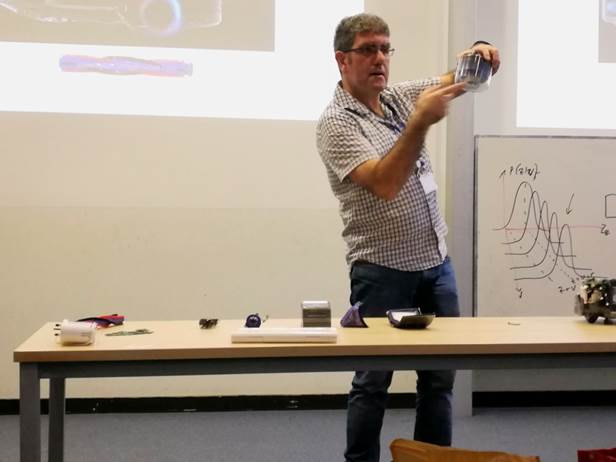
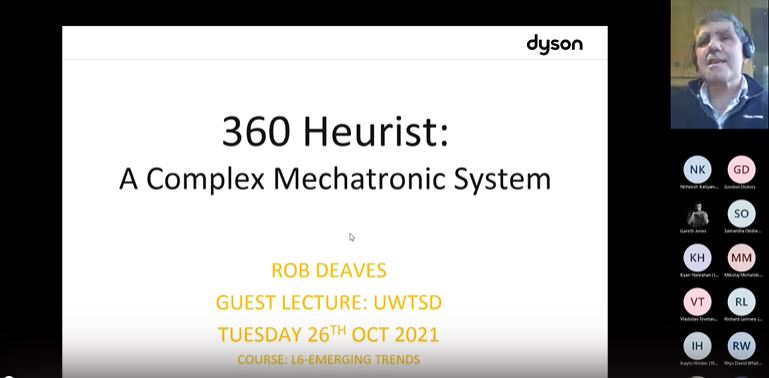
The Applied Computing Team at UWTSD, had the pleasure of welcoming Dr Rob Deaves (below), a visiting Professor of Robotics Systems Architectures to deliver a Guest Lecture on Complex Autonomous Robotic Systems.

The talk covered many related areas and enabled listeners to enhance their knowledge and skills in the following topics:

* Robotic components in a mass market commercial robot;
* Usefulness of visualisation tools;
* Testing campaigns based on simulation, prototyping and trials;
* Product and support systems;
* Appreciation of what is required to take research to product.

“In recent years autonomous robots are starting to provide useful functions for society. Future developments will be really exciting allowing robotics to help address the UN sustainability goals!”  – Dr Rob Deaves, RAEng Visiting Professor of Robotics Systems Architectures.

Dr. Rob Deaves, Guest Lecture at UWTSD Swansea, School of Applied Computing.

About: Dr Rob Deaves is a Dyson Robotics Architect from Imperial College London.

The Applied Computing Team would like to thank Dr. Deaves for taking the time to share his knowledge and experience with our staff and students. The lecture was organised by UWTSD Computing Lecturer Dr. Nitheesh Kaliyamurthy as part of the Emerging Trends module, a final year module on all Computing degree courses.

For more information about our courses please click-here.

Graduate Profile: Richard Martin – Web Developer

Q. What is your Name? Richard Martin

Q. What was your University course? BSc Web Development

Q. What is your job title and role? Developer

developer-image-c

Q. Could you briefly describe the organisation you work for?
We build estates management software.

Q. Which skills learned at University are helpful to you in your job?
Project management as well as coding and computational skills needed for a career in IT.

Q. Do you have a typical day and how would you describe it? Get in for nine and get the kettle on. As any developer will tell you software is fueled by caffeine. Spend my morning writing asp.Net MVC and SQL then some self study and onto the React and NoSQL project.

Q. What aspects of your job do you enjoy most? The freedom to manage my own time and investigate and research different technologies as I see fit. Also working with cutting edge technologies such as React.JS.

Q. Do you have any advice for students who would like to start a Career? Do your best in anything you do. My career as a developer started four years ago before I started uni when I took a three week temporary data entry position. I gave it my all as I always do. Within two weeks I had finished all the data entry and moved in to front end web design/development. Which lead into my degree. So, just always do your best at anything you do. You never know what will be your break into your career.

Q. A Quote that sums up your time at the University? Hard work, challenging and stressful but one of the best and most rewarding things I have done.

~

>> If you would like to submit a Graduate Profile please contact james.williams@uwtsd.ac.uk.

Graduate Profile: Ana Mirsayar

anamirsayar-1

Q. What is your Name? Ana Mirsayar

Q. What was your University course?
· BEng Computer System and Electronics
· MSc e-Commerce
· PHD in Telecommunications from King’s college London

Q. What is your job title and role? UK RTI (Research, Technical and Innovation) Coordinator/ Project Manager. I work for Thales UK, Vice President of RTI which enables me to get a helicopter view of the company’s business units (Under water systems, Avionics, Defence, Cyber security and Transportation). I go to different Thales sites to hear the progress on major works. I also manage my own projects

Q. Could you briefly describe the organisation you work for? Thales is a French company that has expanded internationally. They work on many different business units and some great examples of their work can be found under the activities tap. It is such a large company with a vast scope of work that if I was to give you small examples then I won’t be doing it justice.

anamirsayar

Q. Which skills learned at University are helpful to you in your job? Some of the soft skills that became handy were communication, team work, task prioritising and discipline and the attention to details particularly for example in PCB design. Work under pressure, I remember for our final project work one of the guys dropped out of the course due to personal reasons and we had to pick up on his work and still deliver on the same deadline.

Q. Do you have a typical day and how would you describe it? I am usually in a couple of teleconferences, and a meeting or two. On a quiet day I look at the road map for my projects to monitor progress. I regularly ask for updates from the team and plan ahead and I allocate tasks to members. I must say that I’ve only been managing projects in the last year. Before which I was a senior design engineer who designed and developed mathematical algorithms. So I’d say my maths modules became very useful. Also understanding the systems at a top layer and looking down was also something I had learnt at university which is essential for detailed designing as you need to understand the concept of operation and applications.

Q. What aspects of your job do you enjoy most? I enjoy having an appreciation for the technical nature of the work as it always helps the project managers make better decisions in comparison to the mangers that have a business background. My job is varied and it involves travelling inside and outside the UK which I do enjoy. Interacting with customers and hearing their needs for our products is also enjoyable.

Q. Do you have any advice for students who would like to start a Career? My humble opinion for the students would be not just to study for a label (PhD) or just to get high marks. Make sure you really understand the concept because the devil is in the details and that is the most important thing. Engineering is a great career to have as it is fun, satisfying, challenging and its safe, as many surveys show that job security in engineering is quit high.

Graduate Profile: Luke Byers

During the Working Week

luke2

At the Weekend 🙂

luke

Q. What is your Name? Luke Byers

Q. What was your University course? BSc (Hons) Business Information Technology

Q. What is your job title and role? Technology Risk Analyst

Q. Could you briefly describe the organisation you work for? Australia and New Zealand Bank (ANZ)

Q. Which skills learned at University are helpful to you in your job?

Business environments (internal and external), Business Continuity Management (BCM), Written and presenting skills.

Q. Do you have a typical day and how would you describe it?

Analysis and reporting of data, testing of controls in place to mitigate risks and providing assurance to risk managers. Providing advice to ensure people comply with policies.

Q. What aspects of your job do you enjoy most?

Operational risk is an interesting space with so many factors, In particular I enjoy working within the Technology department and understanding how a large financial organisation deals with the changing landscape of technology trends and cyber threats.

Q. Do you have any advice for students who would like to start a Career?

If you see an opportunity that interests you don’t be afraid to go for it. Prepare for interviews well, be confident in yourself and you will get a chance!

Q. A Quote that sums up your time at the University?

I learned a lot while having fun and making friends along the way, what more could you ask for!

SoAC lecturers become Senior Fellows of Higher Education Authority


The School of Applied Computing is proud to report that the achievements of three of its lecturers have recently been recognised by the Higher Education Authority (HEA).

Our congratulations go to  Dr Stephen Hole Associate Professor, Dr Kapilan Radhakrishnan and Dr John Rees, who were awarded prestigious Senior Fellowships of the HEA over the summer.

The status of Senior Fellow is awarded to those professionals who reach the highest standards of teaching and supporting learning in higher education.  The award recognises excellence across a broad range of key criteria, including management, coordination, subject and pedagogic research, scholarship, academic practice, professional values, supervision, assessment and mentoring.

The HEA, globally recognised for inspiring excellent teaching as an essential driver of student success, delivers a platform for continuous professional development and aims to improve learning outcomes by constantly enhancing the quality of teaching in Higher Education.

hea

WIPO – Digital Creativity: Culture Reimagined

IMG_6676

The School of Applied Computing celebrated World Intellectual Property Day which this year explores the theme of ‘Digital Creativity: Culture Reimagined’ – the current emerging and future of culture in the digital age. As part of the celebration some students (above) from the Managing People and Change module learned about the importance of Employee Engagement in 21st Century Organisations.