Turn On Your Future @ UWTSD's School of Applied Computing & Electronics

Posts tagged ‘e-Commerce’

Industry Speaker: Phil Rees, CEO of SHIPMAX Ltd
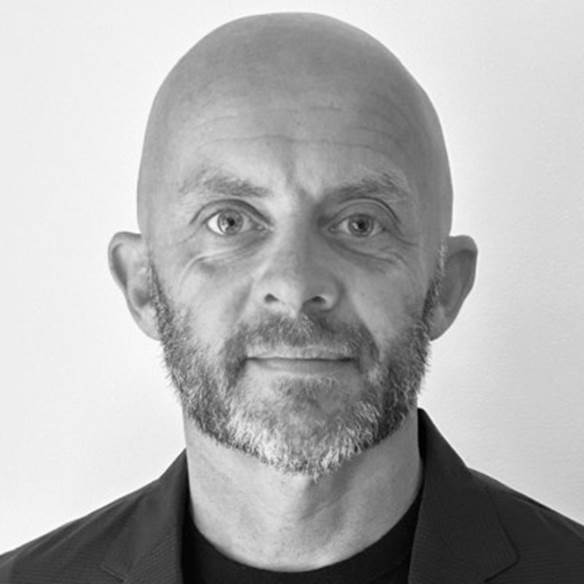
Our students were recently joined by Phil Rees, CEO of SHIPMAX Ltd, for an ‘Industry Guest Lecture’ that focused on AI, e-commerce, innovation and what really matters in the world of industry.

Phil Rees is the founder and CEO of SHIPMAX Ltd, a Swansea-based, AI‑native logistics consultancy, helping e‑commerce brands expand internationally while reducing the cost, complexity, and risk of going global.

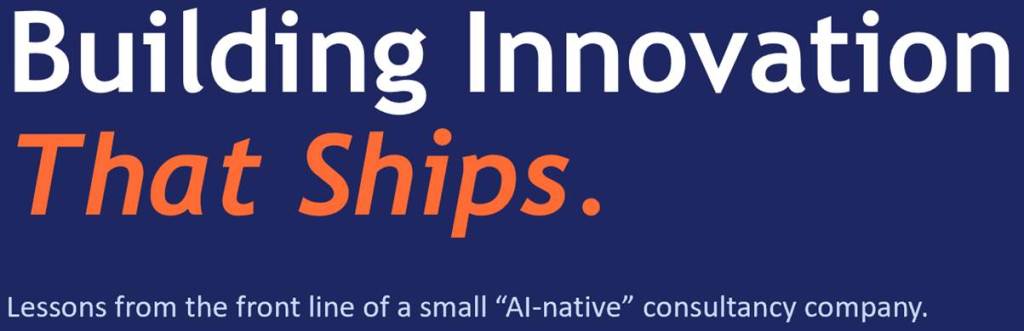
Framed around the idea of “building innovation that ships”, Phil began by reminding students that the process they have just been through in their University ‘Innovation & Project Management’ module, included important steps: ideation, design, build, and ship, is not an academic exercise. It’s the same arc used by real Tech & SaaS companies and digital consultancies.

Phil’s session challenged students to think about the qualities he & employers looks for. The takeaway was simple but powerful:

The frameworks you’re using now are not practice for the job: They are the job.

What actually makes an innovation project stand out? At the heart of the lecture were four pillars Phil uses when judging innovation projects, the same criteria used by founders, investors, and employers:

  1. A real problem, for a real user: Evidence of even a handful of genuine user conversations beats pages of assumptions. Winning projects show how user insight actively shape design decisions.
  2. Credible execution: Not just can it work, but can it survive? Students were encouraged to reflect on scalability, support, and  importantly: what they deliberately chose not to build.
  3. Commercial or strategic logic: Every project needs a clear ‘so what?’. Who pays? Who adopts it? Why does it matter now? And why is it credible?
  4. Clear differentiation: In a world where software can be built faster than ever, the key question is no longer can you build it? but what makes this hard to copy?

A real-world pivot from SHIPMAX:
One of the most valuable moments came when Phil shared a SHIPMAX ‘war story’, a SaaS idea he was close to funding, before pulling the plug.

As AI‑driven development tools rapidly lowered the cost of building software, the competitive ‘moat’ or distance has disappeared. Rather than pushing ahead with a product that could be copied in a weekend, Phil chose not to build that time, quickly pivoting resources and expertise into new projects that would yield sustainable and strategic growth for his company.

While staying at the cutting edge and adopting the latest tech developments has greatly benefited the expansion of Phil’s company, his experience and expertise creates a self-trust that brings an agility and discernment to focus his time and energy where it matters most. = A recipe for Success.
Phil also highlighted patterns he sees repeatedly in student and early‑stage projects:

  • Feature creep instead of focus
  • Claims of user demand without evidence
  • No clear distribution or discovery strategy
  • Strong work undermined by weak storytelling

His advice? Treat the narrative as part of the product. Innovation isn’t just what you built, it’s how you explain why you built it.

AI, data, and the new baseline for graduates:
Drawing on insights from a recent AI conference at MIT, Phil warned against chasing models and tools without first getting the foundations right.

Clean, well‑structured data, he argued, is becoming a genuine competitive advantage. At SHIPMAX, AI is already used to compress hours of research into minutes, not by magic, but through disciplined data handling and clear workflows.

For students entering the tech industry in 2026, the message was clear:

  • “Can you build it?” is now table stakes (the minimum requirements)
  • Judgement beats raw technical ability
  • Data quality compounds over time

Phil closed with a challenge to students shortlisted for the Best Innovation Project 2026, sponsored by SHIPMAX:

“If your project lands on my desk, I’ll read every word. Make it worth my reading time.”

Phil’s talk was open and authentic, confidence‑building, less about perfection, more about honesty, refreshingly aligned with how modern digital work really gets done and very valuable to our students.

The Academic team at UWTSD’s School of Applied Computing would like to thank Phil for taking the time to speak with our students and for sharing his valuable experience, industry knowledge and insights 👏. Diolch yn fawr iawn 😊. Thank you Phil, we look forward to future collaborations 👍
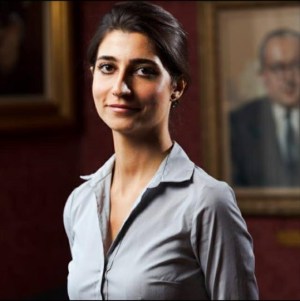
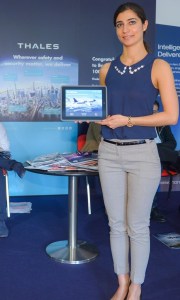
Graduate Profile: Ana Mirsayar

anamirsayar-1

Q. What is your Name? Ana Mirsayar

Q. What was your University course?
· BEng Computer System and Electronics
· MSc e-Commerce
· PHD in Telecommunications from King’s college London

Q. What is your job title and role? UK RTI (Research, Technical and Innovation) Coordinator/ Project Manager. I work for Thales UK, Vice President of RTI which enables me to get a helicopter view of the company’s business units (Under water systems, Avionics, Defence, Cyber security and Transportation). I go to different Thales sites to hear the progress on major works. I also manage my own projects

Q. Could you briefly describe the organisation you work for? Thales is a French company that has expanded internationally. They work on many different business units and some great examples of their work can be found under the activities tap. It is such a large company with a vast scope of work that if I was to give you small examples then I won’t be doing it justice.

anamirsayar

Q. Which skills learned at University are helpful to you in your job? Some of the soft skills that became handy were communication, team work, task prioritising and discipline and the attention to details particularly for example in PCB design. Work under pressure, I remember for our final project work one of the guys dropped out of the course due to personal reasons and we had to pick up on his work and still deliver on the same deadline.

Q. Do you have a typical day and how would you describe it? I am usually in a couple of teleconferences, and a meeting or two. On a quiet day I look at the road map for my projects to monitor progress. I regularly ask for updates from the team and plan ahead and I allocate tasks to members. I must say that I’ve only been managing projects in the last year. Before which I was a senior design engineer who designed and developed mathematical algorithms. So I’d say my maths modules became very useful. Also understanding the systems at a top layer and looking down was also something I had learnt at university which is essential for detailed designing as you need to understand the concept of operation and applications.

Q. What aspects of your job do you enjoy most? I enjoy having an appreciation for the technical nature of the work as it always helps the project managers make better decisions in comparison to the mangers that have a business background. My job is varied and it involves travelling inside and outside the UK which I do enjoy. Interacting with customers and hearing their needs for our products is also enjoyable.

Q. Do you have any advice for students who would like to start a Career? My humble opinion for the students would be not just to study for a label (PhD) or just to get high marks. Make sure you really understand the concept because the devil is in the details and that is the most important thing. Engineering is a great career to have as it is fun, satisfying, challenging and its safe, as many surveys show that job security in engineering is quit high.

Graduate Profile: Richard Evans @ University of Greenwich

Richard

Richard Evans studied the MSc e-Commerce (Business pathway) at the School of Applied Computing UWTSD Swansea. He is now a Research Fellow @ the University of Greenwich, to learn more about Richard’s Career success please continuing reading below.

What was your HE course at the School of Applied Computing?

 MSc in e-Commerce (Business).

 What is your job title and role?

 Research Fellow in Knowledge Management for Collaborative Product Development at the University of Greenwich

My role within the University of Greenwich is to conduct research into the use of Web 2.0 technologies to improve employee collaboration and knowledge sharing during product development lifecycles in extended supply chains. I am currently working in collaboration with CESi University, Rouen, France as part of a European INTERREG research project.

My responsibilities include: liaising and maintaining links with industrial collaborators, organising bi-annual industrial workshops, identifying potential funding opportunities and assisting with grant applications. I review articles for the International Journal of Modelling, Identification and Control and the International Conference on Teaching, Assessment and Learning for Engineering and am currently a member of the Host Organising Committee for the International Conference on Computer Aided Design and Applications Conference, which is being held at the University of Greenwich in 2015. Finally, I teach and assess two MSc modules within the Faculty of Engineering and Science: Research Methodologies and e-Technologies. I am also a Visiting Lecturer at Cranfield University where I teach lectures to MSc students on the use of Web 2.0 Technologies in Business.

 Could you briefly describe the organization you work for?

The University of Greenwich is a British University with over 27,000 students and offers HE courses, including undergraduate and postgraduate degree programmes. The university has three main campuses situated in the South East of England. I currently work in the Centre of Innovative Product Development and Manufacturing (CiPDM) which sits within the Faculty of Engineering and Science.

The CiPDM carries out strategic research and consultancy in the manufacturing sector in areas such as new product development; collaboration between Original Equipment Manufacturers (OEMs) and their suppliers; digital and sustainable manufacturing; information and knowledge management; and product lifecycle management. The centre focuses on new enabling technologies and methods and processes for the design, manufacturing and servicing of high value complex engineering products and systems in the aerospace, automotive, power generation and general manufacturing sector. The centre employs six members of academic staff, including myself, and we currently have six full-time PhD students who work in collaboration with our industrial partners who include BAE Systems, Cummins Power Generation and Ford Motor Company.

 A brief summary of your Career, how you got to where you are today?

After finishing my MSc degree in e-Commerce, I immediately got offered the role of Online Product Manager for Dunelm Mill Ltd, the UK’s largest home furnishings organisation. I stayed in the role for 8 months before seeking funded PhD programmes; this led me to the position at BAE Systems, which I started in October 2010. During my PhD, I worked for BAE Systems’ Electronic Systems division in Rochester, Kent. I also became a professional member of both the Institution of Engineering and Technology (IET) and the British Computer Society (BCS). I successfully defended my PhD in August 2013 and was then offered a full-time role at the University of Greenwich as a research fellow in knowledge management for collaborative product development.

 Which skills learned at University are helpful to you in your job?

Good question! In my own experience, the knowledge I acquired in web programming has helped a lot during my PhD where I had to create a bespoke IT system. When working for Dunelm Mill, my knowledge of e-Commerce Law really helped – I think this is only available on the business route.

 Do you have a typical day and how would you describe it?

A typical day can take one of two routes:

  1. During term time, I would teach two lectures per week, meet with MSc students for supervision meetings, assess coursework submissions and conduct research, including reading academic publications, writing articles for submission. I also typically present at two international conferences per year within the fields of manufacturing and information systems.
  2. During non-term time, I spend all day conducting research – reading through publications and formilising my own ideas for new projects and publications. I would also assist the Centre manager in research grant applications and management.

What aspects of your job do you enjoy most?

Two aspects stand out: liaising with industrial collaborators – seeing your research being transferred into a commercial setting gives you a real “buzz” and also attending conferences and networking events – not only do you get to travel the world, but you get to meet new people from other Universities who may turn into collaborators on future projects.

 Do you have any advice for students who would like to start a Career in the IT industry? 

  • Do not underestimate your own knowledge and skills – you will find when you join a large organisation that you are more than capable with the knowledge which you have acquired at University.
  • Become a member of a professional association e.g. British Computer Society (BCS). Attend their networking events and gain knowledge about the current needs and challenges in the IT industry.
  • Gain greater knowledge of the current systems used within the IT industry e.g. in my role at Dunelm Mill, we used IBM WebSphere Commerce and Google Analytics for e-Commerce tasks. Having worked for BAE Systems, I found that Microsoft Sharepoint and Yammer is relied upon for employee collaboration whilst PTC WindChill and other PLM tools are used for manufacturing work.