Turn On Your Future @ UWTSD's School of Applied Computing & Electronics

Posts tagged ‘writing’

Bringing Plato’s Cave to Life with Immersive Technology

Bringing Plato’s Cave to Life: UWTSD Students Transform Ancient Philosophy Through Immersive Technology
How do you teach a 2,400-year-old philosophical thought experiment to a generation raised on digital technology?

At the University of Wales Trinity Saint David (UWTSD), the answer has been to step beyond the traditional classroom and into an immersive digital world.

A team of Games Design students has developed an innovative interactive recreation of Plato’s Cave, one of philosophy’s most famous and enduring thought experiments. The project brings together expertise from philosophy, games design, applied computing, and immersive technologies to create a learning experience that allows students to explore philosophical ideas in a completely new way.

Reimagining a Timeless Philosophical Concept:

Plato’s Allegory of the Cave has been used for centuries to explore questions about reality, perception, knowledge, and truth. Traditionally encountered through textbooks and classroom discussion, the allegory challenges learners to consider how much of what they perceive is genuine reality and how much may simply be a shadow of something deeper.

Summary: Plato’s Allegory of the Cave
Plato’s Allegory of the Cave is a powerful philosophical story about the difference between appearance and reality. In the allegory, prisoners spend their lives chained inside a cave, seeing only shadows on a wall and believing those shadows to be the whole of reality. When one prisoner escapes and discovers the world outside, he realises that what he once accepted as truth was only a limited representation of a much greater reality.

The allegory is often understood as a metaphor for education and personal growth. Plato suggests that true learning is not simply about acquiring information, but about transforming the way we see the world. It encourages us to question assumptions, challenge accepted beliefs, and seek a deeper understanding of truth rather than accepting appearances at face value.

On a deeper level, the allegory can also be viewed as a journey of awakening. The cave represents limited awareness, the shadows symbolise misconceptions and conditioned beliefs, and the journey into the light represents the pursuit of wisdom, knowledge, and greater consciousness. Its enduring message is that growth begins when we are willing to move beyond the familiar and explore a fuller understanding of reality.

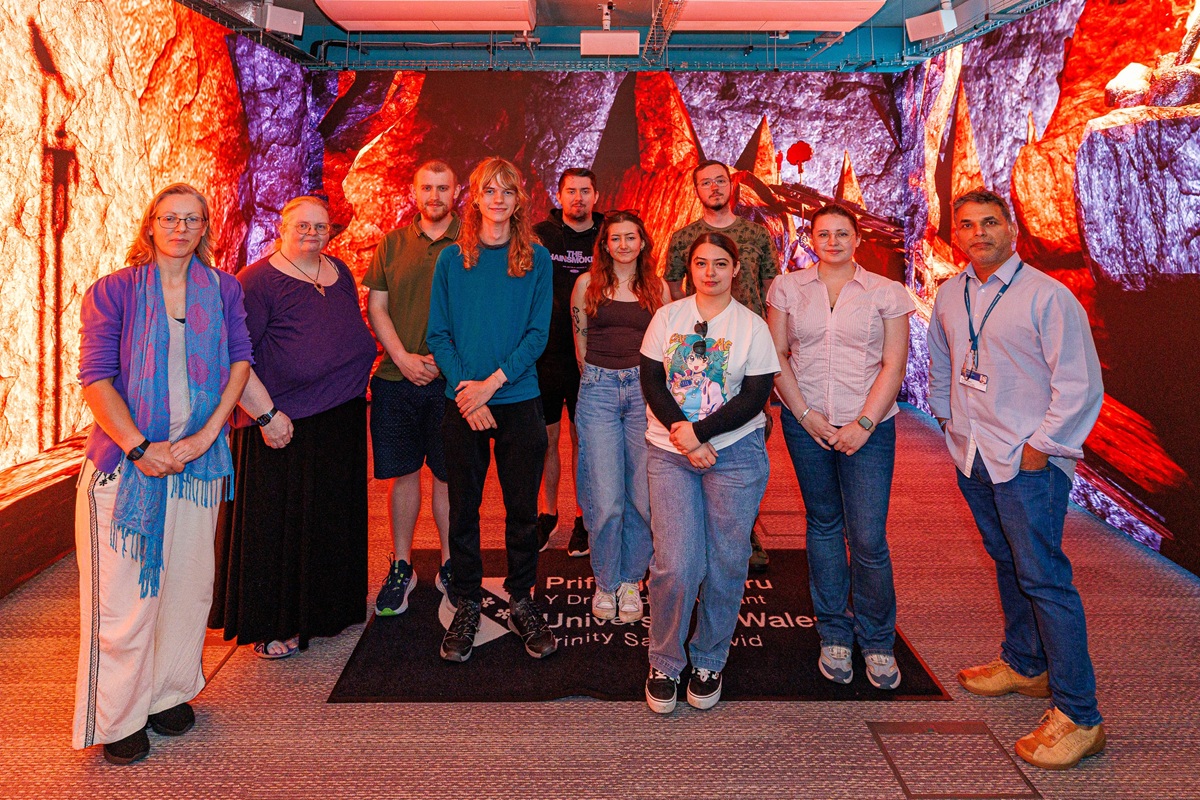
Now, UWTSD students have transformed this ancient philosophical narrative into a fully immersive digital experience within the University’s Interactive Room at Y Fforwm in Swansea. Working with academic staff from the School of Applied Computing, seven Games Design students recreated Plato’s Cave using professional game development technologies and production techniques.

A Truly Interdisciplinary Project:

One of the most exciting aspects of the project is its collaborative and interdisciplinary nature. Students took on specialist industry-style roles including:

  • 3D Modelling
  • Animation
  • Sound Design
  • Texturing
  • Lighting
  • Unreal Engine Development

By mirroring professional creative industry workflows, the project provided students with valuable real-world experience while contributing to an innovative educational resource for the University. The initiative demonstrates how authentic learning experiences can simultaneously support student professional development and enhance teaching and learning across disciplines.

Technology Enhancing Learning:

While the project is rooted in philosophy, its impact reaches much further. The immersive experience has been designed not only for philosophy teaching but also for subjects such as media studies, semiotics, digital humanities, art, and creative technologies. The resource offers educators an engaging way of exploring abstract concepts through experiential learning, enabling students to move beyond passive observation and actively engage with complex ideas.

Importantly, the experience is available in both Welsh and English, making it one of the first immersive philosophy teaching resources of its kind to offer bilingual delivery. This reflects UWTSD’s commitment to accessibility, inclusivity, and innovation in education.

Student Learning Beyond the Classroom:

The project formed part of a student internship initiative, giving participants the opportunity to work on a genuine educational brief with a lasting impact. Beyond developing technical expertise, students strengthened key employability skills including:

  • Teamwork
  • Communication
  • Creative problem solving
  • Project management
  • Cross-disciplinary collaboration

Student participant Joshua Platt highlighted how the experience enabled the team to combine technology, creativity, and education while developing valuable professional capabilities for their future careers.

Professor Nik Whitehead emphasised the significance of bringing together philosophy, games design, and immersive technology to create an educational experience that reaches broader audiences, with the bilingual approach helping to maximise accessibility.

The Future of Immersive Education:

Projects such as this highlight the growing potential of immersive technologies in education. Rather than simply reading about concepts, learners can increasingly experience them, creating deeper engagement and understanding.

The Plato’s Cave project represents more than a technological achievement. It demonstrates how universities can blend Humanities and Digital Technologies to create powerful learning experiences that prepare students for future careers while enriching the educational experience for others.

As higher education continues to explore new approaches to teaching and learning, UWTSD’s immersive interpretation of Plato’s Cave provides an inspiring example of how ancient ideas can find new life through modern technology.

The shadows on the cave wall may be ancient, but the future of learning is anything but.

To learn more about UWTSDs Computing courses please click-here.

Student profile: Hamza Qasim

Name: Hamza Qasim

What University course are you doing? MA Masters in Animation at UWTSD.
This follows my completion of a BA in Computer Games Design at UWTSD, where I spent 3 fulfilling years building my foundation in digital arts and game development.

What truly inspires me about animation and the broader field of digital arts is the unlimited creative potential it offers. I have a genuine passion for games, animation, VFX, and CGI, particularly the captivating effects seen in Marvel movies. The ability to bring ideas to life through digital mediums and create immersive experiences that can transport viewers into different worlds is incredibly motivating.

Video below: BA Game Design animation by Hamza Qasim

Beyond the creative aspects, I’m inspired by how this field connects to my other interests, especially automotive design. The intersection of technical precision and artistic vision in CGI, particularly in automotive visualisation, represents the perfect blend of my passions. What makes this journey even more inspiring is the supportive environment at UWTSD, where I feel encouraged to explore emerging technologies and push the boundaries of what’s possible in animation and interactive media.

Video below: Portfolio from BA Games Design Yr.3 by Hamza Qasim

Throughout my Masters program, I’ve been developing a diverse range of technical and creative skills. On the technical side, I’ve advanced my proficiency in 3D modelling, animation, texturing, and rendering using various versions of Blender (4.0, 4.2, and 4.4). I’ve also expanded into video editing and composition using Wondershare Filmora 13, along with comprehensive sound design capabilities.

Video below: Cans by Hamza Qasim

Video below: Koi by Hamza Qasim

Recently, I’ve ventured into VR development using Unreal Engine 5.5, where I’ve learned to create custom blueprints for asset switching, material switching, and targeted interactions. One of my proudest achievements has been developing a real-time sun movement system that enhances environmental immersion in VR experiences.

Video below: Material Switching & Sun Movement by Hamza Qasim

Beyond technical skills, I’ve been developing crucial soft skills through modules like Leadership, Management and Ethics. This module, though different from animation, has taught me about various leadership styles, management approaches, and proper research methodologies, skills that are invaluable for any creative professional.

Favourite Technology: My current favourite tool is definitely Blender. While we also learn Maya at University, I’ve found that the modelling and animation skills transfer seamlessly to Blender, and it offers several advantages that make it exceptional for independent learning and creative work. What I love most about Blender is its comprehensive nature, I can model, sculpt, texture, animate, composite, and render all within a single application.

The fact that it’s completely free removes financial barriers to learning, and the extensive community support through YouTube tutorials and forums means that virtually any problem I encounter has likely been solved by someone else. The accessibility and community aspect of Blender have been game-changing for my learning process. While Maya still has some advantages, particularly for UV unwrapping, the plugins available for Blender help bridge most gaps, making it an incredibly versatile tool for independent artists and students.

Video below: Liminal Spaces using Advanced Techniques by Hamza Qasim

After you Graduate?
My career aspiration is to work as a CGI Artist at an automotive company, with Mercedes-Benz being my preferred destination. This goal is informed by my previous experience working there before enrolling at UWTSD, which gave me valuable insight into the industry and confirmed my passion for automotive visualisation.

Video below: Car in motion by Hamza Qasim

The automotive industry’s increasing reliance on high-quality CGI for marketing, design visualisation, and virtual showrooms aligns perfectly with my skills in 3D modelling, animation, and rendering. My experience with both traditional animation techniques and emerging technologies like VR positions me well for the evolving demands of automotive CGI, where immersive experiences are becoming increasingly important.

Video below: Cloth Reveal by Hamza Qasim

Advice for students?
My most important advice is simple but crucial: do something that you truly enjoy. Don’t choose a course based on others’ expectations or perceived prestige, choose it for yourself and your genuine interests.

I love what I study because it encompasses everything I’m passionate about: games, animation, VFX, CGI, and automotive design. This genuine enthusiasm makes the work feel less like a chore and more like an exciting challenge. When you’re passionate about your subject, you naturally strive for excellence and find yourself more resilient when facing difficulties.

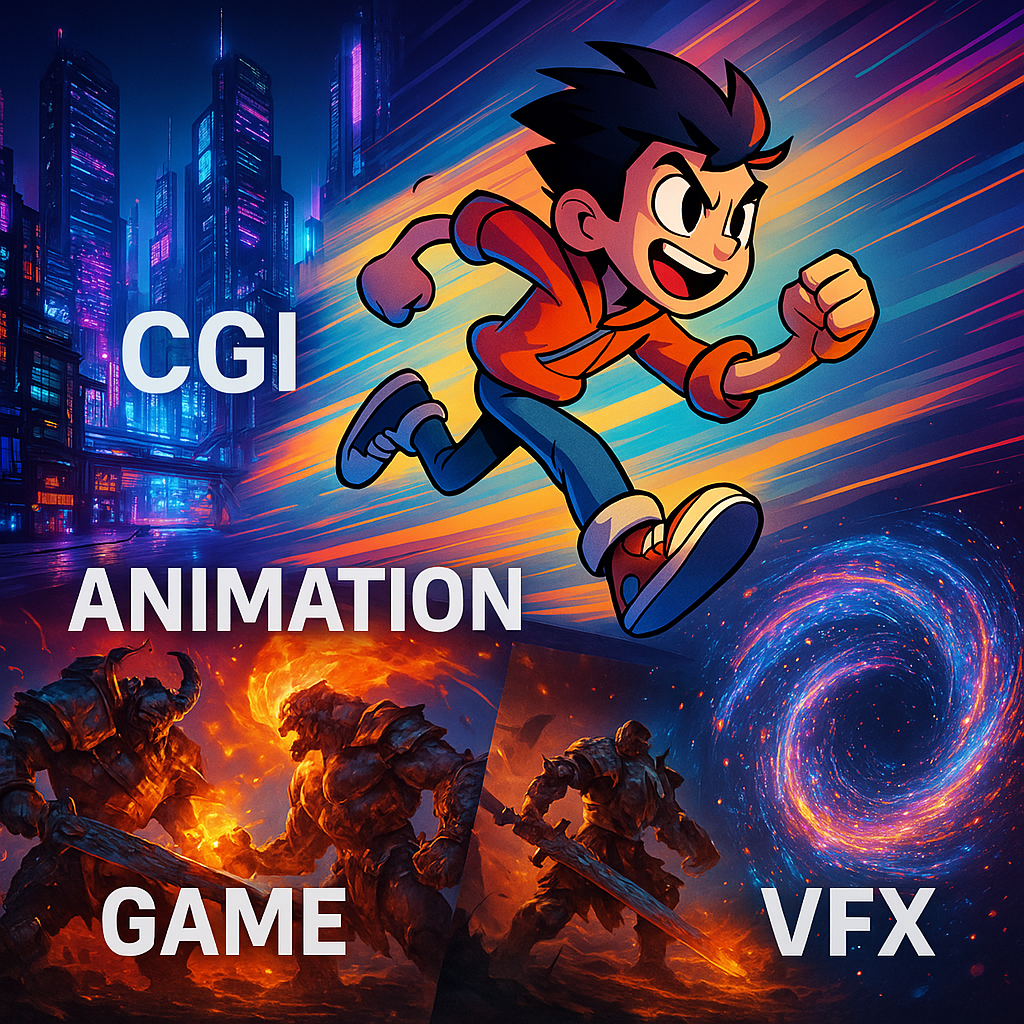
Fig.: Digital Arts image

Another key lesson I’ve learned is about perfectionism and deadlines. As an artist, I’ll always strive for perfection, but I’ve come to understand that sometimes you need to aim for the best work possible within tight deadlines rather than perfect work that never gets completed. It’s better to submit a strong, complete project than to miss deadlines chasing an impossible ideal of perfection. The balance between ambition and pragmatism is essential for success in any creative field.

Experience at UWTSD?
My experience at UWTSD has been absolutely transformative and couldn’t have been better. The support system here is extraordinary, from Richard Morgan in the Games Design department, who has been my rock throughout my three-year BA journey, to lecturers like Nabeel Masih, Adam Head, Philip Organ, and James Williams, who have consistently encouraged my growth and exploration of emerging technologies. The university’s holistic approach to student support extends beyond academics. The well-being department has been incredibly supportive during challenging times with my mental health, and the entire campus environment, from reception and canteen staff to lecturers, creates an atmosphere that feels genuinely supportive and nurturing.

I’ve had numerous opportunities for leadership and community involvement, serving as Student Representative for both my BA and MA courses and participating in the UWTSD Esports Committee, where we organised events and created lasting memories. The university even pushed me toward pursuing my Masters degree when I wasn’t initially planning to continue, a decision that has proven invaluable. The collaborative environment has allowed me to form lasting friendships with both staff and students, and I’ve been able to contribute through graphic design work for various university projects. If I could change anything about my university experience, it would be nothing, every aspect has been beneficial and has contributed to my growth as both a person and a professional.

~

For further information about Computer Games & Animation courses at UWTSD, please click here.