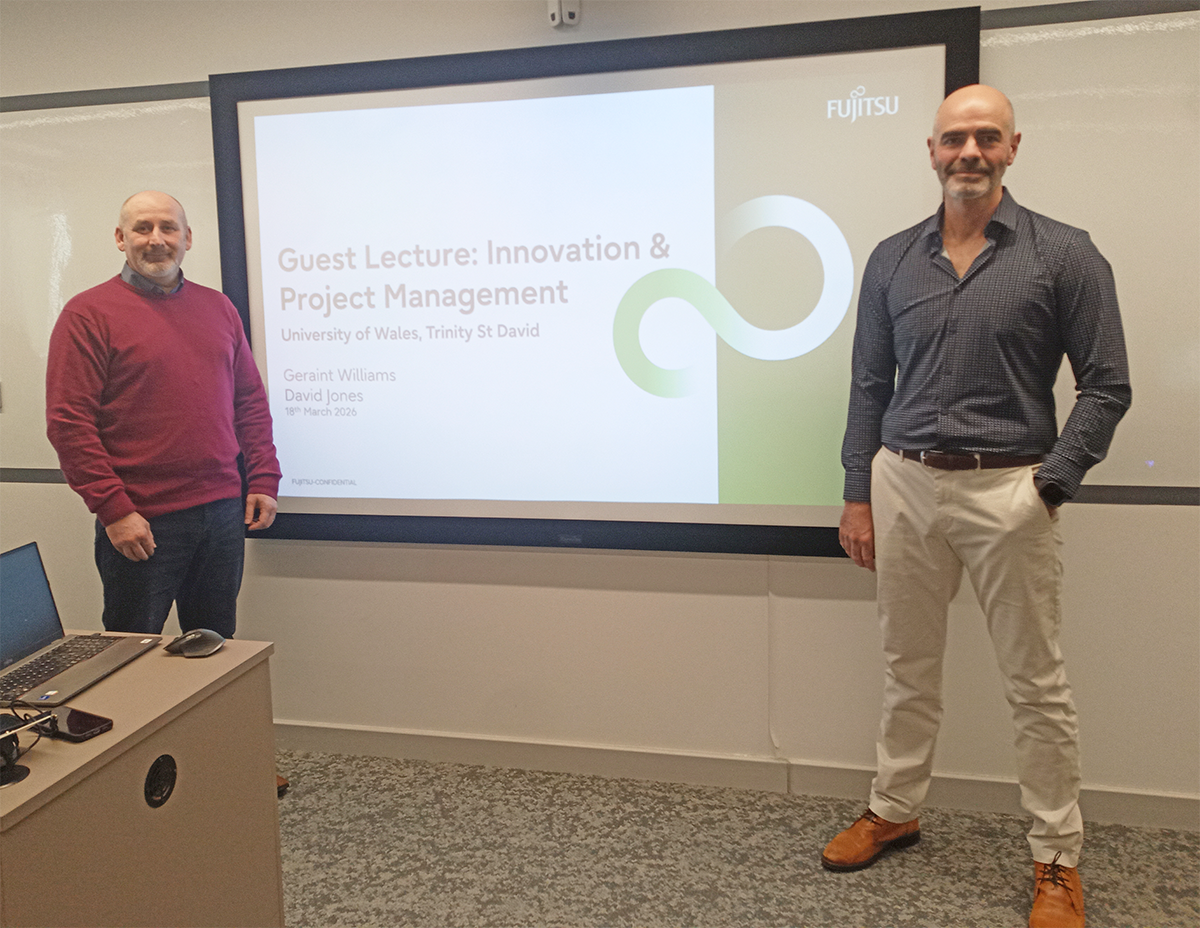
Geraint Williams (Director of Mission Control – left above) & David Jones (Principal Consultant – right above)
Many thanks to our industry partners from Fujitsu ‘David Jones‘ (Principal Consultant) and Geraint Williams (Director of Mission Control) for visiting the University again to speak with our students and share their valuable knowledge, skills, experience and insights.
Their industry guest Lecture titled ‘Innovation & Project Management‘, brought together decades of industry expertise, offering students a rare and valuable inside look into how innovation really happens within major organisations, and how modern project management brings ideas and solutions to life.
Drawing from Drucker, the UK Government, OECD, and their own experience, they showed that innovation is fundamentally about:
Doing something new that creates value
Improving outcomes, efficiency, effectiveness, and quality
Turning ideas into implemented change that benefits people and society
Innovation succeeds when it is: Novel, Implemented (not just imagined), Value-creating and Adaptable to changing needs.
They outlined different types of innovation and what drives Successful innovation. And that a sustainable innovation culture rests on four pillars:
Leadership that champions experimentation
Workforce empowerment and diverse skills
Processes that are agile and user‑centred
Partnerships across academia, industry, and civil society [
The second half of the session unpacked real-world project delivery, comparing traditional and modern AgileProject Management approaches.
Both speakers gave insights from major industry projects. They emphasised that innovation means nothing unless it can be delivered, and delivery fails without the ability to innovate. Students gained industry insights and a powerful, industry‑tested message: Technology, Solutions & Big ideas matter. Bold leadership matters. But People and the Social element are vital for success: Collaboration is what turns ideas into real positive impact and results.
Geraint Williams “Thoroughly enjoyed speaking with the students and sharing industry insights on driving successful innovation, along with the pros and cons of different project management methodologies.”
David Jones “It was a great opportunity to come back to UWTSD and bring some insights from working in a wide variety of roles through my career. Focusing on Innovation and Project Management, I was able to share real‑world perspectives on how organisations navigate change, deliver value, and harness creative thinking to solve complex challenges.”
We would like to thank both David & Geraint for taking the time to come back to the University again to share their valuable experience and expertise. And look forward to further collaboration in the future. Diolch yn fawr iawn.
Graduate profile for Dale Warner, a Solutions Engineer at Cisco.
"Exposure to new and challenging events is critical. Everyone is winging it; no one can know it all."

"Creativity requires play, and play can be messy. Embrace the cluttered desk!"

"My days can range from face-to-face customer meetings across the UK, building high level plans/designs/BoMs from my home office, or turning my time to study so I can stay on-top of the latest technology trends."
Q. Job title and role? Solutions Engineer at the Central Government Team at Cisco
Q. Briefly describe the organization you work for? Cisco are the market leader when it comes to networking. They also provide cutting edge technologies and services across a wide range of areas; Security, collaboration, observability, to name a few.
Q. Which skills learned at university are helpful to you in your job? While at university the most important skill I learned was how to concisely present a complex idea or solution. Being able to do so allows me to talk and explain new products and ideas to customers, cutting out all the unnecessary fluff.
Q. A typical day and how would you describe it? Like any engineer, two days are very rarely the same. But I talk with customers about their technical issues and look to provide Cisco solutions to bridge the gap. This requires me having a board understanding of a range of technologies and where/how Cisco products can be used. My days can range from face-to-face customer meetings across the UK, building high level plans/designs/BoMs from my home office, or turning my time to study so I can stay on-top of the latest technology trends.
Q. What aspects of your job do you enjoy most? I enjoy meeting customers, understanding their needs, and proposing suitable solutions. This, alongside learning on the latest technologies and having a future vision of the technology industry.
Q. Advise for students who would like to start a Career? It’s okay not to have an end goal, so long as you know what you want to do next. When your end destination isn’t set you can put all your effort into achieving your next goal. Exposure to new and challenging events is critical. Everyone is winging it; no one can know it all.
Q. A quote that you like / live by / inspires you? My favorite quote is a quip from Albert Einstein “if a cluttered desk is a sign of a cluttered mind, of what, then, is an empty desk a sign?” I’d like to add – creativity requires play, and play can be messy. Embrace the cluttered desk!
Thank you for your profile Dale, it will help to inspire current and future students. We are most grateful. We hope to see you at future alumni events. Well done and Congratulates on your success Dale. Da iawn a llongyfarchiadau Dale
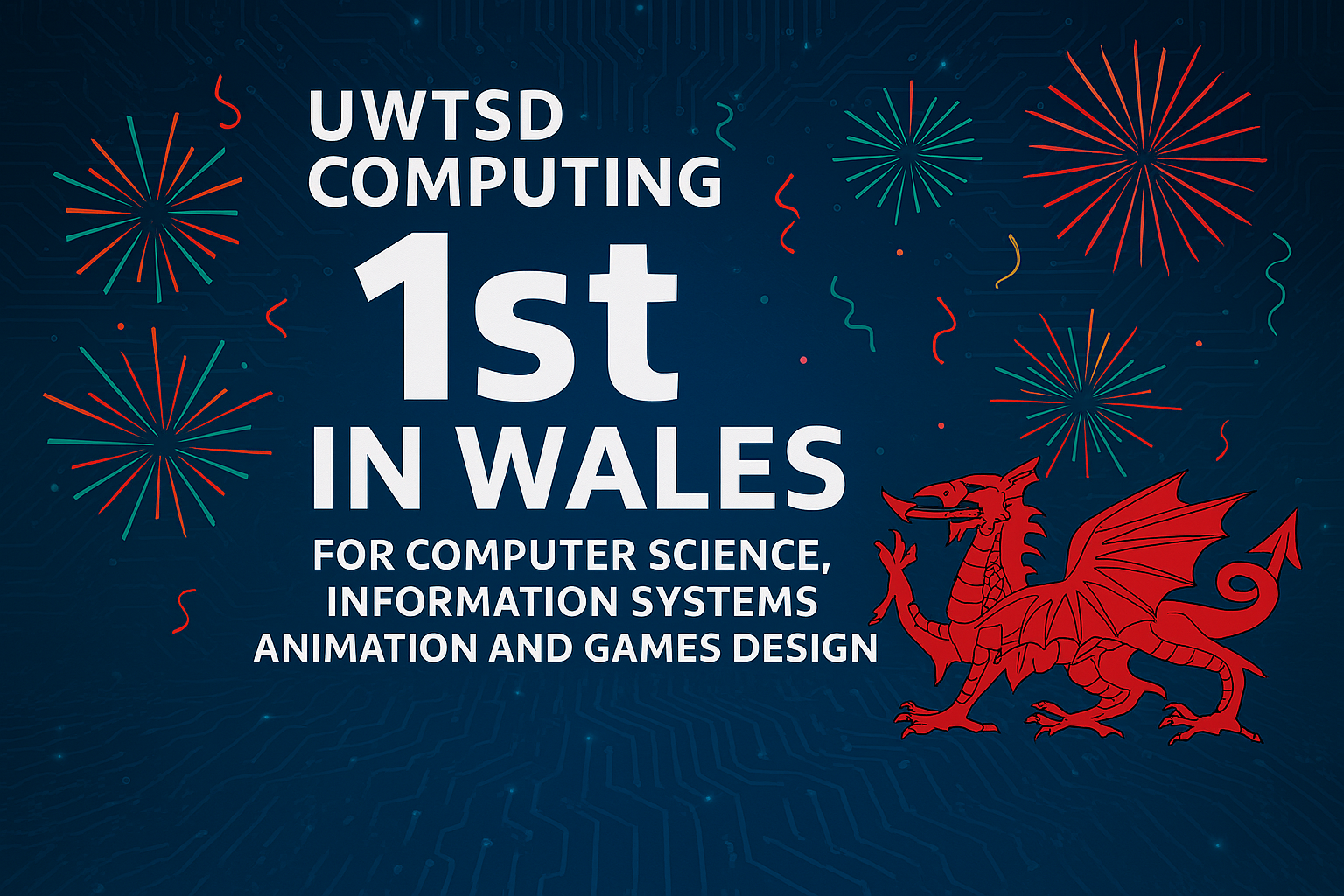
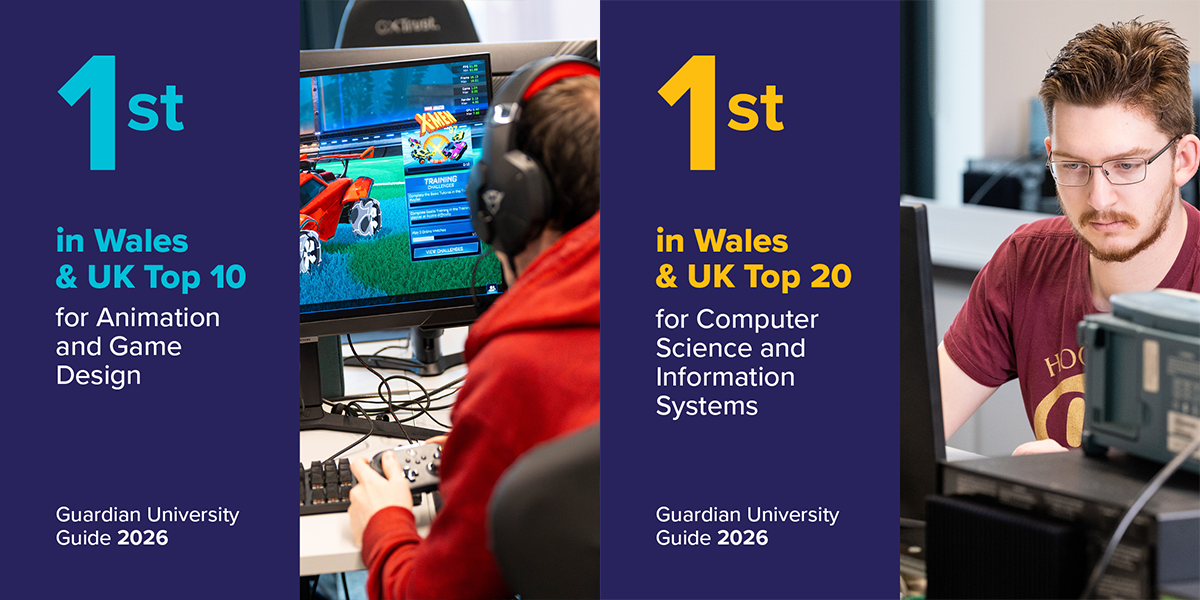
We’re thrilled to announce that in the Guardian University Guide 2026, our courses have ranked 1st in Wales & 9th in the UK for Animation & Games Design and 1st in Wales & 11th in the UK for Computer Science and Information Systems. 🎉🎊
This achievement reflects our dedication to delivering hands-on, real-world industry relevant learning experiences, with exceptional student support. Our highly qualified, industry-experienced staff work hard to ensure students are prepared for a successful future with the practical knowledge & employability skills they need to excel.
A huge thank you to our students, staff, and supportive community for making this recognition possible. 🙏👍
For information about our courses, please click-here.
What truly inspires me about animation and the broader field of digital arts is the unlimited creative potential it offers. I have a genuine passion for games, animation, VFX, and CGI, particularly the captivating effects seen in Marvel movies. The ability to bring ideas to life through digital mediums and create immersive experiences that can transport viewers into different worlds is incredibly motivating.
Video below: BA Game Design animation by Hamza Qasim
Beyond the creative aspects, I’m inspired by how this field connects to my other interests, especially automotive design. The intersection of technical precision and artistic vision in CGI, particularly in automotive visualisation, represents the perfect blend of my passions. What makes this journey even more inspiring is the supportive environment at UWTSD, where I feel encouraged to explore emerging technologies and push the boundaries of what’s possible in animation and interactive media.
Video below: Portfolio from BA Games Design Yr.3 by Hamza Qasim
Throughout my Masters program, I’ve been developing a diverse range of technical and creative skills. On the technical side, I’ve advanced my proficiency in 3D modelling, animation, texturing, and rendering using various versions of Blender (4.0, 4.2, and 4.4). I’ve also expanded into video editing and composition using Wondershare Filmora 13, along with comprehensive sound design capabilities.
Video below: Cans by Hamza Qasim
Video below: Koi by Hamza Qasim
Recently, I’ve ventured into VR development using Unreal Engine 5.5, where I’ve learned to create custom blueprints for asset switching, material switching, and targeted interactions. One of my proudest achievements has been developing a real-time sun movement system that enhances environmental immersion in VR experiences.
Video below: Material Switching & Sun Movement by Hamza Qasim
Beyond technical skills, I’ve been developing crucial soft skills through modules like Leadership, Management and Ethics. This module, though different from animation, has taught me about various leadership styles, management approaches, and proper research methodologies, skills that are invaluable for any creative professional.
Favourite Technology: My current favourite tool is definitely Blender. While we also learn Maya at University, I’ve found that the modelling and animation skills transfer seamlessly to Blender, and it offers several advantages that make it exceptional for independent learning and creative work. What I love most about Blender is its comprehensive nature, I can model, sculpt, texture, animate, composite, and render all within a single application.
The fact that it’s completely free removes financial barriers to learning, and the extensive community support through YouTube tutorials and forums means that virtually any problem I encounter has likely been solved by someone else. The accessibility and community aspect of Blender have been game-changing for my learning process. While Maya still has some advantages, particularly for UV unwrapping, the plugins available for Blender help bridge most gaps, making it an incredibly versatile tool for independent artists and students.
Video below: Liminal Spaces using Advanced Techniques by Hamza Qasim
After you Graduate? My career aspiration is to work as a CGI Artist at an automotive company, with Mercedes-Benz being my preferred destination. This goal is informed by my previous experience working there before enrolling at UWTSD, which gave me valuable insight into the industry and confirmed my passion for automotive visualisation.
Video below: Car in motion by Hamza Qasim
The automotive industry’s increasing reliance on high-quality CGI for marketing, design visualisation, and virtual showrooms aligns perfectly with my skills in 3D modelling, animation, and rendering. My experience with both traditional animation techniques and emerging technologies like VR positions me well for the evolving demands of automotive CGI, where immersive experiences are becoming increasingly important.
Video below: Cloth Reveal by Hamza Qasim
Advice for students? My most important advice is simple but crucial: do something that you truly enjoy. Don’t choose a course based on others’ expectations or perceived prestige, choose it for yourself and your genuine interests.
I love what I study because it encompasses everything I’m passionate about: games, animation, VFX, CGI, and automotive design. This genuine enthusiasm makes the work feel less like a chore and more like an exciting challenge. When you’re passionate about your subject, you naturally strive for excellence and find yourself more resilient when facing difficulties.
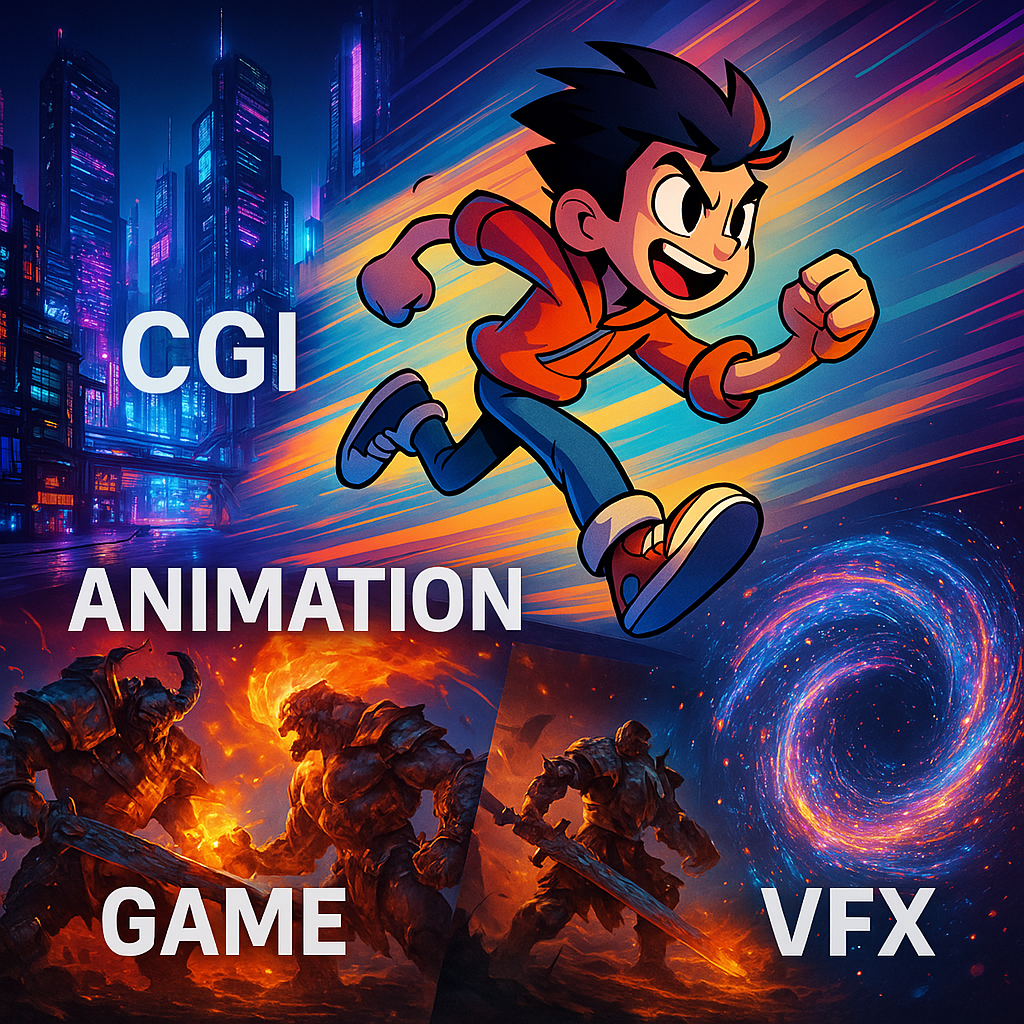
Fig.: Digital Arts image
Another key lesson I’ve learned is about perfectionism and deadlines. As an artist, I’ll always strive for perfection, but I’ve come to understand that sometimes you need to aim for the best work possible within tight deadlines rather than perfect work that never gets completed. It’s better to submit a strong, complete project than to miss deadlines chasing an impossible ideal of perfection. The balance between ambition and pragmatism is essential for success in any creative field.
Experience at UWTSD? My experience at UWTSD has been absolutely transformative and couldn’t have been better. The support system here is extraordinary, from Richard Morgan in the Games Design department, who has been my rock throughout my three-year BA journey, to lecturers like Nabeel Masih, Adam Head, Philip Organ, and James Williams, who have consistently encouraged my growth and exploration of emerging technologies. The university’s holistic approach to student support extends beyond academics. The well-being department has been incredibly supportive during challenging times with my mental health, and the entire campus environment, from reception and canteen staff to lecturers, creates an atmosphere that feels genuinely supportive and nurturing.
I’ve had numerous opportunities for leadership and community involvement, serving as Student Representative for both my BA and MA courses and participating in the UWTSD Esports Committee, where we organised events and created lasting memories. The university even pushed me toward pursuing my Masters degree when I wasn’t initially planning to continue, a decision that has proven invaluable. The collaborative environment has allowed me to form lasting friendships with both staff and students, and I’ve been able to contribute through graphic design work for various university projects. If I could change anything about my university experience, it would be nothing, every aspect has been beneficial and has contributed to my growth as both a person and a professional.
~
For further information about Computer Games & Animation courses at UWTSD, please click here.
Project Title: An affordable device for monitoring noise levels in home studio environments to warn users of duration-based hearing damage.
Purpose: As a drummer and someone who regularly practises in home studio environments, I quickly became aware of how easily you can be exposed to loud sounds for long periods. Many people only think about hearing damage in terms of volume, but in fact, long durations of noises that aren’t excessively loud can be just as dangerous. I wanted to build a simple and affordable device that could help raise awareness of this overlooked danger and help people protect their hearing.
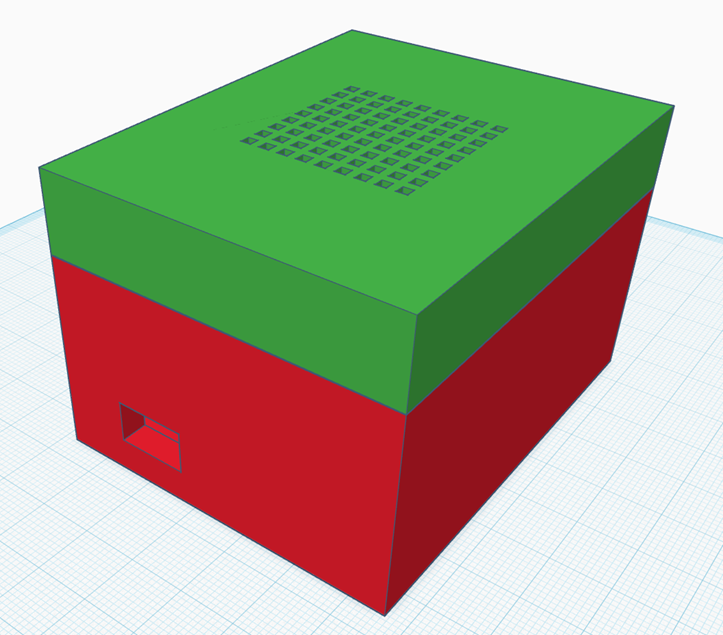
Fig.: Design
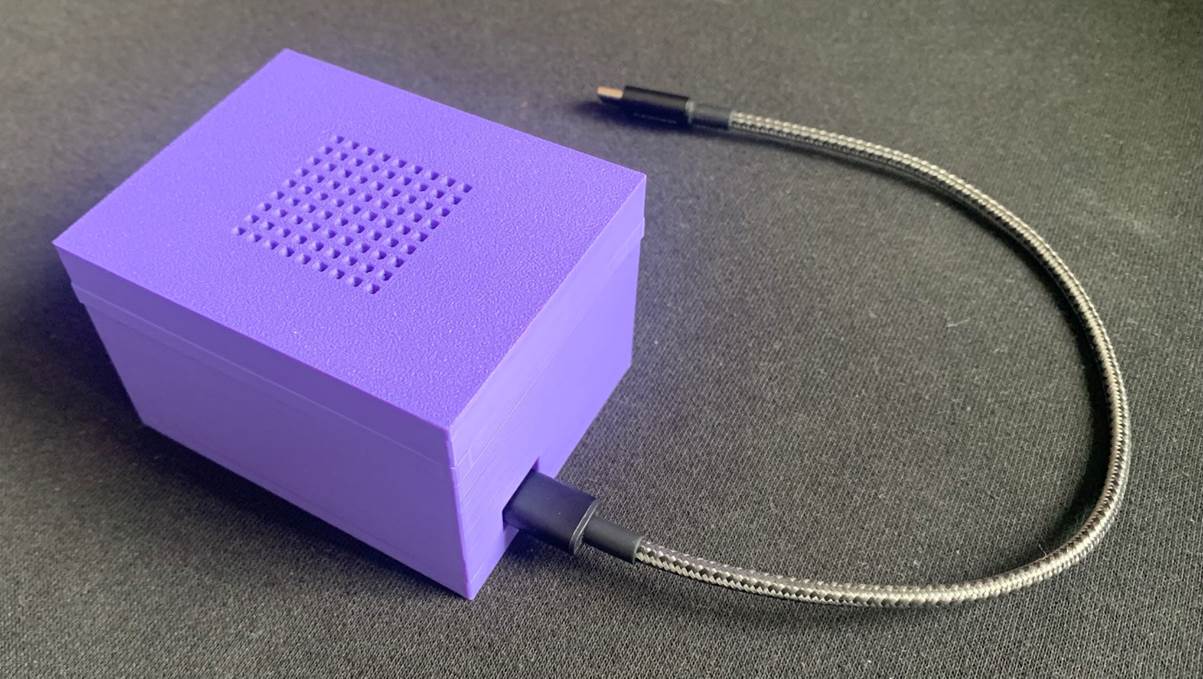
Implementation: The system consists of a small microphone and microcontroller, both housed in a compact 3D-printed case. The device connects to a desktop application built in Python. It monitors the noise in the room in real time, calculates how long it’s safe to be in that environment based on the current sound levels, and sends a warning when the average noise levels since starting the application reach a point where it becomes dangerous to continue listening.
Fig.: Case implementation
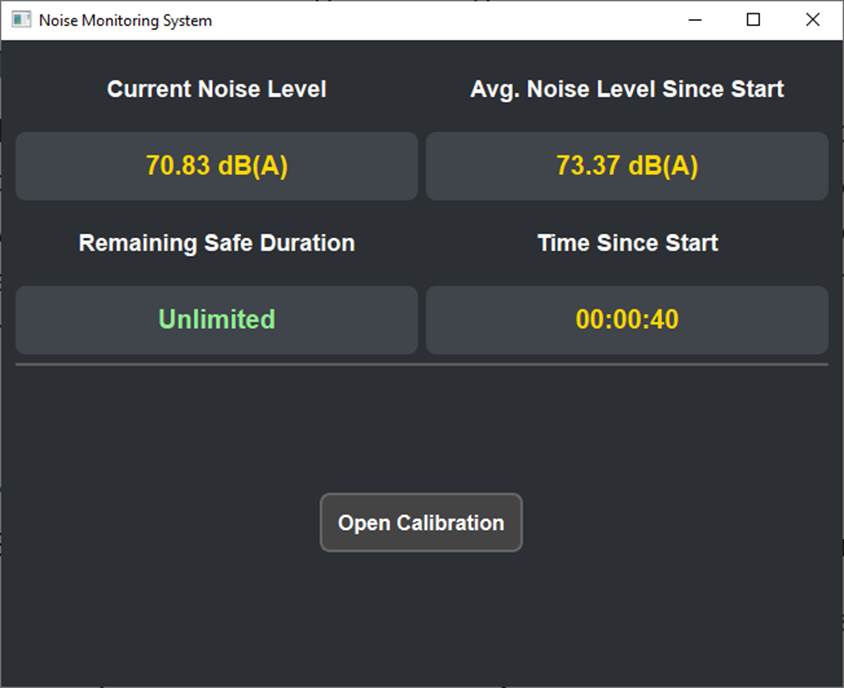
The GUI displays current noise levels, the average levels since starting, the time remaining before risk becomes high, and how long the app has been running. The system was built for under £20 and was tested with real users, receiving very positive feedback for its usability and clarity.
Fig.: Application
Conclusion: The final product was a reliable, accurate tool that helped users understand their sound environment better. It successfully raised awareness of long-term hearing risks and provided clear, real-time feedback. The project met all its core goals and achieved an excellent System Usability Scale (SUS) score of 89.5. It also received valuable suggestions from users, which could shape future improvements, such as wearable versions and mobile app integration.
Next steps: I’m hoping to move into a role that allows me to work with people and ideally in music or creative environments. I’m particularly interested in opportunities that combine practical problem-solving with collaboration. My degree in Software Engineering has given me a strong foundation in project planning, technical thinking, and building things that work in the real world – skills that will be useful in many industries, not just computing.
Advice for students: Your time and energy are limited, so it’s important to prioritise your studies and project work, especially in your final year. Balancing other commitments is part of life, but giving focused attention to your degree when it counts will really pay off. Also, don’t be afraid to use the tools available to you – make use of AI, but without breaching academic standards. Do use it to help guide research and explore ideas related to your studies, don’t use it as a copy-and-paste tool to blindly research information. AI isn’t going to go away, so it’s important you learn how to use it to assist your studies as early as possible in your degree. Good luck with your studies!
~
For further information about Computing & Computer Science courses at UWTSD, please click here.
Additional Occupation: Redevelopment Business Director
Q. The organisation you work for?
The BT and EE group is the UK’s largest residential Internet Service Provider, in addition to being the UK’s largest mobile phone network provider.
cc-fig.: BT EE
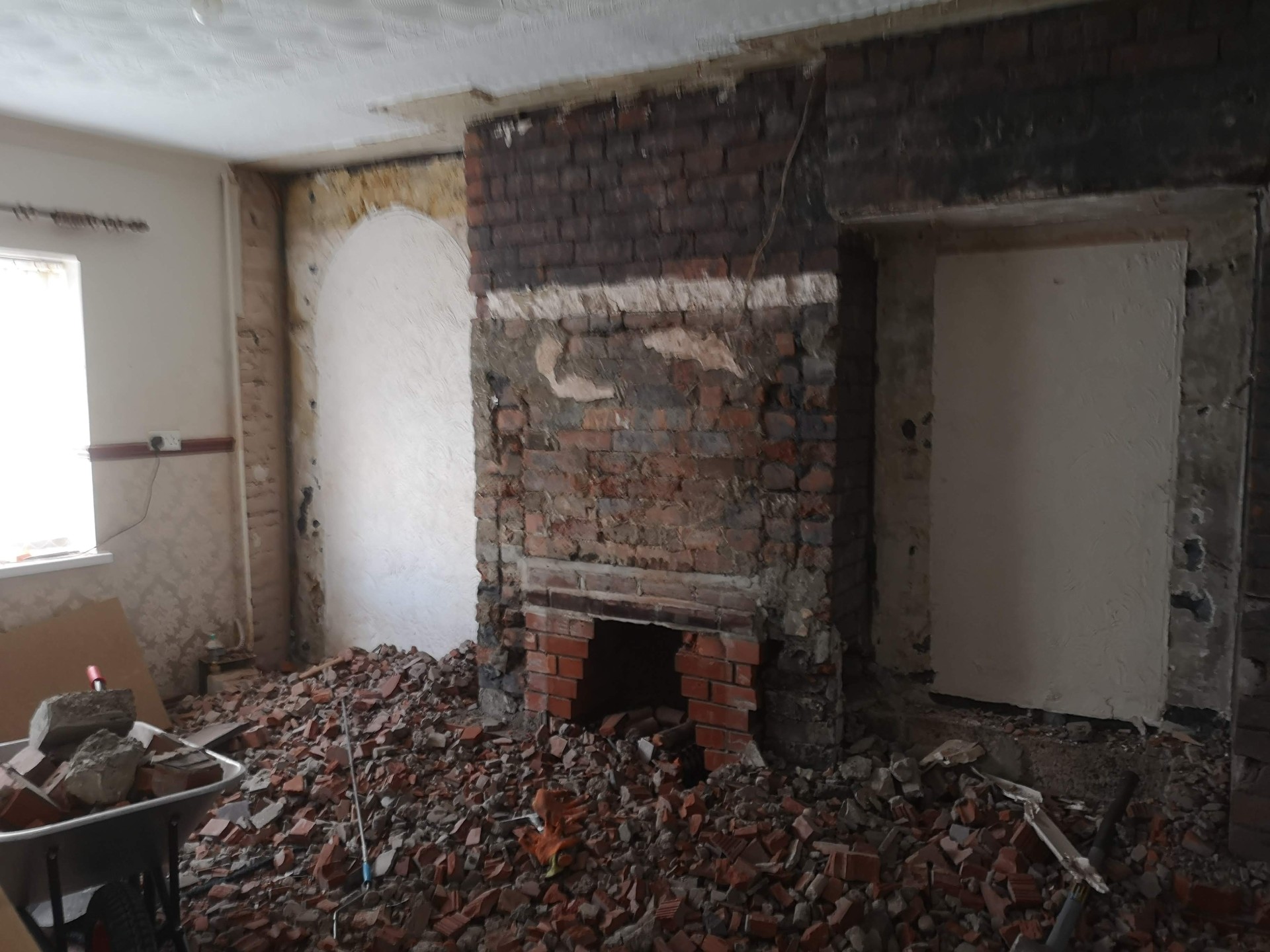
Additionally, I am the director of my own company, focusing on the redevelopment of properties and converting them into environmentally conscious, sustainable student lets. (Known officially as HMOs, Houses of Multiple Occupation.)
Fig.: Pre-renovation
Fig.: Post-renovation
Q. Which skills learned at University are helpful to you in your job?
As part of my undergraduate degree, I undertook modules such as ‘Managing People and Change’ and ‘Usability Engineering’. These modules provided me with real-world insight into how to lead and manage teams of individuals in my professional career. Additionally, usability engineering directly aided me in developing contemporary business plans and product/marketing strategies.
Q. What aspects of your job do you enjoy most?
Money.. Jokes aside, there is something incredibly satisfying in helping others achieve heights they once thought impossible. Turning low-confidence, underperforming team members into smiling, highly productive employees helps both the individual and the wider business achieve the goals and targets set before them.
The same satisfaction is directly correlated to the real-estate projects, as turning unloved, dilapidated properties into homes for multiple students allows me not only to see a project develop from its infancy until its final stage, but it also provides high-quality, lower-cost accommodation for individuals who are trying to achieve more for themselves.
Q. What opportunities has University opened up and supported you in pursuing?
Upon my graduation, the university kindly offered me the opportunity to pursue further study, such as PHD Doctoral support, and whilst at this stage I have not taken up this offer, the fact that this is available for high-achieving graduates illustrates how UWTSD is willing to invest and support in home-grown talent.
In addition, the network I built during my time at the university has proved invaluable, with friends who have become Mortgage Brokers (aided in real estate) and Openreach Engineers (Helped in my BT teams roll-out of FTTP in South Wales).
cc-fig.: BT Towers in Swansea (Wales) & London (England)
Q. Do you have any advice for students who would like to start a Career?
Do not be afraid to take risks. Through personal travel, I have visited nations where ‘real’ abject poverty is unavoidable. This reality check gave me a major perspective shift on the country we call home.
We are incredibly lucky to live in a country with such a strong safety net, so if you’re ambitious and have a business idea you really want to try, plan it out properly and then give it a go! Worst case scenario, you’re back where you started. Best case? Skies the limit.
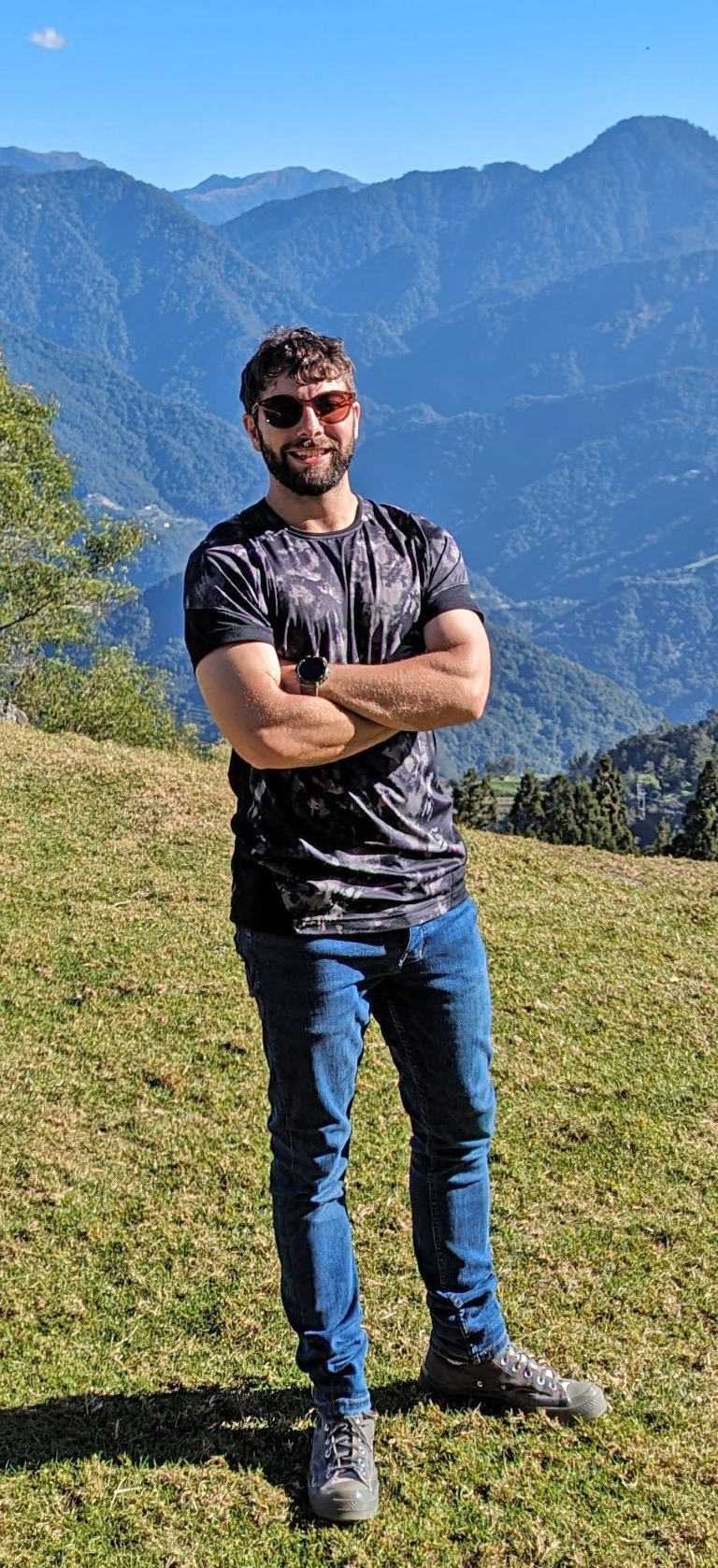
Fig.: Myles Anderson – 12,000ft above Sea-level in Taiwan.
Q. A Quote that sums up your time at the University?
“Do. Or do not. There is no try.” – Yoda
cc-fig: Yoda (Legendary Jedi Master)
~
For more information about Computing courses at UWTSD click-here.
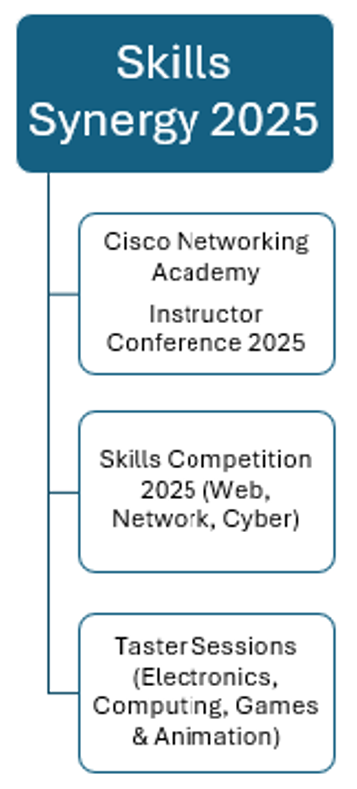
A dynamic day of learning, and competition for students and networking for Teachers. The student events are designed to inspire, challenge, and showcase skills in Web Technologies, Cybersecurity, and Network Systems Administration, tailored for Year 12, Year 13, and Further Education students.
Student Team Competitions:
A taster competition event to give an experience to the participants about the competitions and competition environment.
Students who are interested in one or more than one of the below domains are welcome to register. Students will get a taste of the competition with a briefing about competitions followed by a small competitive activity.
Schools/FE’s can register their students who are interested to get a taste on competitions like Web Technologies, Cybersecurity, and Network Systems Administration.
Limited Registrations. First come First Serve. Register immediately.
Taster Sessions for School Students:
Explore Computing (Cybersecurity, Digital Forensics, Software, Artificial Intelligence, Data Science), Electronics, and Games Design, Development, Animation, VFX in engaging hands-on sessions.
Cisco Instructors Conference:
A parallel session for Head Teachers, Teachers, Lecturers and Cisco Networking Academy Instructors to share best practices, network, and collaborate.
Event Details: Date: 26th March 2025 Time: 09:30 AM – 02.00 PM. Venue: Swansea Arena
For further information and inquiries, please contact Nitheesh Kaliyamurthy via email: n.kaliyamurthy@uwtsd.ac.uk
For further information about Computing & Computer Science courses at UWTSD Swansea, please click here.
This week, Nagaraj Ravinuthala, a DevOps trainer at HCL Technologies Limited and a specialised trainer for WorldSkills UK Squad on Infrastructure Automation, delivered a Guest Lecture on Network Automation and CI/CD to our students.
The lecture began with basic yet powerful concepts of deployment and CI/CD, connecting the dots between writing code, integrating APIs, and automating the process of pushing updates live. The session emphasized simplicity and clarity, presenting CI/CD as a pipeline that automates code testing, integration, and deployment to production environments.
“Think of CI/CD as a conveyor belt for your code,” explained Nagaraj. “You write it, test it, and deploy it—all in a streamlined process that ensures faster delivery and better reliability, which are essential in modern network automation workflows.”
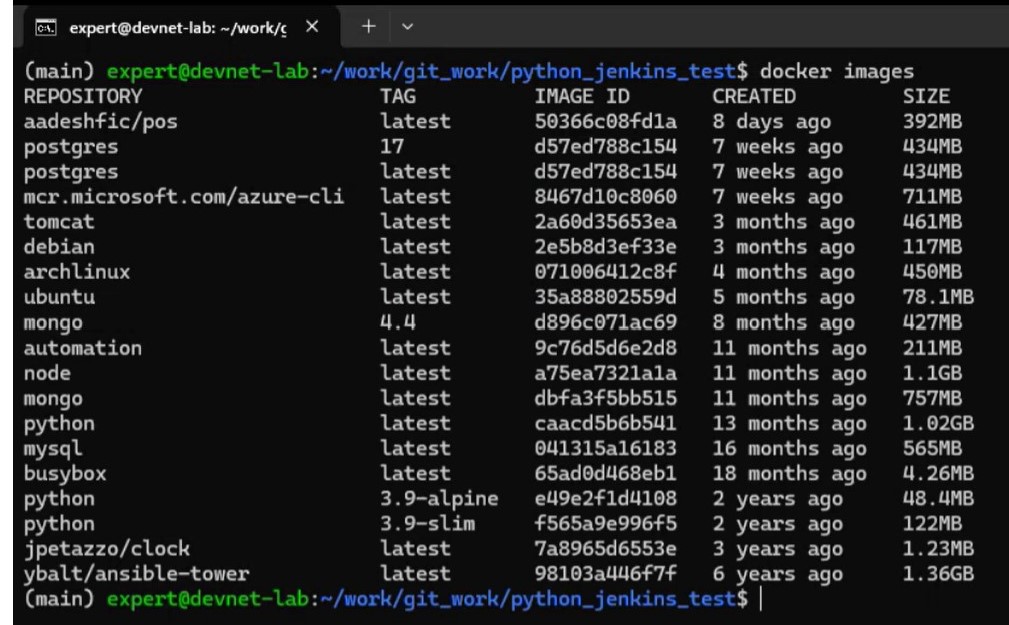
Students were introduced to tools and techniques aligned with Cisco’s CCNA DevNet, providing a glimpse into industry-standard practices. To make deployment relatable, the lecturer drew parallels with the earlier lectures on Python and API during their Network Programmability Module where the students integrated the OpenWeather API creating and running a Python script, and explaining that deployment involves taking code that works locally and making it accessible to users.
The session concluded with an interactive Q&A, where students enthusiastically asked about real-world applications of network automation and the career paths that mastery in CI/CD can unlock.
This guest lecture was an eye-opening experience for students, sparking curiosity and laying the foundation for further exploration in network automation. It was a step toward preparing them for the evolving demands of the industry.
We would like to thank Nagaraj Ravinuthala for taking time to speak and share valuable industry knowledge with our students.
For further information about our courses, please click-here.
Guardian University Guide: #1 in Wales and #20 in UK
We’re thrilled to announce that in the Guardian University Guide 2025, our Computing courses have ranked #1 in Wales 🏆 and #20 in the UK for Computer Science and Information Systems subject area.
This achievement reflects the dedication we bring to delivering hands-on, real-world learning experiences, alongside exceptional support that guides our students every step of the way. Our highly qualified, industry-experienced staff work tirelessly to ensure students are prepared for a future in tech with the practical skills and knowledge they need to excel.
A huge thank you to our outstanding students, dedicated staff, and supportive community for making this recognition possible.
Together, we’re shaping the future of tech in Wales and beyond! 🌍💻
For further information about Computing courses at UWTSD, please click-here.
Introduction/rationale: The motivation behind choosing the project stemmed from the growing need for more structured and standardized approaches to penetration testing and vulnerability assessment. With cyberattacks becoming increasingly sophisticated, organizations struggle to identify and remediate vulnerabilities efficiently.
TECH TERM: Penetration testing, often referred to as ‘pen testing‘, is a cybersecurity practice where ethical hackers simulate cyberattacks on a computer system, network, or web application to identify vulnerabilities that could be exploited by malicious hackers. The main goals of penetration testing is to: 1. Identify security weaknesses 2. Assess the effectiveness of security measures 3. Improve overall security posture: By identifying and fixing vulnerabilities, organizations can strengthen their defenses against potential cyber threats.
The MITRE ATT&CK Framework provides a well-defined structure for understanding adversarial techniques and tactics, making it ideal for enhancing VAPT (Vulnerability Assessment and Penetration Testing) methodologies. This project aimed to leverage MITRE’s capabilities to analyze risk, improve testing scope, and ensure that testing efforts are comprehensive and aligned with real-world threats.
Project overview: In this project, we integrated the MITRE ATT&CK Framework into the traditional VAPT methodology to refine the testing scope and increase effectiveness in detecting vulnerabilities. The steps involved included:
Defining the Scope: The project began by clearly defining the boundaries and goals of the penetration test. Using the MITRE Framework, specific attack vectors and techniques relevant to the organization’s environment were identified.
Conducting Vulnerability Scanning: Automated tools were used to perform initial vulnerability scans, identifying weak points that attackers might exploit.
Simulating Attacks Using MITRE Tactics: We designed attack scenarios based on the tactics and techniques outlined in MITRE ATT&CK, simulating adversarial behavior. This allowed us to target the actual risks that real attackers would exploit, rather than theoretical vulnerabilities.
Analyzing Results and Refining Scope: Post-attack analysis identified network gaps and weaknesses in current defenses. The scope of the testing was iteratively refined based on these findings.
Reporting and Remediation: Finally, comprehensive reports were generated, providing actionable insights for the security team, along with specific recommendations for closing vulnerabilities.
Visual Representation: A flow diagram illustrating the process of integrating MITRE with VAPT in Penetration Testing Stages, is located below:
Project outcome & conclusion: The integration of the MITRE ATT&CK Framework significantly enhanced the scope and depth of the VAPT process. By aligning testing activities with real-world adversarial tactics, the project was able to identify previously overlooked risks and vulnerabilities. The methodology provided a more focused, risk-based approach to penetration testing, ensuring that organizations could better prepare for and mitigate threats. The project demonstrated that using MITRE not only strengthens the identification of vulnerabilities but also offers a more comprehensive understanding of the adversarial techniques that could affect critical systems.
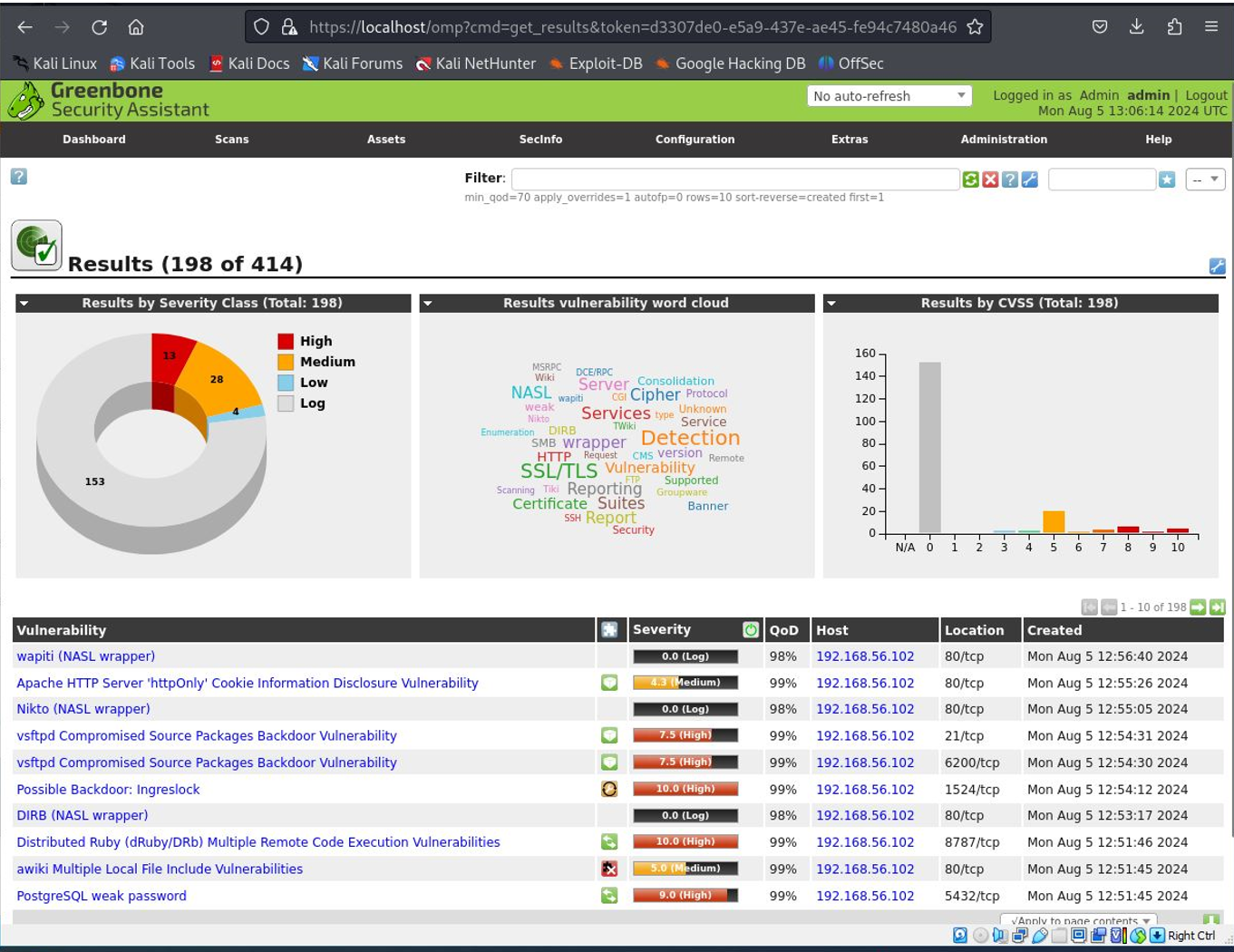
OpenVAS is a full-featured vulnerability scanning tool, that was used for this purposes of this project. An example output of vulnerability findings can be seen below:
Q. What Career and job role are you hoping to move into after graduation? After graduation, I am hoping to pursue a career in cybersecurity, with a specific focus on roles like:
Penetration Tester: Using tools and methodologies (such as MITRE ATT&CK) to identify vulnerabilities in an organization’s IT infrastructure.
Cybersecurity Analyst: Monitoring, analyzing, and defending against cybersecurity threats.
Security Consultant: Advising organizations on how to improve their security posture by implementing effective VAPT practices.
These roles align with my passion for understanding and mitigating cyber risks, particularly in offensive security and ethical hacking.
Q. Please share a top tip/advice for students who are interested in completing a University Degree? My top tip for students is to focus on practical applications of what you learn. Theoretical knowledge is important, but real growth happens when you apply it in real-world scenarios, whether through internships, projects, or labs. Hands-on experience not only solidifies your understanding but also makes you more marketable in the job market.
For further information about Computing courses at UWTSD, please click-here.














 UWTSD Applied Computing Blog