Turn On Your Future @ UWTSD's School of Applied Computing & Electronics

Posts tagged ‘Computing’

MSc Project: Cyber Security
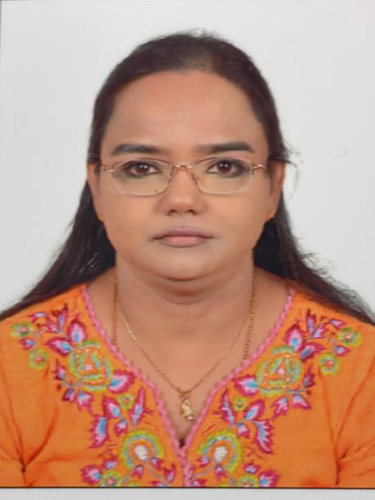
Student name:
Sakthi Sangeetha Kandaswamy

MSc Project title: Analysing risk in Vulnerability Assessment and Penetration Testing Methodology

Course: MSc Cybersecurity and Digital Forensics

Introduction/rationale:
The motivation behind choosing the project stemmed from the growing need for more structured and standardized approaches to penetration testing and vulnerability assessment. With cyberattacks becoming increasingly sophisticated, organizations struggle to identify and remediate vulnerabilities efficiently.

TECH TERM: Penetration testing, often referred to as ‘pen testing‘, is a cybersecurity practice where ethical hackers simulate cyberattacks on a computer system, network, or web application to identify vulnerabilities that could be exploited by malicious hackers. The main goals of penetration testing is to:
1. Identify security weaknesses
2. Assess the effectiveness of security measures
3. Improve overall security posture: By identifying and fixing vulnerabilities, organizations can strengthen their defenses against potential cyber threats.

The MITRE ATT&CK Framework provides a well-defined structure for understanding adversarial techniques and tactics, making it ideal for enhancing VAPT (Vulnerability Assessment and Penetration Testing) methodologies. This project aimed to leverage MITRE’s capabilities to analyze risk, improve testing scope, and ensure that testing efforts are comprehensive and aligned with real-world threats.

Project overview:
In this project, we integrated the MITRE ATT&CK Framework into the traditional VAPT methodology to refine the testing scope and increase effectiveness in detecting vulnerabilities. The steps involved included:

  • Defining the Scope: The project began by clearly defining the boundaries and goals of the penetration test. Using the MITRE Framework, specific attack vectors and techniques relevant to the organization’s environment were identified.
  • Conducting Vulnerability Scanning: Automated tools were used to perform initial vulnerability scans, identifying weak points that attackers might exploit.
  • Simulating Attacks Using MITRE Tactics: We designed attack scenarios based on the tactics and techniques outlined in MITRE ATT&CK, simulating adversarial behavior. This allowed us to target the actual risks that real attackers would exploit, rather than theoretical vulnerabilities.
  • Analyzing Results and Refining Scope: Post-attack analysis identified network gaps and weaknesses in current defenses. The scope of the testing was iteratively refined based on these findings.
  • Reporting and Remediation: Finally, comprehensive reports were generated, providing actionable insights for the security team, along with specific recommendations for closing vulnerabilities.

Visual Representation: A flow diagram illustrating the process of integrating MITRE with VAPT in Penetration Testing Stages, is located below:

Project outcome & conclusion:
The integration of the MITRE ATT&CK Framework significantly enhanced the scope and depth of the VAPT process. By aligning testing activities with real-world adversarial tactics, the project was able to identify previously overlooked risks and vulnerabilities. The methodology provided a more focused, risk-based approach to penetration testing, ensuring that organizations could better prepare for and mitigate threats. The project demonstrated that using MITRE not only strengthens the identification of vulnerabilities but also offers a more comprehensive understanding of the adversarial techniques that could affect critical systems.

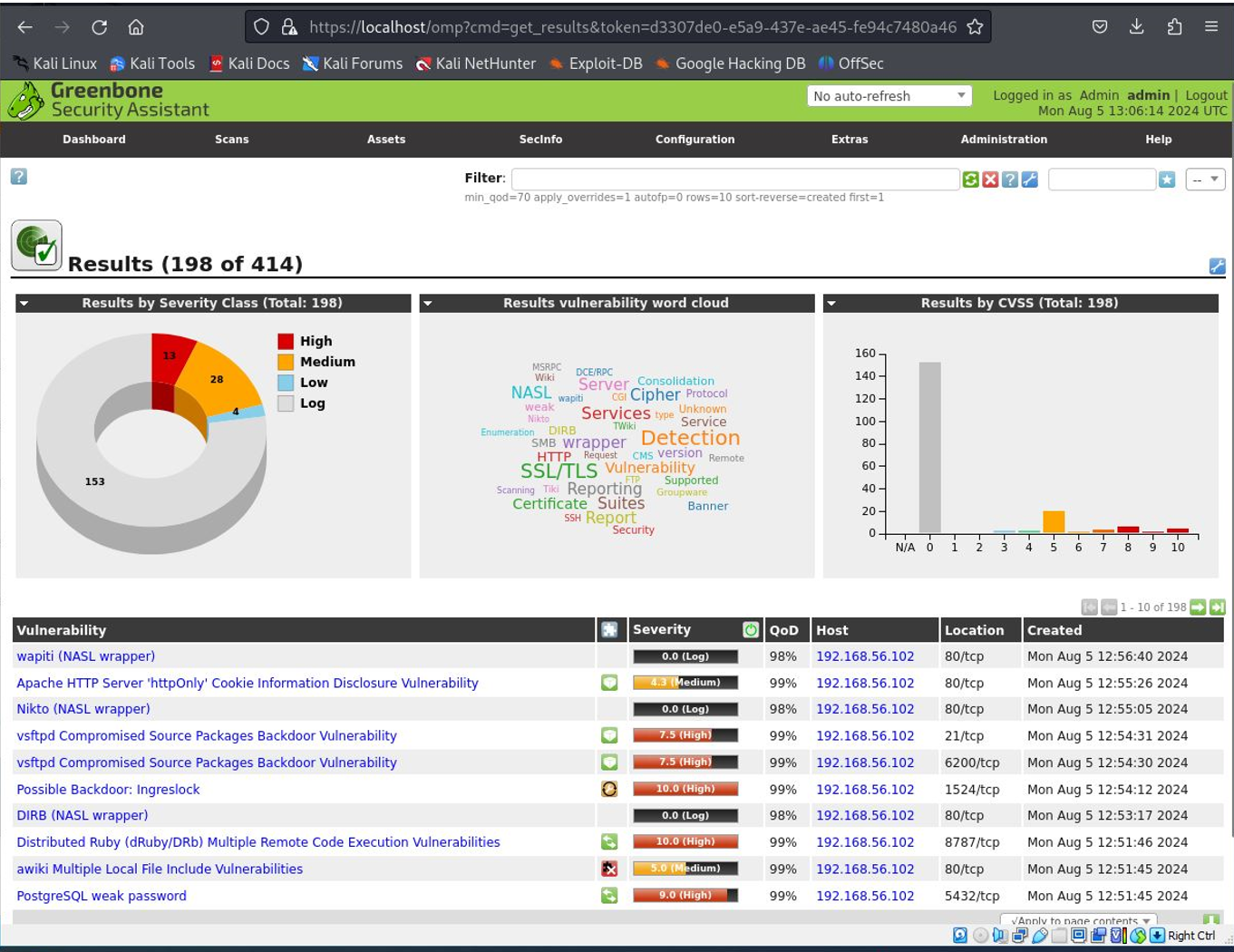
OpenVAS is a full-featured vulnerability scanning tool, that was used for this purposes of this project. An example output of vulnerability findings can be seen below:
Q. What Career and job role are you hoping to move into after graduation?
After graduation, I am hoping to pursue a career in cybersecurity, with a specific focus on roles like:

  • Penetration Tester: Using tools and methodologies (such as MITRE ATT&CK) to identify vulnerabilities in an organization’s IT infrastructure.
  • Cybersecurity Analyst: Monitoring, analyzing, and defending against cybersecurity threats.
  • Security Consultant: Advising organizations on how to improve their security posture by implementing effective VAPT practices.

These roles align with my passion for understanding and mitigating cyber risks, particularly in offensive security and ethical hacking.

Q. Please share a top tip/advice for students who are interested in completing a University Degree?
My top tip for students is to focus on practical applications of what you learn. Theoretical knowledge is important, but real growth happens when you apply it in real-world scenarios, whether through internships, projects, or labs. Hands-on experience not only solidifies your understanding but also makes you more marketable in the job market.

For further information about Computing courses at UWTSD, please click-here.

~

UWTSD Computing students take their learning journey to Paris

Computing students from the University of Wales Trinity Saint David (UWTSD) have enjoyed the sights and sounds of Paris as part of an international learning journey. The students studied at the Institut Supérieur d’Electronique de Paris (ISEP).

Taith provides funding to enable education staff and learners to spend time abroad as part of their studies. It also brings learners and educators from around the world to Wales.

The programme, with Welsh Government funding of £65 million, launched in 2022 and offers life-changing opportunities to travel and learn for learners and staff in every part of Wales, and in every type of education.

The UWTSD partnership also coincided with the Welsh Government’s ‘Wales in France’ initiative, a year-long celebration of cultural, business and sporting events designed to strengthen existing links and forge new connections between the two countries. 

The UWTSD students attended classes with French students and studied subjects similar to those that they study in Wales. Most of the classes at ISEP are delivered in English, so the students were easily able to join their French counterparts for studies. 

Kath Griffiths, International Regional manager (North America and Outward Mobility), Wales Global Academy said : “We are delighted that students from a Welsh institution funded via Taith have spent two weeks in Paris. UWTSD is currently hosting 24 students from ISEP in Swansea. 

“A key feature of the Taith programme is reciprocity; the ability to nurture and develop overseas partners who are already committing to reciprocal arrangements regarding student exchange. This approach through Taith enables high-quality placements and builds towards our aspiration to provide all domestic students with the opportunity to study internationally, ISEP which will strengthen our international profile and create opportunities for staff and students to pursue their interests with reciprocal opportunities for international learners here in Wales. 

“This provides an excellent opportunity for students to experience living and studying in another country and to gain invaluable insight into international employment opportunities.”

Dr Kapilan Radhakrishnan, Academic Director, Applied Computing said: “Amidst the iconic landmarks and cultural marvels, our students delved deep into a world of academic exploration. From classroom experiences to dynamic engagements in extracurricular and social activities, each moment was a stepping stone towards personal and educational growth. 

“This exchange not only broadened their academic horizons but also fostered a vibrant tapestry of cultural understanding and friendship. Interacting with students, academics, and professionals from diverse backgrounds exposes students to a variety of viewpoints and approaches, broadening their perspectives and critical thinking skills. Collaborating with classmates in unfamiliar settings fosters teamwork, communication, and interpersonal skills, strengthening bonds and creating lasting friendships.

“The study trip provided a rich and multifaceted learning experience that goes beyond traditional classroom settings, offering students a unique opportunity for personal, academic, and professional development. Our students have returned home enriched with a wealth of diverse perspectives and unforgettable memories.”

Source: https://www.uwtsd.ac.uk/news/uwtsd-students-take-their-learning-journey-paris-part-welsh-governments-taith-programme-0
For further information: Contact Executive Press and Media Relations Officer, Rebecca Davies rebecca.davies@uwtsd.ac.uk.

Training & Selection for Team UK WorldSkills Squad

The international and prestigious WorldSkills competition started in the 1950’s and brings together skilled young professionals from over 80 countries. WorldSkills supports young people across the world via competition-based training, with national teams taking part and testing their ability against each other in a world-class standards ‘Skills Olympics’ every two years. The skills young people gain from taking part in the competition embed world-class training across the world and helps to increase jobs and economic growth.

Participants compete in over 50 diverse fields including IT Network Systems Administration (IT-NSA).

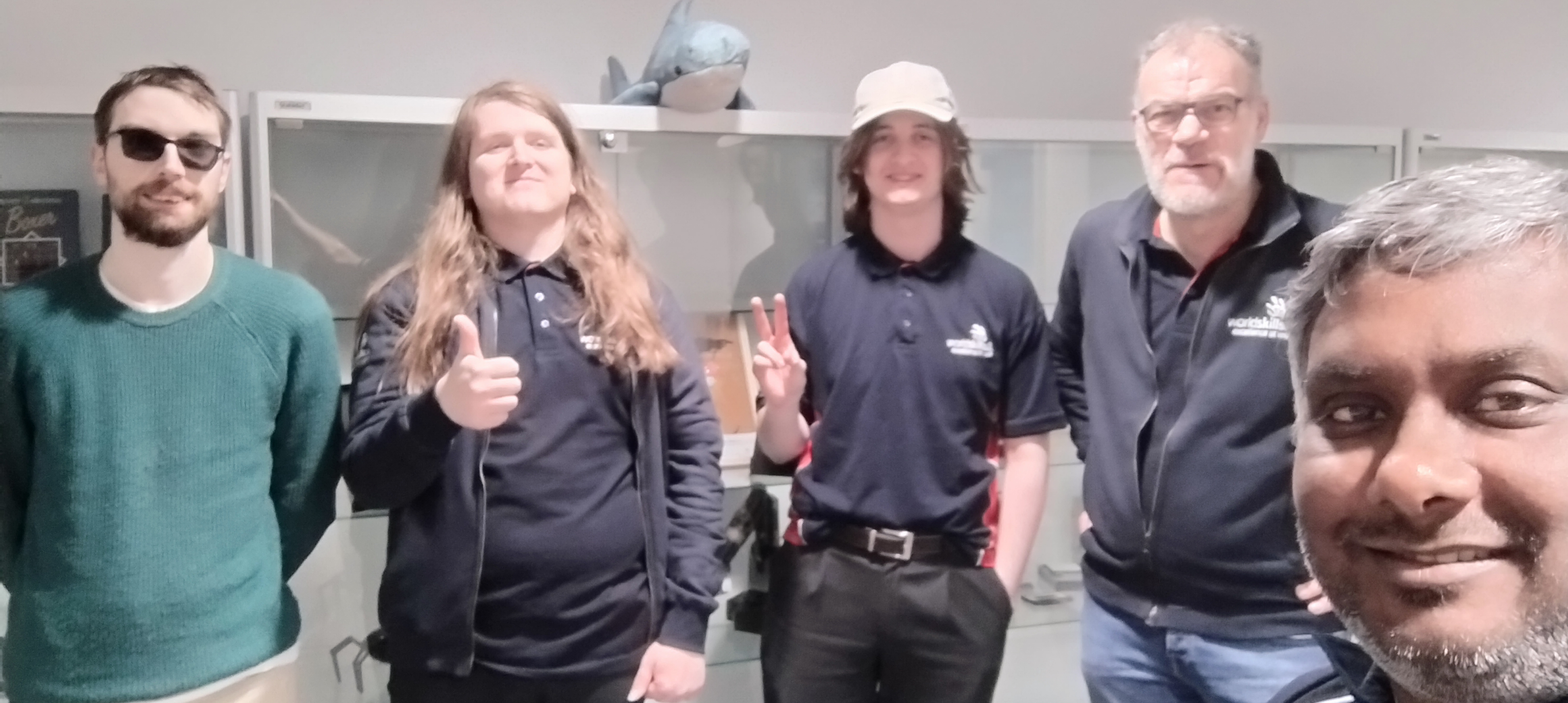
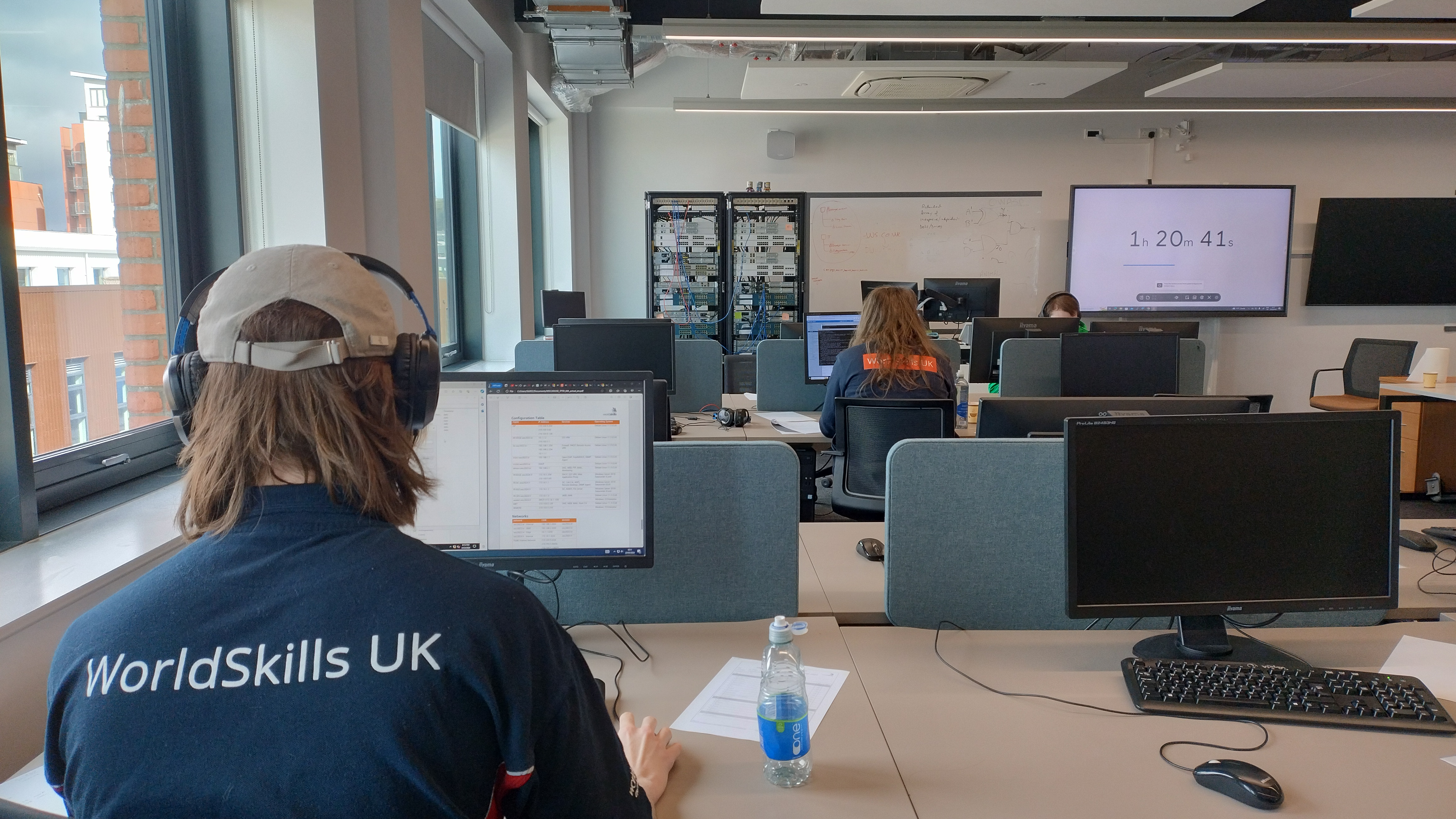
Image: WorldSkillsUK IT-NSA Team training & selection at SOAC UWTSD

The squad for WorldSkillsUK (in partnership with Pearson) IT-NSA competition is selected based on UK National Competitions. For IT-NSA we had around 6 squad members who were trained by experts over the year, testing their skills and benchmarking international standards participating in various International Competitions. Our Competitors over the last year competed in Euro Skills 2023 in Gdansk Poland and Asia Skills 2023 in Abu Dhabi, UAE. Considering the fact that the squad members are the best of the best from UK, only one out of them represent the UK in the upcoming WorldSkills Competition in Lyon, France 2024. 

Nitheesh Kaliyamurthy (Senior Lecturer from the School of Applied Computing (SOAC) at the University of Wales Trinity Saint David (UWTSD), took over as an Expert Training Manager for the WorldSkillsUK IT-NSA squad last year and has been involved in Training the squad. The School of Applied Computing at UWTSD, hosted various Technical Bootcamps in the year, starting with 1st Technical BootCamp in June 2023 for 3 days focusing on EuroSkills Test Project, 2nd Technical Boot Camp in November 2023 for 3 days focusing WorldSkills 2022 Special Edition Test Project and 3rd Technical Boot Camp for raising stars in the squad in January 2024 for 3 days. We also support IT NSA Squad for WorldSkills UK with International Standard Infrastructure enabling them to practice their Test Projects.

A WorldSkills Competition selection event to represent the WorldSkillsUK IT-NSA squad was hosted at SOAC-UWTSD last week with a 2-day Competition, where participants tested their skills in Microsoft, Linux, Troubleshooting aspects, Cisco and Infrastructure Automation.

Image: WorldSkillsUK IT-NSA Team training & selection at SOAC UWTSD

The competitors performed well. The competitors representing the UK squad will be announced later next month (April) during WorldSkills UK (in partnership with Pearson) Moderation Week. Intense training for that one competitor is planned over the coming months in May, June and July before they fly to Lyon, France in September 2024 to compete with other International Countries.

For more about WorldSkills please click-here. For information about Computing courses at UWTSD please click-here.

For inquiries related to WorldSkillsUK IT-NSA at UWTSD please contact Nitheesh Kaliyamurthy.

Student Profile: Kallem G. Thomas

Q. What is your Name? Kallem G Thomas

Q. What inspires you about Computing/Technology/Electronics? The fact that computing is logical based and not emotionally based, I know that if my program doesn’t work, I have done something wrong. And I know that if it works as I want it to work, then I know I have done it correctly.

Q. What is your current favorite piece of Technology/hardware/software/App? Currently, my favorite piece of software would be Opera GX, it is a web browser specifically made for Gamers, one of the features I love the most about it is the “Force dark pages”, which does exactly as it sounds, no matter what page or website you load into, the browser will force the page to dark mode and adjust the font accordingly.

Q. Which University course are you studying and what year are you on? BSc (Hons) Computer Games Development – Year 1 of 3.

Q. What technical and employability skills are you learning on your course? I have learned to create a GDD (Game Design Document), which in the future game industry, I would be required to create and understand GDDs to create a new game. I have also been learning the C coding language as a whole to further my knowledge of coding.

Q. How do you think Technology is and will change the world for the better? On 16th July 1969, the first man landed on the moon, and now on the 29th of September 2023, humanity has created artificial intelligence to start automating mundane tasks. I would say technology CAN change the world for the better.

Q. What Career/job role would you like to enter after you Graduate? Videogame developer/designer.

Q. Do you have any hints/tips/advice for students who would like to start a University course? Your time at university is not just time to learn, it is also a time to connect with others and to start networking with others.

Q. In a few words describe your experience so far at UWTSD?. I have met so many great people on my course, not just my classmates, but my peers as well. It has been amazing, and I have already learned so many things while at UWTSD.

For further information about Computing courses at UWTSD, please click-here.

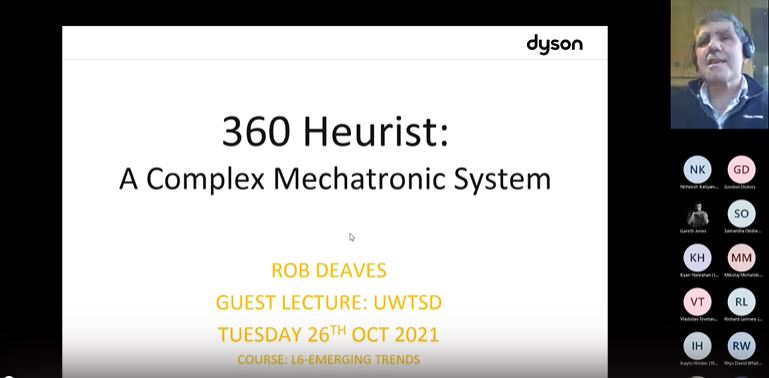
Emerging Trends Lecture: Complex Autonomous Robotic Systems

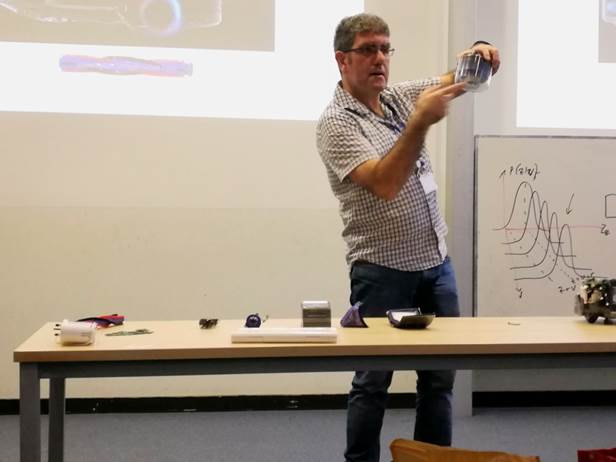
The Applied Computing Team at UWTSD, had the pleasure of welcoming Dr Rob Deaves (below), a visiting Professor of Robotics Systems Architectures to deliver a Guest Lecture on Complex Autonomous Robotic Systems.

The talk covered many related areas and enabled listeners to enhance their knowledge and skills in the following topics:

* Robotic components in a mass market commercial robot;
* Usefulness of visualisation tools;
* Testing campaigns based on simulation, prototyping and trials;
* Product and support systems;
* Appreciation of what is required to take research to product.

“In recent years autonomous robots are starting to provide useful functions for society. Future developments will be really exciting allowing robotics to help address the UN sustainability goals!”  – Dr Rob Deaves, RAEng Visiting Professor of Robotics Systems Architectures.

Dr. Rob Deaves, Guest Lecture at UWTSD Swansea, School of Applied Computing.

About: Dr Rob Deaves is a Dyson Robotics Architect from Imperial College London.

The Applied Computing Team would like to thank Dr. Deaves for taking the time to share his knowledge and experience with our staff and students. The lecture was organised by UWTSD Computing Lecturer Dr. Nitheesh Kaliyamurthy as part of the Emerging Trends module, a final year module on all Computing degree courses.

For more information about our courses please click-here.

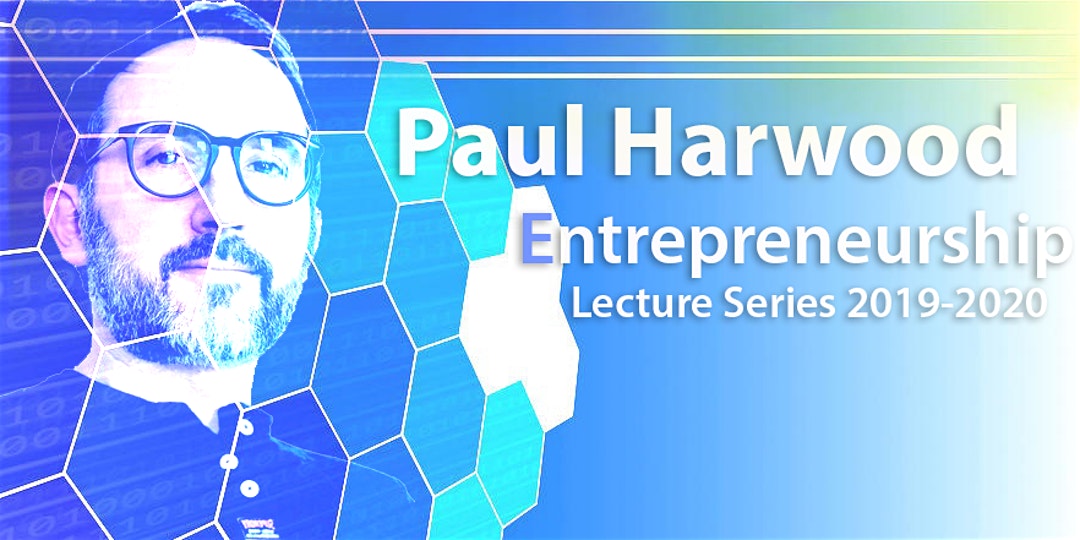
Enterprise Masterclass Series by Paul Harwood

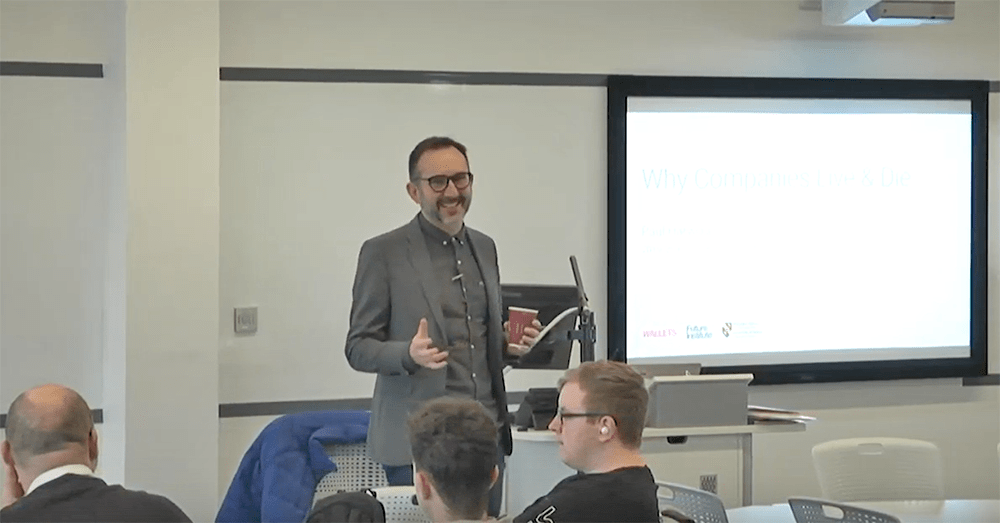
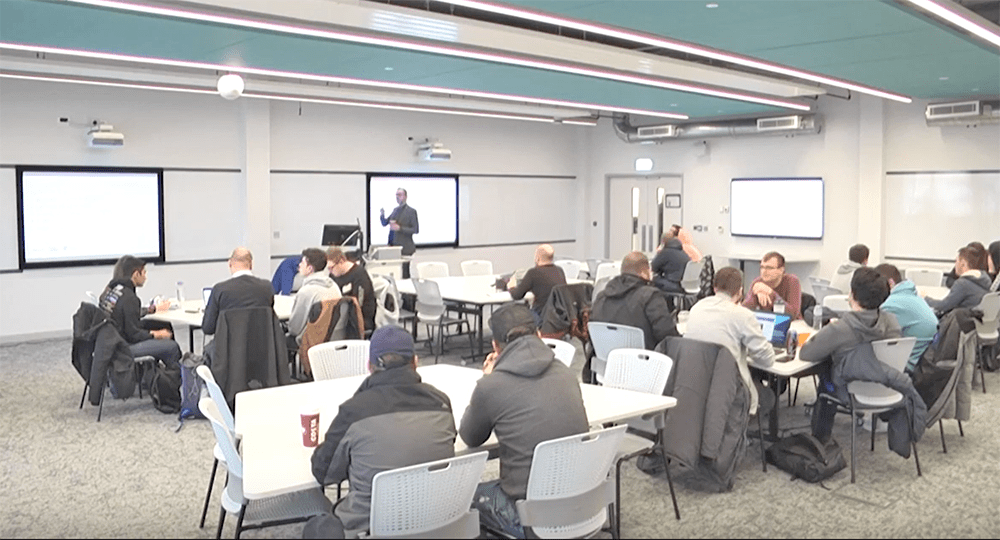
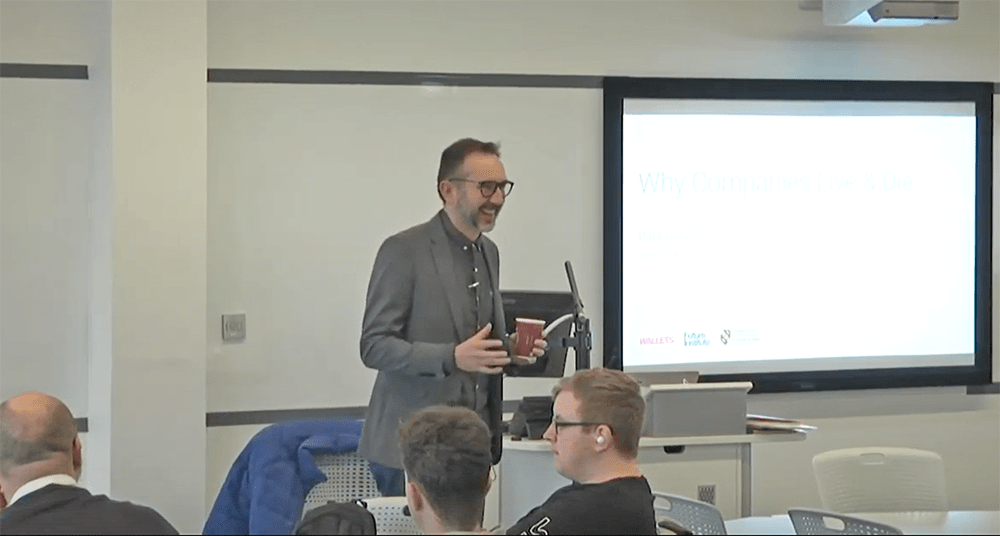
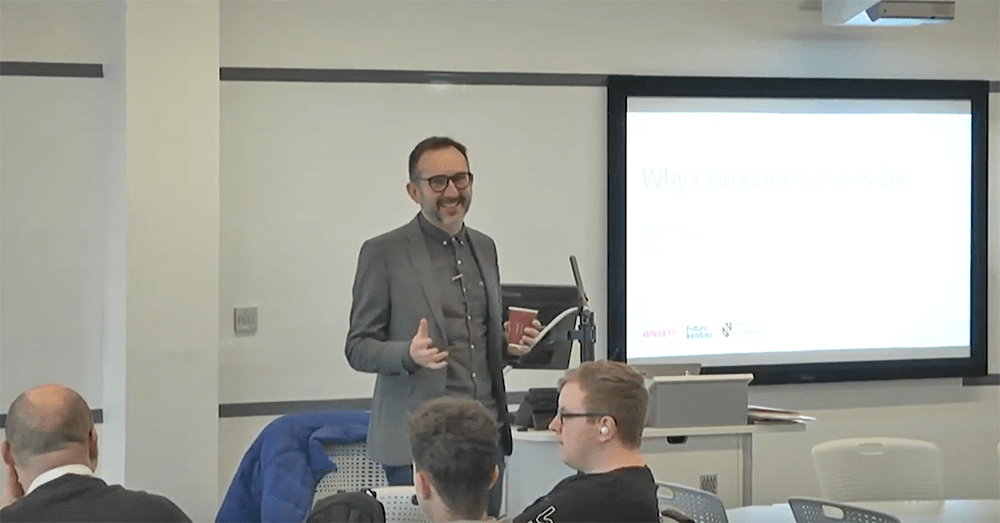
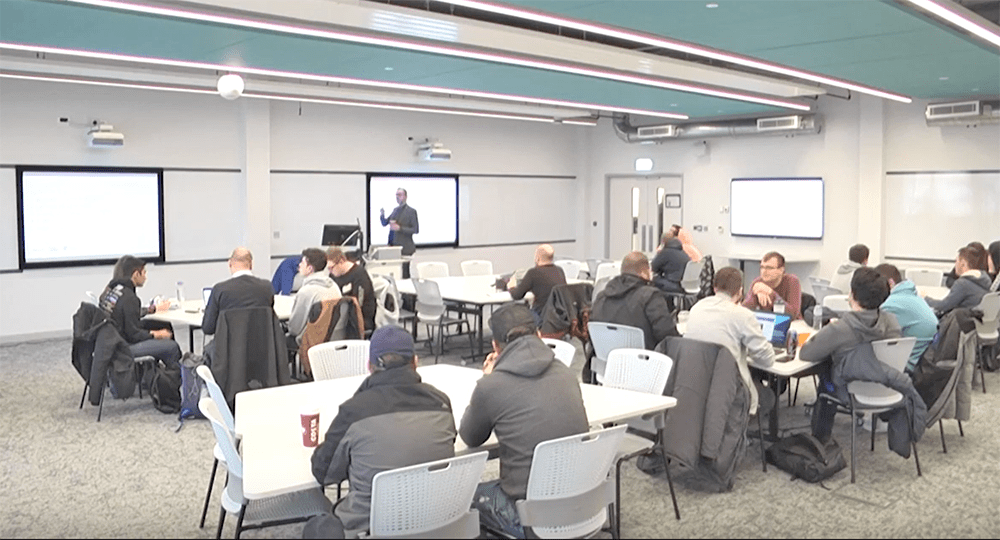
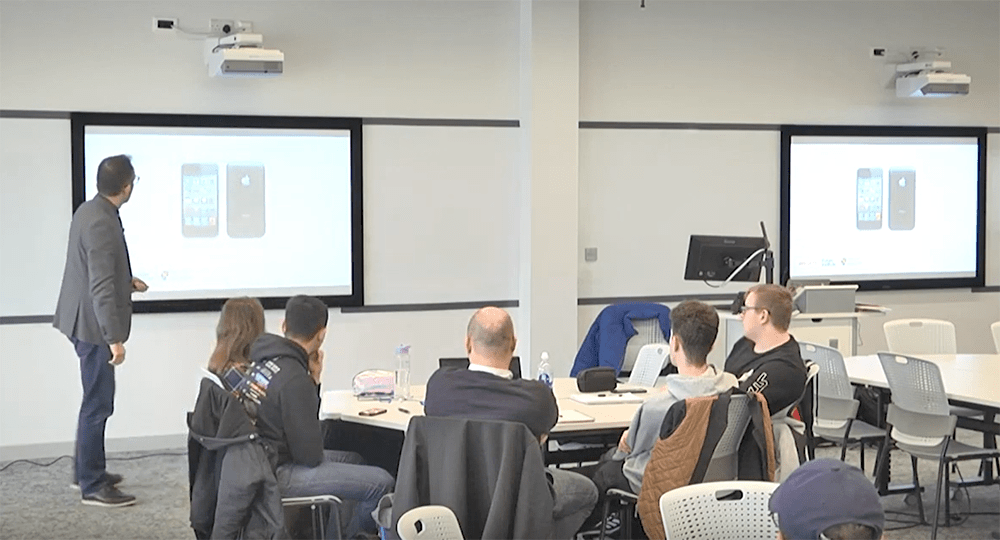
The Applied Computing Team at UWTSD would like to thank Paul Harwood (Seasoned Tech Entrepreneur and Co-founder of Techhub Swansea) for delivering a series of Enterprise Masterclass lectures to our students. It has been a fantastic opportunity for our students to learn from one of the most experienced Tech Start-Up professionals in the region.

Paul shared his valuable knowledge experience insights and industry predictions during a series of 6 talks (listed below) covering areas including Value & Money, Wallets & Cryptocurrency, Success & failure factors, Understanding Markets, Adaptability and Resilience.

A brief description of each talk is listed below:

  • Talk 1: Money, Shares, Value, Deals What is money anyway? Why measuring value is important. What do shares mean? A condensed history of measuring value, from bartering to cheques, from shares to cryptocurrency. How to bake a deal the right way.
  • Talk 2: Founders and Investors. How many founders is good? Looking at how many founders is good? What do you need to be a good founder? What do investors want? What do founder deals typically look like? Who’s liable.
  • Talk 3: Why Companies Die. Why companies failed and why they will typically fail in the future. How to handle a company failure and what tell tale signs can you identify before it goes bad.
  • Talk 4: Products, Sales, Markets and Timing. Identifying product / market fit is a key skill for any founder. Selling your wares to the world is also a skill. You can learn both techniques quickly by listening.
  • Talk 5: Viable Businesses. Viable systems are made because they can adapt to their environment. If you can’t adapt, you won’t survive. Learn how to structure a startup without strangling it with admin.
  • Talk 6: Resilience. Resilience Being ‘strong’ is normally the stupid thing to do. Coping with change means being flexible and resilient. Learn the difference and how to cope well with adversity.

About Paul: Paul is a seasoned entrepreneur with experienced knowledge of BigData, Blockchain and Cryptocurrency and a passion for Building systems for a decentralised future. Originally from Swansea, Paul co-founded TechHub Swansea and has spent the last 17 years working on his own companies in Bristol and London. A successful Entrepreneur/Developer with product management and delivery expertise. Proven successes in building Tech products and communities. Highly experienced in product management/product strategy, system design, high availability and UX skills.

For more information about Paul and Techhub Swansea please click-here. For more information about Computing courses at UWTSD please click-here.

~

Evolution of IT & Cloud Computing

Many thanks to David Jones (Technical Account Manager at RackSpace) and Geraint Williams (Head of Service Evolution & Change at Fujitsu) for visiting us and speaking with our students.

The talk titled ‘the Trends Challenges and Future Technologies’ covered the incredible evolution of IT & Cloud Computing over the last 50 years, highlighting the change & innovation of IT Architecture, current and future trends. A fascinating and very interesting talk enjoyed by all.

Thank you very much for sharing your experience, industry insights and useful information to know now and for the future. Diolch yn fawr iawn. 💻 🌐 😃 👍.

Future Tech Solutions @ DVLA’s BOTHACK BOTATHON

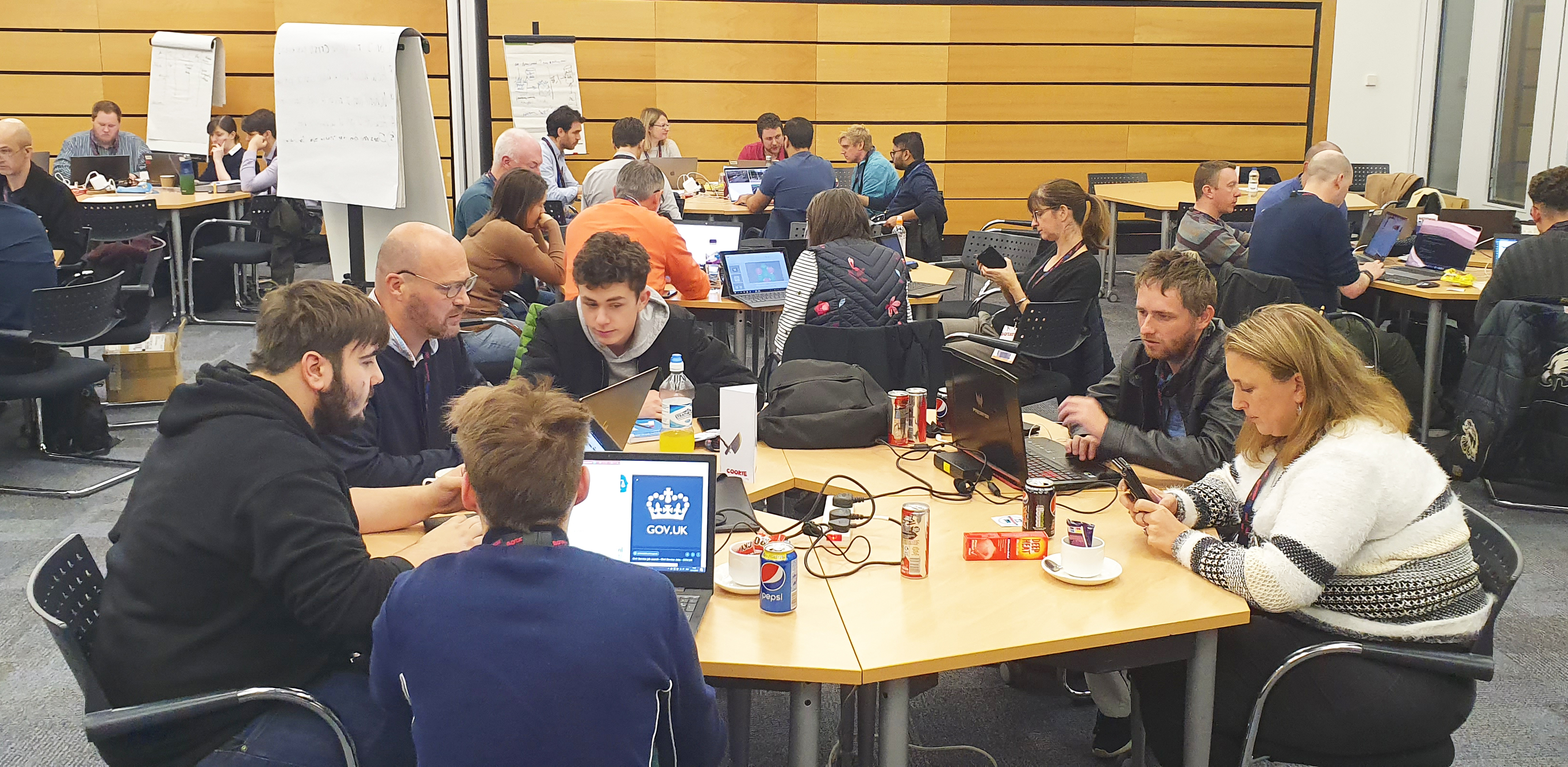
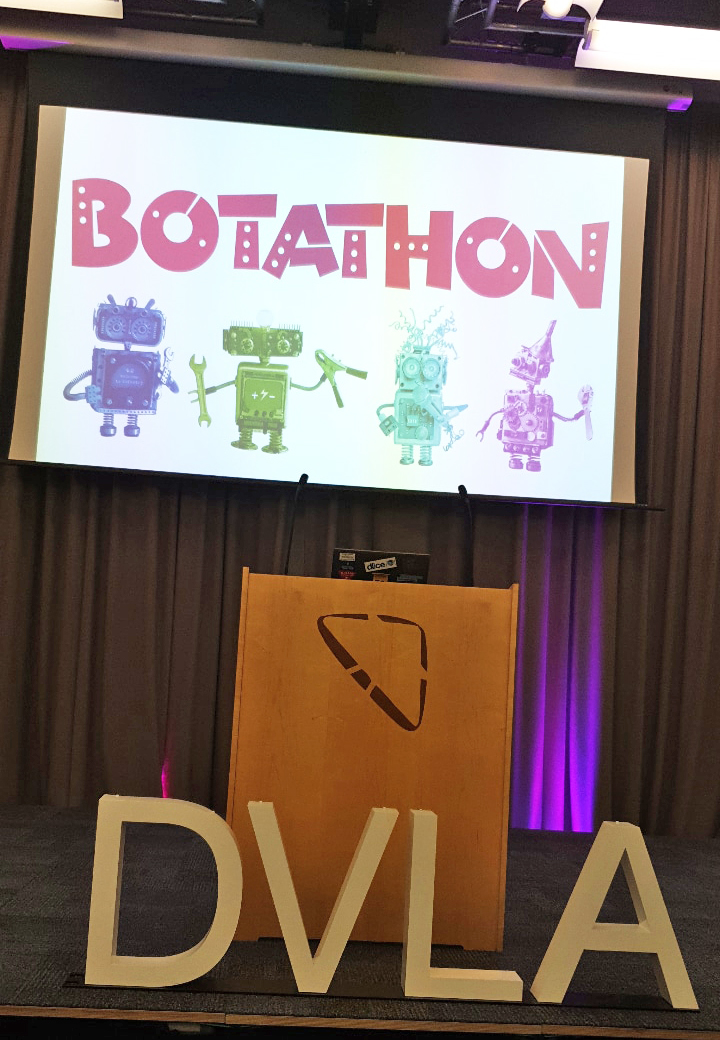
Congratulations to all our Computing students who participated in the DVLA’s Bot Hack BOTATHON event this week. Creating future Tech solutions NOW. 👏📱. “Thoroughly enjoyed the experience and the opportunity it offered to widen our skill set and offer different opportunities for our future” James Dunhill. 👏📱😃👍.

Social Enterprise: Business Technology & Innovation

Many thanks to Martin Downes, Social Entrepreneurship Officer at Wales Co-operative Centre for visiting us and speaking with our students today about Social Enterprise and how they are changing the world. A perfect example of 21st Century Business Technology & Innovation. A very heart warming and inspiring talk enjoyed by all. Diolch yn fawr iawn. 💛📈📱💻👍😃.

Graduate Profile: John Rees @ ARM


Q. What is your Name? John Rees


Q. What University course/s did you study? B.Eng Computer Systems Engineering (Electronics)
“A stepping stone to engineering.”
Q. What is your job title and role? Technical Director at ARM. Leader of the ARM Mali GPU SW Architecture Team. I lead a team of architects who work to define the SW architecture of the GPU driver for supporting OpenGLES, Vulkan and OpenCL khronos APIs for mobile, digital television and emerging markets demanding the needs of a GPU.


Q. Could you briefly describe the organisation you work for? ARM develops and licenses a wide range of software and silicon IP for inclusion in SoC designs that are deployed in very wide number of market segments and domains,  Arm is unique in that it does not produce SoC devices itself.


Q. Which skills learned at University are helpful to you in your job? Embedded Systems, Digital Systems, Digital Signal Processing, Object Orientated Programming, Control Systems, Electronics


Q. Do you have a typical day and how would you describe it? There is no typical day!  Working on GPU’s is a challenging environment and we face new challenges almost daily stemming from new trends in the market place, new technologies in silicon, competitors and the continuous customer quest for differentiation and pushing the boundaries of technology. Beyond that the typical day is spent analysing incoming product requirements and finding solutions within the many constraints, requesting or reviewing GPU HW features, obtaining wider ecosystem support, documenting the SW designs, engaging with customers and as a leader ensuring that people collaborate well together.


Q. What aspects of your job do you enjoy most? I really enjoy my job when we can find a solution to a given problem, there is a real buzz when you find it, I have found over time that it does not matter if it is hunting a bug in a system or code module, finding a solution to a architectural problem or fixing some working practice or process within an organisation where it will improve engineering.  Working with many bright people and understanding how different people solve problems, it can be challenging to come to some alignment but satisfying when you do. Another aspect is seeing products in the market that I can attribute to my work and show people.


Q. Do you have any advice for students who would like to start a Career? I would advocate using your spare time for hobby projects, its a cliche but there really is much to be gained from practical application.  You can learn a lot of essential and transferable skills that you will draw upon throughout your University program and your career. Further, it can help to narrow your interests that you really engage with and enjoy. Having some of the skills on board before you join an organisation can really help you in your early roles.


Q. A Quote that sums up your time at the University? A stepping stone to engineering.


For more information about Applied Computing courses at UWTSD please click-here.