Turn On Your Future @ UWTSD's School of Applied Computing & Electronics

Posts tagged ‘School of Applied Computing’

Graduate Profile: Richard Evans @ University of Greenwich

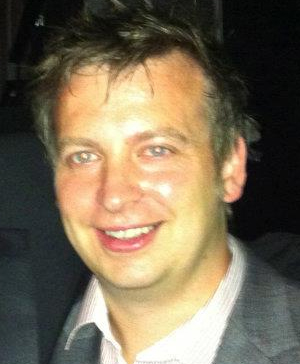
Richard

Richard Evans studied the MSc e-Commerce (Business pathway) at the School of Applied Computing UWTSD Swansea. He is now a Research Fellow @ the University of Greenwich, to learn more about Richard’s Career success please continuing reading below.

What was your HE course at the School of Applied Computing?

 MSc in e-Commerce (Business).

 What is your job title and role?

 Research Fellow in Knowledge Management for Collaborative Product Development at the University of Greenwich

My role within the University of Greenwich is to conduct research into the use of Web 2.0 technologies to improve employee collaboration and knowledge sharing during product development lifecycles in extended supply chains. I am currently working in collaboration with CESi University, Rouen, France as part of a European INTERREG research project.

My responsibilities include: liaising and maintaining links with industrial collaborators, organising bi-annual industrial workshops, identifying potential funding opportunities and assisting with grant applications. I review articles for the International Journal of Modelling, Identification and Control and the International Conference on Teaching, Assessment and Learning for Engineering and am currently a member of the Host Organising Committee for the International Conference on Computer Aided Design and Applications Conference, which is being held at the University of Greenwich in 2015. Finally, I teach and assess two MSc modules within the Faculty of Engineering and Science: Research Methodologies and e-Technologies. I am also a Visiting Lecturer at Cranfield University where I teach lectures to MSc students on the use of Web 2.0 Technologies in Business.

 Could you briefly describe the organization you work for?

The University of Greenwich is a British University with over 27,000 students and offers HE courses, including undergraduate and postgraduate degree programmes. The university has three main campuses situated in the South East of England. I currently work in the Centre of Innovative Product Development and Manufacturing (CiPDM) which sits within the Faculty of Engineering and Science.

The CiPDM carries out strategic research and consultancy in the manufacturing sector in areas such as new product development; collaboration between Original Equipment Manufacturers (OEMs) and their suppliers; digital and sustainable manufacturing; information and knowledge management; and product lifecycle management. The centre focuses on new enabling technologies and methods and processes for the design, manufacturing and servicing of high value complex engineering products and systems in the aerospace, automotive, power generation and general manufacturing sector. The centre employs six members of academic staff, including myself, and we currently have six full-time PhD students who work in collaboration with our industrial partners who include BAE Systems, Cummins Power Generation and Ford Motor Company.

 A brief summary of your Career, how you got to where you are today?

After finishing my MSc degree in e-Commerce, I immediately got offered the role of Online Product Manager for Dunelm Mill Ltd, the UK’s largest home furnishings organisation. I stayed in the role for 8 months before seeking funded PhD programmes; this led me to the position at BAE Systems, which I started in October 2010. During my PhD, I worked for BAE Systems’ Electronic Systems division in Rochester, Kent. I also became a professional member of both the Institution of Engineering and Technology (IET) and the British Computer Society (BCS). I successfully defended my PhD in August 2013 and was then offered a full-time role at the University of Greenwich as a research fellow in knowledge management for collaborative product development.

 Which skills learned at University are helpful to you in your job?

Good question! In my own experience, the knowledge I acquired in web programming has helped a lot during my PhD where I had to create a bespoke IT system. When working for Dunelm Mill, my knowledge of e-Commerce Law really helped – I think this is only available on the business route.

 Do you have a typical day and how would you describe it?

A typical day can take one of two routes:

  1. During term time, I would teach two lectures per week, meet with MSc students for supervision meetings, assess coursework submissions and conduct research, including reading academic publications, writing articles for submission. I also typically present at two international conferences per year within the fields of manufacturing and information systems.
  2. During non-term time, I spend all day conducting research – reading through publications and formilising my own ideas for new projects and publications. I would also assist the Centre manager in research grant applications and management.

What aspects of your job do you enjoy most?

Two aspects stand out: liaising with industrial collaborators – seeing your research being transferred into a commercial setting gives you a real “buzz” and also attending conferences and networking events – not only do you get to travel the world, but you get to meet new people from other Universities who may turn into collaborators on future projects.

 Do you have any advice for students who would like to start a Career in the IT industry? 

  • Do not underestimate your own knowledge and skills – you will find when you join a large organisation that you are more than capable with the knowledge which you have acquired at University.
  • Become a member of a professional association e.g. British Computer Society (BCS). Attend their networking events and gain knowledge about the current needs and challenges in the IT industry.
  • Gain greater knowledge of the current systems used within the IT industry e.g. in my role at Dunelm Mill, we used IBM WebSphere Commerce and Google Analytics for e-Commerce tasks. Having worked for BAE Systems, I found that Microsoft Sharepoint and Yammer is relied upon for employee collaboration whilst PTC WindChill and other PLM tools are used for manufacturing work.
Image

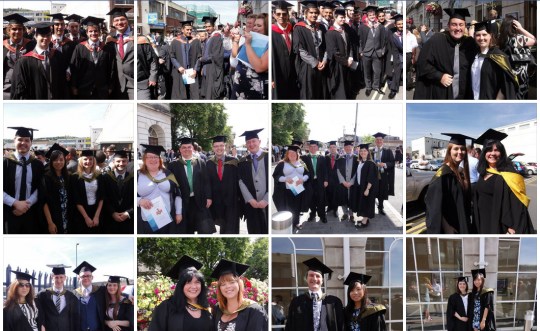
CONGRATULATIONS GRADUATES OF 2014

 Some of our Graduating students at Swansea’s Grand Theatre Graduation Ceremony. Well done & Congratulations to you all! 🙂

Please click below for more photos 🙂

Graduation2014

Graduate Success : Andrew Thomas @ BrightSeed Ltd.

Andrwe_Thomas

What was your HE course? BSc Software Engineering
What is your job title and role? Technical Director – My role is to manage the development team, to design and build scalable and secure web applications for Brightseed Ltd. and our clients, with focus on delivering high performance digital products ranging from bespoke applications to eCommerce and CMS applications.

BrightSeed
Could you briefly describe the organization you work for? Brightseed Ltd. – We are a small highly skilled team with a strong development and design department. We are building a team that wants to work on some of our industries leading techniques used within software development whilst also keeping a focus on training our team to be recognised leaders in our field.

Which skills learned at University are helpful to you in your job? The degree set me out to cover the core fundamentals of programming and project management. I took these values to earn my first position as a junior developer at a local agency and continued to learn whist moving into a large national corporate.

Do you have a typical day and how would you describe it? Each day varies from working on a large project used by a global insurance company to working with a local SME that would like to develop a new application to help streamline their internal business processes.

What aspects of your job do you enjoy most?  When a client goes live with a new site and their business grows from it.

Do you have any advice for students who would like to start a Career? Try to gain valuable and relevant industry experience over several years – then the choice is yours with what you want to do.

Believe in yourself and set no boundaries.

Publishing Success: Archie Watt

s200_archie.watt-v2

Congratulations to final year student Archie Watt from the B.Sc.(Hons) Computer Networks degree who has successfully published a journal article in the University’s journal of undergraduate research. The main focus of the paper is on security policies for a BYOD network, and the additional challenges that can be faced when developing a security policy for such a network. From the Abstract:

 The paper emphasizes the importance of security policies and also studies some of the main factors that can hinder their effectiveness, including insufficient security training for employees.   Bring Your Own Device (BYOD) is also examined in detail, including the various advantages and disadvantages that it can bring to an organization supporting it, and the various factors, such as advances in wireless network technologies and the greatly increased use of mobile computing devices, such as tablets and smartphones, that have led to its growth over the last few years.

10272726_624219894332145_6678869915465535777_o v2

“The aim of publication  is to promote research at undergraduate level and showcase achievements of all undergraduates across all levels and disciplines of the University. … The journal offers an opportunity for all undergraduates to publish work from all Schools. As a multidisciplinary journal currently it is one of only a few in the UK and the only one in Wales.”  (ref)

Archie I was also invited and visited Google’s TC Summit in California earlier this year and was asked to join the Top Contributor (TC) programme.

Arabian feast 2014

Final Year Degree Students from Saudi Arabia Studying at Swansea’s School of Applied Computing Surprise the Teaching Team with an Arabian feast fit for a King. An offering of thanks for the support they have received during their time at the University. The Team are Very Grateful and would like to thank all those involved in preparing cooking and organising the delicious meal. THANK YOU VERY MUCH x.

Arabian feast

Deborah Roberts: Web Developer @ DAC

29dd4d8What was your HE course?
The course that I did was BSc (Hons) Web Development.

What is your job title and role?
My job title is web developer/technical auditor at the Digital Accessibility Centre (DAC). My role varies to include design and development of small SME websites, Mobile Apps, technical auditing, accessibility testing and reporting on larger websites including clients such as Channel 4, Money Advice Service, HMRC, Lloyds, Santander and many more.

Could you briefly describe the organization you work for?
The organisation I work for deals with the accessibility testing of digital products to WCAG 2.0 standards. We have a team of expert testers that have a range of disabilities and use various Assistive technologies to ensure that these products are accessible and inclusive to all.

Which skills learned at University are helpful to you in your job?
The skills that I learnt at University that I have found help me are web design and development skills, report writing, how to research and meet deadlines and the final project that I undertook relating to accessibility and accessibility guidelines.

Do you have a typical day and how would you describe it?
I can be involved in any part or all of the process depending on how many audits are on-going. I could be working with the testers where I analyse code as they find accessibility issues with a website or mobile app in relation to their assistive technologies. I will then find the reason for the problem and offer companies a solution for fixing it.

I will then complete a technical audit and compile a report. This process is then followed up with a conference call with project managers and developers/designers to discuss a way forward for compliance.

I have also been involved in training developers, designers and project managers in creating accessible products, selling the service to clients and presentations.

A colleague and I also developed the Accessibility ‘hub’ for Virgin Media’s website.

What aspects of your job do you enjoy most?
I do enjoy getting out of the office and visiting companies all over the UK and seeing how they work. I have recently been to HMRC offices after being involved in a piece of work for them, along with Channel 4, ITV and Virgin. But the part that I like is the analysing of code, finding the reason why a screen reader for example is not working with the code and finding a way of fixing it. It is also nice to see the fixes that I have suggested being implemented and no longer causing my blind colleagues an issue.

Do you have any advice for students who would like to start a Career?
Yes, work hard and stay focussed, if you’re determined you’ll get there.

Industry Guest Speakers: Grant Armstrong & Sion Williams

Two of our Graduates Grant Armstrong and Sion Williams return to the School on Friday to talk about their Careers to date including how they got their first jobs which will be very useful for our current students.

  1. At 11am Grant Armstrong will be talking about his experiences as a software developer working for both Acentic (Hotel TV and hospitality technology) and Aria Networks (Network capacity management software).
  1. At 3pm Sion Williams will be talking about his work as a build and release engineer working at both the Office of National Statistics and Liverpool Victoria.

The talks will include some biographical material about how the students got their first jobs and also included will be information about interesting/upcoming technologies they thing graduates should be aware of and tips for those entering the industry.

If you are interested please feel free to come along to the School of Applied Computing this Friday 28th February at 11am, room MH303, Mount Pleasant Campus, Swansea.

HOMEPAGE1Acentic are global leaders in hotel TV and hospitality technology, operating in more than 40 countries. Acentic is an  integrator of technologies that connect, engage and entertain. Acentic’s range of products include Acentic Smart – future ready Smart TV solution,  Acentic Media advertising, hotel mobile applications, digital interactive television (iTV) and high definition TV platforms (HD TV).

Aria_Networks_company_logoAria’s core technology is called DANI (Distributed Artificial Neural Intelligence) which is a self-learning and evolutionary modelling software suite that can automatically build and execute algorithms on a distributed computing architecture. Aria Networks provides set of solutions to service providers such as capacity planning and management to help service providers achieving the maximum utilisation of their networks.LV_Liverpool_VictoriaLV= Liverpool Victoria serves over five million customers with a wide range of financial services including car, home and life insurance plus investment and retirement products. LV= is also is the UK’s largest friendly society.

Office_for_National_Statistics_logo
The Office for National Statistics (ONS) is the executive office of the UK Statistics Authority, a non-ministerial department which reports directly to the Parliament of the United Kingdom. It is charged with the collection and publication of statistics related to the economy, population and society of England and Wales at national, regional and local levels.

What do you do if your spacecraft doesn’t respond? by Karlie Yeung

Gaia_spacecraft

Karlie Yeung from Rhea Systems is giving a talk at the School of Applied Computing this Wednesday February 26th at 2pm in room MH303.

The talk is titled: What do you do if your spacecraft doesn’t respond?

Karlie Yeung works for Rhea Systems supporting the software used to manage communications between the European Space Agency (ESA) and the recently-launched GAIA  spacecraft. She’ll be talking about life working in scientific and research computing as an alternative to working within the commercial sector.

RHEA is an independent Space Engineering Consulting and Software company that offers knowledge-based services and innovative solutions to the space industry. (1)

The European Space Agency (ESA) is an intergovernmental organisation dedicated to the exploration of space, with 20 member states. Established in 1975 and headquartered in Paris, France, ESA has a staff of more than 2,000 with an annual budget of about €4.28 billion / US$5.51 billion (2013). (2)

Gaia is an ambitious mission to chart a three-dimensional map of our Galaxy, the Milky Way, in the process revealing the composition, formation and evolution of the Galaxy. (3)

ESA_LOGO

Karlie has been working at the European Space Operations Centre (ESOC) for four years on software to support mission operations. This has given Karlie experience working with the satellite flight control teams on all phases of the missions from launch preparation to decommissioning. She currently works on the Manufacturing and Operations Information System (MOIS) software suite used for operations preparation and satellite control automation.

If you would like to join us for Karlie’s fascinating talk please come along to the  School of Applied Computing this Wednesday February 26th at 2pm, room MH303, Mount Pleasant Campus, Swansea.

Computing Student Archie Watt @ Google TC Summit

Archiewatt-group

Name & Course: Archie Watt (2nd from the left above) Graduated with a HND in Computer Networks in 2013, now on final year of B.Sc. (Hons) Computer Networks, tells us about his time at Google’s

Background / introduction: I originally went to Google’s Webmaster Forum (about four years ago now) to ask a few questions of my own.  In doing so, I came across some questions asked by other webmasters that I was able to answer, so I decided to stick around after participating a bit.  Since then I’ve learned a huge amount from the forum (and still do every day) which enables me to answer a wider range of questions.  After a couple of years participating, I was asked to join the Top Contributor (TC) programme, and then earlier this year was invited to the TC Summit in California.

Archiewatt-bridge

When/how long for: the summit took place between 30th September & 3rd October.

The TC Summit is a biannual event hosted in California, where Google invite all TCs from around the world to thank them for the support they provide to their users.  Over the course of three days, TCs were able to meet various Google engineers and product managers for a series of workshops and the opportunity to provide direct feedback, as well as see demos of new products (such as Google Glass).

The Experience: I really enjoy participating in the forum, not only because I learnt so much from there, but also because it’s always motivating when people thank you for fixing problems and giving advice.  The summit was great as I was able to meet a lot of fellow TCs and Google employees who I’d previously only known online.

Skills Gained: the webmaster forum receives questions on an extensive range of topics, so you can gain skills in a lot of areas by participating there, such as accessibility, usability, content management, malware & keeping your website safe from hackers, information architecture, server management, dealing with search engine penalties, best practices for building international websites, getting sensitive content removed from search results, and more.  Since Google’s search algorithms are constantly updating, it’s also a good place to keep up to speed on the latest developments and trends.  The summit also offered the opportunity to learn new skills and build upon existing ones.

The TC Programme:  Currently, the TC programme consists of nearly 600 people around the world, and covers 26 different languages.  Collectively, the TCs contribute close to a million posts to Google’s help forums every year. Google’s Top Contributors (TCs) are the front line of support in Google’s help forums.  TCs are hand-picked by Google staff for demonstrating expertise in a particular area or for a particular product (such as webmaster support or Gmail).

The Webmaster Central forum: specializes in troubleshooting technical issues with websites, which can include usability, website security & cleaning hacked sites, problems getting indexed and/or ranked in search results, using Google Webmaster Tools, removing content from search results, and more.  Since Google’s search algorithms are opaque and highly dynamic (hundreds of changes every year), most of the facts are unknown to outsiders, so helping users in the webmaster forum is a unique challenge when compared to other Google forums, since the people helping here are not supporting a product with clear help documentation, all they have to work from is their own professional experience.

To learn more about the summit, check out the post about the event on the official Google blog.  You can learn more about the TC programme in general here.

Graduate Profile: Thomas John

Thomas-John

What was your HE course/s and when did you graduate?
I studied the HND Computing and Information Systems course, and after graduating from the course, I enrolled on to the 3rd year of the BSc (Hons) Computing and Information Systems course before graduating with a 2:1 Degree.

What is your job title and role?
I am a Software Tester for a company called Dezrez Services Ltd which is based in Swansea.

Could you briefly describe the organization you work for?
Dezrez Services Ltd provides Software Services for Estate Agencies to help the Estate Agencies deal with Sales, Lettings, and also Property Management. The company also offers Support for the Software.  A few products that Dezrez have include:

  • Dezrez PM (Property Management)
  • iPad Valuation App
  • Website in a Box
  • Template Designs
  • Mobile Dezrez

Which skills learned at University are helpful to you in your job?
After graduating from University, some skills have really helped me in my role. With the Assignments and the Final Year Project deadlines, I have learnt how to meet deadlines of Testing Tasks, Testing Activities and Sprints. This has really helped me deal with Testing Tasks and Testing Activities that are set for me. Also my Final Year Project has helped me as I understand the need for Usability within a Software program and how important it is for the Software and for the User.

Do you have a typical day and how would you describe it?
My day would normally involve testing the Property Management software package that Dezrez have developed. I would use TFS (Team Foundation Server) to look at a Task Board to see what Testing Tasks I have been assigned to Test and then I would record any Issues (Functionality, Usability, Compatibility, Design, Spelling/Grammar) or Feature Suggestions in TFS and the Dezrez CRM System.  When a release is performed for new functionality and fixes to go up live, I would perform a Test Plan to make sure that functionality already in place has not been affected by the new functionality.

What aspects of your job do you enjoy most?
I enjoy the challenge of helping the company find issues within the software, helping the company release the software, and that it is suitable and ready for release. I also enjoy working for the company and learning new techniques for testing the products that the company provides.

Do you have any advice for students who are currently studying their HE course?
I would say when an assignment is handed out, start on it as soon as possible. Use the resources that the University provides (library etc.) and the time in which there are no Lectures or Tutorials wisely to do research for assignments, and also take the opportunity to learn some exam preparation techniques. Also if doing a Final Year Project, I would start the Project as soon as you can as I completed my Literature Review at the start of January and that gave me time to make amendments to the sections and also start the Implementation stage early which was really helpful.

In a summary please write a little statement that explains the positive aspects of your experience at University and whether you would recommend it to anyone in the future:
When starting at University, I was a little nervous with the change from College. But the University, the Support, Friends and also the Lecturers made me feel comfortable after a few weeks, I settled in great and worked hard to gain my HND. After gaining the HND, I realised that I wanted to do further education and decided to enrol on the 3rd year of the BSc Degree and it was the best decision I have made. I have made some great friends through my 3 years at the University, and I have also developed myself further as a person through the experience. I recommend the University highly as it a great place to study and I have learnt so much there.