Turn On Your Future @ UWTSD's School of Applied Computing & Electronics

Posts tagged ‘UWTSD’

MSc Project: Machine Learning (ML)

Student name: Sriskantharaja Mithushan

Course: MSc in Data Science and Analytics

Project title: A Comparative Evaluation of Machine Learning Techniques for Sales Forecasting

/\ Sriskantharaja Mithushan

Rationale: What was the reason/motivation for choosing the project?

The motivation behind choosing this project stemmed from the increasing importance of accurate sales forecasting in business decision-making. Companies rely heavily on predictive models to optimize inventory management, plan marketing strategies, and drive revenue growth. I was particularly interested in how different machine learning techniques could enhance the accuracy of these predictions, compared to traditional forecasting methods. My goal was to explore and compare the effectiveness of various machine learning models in improving sales forecasts, which could have a significant impact on business operations and profitability.

Machine learning (ML) is a branch of artificial intelligence (AI) and computer science that focuses on using data and algorithms to enable machines to learn from experience, much like humans do. In analyzing data, the ML algorithm, processes data multiple times to learn / adjust itself to improve accuracy.


Q. Brief overview of the practical implementation? 

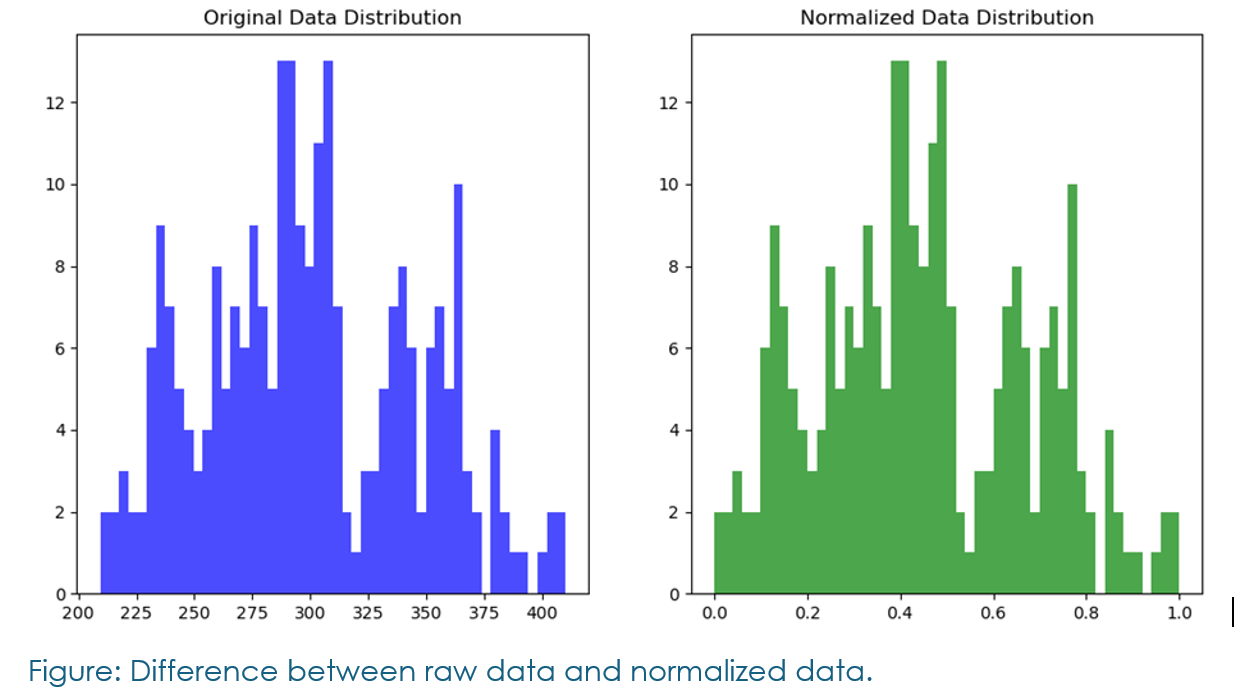
The project was conducted in several stages, starting with data gathering, followed by preprocessing, model execution, and evaluation. A rich dataset was collected from various retail and e-commerce platforms, containing sales records, customer demographics, product categories, and revenue figures. This data was cleaned and transformed to handle missing values, normalize scales, and ensure proper formatting for model training.

Five machine learning models were implemented:

  • Random Forest
  • Support Vector Regression (SVR)
  • LightGBM
  • XGBoost
  • Gated Recurrent Unit (GRU) Neural Network

Each model was trained on the prepared dataset using Python, with libraries such as Scikit-learn, LightGBM, XGBoost, and TensorFlow.

After training, predictions from each model were compared to the actual sales data. Visualization tools like Matplotlib and Seaborn were used to graphically depict the performance of each model, with side-by-side comparisons of RMSE and MAPE metrics. These visualizations helped to highlight the strengths and weaknesses of the various models.

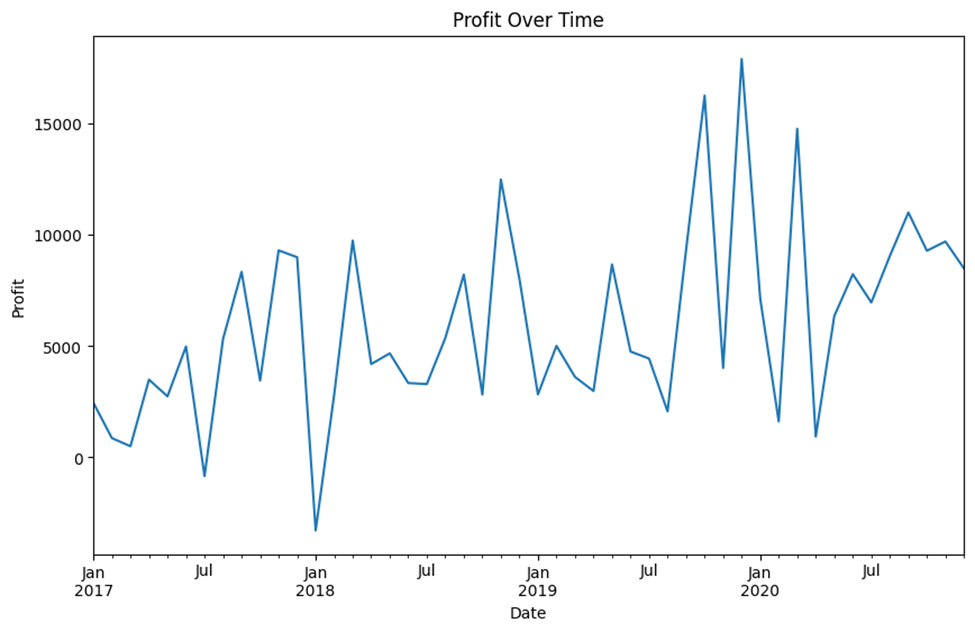
The Profit Over Time graph below, tracks monthly profit trends, providing a clear view of how profitability fluctuates over time. Key insights include: Seasonality and Profit Growth or Decline. For example Seasonality highlights periods of increased or decreased profits, often aligned with sales cycles or specific marketing efforts. This helps in identifying high-profit months and adjusting strategies for low-profit periods.

This visualization is crucial for understanding financial performance, aiding in strategic decision-making, and optimizing resource allocation for long-term profitability.

/\ Profit Over Time: Illustrates monthly profit trends.

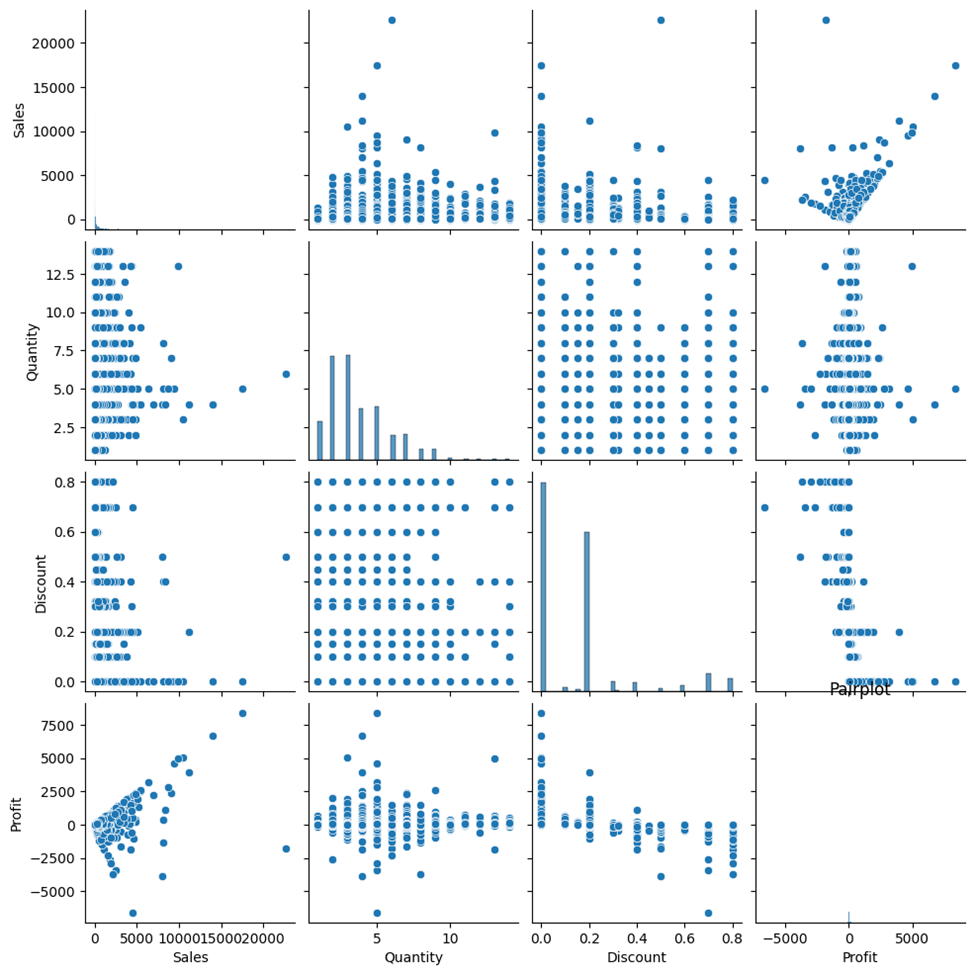
This pairplot chart below, simultaneously shows the distributions (diagonal plots) and relationships (scatter plots) between the key variables: Sales, Quantity, Discount, and Profit. For example the scatter shows a strong positive relationship, confirming that higher sales lead to greater profits. A weak negative trend suggests that offering larger discounts may slightly lower profits. This pair plot provides a comprehensive overview of how these variables relate to each other and how each is distributed, helping in identifying trends, correlations, and potential outliers.

/\ Pairplot: Distributions and Relationships Between Sales, Quantity, Discount, and Profit.

The chart below is a Heat-map. The Heatmap shows the correlations between the key business metrics of Sales, Quantity, Discount, and Profit. The color intensity represents the strength and direction of the relationships, with darker colors indicating stronger correlations. For example, a deep hue between Sales and Profit highlights that as sales increase, profits rise significantly. This visual tool helps identify how these variables interact and guide strategic decisions on pricing, sales, and profit optimization.

/\ Correlation Matrix Heatmap: Sales, Quantity, Discount, and Profit

Q. Overview of outcomes/conclusions?

The project concluded with Random Forest emerging as the top-performing model in terms of prediction accuracy.

The research delved into the use of machine learning techniques for sales forecasting in the retail and e-commerce sectors, with the goal of identifying which models provide the most accurate predictions. The study examined five machine learning algorithms: Random Forest, Support Vector Regression (SVR), LightGBM, XGBoost, and Gated Recurrent Unit (GRU) neural networks. The models were evaluated using metrics such as Root Mean Square Error (RMSE) and Mean Absolute Percentage Error (MAPE).

This study contributes to the understanding of how machine learning can be applied to sales forecasting in retail and e-commerce. It shows that tree-based ensemble methods, particularly Random Forest, are among the most effective techniques. However, deep learning models like GRU also show potential, particularly for capturing temporal dependencies. A balanced approach, combining multiple models and fine-tuning hyperparameters, can lead to more accurate sales predictions. By acting on these insights, retail and e-commerce companies can improve their forecasting accuracy, optimize inventory management, and ultimately enhance customer satisfaction and profitability. 

Q. Please share some top tips/advice for students?

Completing a Bachelor of Science (BSc) or a Master of Science (MSc) at a university like the University of Wales Trinity Saint David (UWTSD) can be a rewarding and challenging journey.

The University offers a variety of Computing courses. Ensure you choose a program that aligns with your interests and career goals. During both BSc and MSc, you’ll often have the flexibility to choose elective modules. Select modules that allow you to develop key skills that are in-demand in your field, or that attract your personal interest. Balancing lectures, labs, independent study, and personal commitments is crucial. Use digital tools to organize deadlines, assignment dates, and exam preparation to stay on track. The University also offer career services to help students prepare for employment. Take advantage of these CV workshops, interview practice, and employability training.

For further information about Computing courses at UWTSD, please click-here.

~

Training & Selection for Team UK WorldSkills Squad

The international and prestigious WorldSkills competition started in the 1950’s and brings together skilled young professionals from over 80 countries. WorldSkills supports young people across the world via competition-based training, with national teams taking part and testing their ability against each other in a world-class standards ‘Skills Olympics’ every two years. The skills young people gain from taking part in the competition embed world-class training across the world and helps to increase jobs and economic growth.

Participants compete in over 50 diverse fields including IT Network Systems Administration (IT-NSA).

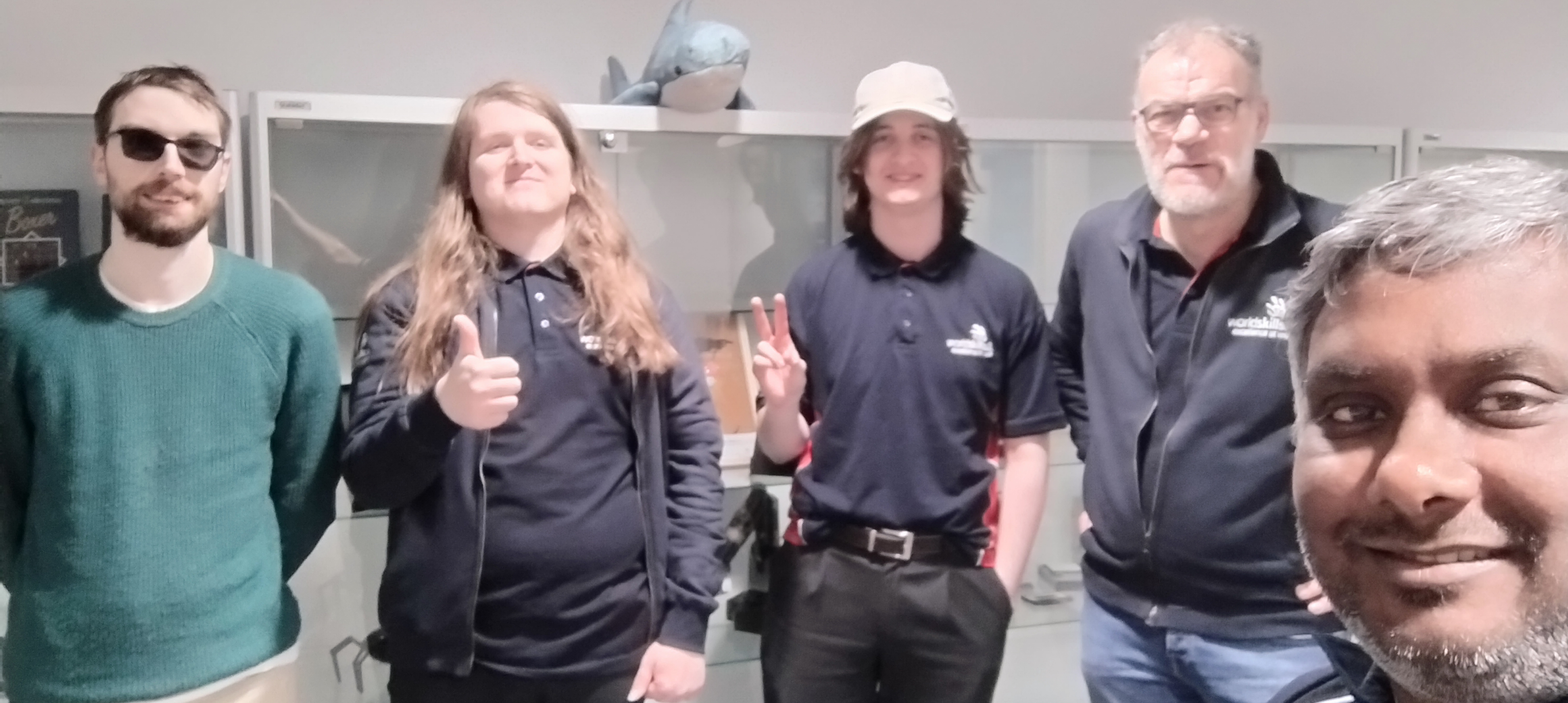
Image: WorldSkillsUK IT-NSA Team training & selection at SOAC UWTSD

The squad for WorldSkillsUK (in partnership with Pearson) IT-NSA competition is selected based on UK National Competitions. For IT-NSA we had around 6 squad members who were trained by experts over the year, testing their skills and benchmarking international standards participating in various International Competitions. Our Competitors over the last year competed in Euro Skills 2023 in Gdansk Poland and Asia Skills 2023 in Abu Dhabi, UAE. Considering the fact that the squad members are the best of the best from UK, only one out of them represent the UK in the upcoming WorldSkills Competition in Lyon, France 2024. 

Nitheesh Kaliyamurthy (Senior Lecturer from the School of Applied Computing (SOAC) at the University of Wales Trinity Saint David (UWTSD), took over as an Expert Training Manager for the WorldSkillsUK IT-NSA squad last year and has been involved in Training the squad. The School of Applied Computing at UWTSD, hosted various Technical Bootcamps in the year, starting with 1st Technical BootCamp in June 2023 for 3 days focusing on EuroSkills Test Project, 2nd Technical Boot Camp in November 2023 for 3 days focusing WorldSkills 2022 Special Edition Test Project and 3rd Technical Boot Camp for raising stars in the squad in January 2024 for 3 days. We also support IT NSA Squad for WorldSkills UK with International Standard Infrastructure enabling them to practice their Test Projects.

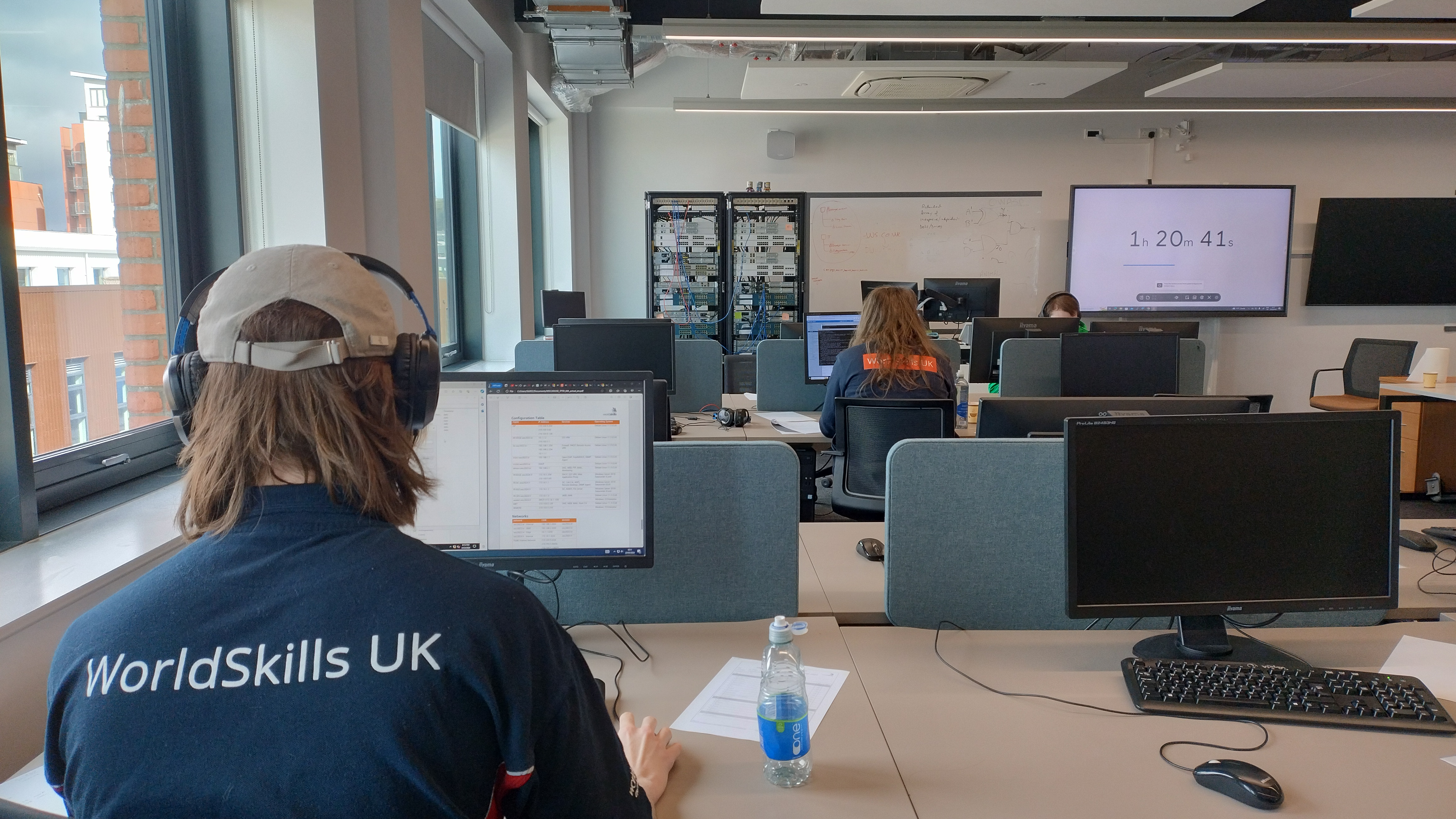
A WorldSkills Competition selection event to represent the WorldSkillsUK IT-NSA squad was hosted at SOAC-UWTSD last week with a 2-day Competition, where participants tested their skills in Microsoft, Linux, Troubleshooting aspects, Cisco and Infrastructure Automation.

Image: WorldSkillsUK IT-NSA Team training & selection at SOAC UWTSD

The competitors performed well. The competitors representing the UK squad will be announced later next month (April) during WorldSkills UK (in partnership with Pearson) Moderation Week. Intense training for that one competitor is planned over the coming months in May, June and July before they fly to Lyon, France in September 2024 to compete with other International Countries.

For more about WorldSkills please click-here. For information about Computing courses at UWTSD please click-here.

For inquiries related to WorldSkillsUK IT-NSA at UWTSD please contact Nitheesh Kaliyamurthy.

Student Profile: Kallem G. Thomas

Q. What is your Name? Kallem G Thomas

Q. What inspires you about Computing/Technology/Electronics? The fact that computing is logical based and not emotionally based, I know that if my program doesn’t work, I have done something wrong. And I know that if it works as I want it to work, then I know I have done it correctly.

Q. What is your current favorite piece of Technology/hardware/software/App? Currently, my favorite piece of software would be Opera GX, it is a web browser specifically made for Gamers, one of the features I love the most about it is the “Force dark pages”, which does exactly as it sounds, no matter what page or website you load into, the browser will force the page to dark mode and adjust the font accordingly.

Q. Which University course are you studying and what year are you on? BSc (Hons) Computer Games Development – Year 1 of 3.

Q. What technical and employability skills are you learning on your course? I have learned to create a GDD (Game Design Document), which in the future game industry, I would be required to create and understand GDDs to create a new game. I have also been learning the C coding language as a whole to further my knowledge of coding.

Q. How do you think Technology is and will change the world for the better? On 16th July 1969, the first man landed on the moon, and now on the 29th of September 2023, humanity has created artificial intelligence to start automating mundane tasks. I would say technology CAN change the world for the better.

Q. What Career/job role would you like to enter after you Graduate? Videogame developer/designer.

Q. Do you have any hints/tips/advice for students who would like to start a University course? Your time at university is not just time to learn, it is also a time to connect with others and to start networking with others.

Q. In a few words describe your experience so far at UWTSD?. I have met so many great people on my course, not just my classmates, but my peers as well. It has been amazing, and I have already learned so many things while at UWTSD.

For further information about Computing courses at UWTSD, please click-here.

Emerging Trends Lecture: Complex Autonomous Robotic Systems

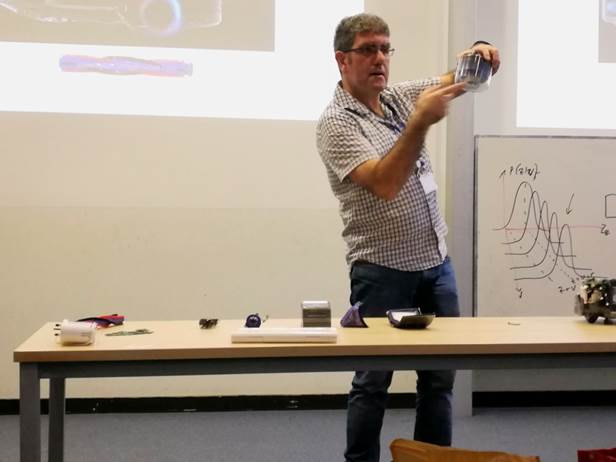
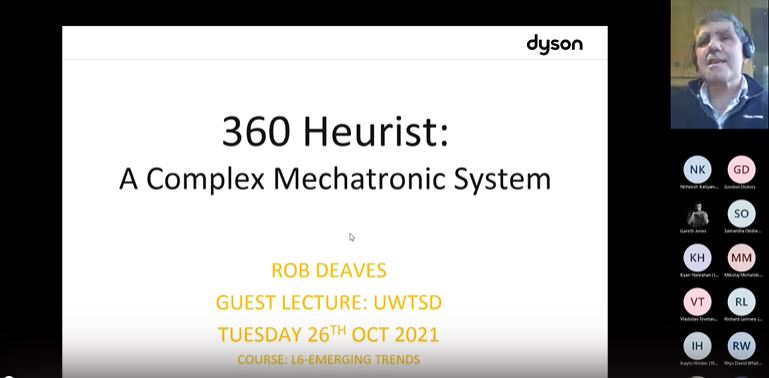
The Applied Computing Team at UWTSD, had the pleasure of welcoming Dr Rob Deaves (below), a visiting Professor of Robotics Systems Architectures to deliver a Guest Lecture on Complex Autonomous Robotic Systems.

The talk covered many related areas and enabled listeners to enhance their knowledge and skills in the following topics:

* Robotic components in a mass market commercial robot;
* Usefulness of visualisation tools;
* Testing campaigns based on simulation, prototyping and trials;
* Product and support systems;
* Appreciation of what is required to take research to product.

“In recent years autonomous robots are starting to provide useful functions for society. Future developments will be really exciting allowing robotics to help address the UN sustainability goals!”  – Dr Rob Deaves, RAEng Visiting Professor of Robotics Systems Architectures.

Dr. Rob Deaves, Guest Lecture at UWTSD Swansea, School of Applied Computing.

About: Dr Rob Deaves is a Dyson Robotics Architect from Imperial College London.

The Applied Computing Team would like to thank Dr. Deaves for taking the time to share his knowledge and experience with our staff and students. The lecture was organised by UWTSD Computing Lecturer Dr. Nitheesh Kaliyamurthy as part of the Emerging Trends module, a final year module on all Computing degree courses.

For more information about our courses please click-here.

Evolution of IT & Cloud Computing

Many thanks to David Jones (Technical Account Manager at RackSpace) and Geraint Williams (Head of Service Evolution & Change at Fujitsu) for visiting us and speaking with our students.

The talk titled ‘the Trends Challenges and Future Technologies’ covered the incredible evolution of IT & Cloud Computing over the last 50 years, highlighting the change & innovation of IT Architecture, current and future trends. A fascinating and very interesting talk enjoyed by all.

Thank you very much for sharing your experience, industry insights and useful information to know now and for the future. Diolch yn fawr iawn. 💻 🌐 😃 👍.

Future Tech Solutions @ DVLA’s BOTHACK BOTATHON

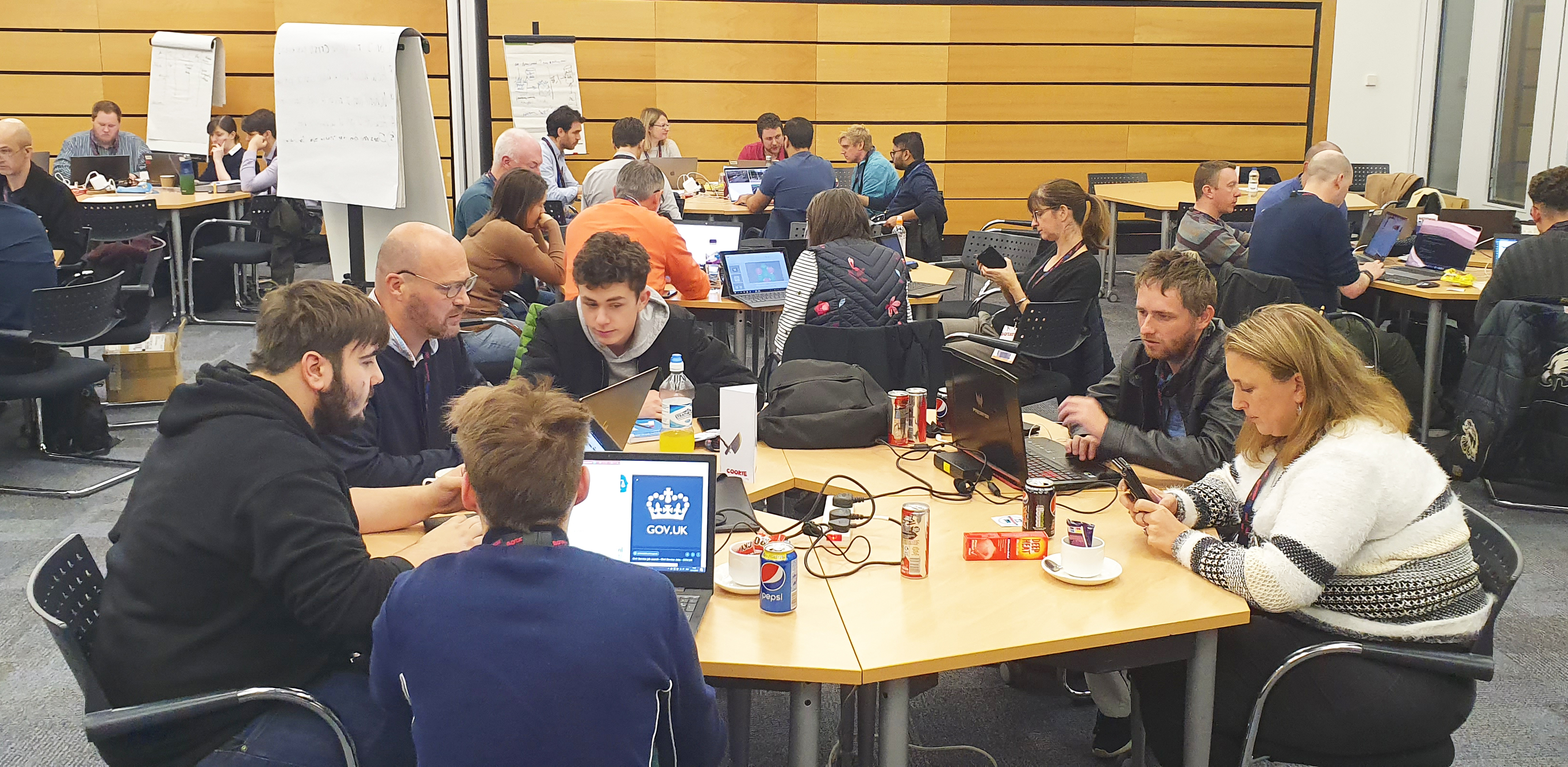
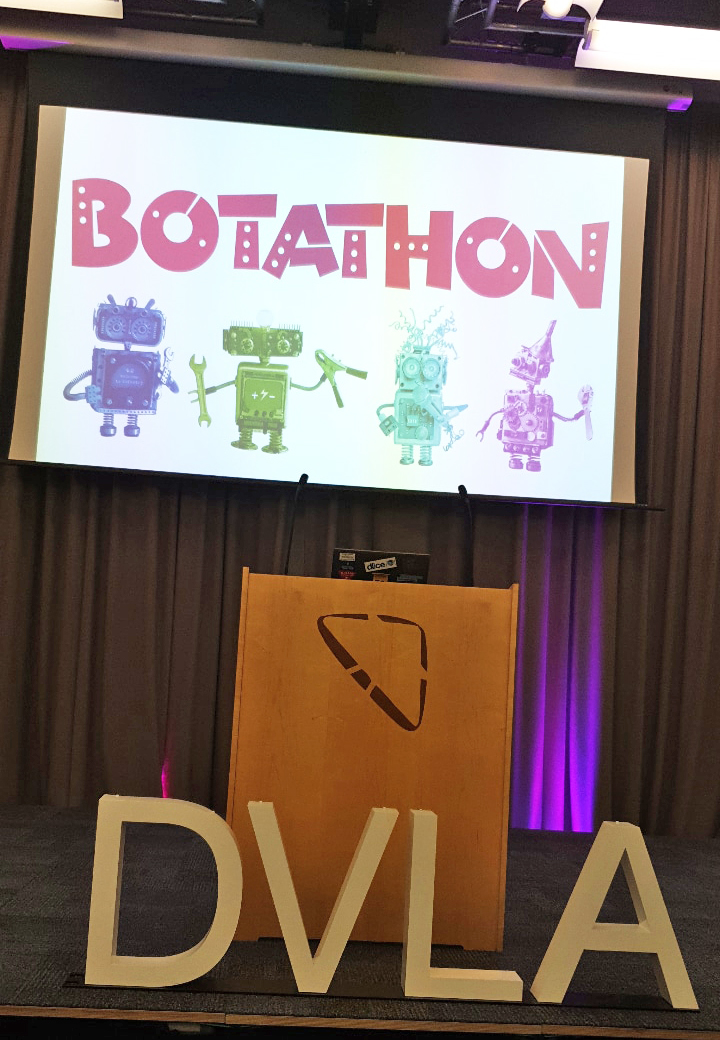
Congratulations to all our Computing students who participated in the DVLA’s Bot Hack BOTATHON event this week. Creating future Tech solutions NOW. 👏📱. “Thoroughly enjoyed the experience and the opportunity it offered to widen our skill set and offer different opportunities for our future” James Dunhill. 👏📱😃👍.

Social Enterprise: Business Technology & Innovation

Many thanks to Martin Downes, Social Entrepreneurship Officer at Wales Co-operative Centre for visiting us and speaking with our students today about Social Enterprise and how they are changing the world. A perfect example of 21st Century Business Technology & Innovation. A very heart warming and inspiring talk enjoyed by all. Diolch yn fawr iawn. 💛📈📱💻👍😃.

Graduate Profile: John Rees @ ARM


Q. What is your Name? John Rees


Q. What University course/s did you study? B.Eng Computer Systems Engineering (Electronics)
“A stepping stone to engineering.”
Q. What is your job title and role? Technical Director at ARM. Leader of the ARM Mali GPU SW Architecture Team. I lead a team of architects who work to define the SW architecture of the GPU driver for supporting OpenGLES, Vulkan and OpenCL khronos APIs for mobile, digital television and emerging markets demanding the needs of a GPU.


Q. Could you briefly describe the organisation you work for? ARM develops and licenses a wide range of software and silicon IP for inclusion in SoC designs that are deployed in very wide number of market segments and domains,  Arm is unique in that it does not produce SoC devices itself.


Q. Which skills learned at University are helpful to you in your job? Embedded Systems, Digital Systems, Digital Signal Processing, Object Orientated Programming, Control Systems, Electronics


Q. Do you have a typical day and how would you describe it? There is no typical day!  Working on GPU’s is a challenging environment and we face new challenges almost daily stemming from new trends in the market place, new technologies in silicon, competitors and the continuous customer quest for differentiation and pushing the boundaries of technology. Beyond that the typical day is spent analysing incoming product requirements and finding solutions within the many constraints, requesting or reviewing GPU HW features, obtaining wider ecosystem support, documenting the SW designs, engaging with customers and as a leader ensuring that people collaborate well together.


Q. What aspects of your job do you enjoy most? I really enjoy my job when we can find a solution to a given problem, there is a real buzz when you find it, I have found over time that it does not matter if it is hunting a bug in a system or code module, finding a solution to a architectural problem or fixing some working practice or process within an organisation where it will improve engineering.  Working with many bright people and understanding how different people solve problems, it can be challenging to come to some alignment but satisfying when you do. Another aspect is seeing products in the market that I can attribute to my work and show people.


Q. Do you have any advice for students who would like to start a Career? I would advocate using your spare time for hobby projects, its a cliche but there really is much to be gained from practical application.  You can learn a lot of essential and transferable skills that you will draw upon throughout your University program and your career. Further, it can help to narrow your interests that you really engage with and enjoy. Having some of the skills on board before you join an organisation can really help you in your early roles.


Q. A Quote that sums up your time at the University? A stepping stone to engineering.


For more information about Applied Computing courses at UWTSD please click-here.

Techstars Innovation Competition 2019

Applied Computing students from the University of Wales Trinity Saint David recently participated in the TechStars Innovation Competition and presented their enterprising and innovative ideas to a panel of judges at Swansea’s TechHub. The panel of experts included: Guy Wendon, Business Development Manager from the module & event sponsor Alacrity, Ann Swift, Enterprise Manager for the Welsh Government and Paul Harwood co-founder of TechHub Swansea.

The TechStars Innovation Champions 2019 Award sponsored by Alacrity went to ‘Team Version ZERO’ consisting of Richard Davies, Dylan Evans, James Millns, Austin Hooper, Sarann Strange. The Team created ‘Doggogo’ an Animal Well-being System that included a Pet Health tracker for physical and mental well-being.

Doggogo is a phone application and device pair that will allow dog owners to better care for their dog. The device is a small cuboid that clips onto the collar of the dog. The phone application gives tailored recommendations based on the breed of the dog, for example; giving walk distance recommendations which would be higher for a husky as opposed to a Chihuahua. The device is GPS enabled and relays the live location of the dog to the application, this can be used to alert the owner if the dog escapes the property. The phone application can also store reminders for the dog including de-worm/flea reminders and vet appointments. The application will store the health progress of the dog and will have a review section which will be useful for vet appointments.” Team Version ZERO.

Winning Team with Judges and Module tutors

James Williams, Paul Harwood, Richard Davies, James Millns, Dylan Evans, Sarann Strange, Ann Swift, Mabrouka Abuhmida.

The Best Prototype Innovation Awards sponsored by IICED The International Institute for Creative Entrepreneurial Development went to Team EEST consisting of Nicholas Jones and Team LIFE consisting of Helen Frey & Julie Millard.

Nicholas Jones

Nicholas Jones

Nicholas Jones created a proposition called EEST Educational, Electronics & Science, Technologies. A potential Tech Start-Up Company to design and create educational products geared towards electronics and sciences. The initial product offering and prototype demonstrated included a modular environmental weather monitoring system.

Helen Frey & Julie Millard

Helen Frey & Julie Millard

Team Life’s innovative idea and prototype is a Health App that monitors and reacts to abnormal parameters in heart-rate temperature and body functions, and if an emergency situation occurs such as a stoke or collapse the App would notify a pre-arranged contact alerting them to the event.

“The ingenuity and creativity of our students never ceases to amaze me.  Their curiosity and capacity for spotting opportunities is something we  know will put them in good stead for their future careers. What drives IICED is that simple fact, and our international research activities helps us to learn how to continuously improve – so that we can fully support our students in their creative endeavours.” – Kathryn Penaluna

The Best Tech Start-Up & Business Development report sponsored by Alacrity and selected by Alacrity CEO Dr. Will Williams went to Sarann Strange.

Prizes for the Winning Teams and students provided by the event sponsor include an overnight stay and dinner at the prestigious 5* Celtic Manor Resort.

 “The Alacrity Foundation is a charity that helps to nurture and create the next generation of technology entrepreneurs. We recognise the value of innovation in academia and were delighted to sponsor the 2019 Techstars competition. James and his team have supported a fantastic group of students from a variety of disciplines to create some cutting-edge technical innovation.  We are excited to continue to work with UWTSD.” – Guy Wendon

Ann Swift, Guy Wendon and Paul Harwood

Ann Swift, Guy Wendon and Paul Harwood.

The TechStars Innovation Competition, was organised by UWTSD Senior Lecturer James Williams who teaches the School’s Enterprise and Innovation Group Project module. The competition enables students within the School of Applied Computing to form inter-disciplinary teams and pitch their innovative solutions to a panel of experts from industry. Teams consist of students from multiple Computing degree programmes including Applied Computing, Business Information Systems, Web Development, Computer Games Development, Computer Networks & Cyber Security and Software Engineering.

“The Group project module and the TechStars event is a fantastic learning experience for our students. It enables and supports them to discover their potential and develop enterprising innovation & employability skills. Congratulations to all our students who presented at today’s event. You should all be very proud of yourselves. A special thanks to the module and event’s main sponsor The Alacrity Foundation represented by Guy Wendon. A special acknowledgement and thanks to the module and event’s supporters and prototype Innovation sponsor: TechHub Swansea represented by co-founder Paul Harwood, The Welsh Government represented by Youth Entrepreneurship Manger Ann Swift and IICED The International Institute for Creative Entrepreneurial Development. Thank you for your time support and expertise. Particularly for the constructive positive and encouraging advice given to our students.
Finally but not least, the proficient application of up-to-date technical skill displayed by the students is testament to the excellent teaching team at the School of Applied Computing UWTSD.” – James Williams

For more information about the Techstars Innovation Competition please click-here.

Exciting visit to TechHub with Alacrity

UWTSD Computing students visited TechHub Swansea today to learn about exciting Graduate ‘Tech Start-Up’ Opportunities at Alacrity and TechHub Swansea.

Many thanks to Sarah Fogel & Jennifer Clay from TechHub and Guy Wendon & Emily Rees from Alacrity for speaking with our students.

The build up to TechStars Innovation Comp 2019 has begun👍😃.

DSC_0942

Guy Wendon – Business Development Manager – Alacrity

DSC_0943.JPG

Emily Rees – Graduate Entrepreneur – Alacrity