Turn On Your Future @ UWTSD's School of Applied Computing & Electronics

Posts tagged ‘MSc’

MSc Project: Cyber Security
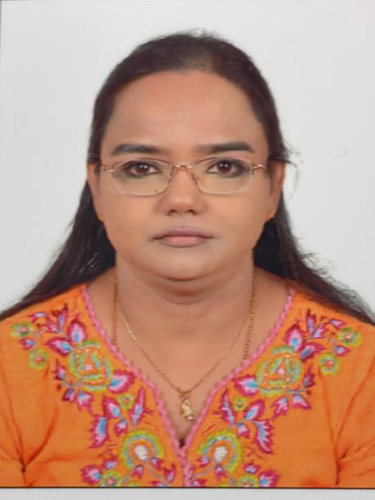
Student name:
Sakthi Sangeetha Kandaswamy

MSc Project title: Analysing risk in Vulnerability Assessment and Penetration Testing Methodology

Course: MSc Cybersecurity and Digital Forensics

Introduction/rationale:
The motivation behind choosing the project stemmed from the growing need for more structured and standardized approaches to penetration testing and vulnerability assessment. With cyberattacks becoming increasingly sophisticated, organizations struggle to identify and remediate vulnerabilities efficiently.

TECH TERM: Penetration testing, often referred to as ‘pen testing‘, is a cybersecurity practice where ethical hackers simulate cyberattacks on a computer system, network, or web application to identify vulnerabilities that could be exploited by malicious hackers. The main goals of penetration testing is to:
1. Identify security weaknesses
2. Assess the effectiveness of security measures
3. Improve overall security posture: By identifying and fixing vulnerabilities, organizations can strengthen their defenses against potential cyber threats.

The MITRE ATT&CK Framework provides a well-defined structure for understanding adversarial techniques and tactics, making it ideal for enhancing VAPT (Vulnerability Assessment and Penetration Testing) methodologies. This project aimed to leverage MITRE’s capabilities to analyze risk, improve testing scope, and ensure that testing efforts are comprehensive and aligned with real-world threats.

Project overview:
In this project, we integrated the MITRE ATT&CK Framework into the traditional VAPT methodology to refine the testing scope and increase effectiveness in detecting vulnerabilities. The steps involved included:

  • Defining the Scope: The project began by clearly defining the boundaries and goals of the penetration test. Using the MITRE Framework, specific attack vectors and techniques relevant to the organization’s environment were identified.
  • Conducting Vulnerability Scanning: Automated tools were used to perform initial vulnerability scans, identifying weak points that attackers might exploit.
  • Simulating Attacks Using MITRE Tactics: We designed attack scenarios based on the tactics and techniques outlined in MITRE ATT&CK, simulating adversarial behavior. This allowed us to target the actual risks that real attackers would exploit, rather than theoretical vulnerabilities.
  • Analyzing Results and Refining Scope: Post-attack analysis identified network gaps and weaknesses in current defenses. The scope of the testing was iteratively refined based on these findings.
  • Reporting and Remediation: Finally, comprehensive reports were generated, providing actionable insights for the security team, along with specific recommendations for closing vulnerabilities.

Visual Representation: A flow diagram illustrating the process of integrating MITRE with VAPT in Penetration Testing Stages, is located below:

Project outcome & conclusion:
The integration of the MITRE ATT&CK Framework significantly enhanced the scope and depth of the VAPT process. By aligning testing activities with real-world adversarial tactics, the project was able to identify previously overlooked risks and vulnerabilities. The methodology provided a more focused, risk-based approach to penetration testing, ensuring that organizations could better prepare for and mitigate threats. The project demonstrated that using MITRE not only strengthens the identification of vulnerabilities but also offers a more comprehensive understanding of the adversarial techniques that could affect critical systems.

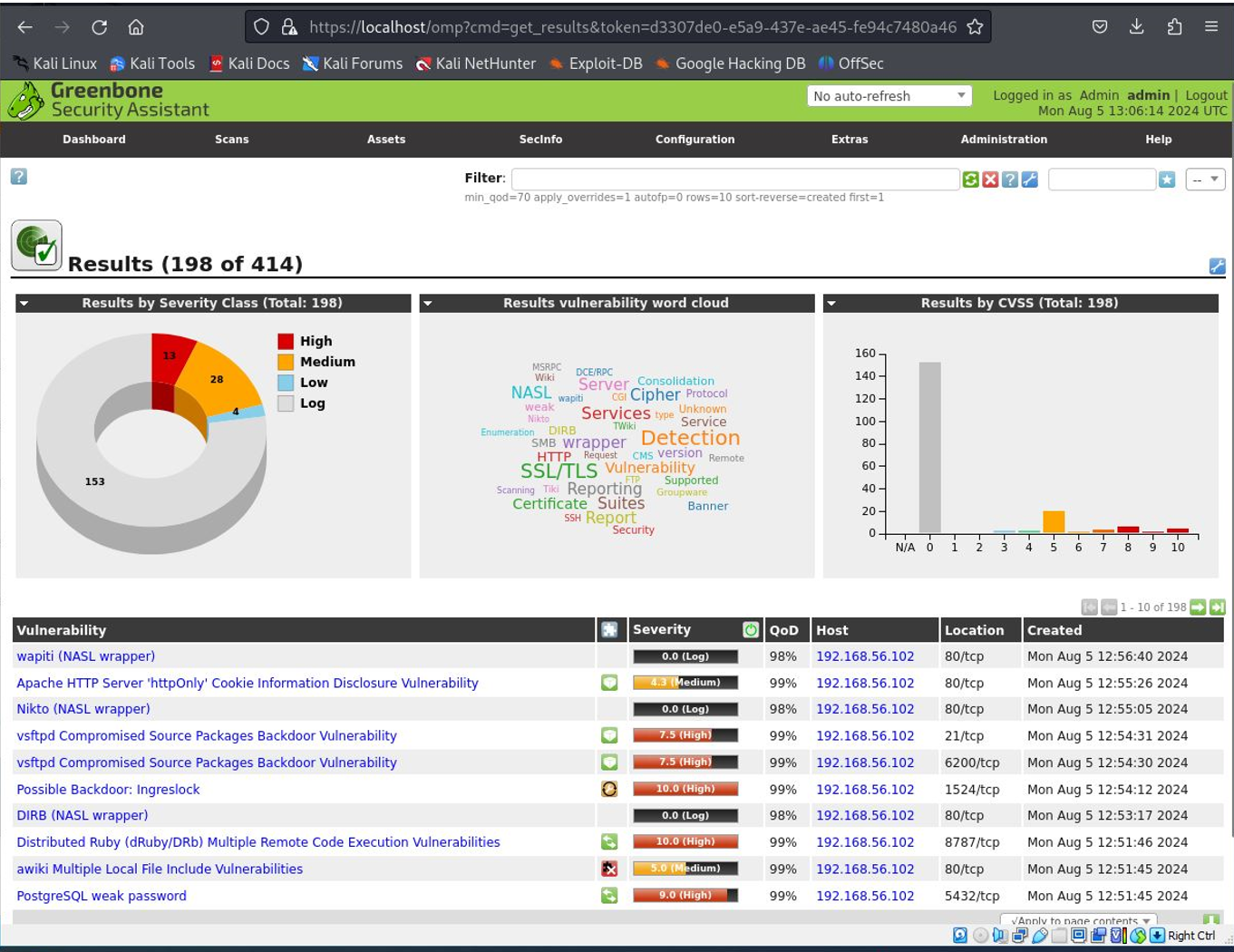
OpenVAS is a full-featured vulnerability scanning tool, that was used for this purposes of this project. An example output of vulnerability findings can be seen below:
Q. What Career and job role are you hoping to move into after graduation?
After graduation, I am hoping to pursue a career in cybersecurity, with a specific focus on roles like:

  • Penetration Tester: Using tools and methodologies (such as MITRE ATT&CK) to identify vulnerabilities in an organization’s IT infrastructure.
  • Cybersecurity Analyst: Monitoring, analyzing, and defending against cybersecurity threats.
  • Security Consultant: Advising organizations on how to improve their security posture by implementing effective VAPT practices.

These roles align with my passion for understanding and mitigating cyber risks, particularly in offensive security and ethical hacking.

Q. Please share a top tip/advice for students who are interested in completing a University Degree?
My top tip for students is to focus on practical applications of what you learn. Theoretical knowledge is important, but real growth happens when you apply it in real-world scenarios, whether through internships, projects, or labs. Hands-on experience not only solidifies your understanding but also makes you more marketable in the job market.

For further information about Computing courses at UWTSD, please click-here.

~

MSc Project: Fusion neural network

Name: Ze Wu

Q. Course: MSc Software Engineering and Artificial Intelligence

Q. Project title: Detection of fusarium head blight on wheat spikelets using a multi-scale feature fusion CNN model.

Q. Introduction/rationale: The motivation for choosing this project stems from the significant impact of fusarium head blight (FHB) on wheat production, which poses a threat to global food security. By leveraging advanced artificial intelligence techniques, this project aims to develop a robust detection system that can assist farmers in early identification of FHB, ultimately contributing to better crop management and yield optimization.

Q. Overview of the practical implementation:

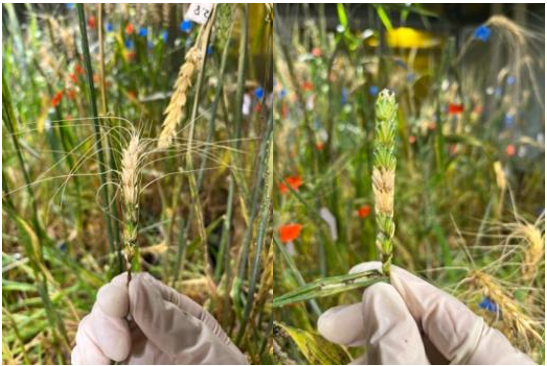
  • Data Collection: Acquiring a dataset of wheat spikelet images, both healthy and affected by FHB.

Figure 1: Dataset Samples

  • Model Development: Designing a multi-scale feature fusion convolutional neural network (CNN) to analyze the images. Built on the advanced YOLOv9 framework, the model incorporates a Multi-Scale Feature Enhancement and Fusion (MSFEF) module, which plays a critical role in extracting and dynamically enhancing features from various scales. To enhance computational efficiency, as shown in Figure 2, optimized convolutional layers such as RepNCSPELAN and DWConv are used, reducing the overall computational load while maintaining high detection performance.

Figure 2: Proposed network overview

  • Training and Testing: The model was trained on the dataset using techniques like data augmentation (Mosaic) to enhance its robustness. Testing was conducted to evaluate accuracy and performance.

Figure 3: Training batch samples

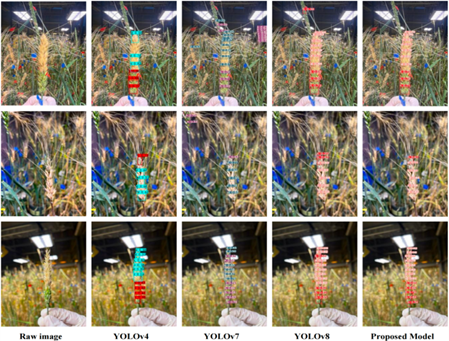
  • Deployment: The final model can be integrated into a user-friendly application for real-time detection, offering researchers and farmers an efficient tool for early disease detection and management.

Figure 4: Model predictions

Q. Overview of outcome/conclusion:

The project successfully demonstrated that the proposed multi-scale feature fusion CNN model can accurately detect fusarium head blight in wheat spikelets, achieving an accuracy of over 90%, which highlights the potential of AI-driven solutions in agriculture, paving the way for future advancements in plant disease management and crop monitoring.

Q. What Career and job role are you hoping to move into after graduation?

After graduation, I aspire to work as a machine learning engineer, focusing on applying AI in agricultural technology. My goal is to contribute to innovations that enhance food security and sustainability through smart farming practices.

Q. Please share a top tip/advice for students who are interested in completing a University Degree?

One essential piece of advice is to stay curious and actively engage with your coursework beyond the classroom. Seek out projects, internships, and collaborative opportunities that apply your knowledge in real-world contexts. Building a strong network and gaining practical experience will significantly enhance learning and career prospects.

For further information about Computing courses at UWTSD, please click-here.

Graduate Profile: Richard Evans @ University of Greenwich

Richard

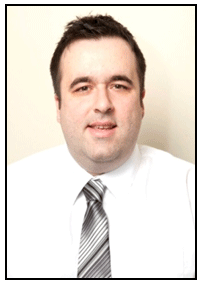
Richard Evans studied the MSc e-Commerce (Business pathway) at the School of Applied Computing UWTSD Swansea. He is now a Research Fellow @ the University of Greenwich, to learn more about Richard’s Career success please continuing reading below.

What was your HE course at the School of Applied Computing?

 MSc in e-Commerce (Business).

 What is your job title and role?

 Research Fellow in Knowledge Management for Collaborative Product Development at the University of Greenwich

My role within the University of Greenwich is to conduct research into the use of Web 2.0 technologies to improve employee collaboration and knowledge sharing during product development lifecycles in extended supply chains. I am currently working in collaboration with CESi University, Rouen, France as part of a European INTERREG research project.

My responsibilities include: liaising and maintaining links with industrial collaborators, organising bi-annual industrial workshops, identifying potential funding opportunities and assisting with grant applications. I review articles for the International Journal of Modelling, Identification and Control and the International Conference on Teaching, Assessment and Learning for Engineering and am currently a member of the Host Organising Committee for the International Conference on Computer Aided Design and Applications Conference, which is being held at the University of Greenwich in 2015. Finally, I teach and assess two MSc modules within the Faculty of Engineering and Science: Research Methodologies and e-Technologies. I am also a Visiting Lecturer at Cranfield University where I teach lectures to MSc students on the use of Web 2.0 Technologies in Business.

 Could you briefly describe the organization you work for?

The University of Greenwich is a British University with over 27,000 students and offers HE courses, including undergraduate and postgraduate degree programmes. The university has three main campuses situated in the South East of England. I currently work in the Centre of Innovative Product Development and Manufacturing (CiPDM) which sits within the Faculty of Engineering and Science.

The CiPDM carries out strategic research and consultancy in the manufacturing sector in areas such as new product development; collaboration between Original Equipment Manufacturers (OEMs) and their suppliers; digital and sustainable manufacturing; information and knowledge management; and product lifecycle management. The centre focuses on new enabling technologies and methods and processes for the design, manufacturing and servicing of high value complex engineering products and systems in the aerospace, automotive, power generation and general manufacturing sector. The centre employs six members of academic staff, including myself, and we currently have six full-time PhD students who work in collaboration with our industrial partners who include BAE Systems, Cummins Power Generation and Ford Motor Company.

 A brief summary of your Career, how you got to where you are today?

After finishing my MSc degree in e-Commerce, I immediately got offered the role of Online Product Manager for Dunelm Mill Ltd, the UK’s largest home furnishings organisation. I stayed in the role for 8 months before seeking funded PhD programmes; this led me to the position at BAE Systems, which I started in October 2010. During my PhD, I worked for BAE Systems’ Electronic Systems division in Rochester, Kent. I also became a professional member of both the Institution of Engineering and Technology (IET) and the British Computer Society (BCS). I successfully defended my PhD in August 2013 and was then offered a full-time role at the University of Greenwich as a research fellow in knowledge management for collaborative product development.

 Which skills learned at University are helpful to you in your job?

Good question! In my own experience, the knowledge I acquired in web programming has helped a lot during my PhD where I had to create a bespoke IT system. When working for Dunelm Mill, my knowledge of e-Commerce Law really helped – I think this is only available on the business route.

 Do you have a typical day and how would you describe it?

A typical day can take one of two routes:

  1. During term time, I would teach two lectures per week, meet with MSc students for supervision meetings, assess coursework submissions and conduct research, including reading academic publications, writing articles for submission. I also typically present at two international conferences per year within the fields of manufacturing and information systems.
  2. During non-term time, I spend all day conducting research – reading through publications and formilising my own ideas for new projects and publications. I would also assist the Centre manager in research grant applications and management.

What aspects of your job do you enjoy most?

Two aspects stand out: liaising with industrial collaborators – seeing your research being transferred into a commercial setting gives you a real “buzz” and also attending conferences and networking events – not only do you get to travel the world, but you get to meet new people from other Universities who may turn into collaborators on future projects.

 Do you have any advice for students who would like to start a Career in the IT industry? 

  • Do not underestimate your own knowledge and skills – you will find when you join a large organisation that you are more than capable with the knowledge which you have acquired at University.
  • Become a member of a professional association e.g. British Computer Society (BCS). Attend their networking events and gain knowledge about the current needs and challenges in the IT industry.
  • Gain greater knowledge of the current systems used within the IT industry e.g. in my role at Dunelm Mill, we used IBM WebSphere Commerce and Google Analytics for e-Commerce tasks. Having worked for BAE Systems, I found that Microsoft Sharepoint and Yammer is relied upon for employee collaboration whilst PTC WindChill and other PLM tools are used for manufacturing work.
Image

Applied Computing Project Exhibition 2014

blog-cover

Masters Students 2014

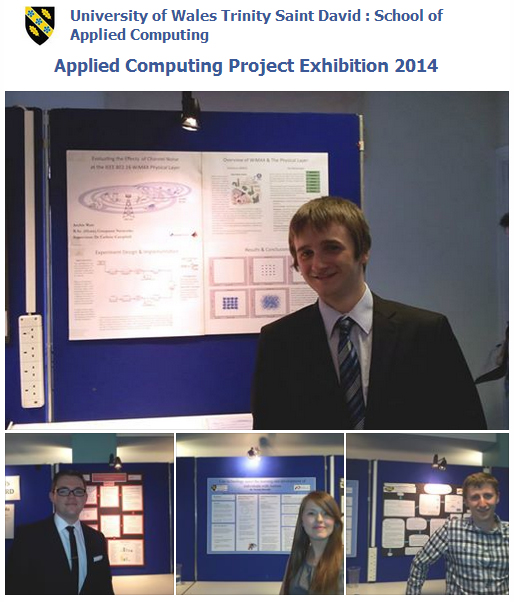
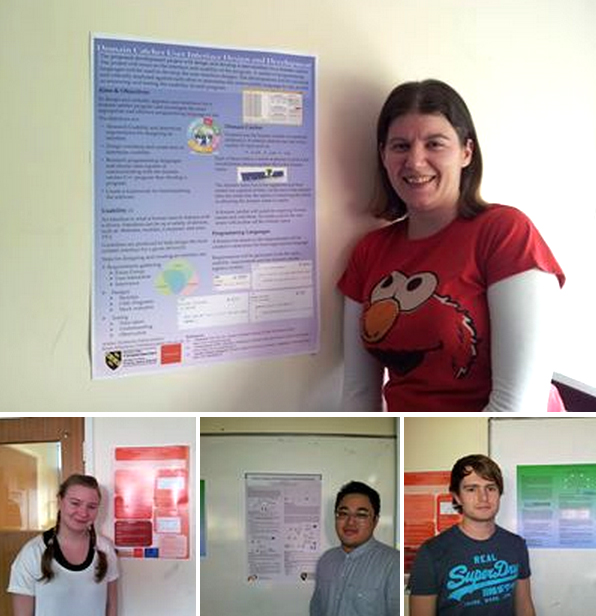
Pics of the MSc Applied Computing and MSc Computer Networks students showcasing their Major Project Posters. Please click-here for more information.

MSc-Students

M.Sc. Applied Computing and M.Sc. Computer Networks

Grads

Swansea Metropolitan is a partner in ‘Access to Masters’, a project funded through the European Social Fund in order to increase the number of graduates in Wales with a Masters Level Qualification. Students who live in the Convergence Area of Wales may be eligible to receive funding to cover the cost of tuition fees as well as providing a bursary of up to £5695.

We at the School of Applied Computing, Swansea Metropolitan are currently recruiting for the M.Sc. Applied Computing and M.Sc. Computer Networks courses and have been allocated a limited number of funded masters places though the ATM Scheme. The philosophy that underpins the M.Sc. courses at Swansea Metropolitan is that they relate to the school’s vocational nature and have been designed to enhance a graduate’s employability.  They focus on the practical application of theory whilst maintaining academic rigour. This makes the programmes distinct when compared with more traditional computing M.Sc. programmes.

The M.Sc. Applied Computing has a distinctive flavour providing a mixture of databases, computer programming, systems analysis and project management. These skills are in great demand in the modern IT industry and our graduates will, we believe, fill many of the ‘hard to fill vacancies’ that are reported by the computer industry generally.

Any questions regarding the course content should be directed to the course director Glenn Jenkins (glenn.l.jenkins@smu.ac.uk).  For more details regarding the ATM funding please contact Nicola Powell (nicola.powell@smu.ac.uk).

The newly updated MSc Computer Networks offers mixture of routing and switching, emerging network technologies, high performance computing, network security, and project management. The programme includes material required for the Cisco Certified Network Professional (CCNP) qualification. The networking industry requires staff with these skills to fill many vacancies.   Any questions regarding the course content should be directed to the course director Kapilan Radhakrishman (kapilan.radhakrishman@smu.ac.uk). For more details regarding the ATM funding please contact Nicola Powell (nicola.powell@smu.ac.uk).

This project has been part-funded by the EU’s Convergence European Regional Development Fund through the Welsh Government.

ERDF Port RGB