Turn On Your Future @ UWTSD's School of Applied Computing & Electronics

Posts tagged ‘art’

Trip to Yr Egin Carmarthen

Our staff and students recently enjoyed an engaging and inspiring trip to Yr Egin in Carmarthen.
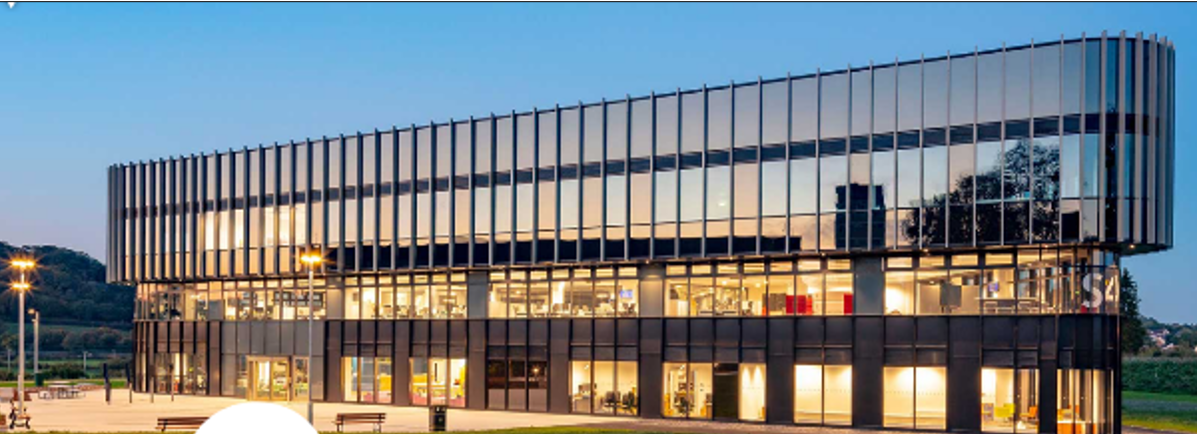
Yr Egin is a creative and digital hub located on the UWTSD Carmarthen campus, home to the Welsh‑language broadcaster S4C and a wide community of media, arts, and digital businesses. Designed to inspire creativity and nurture new talent, the centre provides state‑of‑the‑art production facilities, hot‑desking spaces, an auditorium, and a programme of cultural and industry events. Since opening in 2018, it has developed into a vibrant venue that supports collaboration between students, professionals, and local creatives while contributing significantly to the regional economy and strengthening the Welsh language through its cultural output.

Exploring Creativity and Careers: UWTSD Computing Visit to Yr Egin, Carmarthen

Recently, UWTSD Computing staff and students travelled to Yr Egin, the vibrant creative and digital centre based on the Carmarthen campus. Home to S4C, production companies, freelancers, and a growing community of digital talent, Yr Egin proved the perfect place for students to gain behind‑the‑scenes insights into animation, media production, education technology, and the realities of working in the creative industries. The day combined inspiring talks from industry professionals, a guided tour of S4C’s facilities, and an opportunity to see how creative ideas evolve from early sketches to polished on‑screen productions.

Twt Productions: Getting Started in the Creative Industries
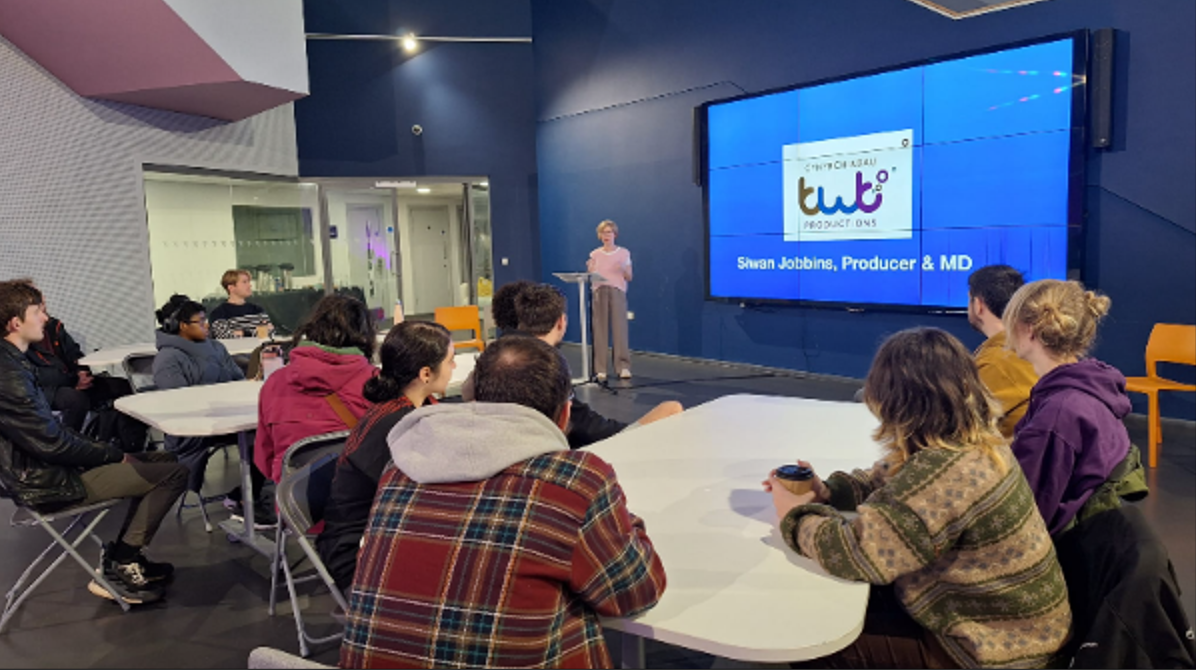
The first speaker of the day was Siwan Jobbins from Twt Productions, who offered practical guidance for students hoping to break into animation and media. Siwan emphasised the importance of keeping things simple when pitching ideas: if you can’t summarise your concept in one clear sentence, it’s not ready yet. She also stressed how crucial strong visuals and a realistic budget are when presenting a project.
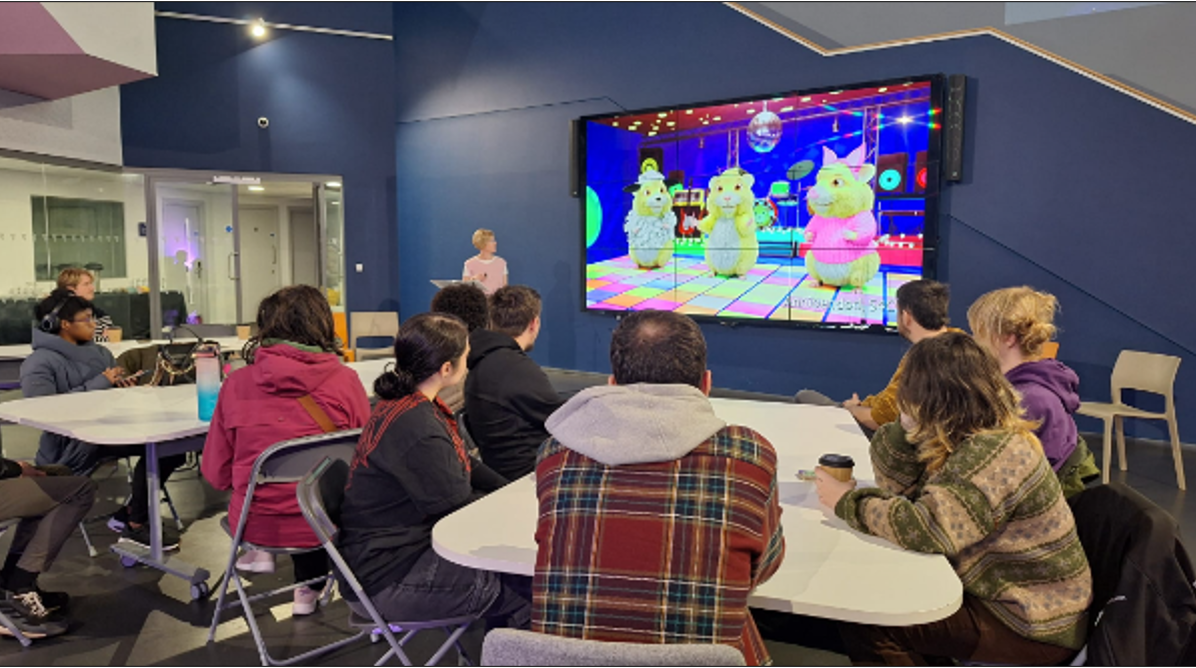
Students were given a useful roundup of upcoming festivals, networking events, and industry platforms—from the Cardiff Animation Festival to tender portals such as S4C Production Tenders, BBC Education Commissioning, and Sell2Wales. For graduates, Siwan encouraged maintaining momentum: keep learning, keep applying, and keep refining your skills. Early in your career, she explained, you may need to give up some rights to get your name out there, but as you gain experience you’ll have more influence and ownership over your work.

Cloth Cat: Craft, Creativity and Career Longevity

Next, the group heard from Jon Rennie of Cloth Cat Animation, whose talk blended humour, honesty, and invaluable advice. Jon reinforced the importance of LinkedIn and social media for building visibility in the industry. He encouraged students to develop original showreels—avoiding overused film clips—and to pay attention to how other animators solve problems under tight budgets. Sometimes, he noted, creativity is about making smart compromises, such as omitting footprints in a snowy scene when deadlines are tight.

Jon urged students to constantly update their skills, be adaptable, and above all be reliable: in animation, meeting deadlines is just as important as artistic flair.
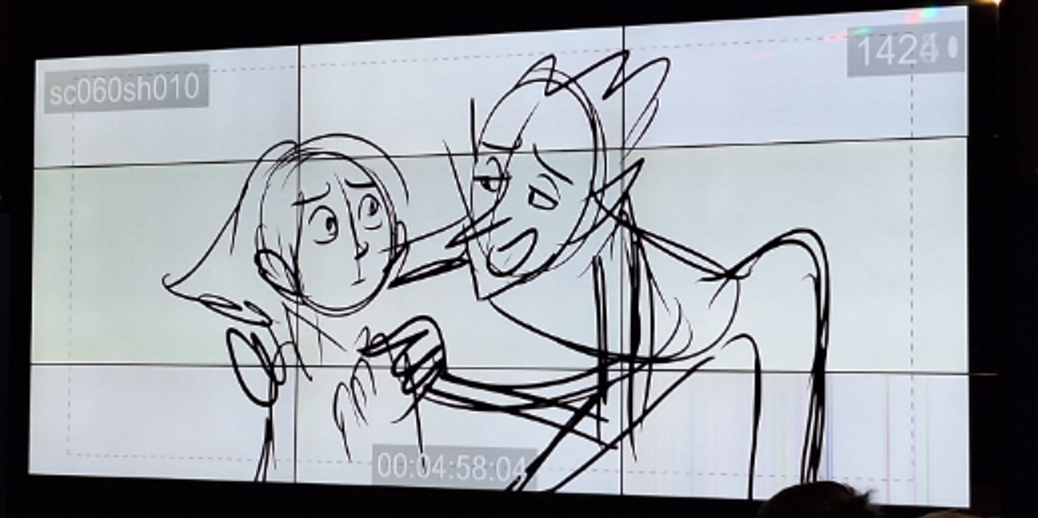
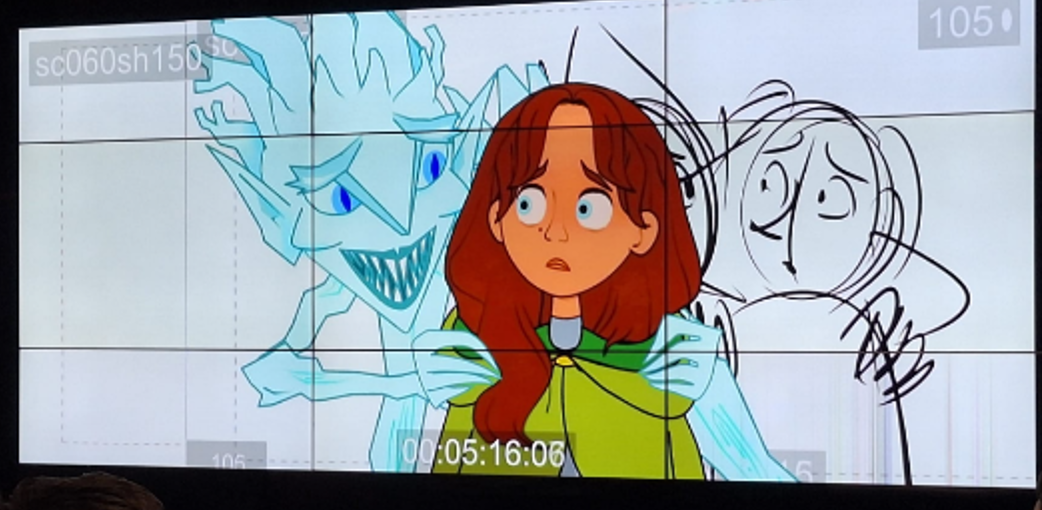
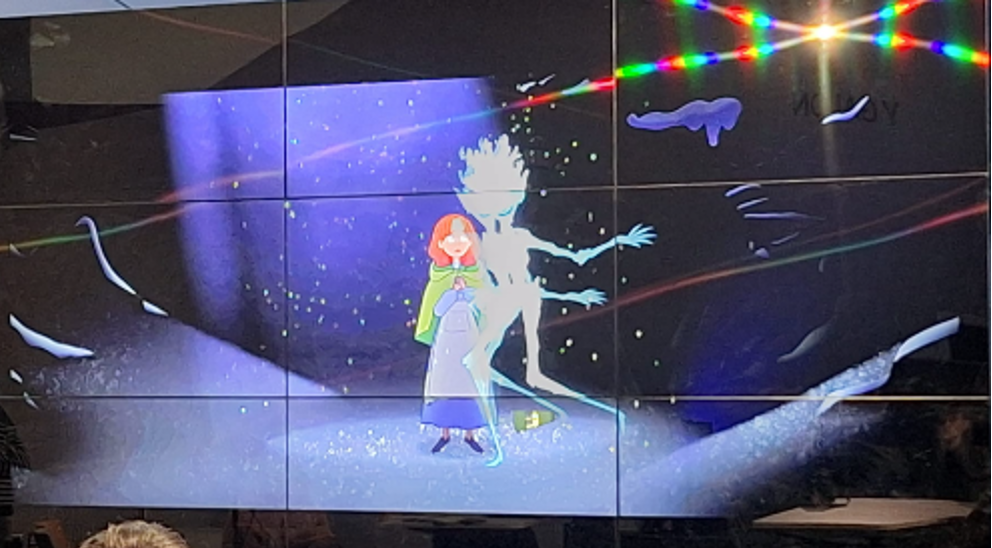
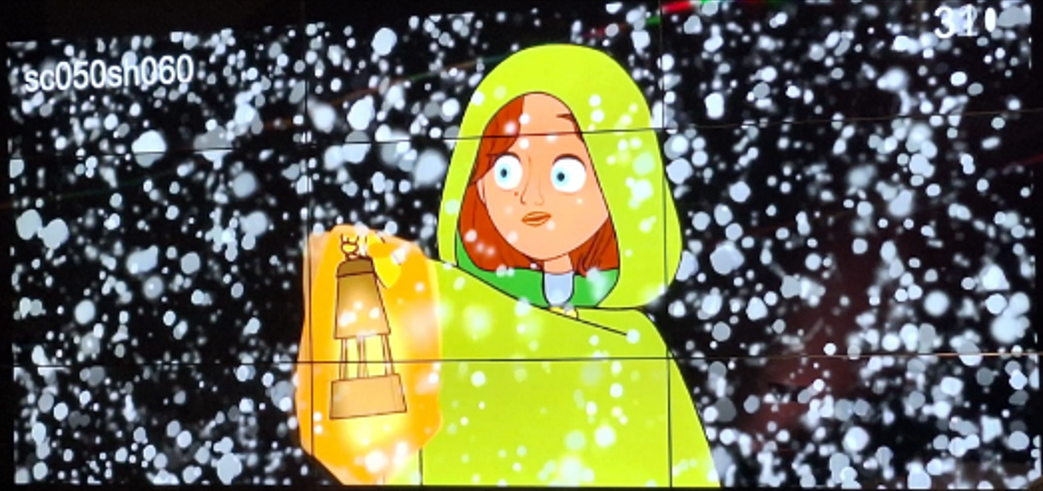
He also shared insights from his project “The Ghost of Midwinter / Ysbryd yr Oerfel,” a bilingual S4C Christmas animation produced in just six months. Students watched how a short sequence developed across four stages: from storyboards, to character animation, to effects, and finally to fully rendered backgrounds. It was a clear, fascinating demonstration of the full animation pipeline.
Inside S4C: Touring the Creative Spaces of Yr Egin

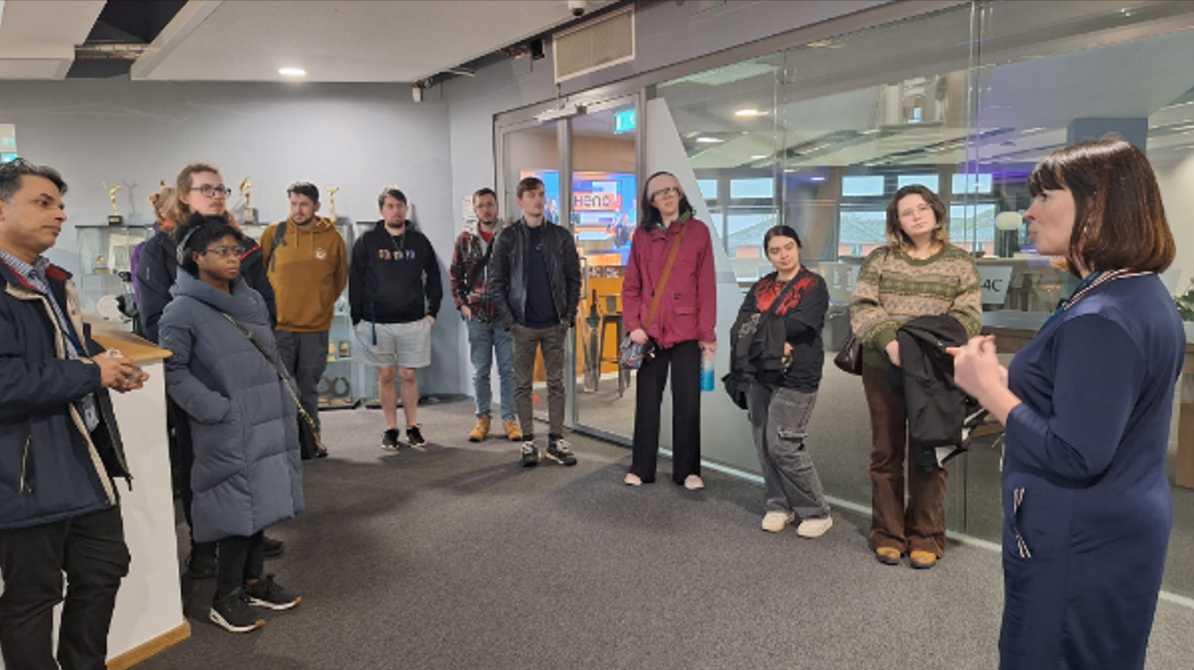
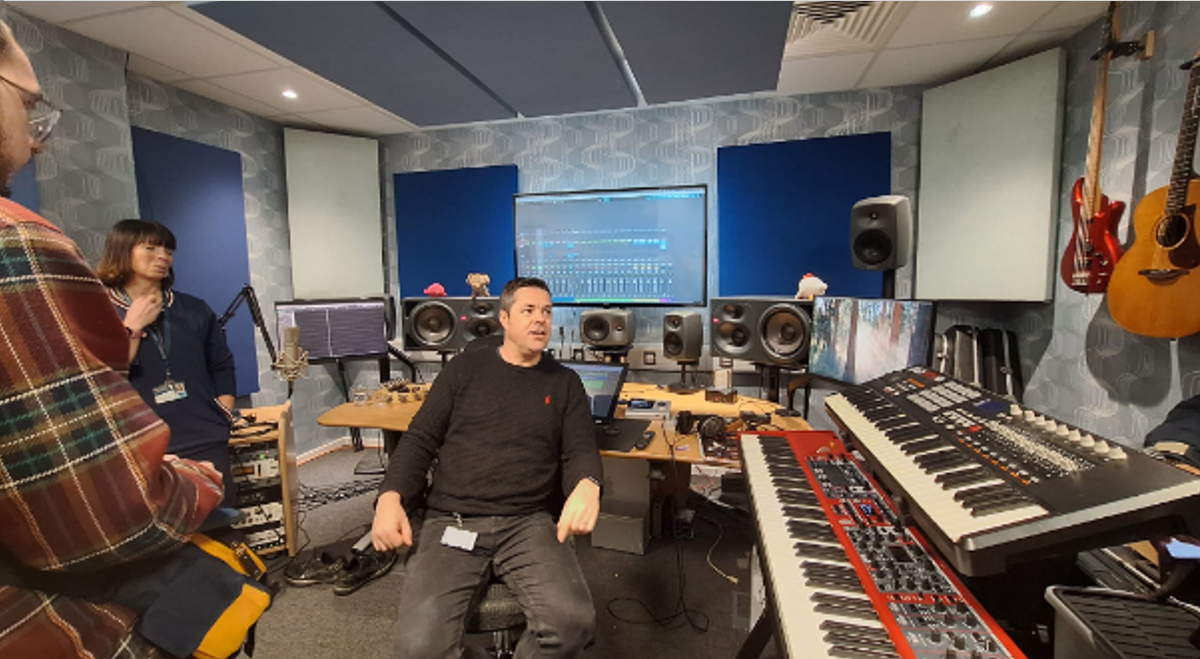
The tour of Yr Egin gave students a glimpse into live studios, editing suites, and the collaborative workspaces used by media professionals. The group met Steffan Rhys Williams, a music producer and composer who has contributed to S4C for more than 20 years. Steffan discussed the realities of composing for television, explaining how he sometimes outsources parts of the process so he can focus on creative direction.
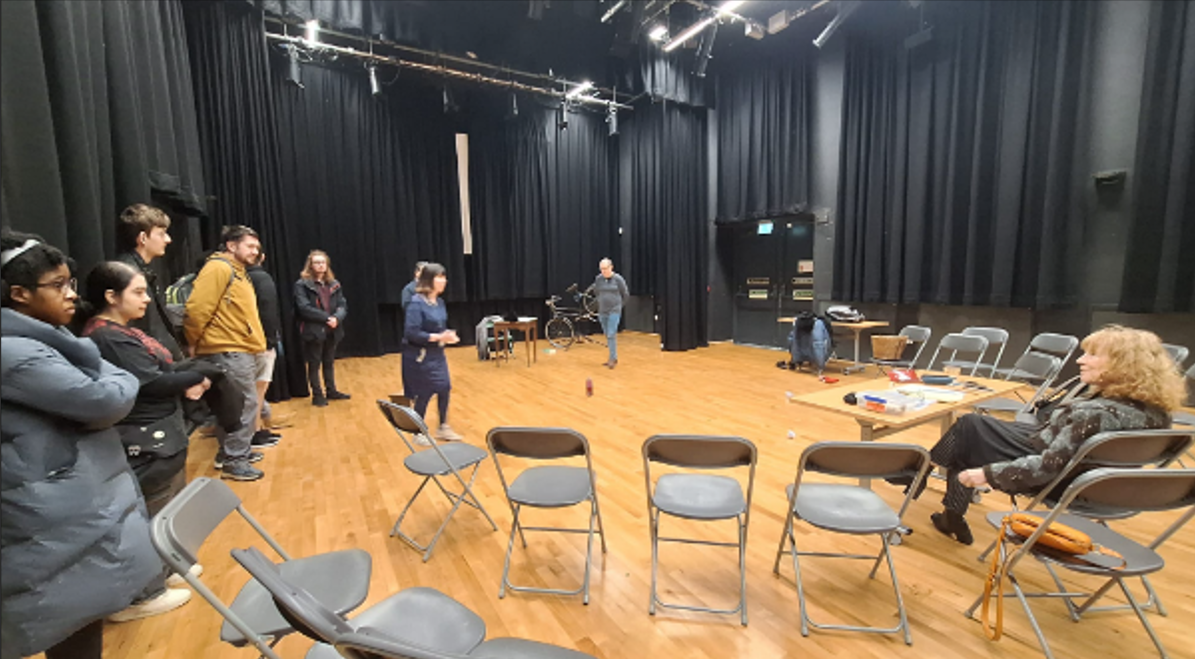
Students also visited the hot‑desking area, which UWTSD graduates can use for six months after completing their studies—a valuable opportunity to network, start freelance work, or collaborate with the industry professionals based in the building.

Antur Amser: Blending Animation, Gaming and Education

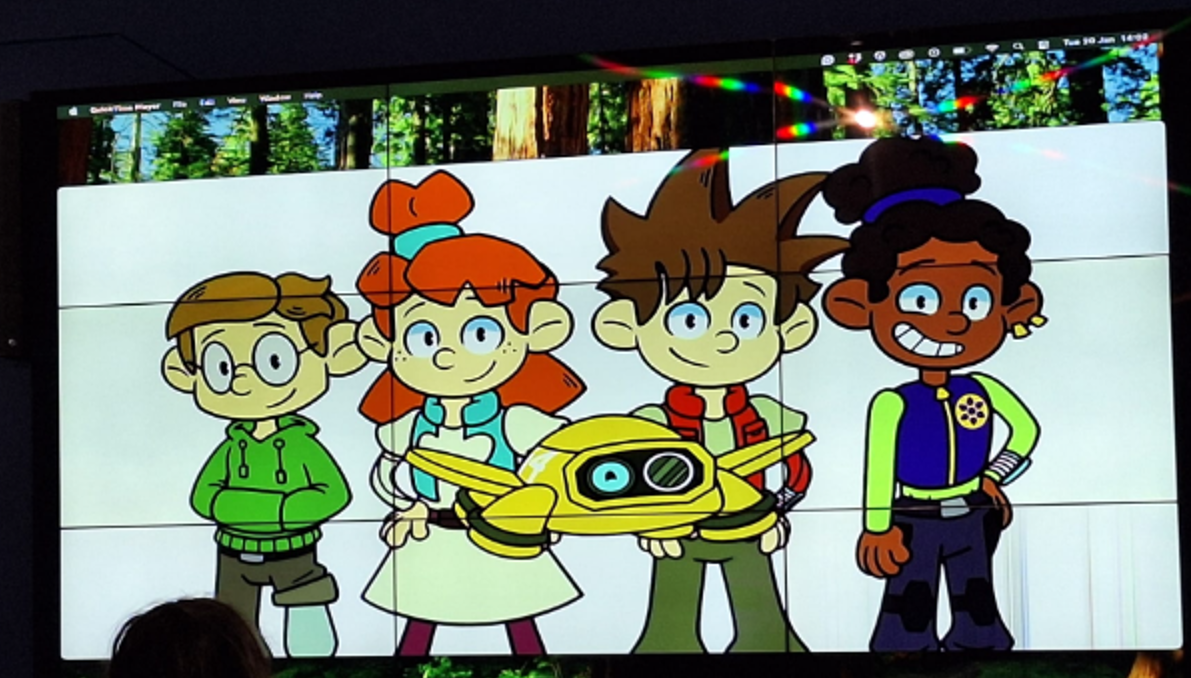
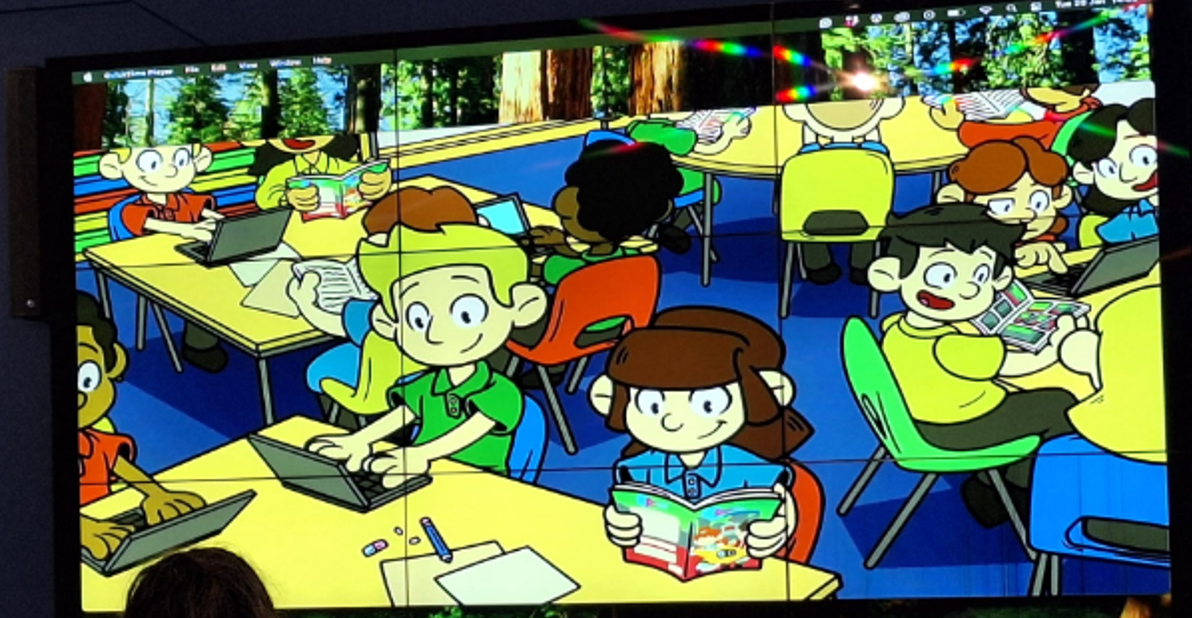
The final speaker, Osian Evans, shared insights from Antur Amser, an ambitious educational entertainment project that follows a group of children from the year 2174 who travel back to different eras in Earth’s history. The characters act as a creative gateway into subjects such as science, history, and geography, blending classroom learning with storytelling and interactive media.
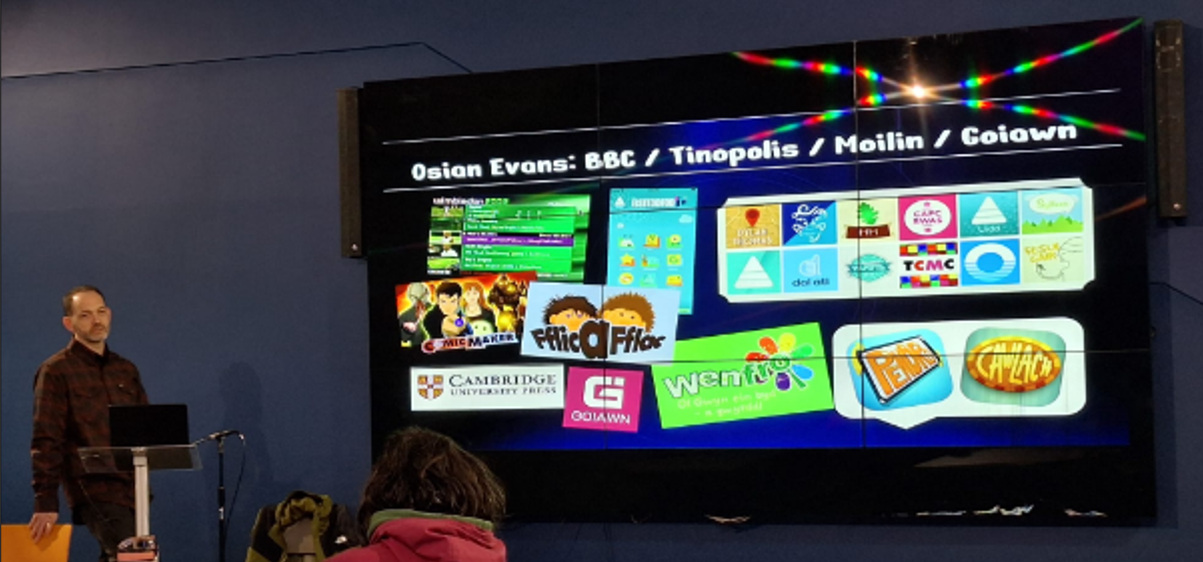
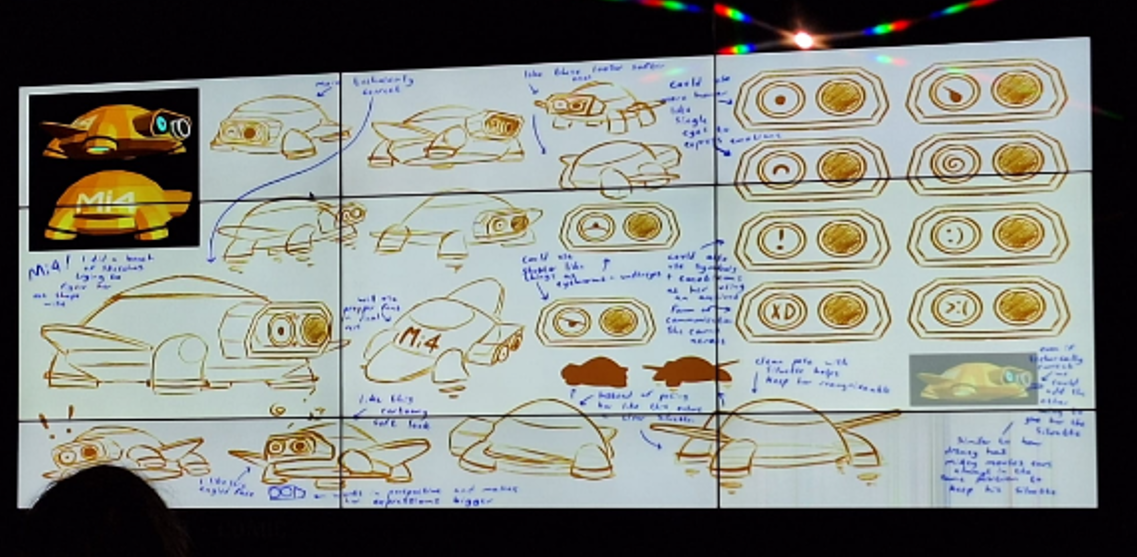
Osian explained the iterative design process behind the characters and emphasised the importance of giving animators precise instructions—highlighted by the time a “robot with anti‑gravity technology” accidentally ended up flapping wings because directions were unclear.

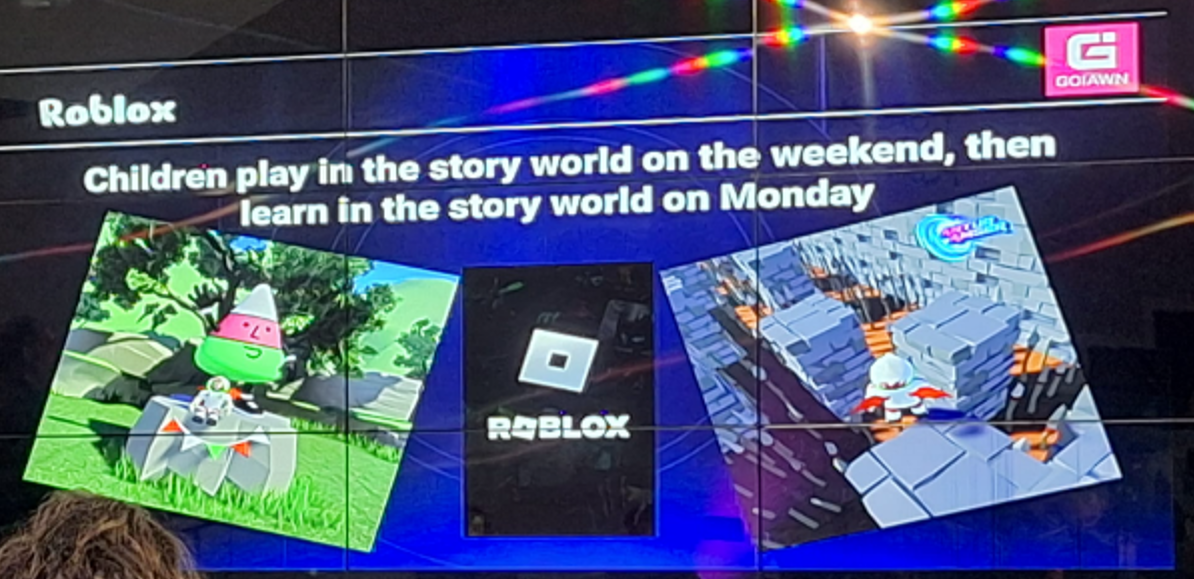
He also discussed the balance between gaming and learning, and how using existing platforms like YouTube and Roblox helps reach young audiences more effectively than trying to build entirely new ecosystems. Where possible, the team uses pre‑built assets, reserving bespoke modelling for niche cases—an essential strategy for meeting deadlines and budgets.

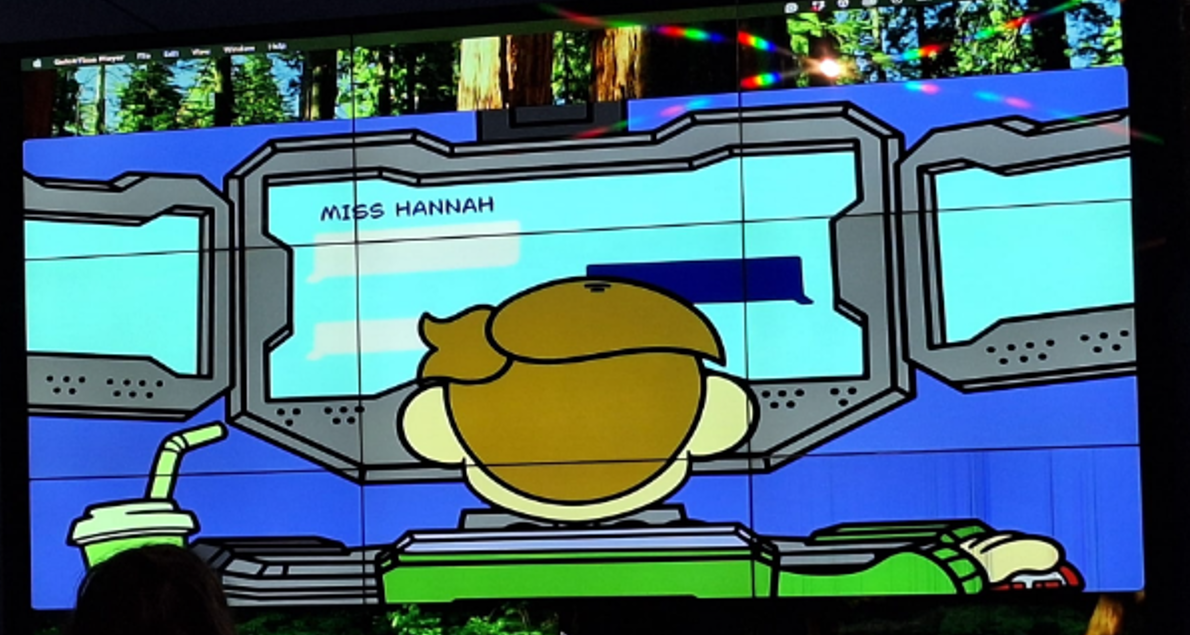
Where AI Fits In: Not a Replacement, but a Team Member

Osian also spoke about the role of AI‑assisted animation, emphasising that AI complements human creativity rather than replacing it. While AI can accelerate early drafts, improve workflow capacity, and support low‑budget productions like vodcasts, it is not suitable for areas like scripting. Instead, he described AI as a “first draft collaborator”: useful for rough animation tests before the real artistry begins. Tools such as HeyGen are now commonly used for rapid prototyping, helping creators gather feedback earlier and refine their ideas faster.

A Day of Inspiration and Industry Insight

The visit to Yr Egin offered our Computing students a rich, realistic look at the creative industries—highlighting both the opportunities available and the hard work and adaptability required to thrive in them. From pitching and production pipelines to character design and the role of AI, the day showcased the many pathways open to students interested in animation, digital creativity, and media technology.

Most importantly, the trip demonstrated just how connected UWTSD students are to Wales’ creative sector. Yr Egin isn’t just a building—it’s a collaborative hub where ideas grow, careers begin, and the next generation of digital storytellers can find their place.

We would like thank all the staff and industry experts from Yr Egin who made the day so enjoyable and inspiring for us all. Diolch yn fawr iawn i chi.

~

Student profile: Hamza Qasim

Name: Hamza Qasim

What University course are you doing? MA Masters in Animation at UWTSD.
This follows my completion of a BA in Computer Games Design at UWTSD, where I spent 3 fulfilling years building my foundation in digital arts and game development.

What truly inspires me about animation and the broader field of digital arts is the unlimited creative potential it offers. I have a genuine passion for games, animation, VFX, and CGI, particularly the captivating effects seen in Marvel movies. The ability to bring ideas to life through digital mediums and create immersive experiences that can transport viewers into different worlds is incredibly motivating.

Video below: BA Game Design animation by Hamza Qasim

Beyond the creative aspects, I’m inspired by how this field connects to my other interests, especially automotive design. The intersection of technical precision and artistic vision in CGI, particularly in automotive visualisation, represents the perfect blend of my passions. What makes this journey even more inspiring is the supportive environment at UWTSD, where I feel encouraged to explore emerging technologies and push the boundaries of what’s possible in animation and interactive media.

Video below: Portfolio from BA Games Design Yr.3 by Hamza Qasim

Throughout my Masters program, I’ve been developing a diverse range of technical and creative skills. On the technical side, I’ve advanced my proficiency in 3D modelling, animation, texturing, and rendering using various versions of Blender (4.0, 4.2, and 4.4). I’ve also expanded into video editing and composition using Wondershare Filmora 13, along with comprehensive sound design capabilities.

Video below: Cans by Hamza Qasim

Video below: Koi by Hamza Qasim

Recently, I’ve ventured into VR development using Unreal Engine 5.5, where I’ve learned to create custom blueprints for asset switching, material switching, and targeted interactions. One of my proudest achievements has been developing a real-time sun movement system that enhances environmental immersion in VR experiences.

Video below: Material Switching & Sun Movement by Hamza Qasim

Beyond technical skills, I’ve been developing crucial soft skills through modules like Leadership, Management and Ethics. This module, though different from animation, has taught me about various leadership styles, management approaches, and proper research methodologies, skills that are invaluable for any creative professional.

Favourite Technology: My current favourite tool is definitely Blender. While we also learn Maya at University, I’ve found that the modelling and animation skills transfer seamlessly to Blender, and it offers several advantages that make it exceptional for independent learning and creative work. What I love most about Blender is its comprehensive nature, I can model, sculpt, texture, animate, composite, and render all within a single application.

The fact that it’s completely free removes financial barriers to learning, and the extensive community support through YouTube tutorials and forums means that virtually any problem I encounter has likely been solved by someone else. The accessibility and community aspect of Blender have been game-changing for my learning process. While Maya still has some advantages, particularly for UV unwrapping, the plugins available for Blender help bridge most gaps, making it an incredibly versatile tool for independent artists and students.

Video below: Liminal Spaces using Advanced Techniques by Hamza Qasim

After you Graduate?
My career aspiration is to work as a CGI Artist at an automotive company, with Mercedes-Benz being my preferred destination. This goal is informed by my previous experience working there before enrolling at UWTSD, which gave me valuable insight into the industry and confirmed my passion for automotive visualisation.

Video below: Car in motion by Hamza Qasim

The automotive industry’s increasing reliance on high-quality CGI for marketing, design visualisation, and virtual showrooms aligns perfectly with my skills in 3D modelling, animation, and rendering. My experience with both traditional animation techniques and emerging technologies like VR positions me well for the evolving demands of automotive CGI, where immersive experiences are becoming increasingly important.

Video below: Cloth Reveal by Hamza Qasim

Advice for students?
My most important advice is simple but crucial: do something that you truly enjoy. Don’t choose a course based on others’ expectations or perceived prestige, choose it for yourself and your genuine interests.

I love what I study because it encompasses everything I’m passionate about: games, animation, VFX, CGI, and automotive design. This genuine enthusiasm makes the work feel less like a chore and more like an exciting challenge. When you’re passionate about your subject, you naturally strive for excellence and find yourself more resilient when facing difficulties.

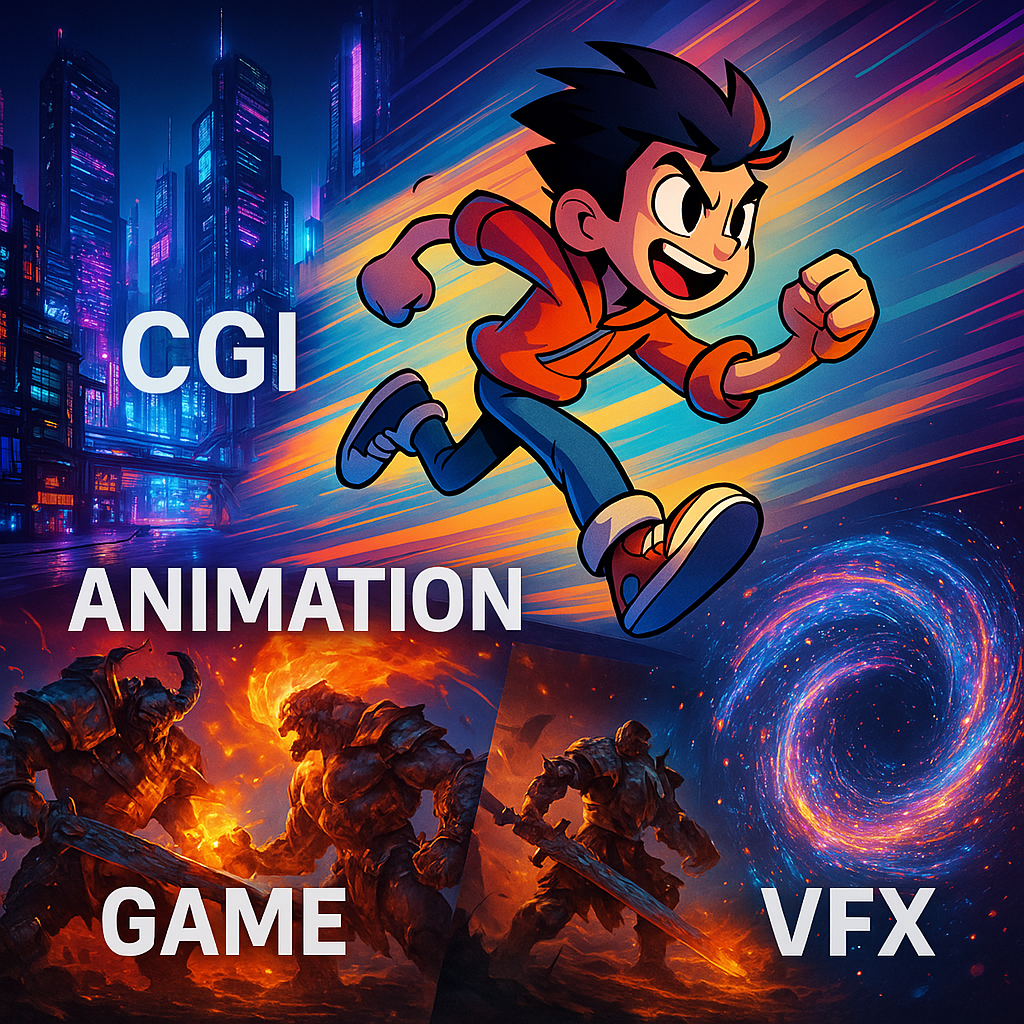
Fig.: Digital Arts image

Another key lesson I’ve learned is about perfectionism and deadlines. As an artist, I’ll always strive for perfection, but I’ve come to understand that sometimes you need to aim for the best work possible within tight deadlines rather than perfect work that never gets completed. It’s better to submit a strong, complete project than to miss deadlines chasing an impossible ideal of perfection. The balance between ambition and pragmatism is essential for success in any creative field.

Experience at UWTSD?
My experience at UWTSD has been absolutely transformative and couldn’t have been better. The support system here is extraordinary, from Richard Morgan in the Games Design department, who has been my rock throughout my three-year BA journey, to lecturers like Nabeel Masih, Adam Head, Philip Organ, and James Williams, who have consistently encouraged my growth and exploration of emerging technologies. The university’s holistic approach to student support extends beyond academics. The well-being department has been incredibly supportive during challenging times with my mental health, and the entire campus environment, from reception and canteen staff to lecturers, creates an atmosphere that feels genuinely supportive and nurturing.

I’ve had numerous opportunities for leadership and community involvement, serving as Student Representative for both my BA and MA courses and participating in the UWTSD Esports Committee, where we organised events and created lasting memories. The university even pushed me toward pursuing my Masters degree when I wasn’t initially planning to continue, a decision that has proven invaluable. The collaborative environment has allowed me to form lasting friendships with both staff and students, and I’ve been able to contribute through graphic design work for various university projects. If I could change anything about my university experience, it would be nothing, every aspect has been beneficial and has contributed to my growth as both a person and a professional.

~

For further information about Computer Games & Animation courses at UWTSD, please click here.