Turn On Your Future @ UWTSD's School of Applied Computing & Electronics

Archive for the ‘Uncategorized’ Category

Image

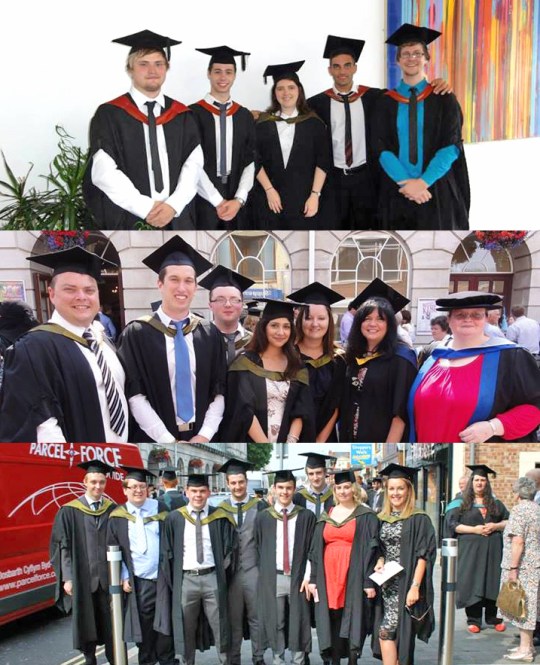
* Congratulations * @AC Graduates 2013

Grads2013_combo

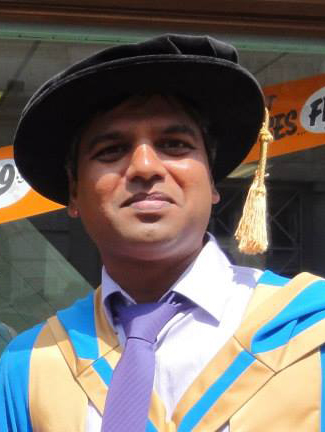
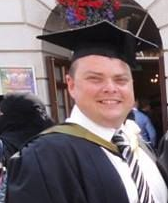
Graduate Profile: Sion Williams

SionWilliams2

What was your undergraduate degree and when did you graduate?

I have a degree in Computer Games Development.

What is your job title and role?

IT Build Manager

Could you briefly describe the organization you work for?

I currently work for one of the fastest growing insurance providers in the UK, based in Exeter.

Did any of your degree modules inspire you or help you in choosing your job?

Interestingly the subject I disliked the most (Software Engineering) ended up being the bread and butter of my daily work.

What modules are most helpful to you in your job?

Build and Release management is an interesting field because it’s not an intensive programming role, be we are often seen as the problem solvers.

Where do you find yourself using the transferable skills that you developed in University?

Because of the architectural complexities behind games development I was often presented with a myriad of different types of problems – the skills I developed throughout the course are all used on a daily basis. In some ways I would even say I had an edge over some other candidates from a computer science background.

Where do you use your specialist skills and abilities?

Whilst I don’t do real-time software development, I do use many of my programming skills, and ability to learn programming languages.

Do you have a typical day and how would you describe it?
The build manager is the person responsible for managing the following processes:
-Create baselines from the initial version of software.
-Organize and refine the structure of your software.
-Set up build management projects for testing and staging.
-Set up and maintain process rules and folder templates.
-Collect software changes from developers, then build test areas.
-Run reports to find out features and tasks that are in or not in a build.
-Freeze software at important milestones, such as a customer release.
-Make the latest changes available to developers.
-Delete baselines that are no longer needed.
-Recreate old software releases to identify problems and create fixes.

What aspects of your job do you enjoy most?

Every day offers a new challenge. As I work on most projects in the company, I don’t get stuck doing the same thing constantly. I also have a real opportunity to make software development faster and more reliable. The pay is excellent too (more than a developer).

Any tips for someone wanting to develop a career in your sector?

If you have a passion for software development, but don’t want to cut code every day, then this is the perfect role for you. Work with open source tools, look at how they are built and find out ways to improve it. This will set you off on the right foot for a role in IT build management.

M.Sc. Applied Computing and M.Sc. Computer Networks

Grads

Swansea Metropolitan is a partner in ‘Access to Masters’, a project funded through the European Social Fund in order to increase the number of graduates in Wales with a Masters Level Qualification. Students who live in the Convergence Area of Wales may be eligible to receive funding to cover the cost of tuition fees as well as providing a bursary of up to £5695.

We at the School of Applied Computing, Swansea Metropolitan are currently recruiting for the M.Sc. Applied Computing and M.Sc. Computer Networks courses and have been allocated a limited number of funded masters places though the ATM Scheme. The philosophy that underpins the M.Sc. courses at Swansea Metropolitan is that they relate to the school’s vocational nature and have been designed to enhance a graduate’s employability.  They focus on the practical application of theory whilst maintaining academic rigour. This makes the programmes distinct when compared with more traditional computing M.Sc. programmes.

The M.Sc. Applied Computing has a distinctive flavour providing a mixture of databases, computer programming, systems analysis and project management. These skills are in great demand in the modern IT industry and our graduates will, we believe, fill many of the ‘hard to fill vacancies’ that are reported by the computer industry generally.

Any questions regarding the course content should be directed to the course director Glenn Jenkins (glenn.l.jenkins@smu.ac.uk).  For more details regarding the ATM funding please contact Nicola Powell (nicola.powell@smu.ac.uk).

The newly updated MSc Computer Networks offers mixture of routing and switching, emerging network technologies, high performance computing, network security, and project management. The programme includes material required for the Cisco Certified Network Professional (CCNP) qualification. The networking industry requires staff with these skills to fill many vacancies.   Any questions regarding the course content should be directed to the course director Kapilan Radhakrishman (kapilan.radhakrishman@smu.ac.uk). For more details regarding the ATM funding please contact Nicola Powell (nicola.powell@smu.ac.uk).

This project has been part-funded by the EU’s Convergence European Regional Development Fund through the Welsh Government.

ERDF Port RGB

Career Opportunities in Computing

Job-Opportunities

The illustration above from an article written by Nell Edgington titled ‘Teaching Our Kids to Build the Computers of the Future‘  clearly shows the number of Computer job opportunities far exceeds the number of Graduates required to fill them. Nell goes onto to state that:

“we are facing an enormous shortage of people who can create the technology we desperately need… Projections estimate that by 2020 we will need 1.4 million computer programmers, but will only have 400,000 computer science graduates, creating a 1 million person gap.”

Similarly in an article for the Guardian Josh Cooke echoes this sentiment “As every aspect of business and commerce becomes ever more reliant on computing, the demand for technologically minded individuals is increasing at a huge rate. This is great for current computer science students such as myself, as we’re entering the industry at a very exciting and lucrative time.”

In an article for Network World titled ‘Want a job? Get a computer science degree‘ written by Carolyn Duffy Marsan, Professor Lenny Pitt, Director of Undergraduate Programs for the Department of Computer Science at the University of Illinois says

“Everybody is realizing that IT is going to be important in the marketplace, and they are looking to beef up their resumes with some kind of certificate or qualification that would give them an edge… Parents may well be aware of the job opportunities in the IT industry, which is suffering the least despite the downturn.”

For more information about Careers & Courses in Computing at Swansea Metropolitan please click-here.

Computing for Schools: Cwrt Sart

Cwrt_Sart_Taster_2013-07-10

The School of Applied Computing would like to thank Teacher Chris Rees and all the Pupils from Cwrt Sart Community Comprehensive School for visiting the School today for a Higher Education Computing Taster session. Led by Kevin Palmer and supported by Tim Bashford, Stephen Hole and James Williams (members of the School’s Lecturing Team) Pupils from Cwrt Sart enjoyed using a Visual Programming Environment to create a Game Application.

Wombat_Code

Congratulations to ALL the students who attended and demonstrated some very good Programming and Game development skills, Well done. We hope you enjoyed your day at the University.

For more information about Courses for Teachers in Applied Computing and Applied Computing Taster sessions for pupils please contact James Williams via e-mail: james.williams@smu.ac.uk.

Congratulations to Swansea Met Computer Society

SU_CS_optimised

Congratulations to the Swansea Met CS Computer Society for being Awarded the Best New Society at the SU Awards. Jen Ada pictured above (right) receiving the Award for the Computer Society provided an overview of the Societies successful year:

“This year has been a successful first year for the computer society. The SOAC staff have really participated and got involved with students. We started off the year building a Beowulf Cluster with Tim Bashford and Glenn Jenkins, and Nik Whitehead organised a robotics tournament. We also took a trip down to Swansea University to see Bjarne Stroustrop with Glenn. We attended hacker workshops and flash-talks with SUCS. Volunteered with open days and workshops. We’ve built robots, thrown parties, seen hackers and parents of languages, soldered things, burnt things and broken things, Kept It Simple Free and Open Source. But best of all, we’ve found a great group of friends who don’t suffer from buffer overflows.”

The Team at the School of Applied Computing S@AC would like to thank all members of the Computer Society for their help support and significant contribution this year for making the School a great place to enjoy Higher Education.

The Swansea Met SU Awards event focused on celebrating and thanking all staff and students who have gone above and beyond to develop student life at Swansea Metropolitan.

SMetSU_Awards_2013

Excellent results for Swansea Met & School of Applied Computing

UoWTSDSMet---Top-Rated-v6

Swansea Metropolitan has been ranked one of the Top Universities in the UK for the provision and quality of its Applied Learning and Teaching. The Telegraph’s University Course Finder recently revealed the figures, which included 130 Universities across the United Kingdom.

The highest ranked universities were Arts University Bournemouth, which focuses on “practical learning, as opposed to theoretical work”, and Swansea Metropolitan, which boasts a dedicated Applied Design and Engineering faculty.

coursefinder_2276181e

The University Course Finder uses information from the Government’s new Key Information Sets (KIS) database, which provides the ‘Average of course spent in scheduled learning and teaching activities’ by course.

The Good news comes at a time when Students studying within the School of Applied Computing recently indicated their satisfaction with the School via the completion of the National Student Survey (NSS), awarding the School an Excellent rating of 91% overall satisfaction. One programme individually identified in this survey was the B.Sc. CIS programme which obtained an incredible rating of 100% student satisfaction.

nss2012_logo_v2

The National Student Survey is a survey of all final year degree students at institutions in England, Wales and Northern Ireland. The survey assesses students opinions of the quality of their degree programmes. The questionnaire assesses the following aspects of the student learning experience: Teaching, Assessment and Feedback, Academic Support, Organisation and Management, Learning Resources, Personal Development and Overall Satisfaction.

Graduate Profile: Michael R Owen

Internet_map_1024_-_transpa

What was your HE course and when did you graduate? 

BSc (HONS) Computer Networks in 2012

 What is your job title and role?

Telecommunications engineer.

My role at Swansea IT Group is to provide support for the organizations many clients, ranging from network troubleshooting/advice, configuring Linux servers, training clients to use the PBX system, and general support.

 Could you briefly describe the organization you work for?

The organization provides a range of IT solutions (VoIP, web design, network design, consultancy, and system administration). For the VoIP system they use Asterisk on a Linux server incorporating an open source platform called Vicidial.

Which skills learned at University are helpful to you in your job?

I have learned a number of skills after graduating from University. By sticking to assignment deadlines and the final year project, I learnt how to effectively prioritize my workload. This has helped in my role, as I may be given a number of support tickets each day ranging from simple fixes to more advanced troubleshooting. Which all need to be prioritized based on the difficulty or the alert level of the ticket.

My course helped me develop my troubleshooting skills by understanding the fundamentals of computer networks, such as the OSI model. With a good understanding of the OSI model you can quickly judge what can be causing an issue, by narrowing down the problem to a specific layer.  With this way of thinking you can easily resolve problems which are not networking related.

Using the Cisco equipment to build networks for assignments quickly helps you build up your troubleshooting abilities as you can make mistakes that you would not normally make or see when using a network simulator.

What aspects of your job do you enjoy most?

My favourite aspect of the job is configuring networks and providing network consultancy to new and current clients. Whether it be how they should design their network, to suggesting VPNs, and general troubleshooting to provide a stable and secure network.

If you could give advice to current students what would it be?

If you’re ending your second year I would suggest making a start on your final year project, as I completed my literary review in January, it provided me with plenty of time to spend on the implementation and troubleshooting of my final year project. This in turn, gave me more flexibility for completing assignments and plenty of time for exam revision.

I would advise any networking students to complete their CCNA studies before the final year, as the final year can be heavy in work load with the final year project, assignments and exams.

The CCNA is a valuable certification to gain, as it will help you stand out from those who do not have the certification when applying for networking/IT support related jobs. If you are interesting in taking on a networking role, there are plenty of other Cisco certifications other than the routing and switching path, which may interest you.

Published Research: Wireless Sensor Networks

Congratulations to Dr. Carlene  Campbell a member of the School’s Lecturing Team who has recently published a book chapter and paper on the use of Wireless Sensor Networks.

Carlene.jpg

The book is titled  Wireless Sensor Networks: Current Status and Future Trends and is published by CRC Press. It looks at the various issues associated with Wireless Sensor Networks (WSN), including their structure, activities and applications. The chapter looks at the Medium Access Control (MAC) layer, where it focuses on the design of multichannel communication based on the 802.11 Distributed Coordinated Function (DCF) to improve its communication in WSN.

The Paper entitled “Multichannel Framework for Body Area Network in Health Monitoring” proposed a novel multi-radio multi-channel framework for efficient communication among devices in wireless body area networks (WBAN).  the focus is to ensure energy efficient and reliable communication in WBAN.

paper


Applied Computing Judges prestigious WorldSkills Competition

bg-worldskills

Young people from across Wales descended on Swansea to take part in the all-Wales final to find the most talented students in the field of web design. Hosted by Gower College Swansea and Judged by Industry Experts from the School of Applied Computing, the WorldSkills Web Design Competition is part of a network of tournaments supported by the Welsh Government and the European Social Fund to highlight the importance of developing strong Employment skills.

WorldSkills UK is the name for high quality skills competitions that are run annually throughout the UK. These competitions aim to encourage young people and adults across England, Northern Ireland, Scotland and Wales to excel in their skill area. They raise participation, esteem and standards in vocational training.

Congratulations to all the finalists listed below who made it through the heats to the Web Design Final:

  • Mathew Bevan – Coleg Llandrillo
  • Craig Mosey – Coleg Sir Gar
  • Sarah Twigg – Coleg Llandrillo
  • Jack Lloyd Davies – Gower College Swansea
  • Jakub Pietrzyk – Gower College Swansea
  • Jake Rooney – Coleg Llandrillo

2013-03-21-16.02.09-v2

Congratulations to the Winners:  Jack Lloyd Davies, 1st , Jakub Pietrzyk, 2nd and Matthew Bevan 3rd

For the winners, the Swansea EU and Welsh Government-backed event could set them on the way to compete in the WorldSkills UK final later this year and possibly the WorldSkills International event in Rio de Janeiro.

James Williams, Senior Lecturer from the School of Applied Computing who judged the event, said: “WorldSkills Competitions are fantastic events and create opportunities for Students to develop their skills and enhance their Employment prospects. Congratulations to Gower College for providing and hosting the event and to all the students who pro-actively engaged and took advantage of the opportunity. It was great  to see the students enthusiasm, they all performed really well, showcasing their skills in the creation of a fully-functional Multimedia Web Site. Congratulations to all the finalists and Good luck with your future Careers.”