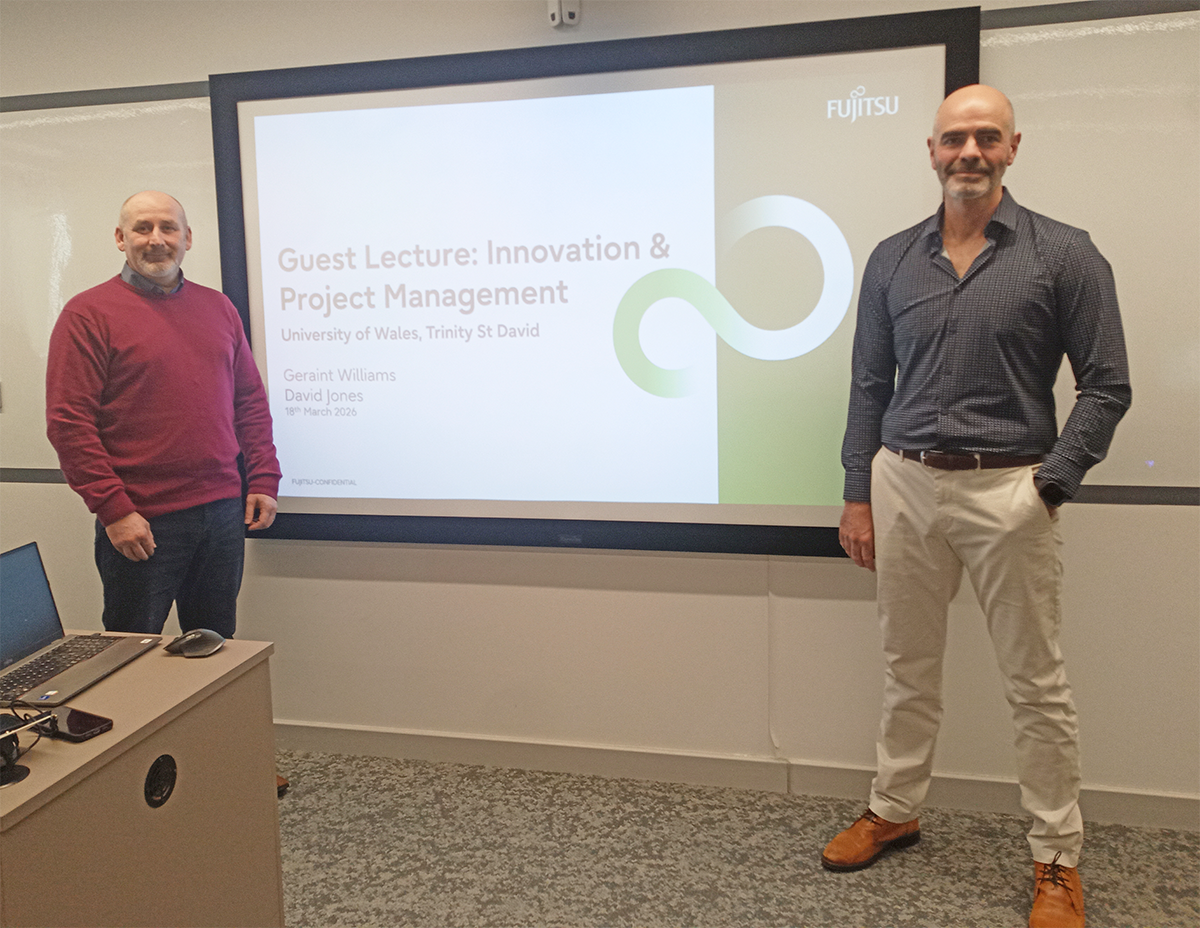
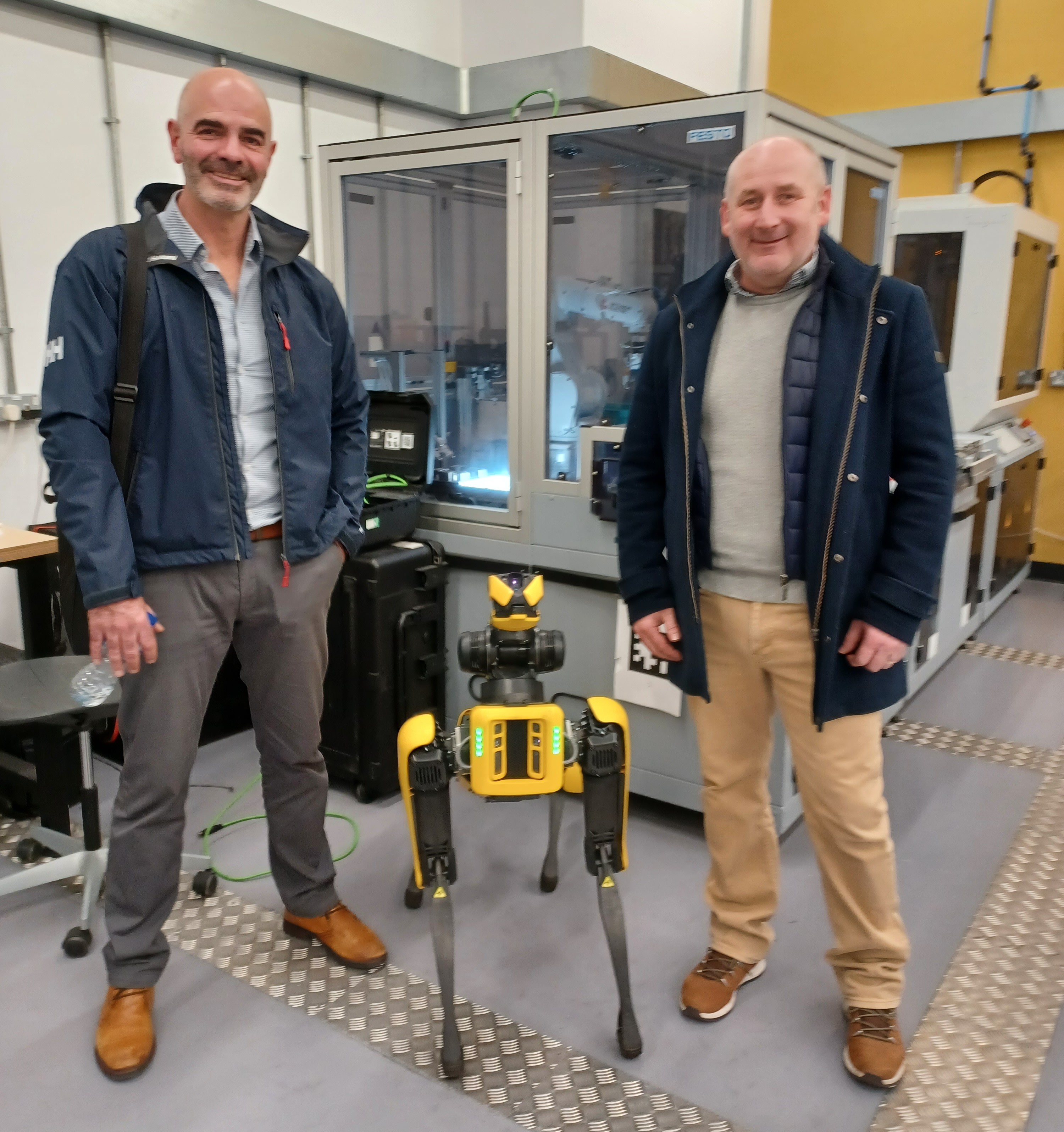
Geraint Williams (Director of Mission Control – left above) & David Jones (Principal Consultant – right above)
Many thanks to our industry partners from Fujitsu ‘David Jones‘ (Principal Consultant) and Geraint Williams (Director of Mission Control) for visiting the University again to speak with our students and share their valuable knowledge, skills, experience and insights.
Their industry guest Lecture titled ‘Innovation & Project Management‘, brought together decades of industry expertise, offering students a rare and valuable inside look into how innovation really happens within major organisations, and how modern project management brings ideas and solutions to life.
Drawing from Drucker, the UK Government, OECD, and their own experience, they showed that innovation is fundamentally about:
Doing something new that creates value
Improving outcomes, efficiency, effectiveness, and quality
Turning ideas into implemented change that benefits people and society
Innovation succeeds when it is: Novel, Implemented (not just imagined), Value-creating and Adaptable to changing needs.
They outlined different types of innovation and what drives Successful innovation. And that a sustainable innovation culture rests on four pillars:
Leadership that champions experimentation
Workforce empowerment and diverse skills
Processes that are agile and user‑centred
Partnerships across academia, industry, and civil society [
The second half of the session unpacked real-world project delivery, comparing traditional and modern AgileProject Management approaches.
Both speakers gave insights from major industry projects. They emphasised that innovation means nothing unless it can be delivered, and delivery fails without the ability to innovate. Students gained industry insights and a powerful, industry‑tested message: Technology, Solutions & Big ideas matter. Bold leadership matters. But People and the Social element are vital for success: Collaboration is what turns ideas into real positive impact and results.
Geraint Williams “Thoroughly enjoyed speaking with the students and sharing industry insights on driving successful innovation, along with the pros and cons of different project management methodologies.”
David Jones “It was a great opportunity to come back to UWTSD and bring some insights from working in a wide variety of roles through my career. Focusing on Innovation and Project Management, I was able to share real‑world perspectives on how organisations navigate change, deliver value, and harness creative thinking to solve complex challenges.”
We would like to thank both David & Geraint for taking the time to come back to the University again to share their valuable experience and expertise. And look forward to further collaboration in the future. Diolch yn fawr iawn.
Today’s blog post features 2 inspiring UWTSD journeys, that show the power of creative and technical education in supporting and transforming peoples lives & futures.
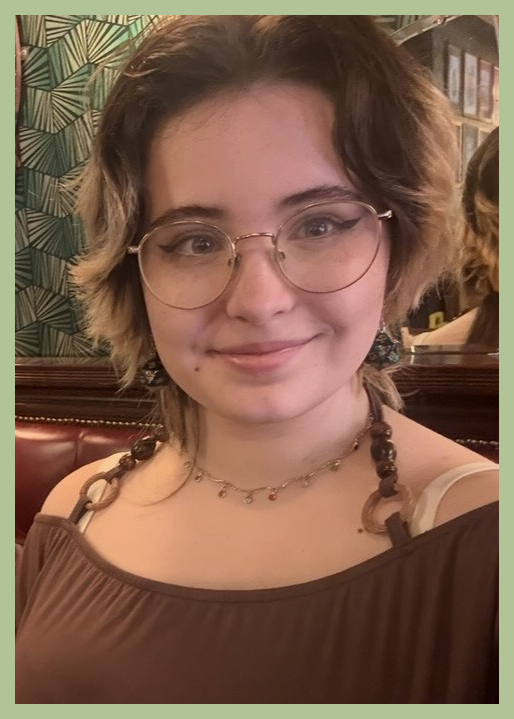
Mia Harries is turning her passion for computer games into a creative career, growing in confidence and industry readiness through hands‑on learning, professional networking, and her long‑standing involvement with Yr Egin.
Meanwhile, Adam Moore has reshaped his career through UWTSD’s Digital Degree Apprenticeship in Computing, progressing from NHS data analyst to an emerging researcher developing AI tools that support clinical decision‑making. Together, their stories showcase how UWTSD empowers learners of all backgrounds to thrive, whether in the world of game design or Computer Science & groundbreaking healthcare innovation.
Mia Harries is turning a passion into a Creative Career. Mia’s time on UWTSD’s BA Computer Game Design course has helped her grow in confidence, creativity, and professional readiness.
Supported by a practical, industry‑focused learning environment, her wide-ranging course experience, combined with meaningful industry contact and her long-standing involvement with Yr Egin – where she has led workshops, built technical skills, and expanded her professional network, has shaped her into a confident emerging game designer. 🎮🎨
Mia now looks ahead to securing a role in a Welsh games studio while continuing freelance work, grateful for the skills, friendships, and guidance that have prepared her for the industry.
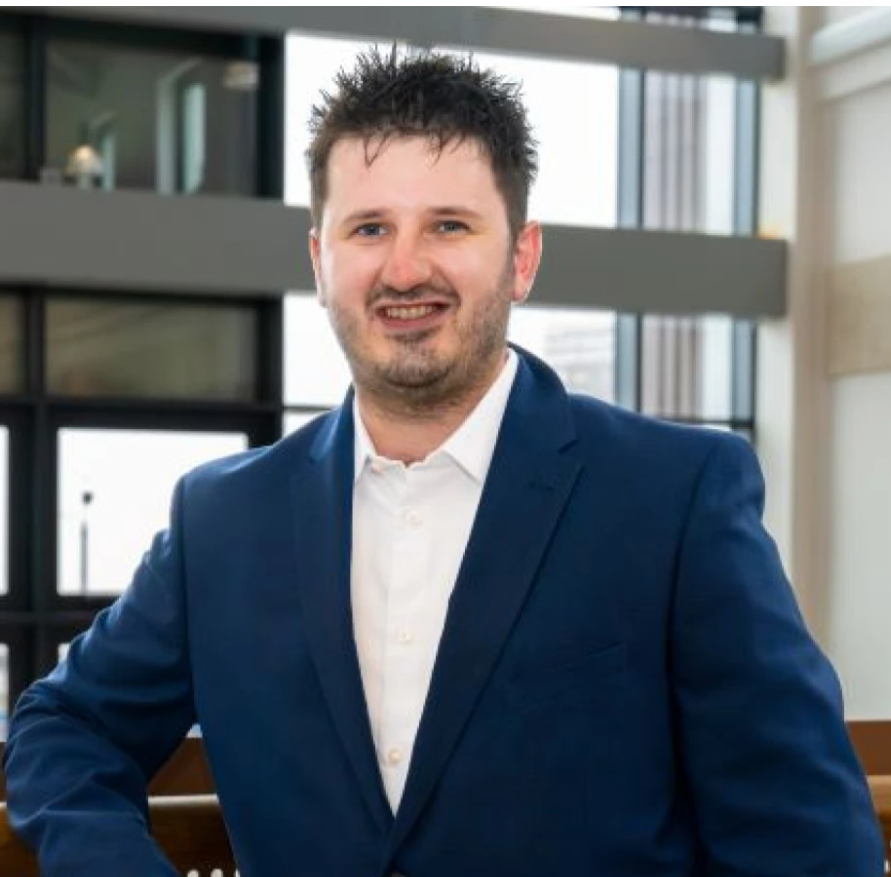
Adam Moore, a Data Scientist from Narberth, credits the University of Wales Trinity Saint David’s Digital Degree Apprenticeship in Computing (Data and Information Systems) with transforming his career and opening the door to advanced work in Artificial Intelligence (AI) and healthcare. While working at Hywel Dda University Health Board, Adam discovered a strong affinity for maths and data, and with encouragement from colleagues, he enrolled in the apprenticeship. This opportunity allowed him to study while working full‑time, supporting his family, and progressing professionally.
Throughout the four‑year programme, Adam successfully balanced academic study with full‑time employment, during which he got married, welcomed two children, and earned three promotions. The apprenticeship equipped him with the skills and confidence to excel in postgraduate study. Now undertaking doctoral research in AI and healthcare, he aims to contribute to innovations that enhance patient care and shape the future of digital health services.
Adam is a strong advocate for UWTSD’s apprenticeship route, praising it’s accessibility and the exceptional support offered by the university. UWTSD leaders emphasise how his journey reflects the programme’s impact across Wales, while colleagues at Hywel Dda describe him as a highly valued staff member whose AI work is already making a meaningful difference in clinical decision‑making.
“I want to play an active role in using AI to revolutionise healthcare and improve patient outcomes,” he said. “The apprenticeship was the foundation that made all of this possible.”
Adam continues to advocate for UWTSD’s Degree Apprenticeship route and encourages others to take advantage of the opportunity.
“It’s an incredible pathway for anyone looking to progress in their career,” he said. “It’s open to professionals of all ages who want to develop their skills and the support from the UWTSD team is exceptional.”
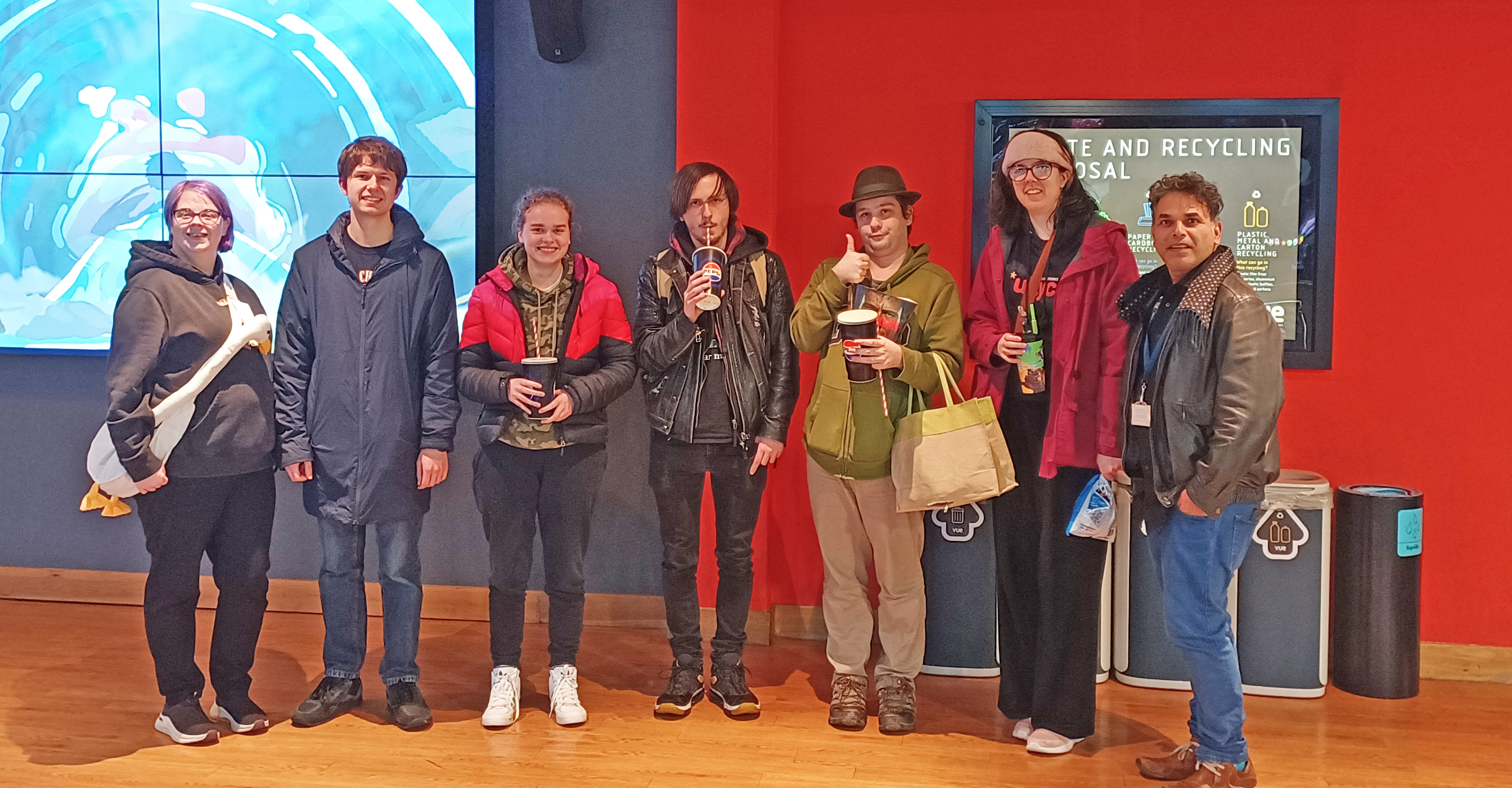
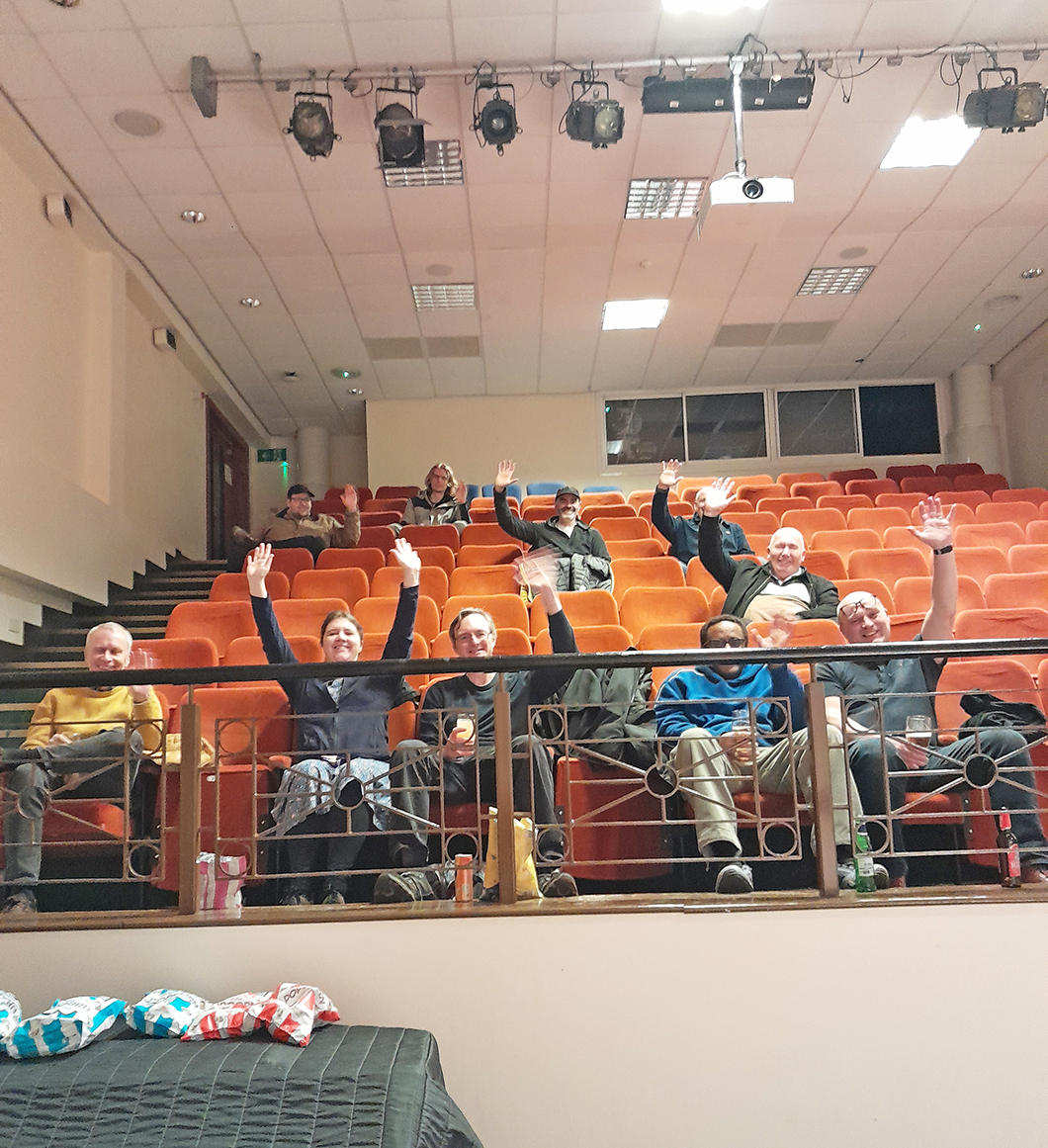
Our students, staff and alumni have recently enjoyed a film night, a movie night and lots of popcorn 🍿:), that allowed them to learn more about Animation and the creation of the PC industry with the founding and rivalry of Apple & Microsoft.
Educational Film Night: Five Nights at Freddy’s
The Educational Film Night showed a viewing of Five Nights at Freddy’s, a film that provides valuable insights for students across Animation, Visual Effects, and Games. The production incorporated a sophisticated combination of practical animatronics and CGI, illustrating how physical creature effects can be seamlessly integrated with digital animation to produce convincing and engaging character performances. Additionally, the film makes effective use of atmospheric VFX, stylised lighting, and environmental design to establish tone, tension, and narrative impact.
The animatronic characters provide a strong case study in how movement, timing, weight, and subtle micro-behaviours can communicate personality and emotional presence, even when working with characters that have limited facial articulation or mechanical constraints. Additionally, the film’s use of lighting and rendering techniques such as controlled shadow placement, colour temperature, and reflective surface management enhances mood, tension, and realism. Analysing how the film’s performers, puppeteers, and animators work together to convey intention, threat, and believability will deepen your understanding of character psychology, cinematic lighting, and visual storytelling.
Movie Night: Pirates of Silicon Valley
The Movie night showed a viewing of ‘Pirates of Silicon Valley’,a fast-paced, dramatic retelling that explores the fierce rivalry between Steve Jobs and Bill Gates, and the scrappy early days of Apple and Microsoft. Packed with ambition, ego, betrayal, and breakthrough ideas, Pirates of Silicon Valley shows how a handful of visionaries rewrote the rules of technology—and changed the world forever. A must-watch for anyone curious about innovation, startups, or the real stories behind today’s tech giants.
Graduate profile for Dale Warner, a Solutions Engineer at Cisco.
"Exposure to new and challenging events is critical. Everyone is winging it; no one can know it all."

"Creativity requires play, and play can be messy. Embrace the cluttered desk!"

"My days can range from face-to-face customer meetings across the UK, building high level plans/designs/BoMs from my home office, or turning my time to study so I can stay on-top of the latest technology trends."
Q. Job title and role? Solutions Engineer at the Central Government Team at Cisco
Q. Briefly describe the organization you work for? Cisco are the market leader when it comes to networking. They also provide cutting edge technologies and services across a wide range of areas; Security, collaboration, observability, to name a few.
Q. Which skills learned at university are helpful to you in your job? While at university the most important skill I learned was how to concisely present a complex idea or solution. Being able to do so allows me to talk and explain new products and ideas to customers, cutting out all the unnecessary fluff.
Q. A typical day and how would you describe it? Like any engineer, two days are very rarely the same. But I talk with customers about their technical issues and look to provide Cisco solutions to bridge the gap. This requires me having a board understanding of a range of technologies and where/how Cisco products can be used. My days can range from face-to-face customer meetings across the UK, building high level plans/designs/BoMs from my home office, or turning my time to study so I can stay on-top of the latest technology trends.
Q. What aspects of your job do you enjoy most? I enjoy meeting customers, understanding their needs, and proposing suitable solutions. This, alongside learning on the latest technologies and having a future vision of the technology industry.
Q. Advise for students who would like to start a Career? It’s okay not to have an end goal, so long as you know what you want to do next. When your end destination isn’t set you can put all your effort into achieving your next goal. Exposure to new and challenging events is critical. Everyone is winging it; no one can know it all.
Q. A quote that you like / live by / inspires you? My favorite quote is a quip from Albert Einstein “if a cluttered desk is a sign of a cluttered mind, of what, then, is an empty desk a sign?” I’d like to add – creativity requires play, and play can be messy. Embrace the cluttered desk!
Thank you for your profile Dale, it will help to inspire current and future students. We are most grateful. We hope to see you at future alumni events. Well done and Congratulates on your success Dale. Da iawn a llongyfarchiadau Dale
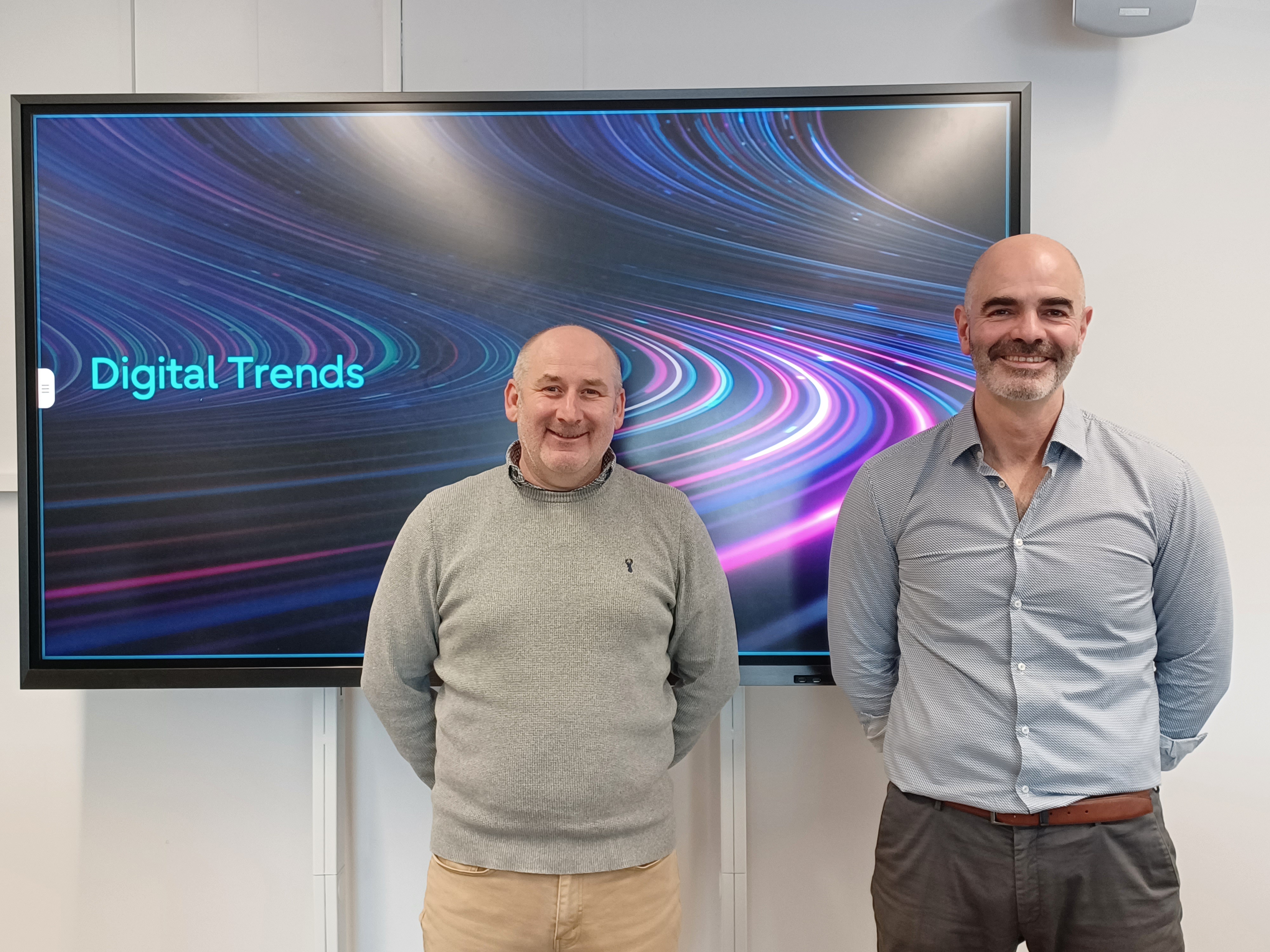
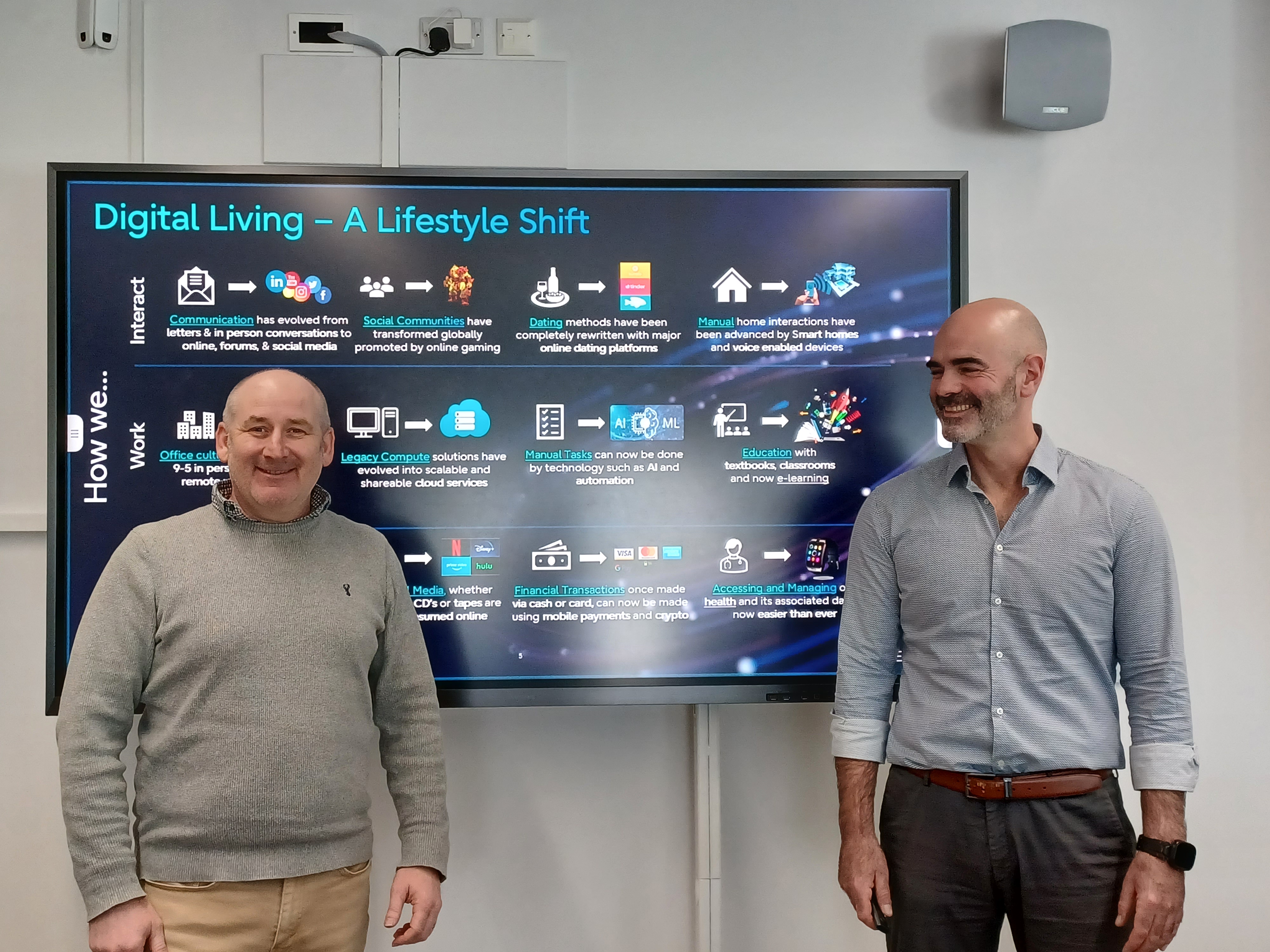
Many thanks to David Jones (Consultant) and Geraint Williams (Director of Mission Control) from Fujitsu for recently visiting the University and speaking with our students.
Geraint Williams (right) & David Jones (left)
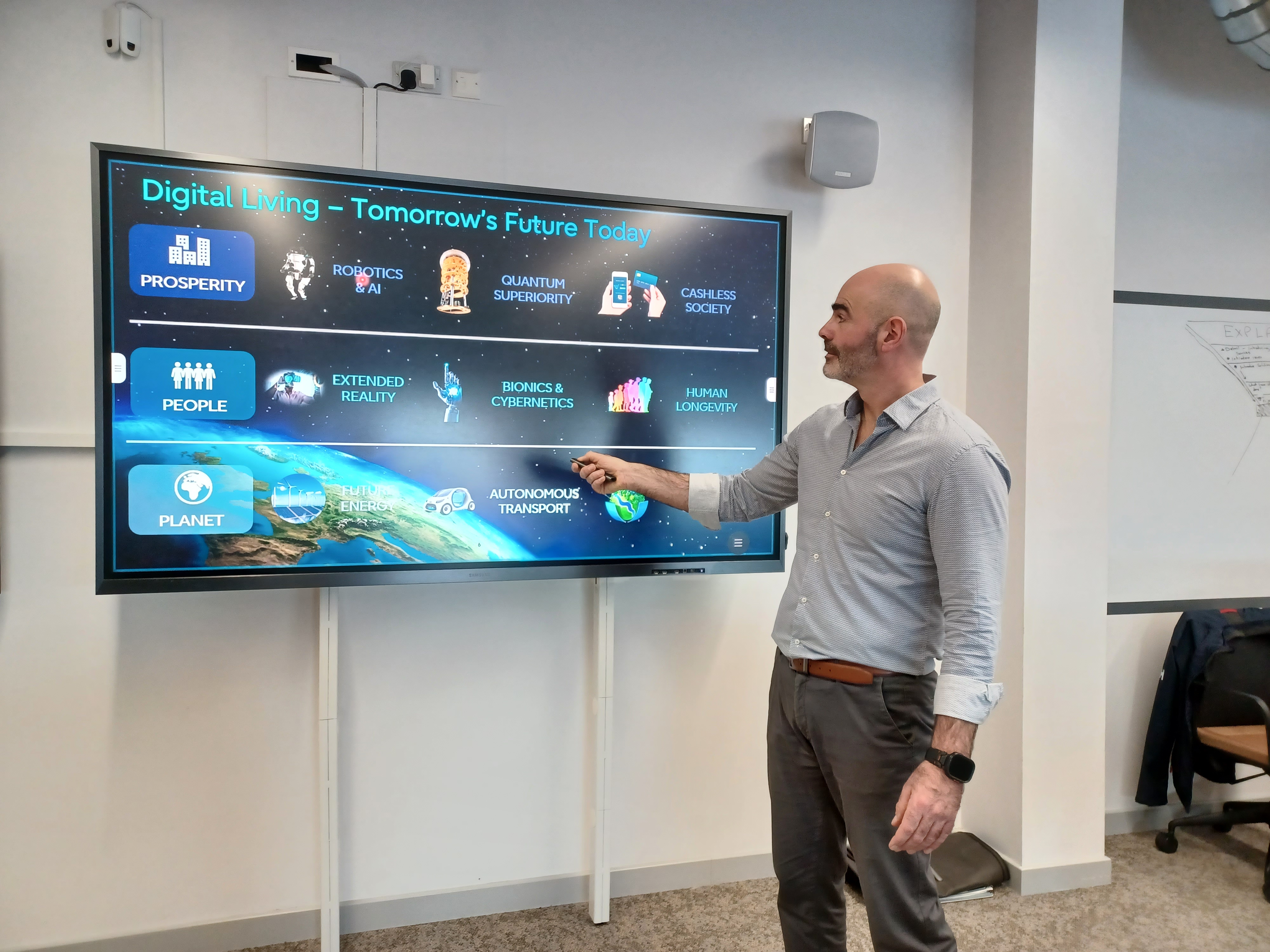
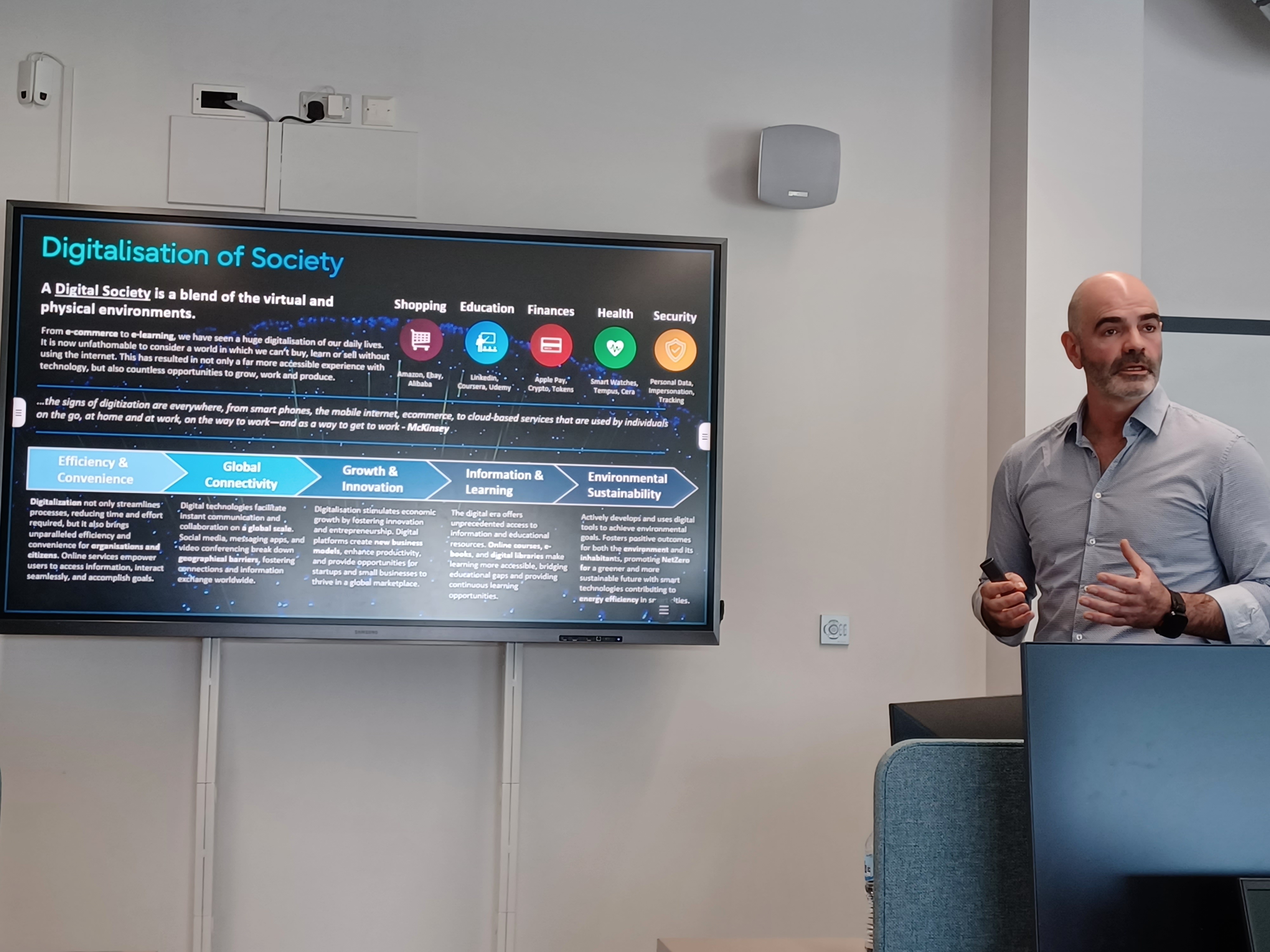
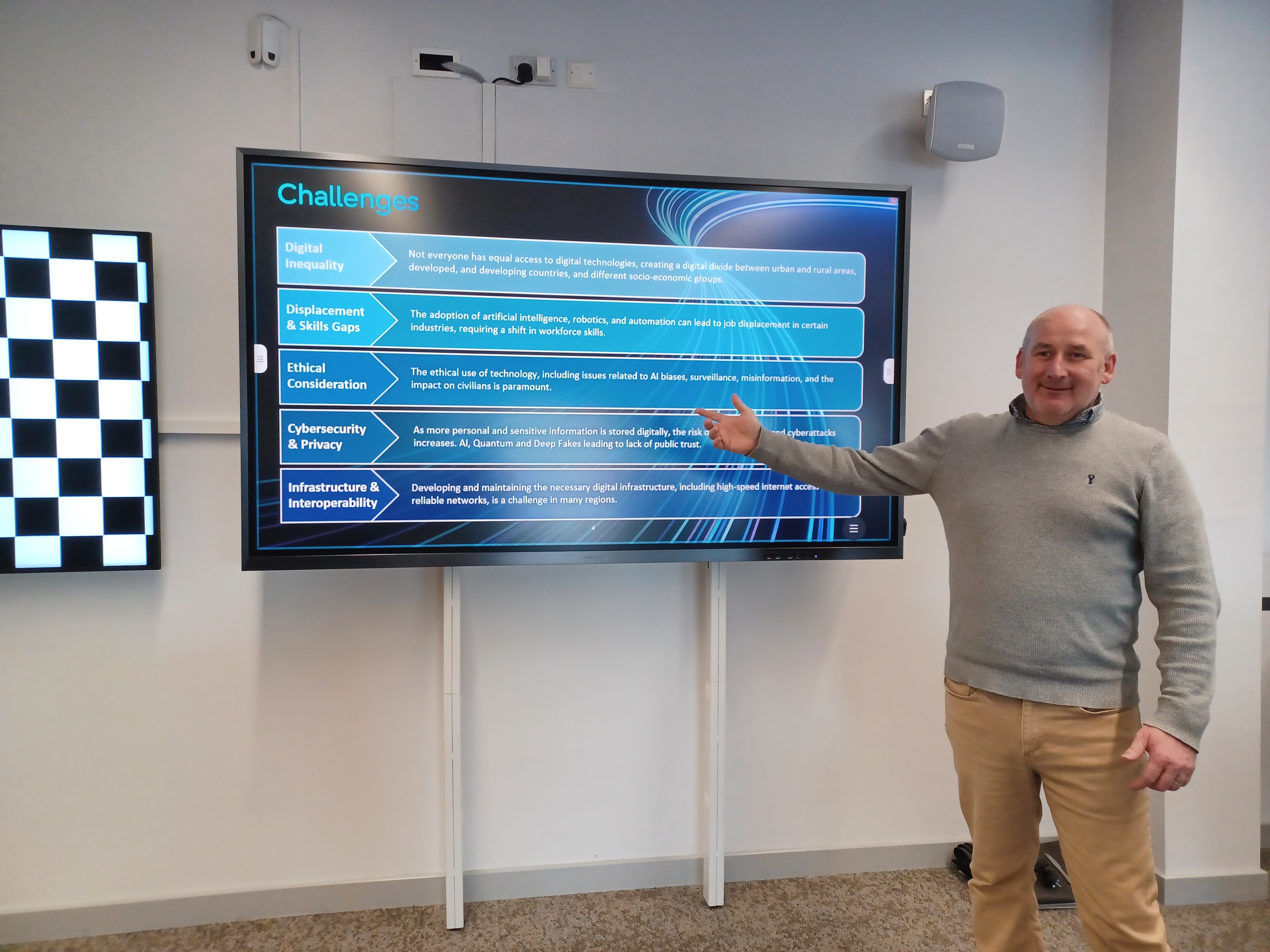
The talk titled ‘Digital Trends‘ covered the incredible rapid innovation and evolution of Technology that has brought about an incredible transformation and digitization of society. Highlighting significant historical and current innovations, positive impacts, and emerging trends & technologies, challenges and future impacts. A whistle stop tour of the digital landscape: past, present and future. A fascinating talk enjoyed by all, staff and students alike.
“Our Digital Trends talk, delved into the multifaceted impact of digitalisation on society, business, and daily life. It highlights key themes such as the integration of technology into everyday activities, the challenges of digital transformation, lifestyle shifts driven by digital innovation, and future trends including Robotics, AI, and Quantum Computing. Additionally, it introduces the concept of Human Centric Design and describes a workshop where participants tackle the ethical integration of Generative AI in organisations, focusing on creating value while mitigating risks such as misinformation and bias”. – David Jones (Guest Speaker from Fujitsu)
David went on to explain that the Digital Trends talk explored the ongoing digital transformation shaping society, business, and daily life. And that it’s purpose is to inform and inspire audiences about the profound impact of digitalisation, the benefits and challenges it brings, and the emerging trends that will define the future.
Key Themes Covered:
Digitalisation of Society: Examines how technology is blending virtual and physical environments, transforming commerce, education, finance, health, and communication. Highlighting the benefits of efficiency, global connectivity, economic growth, and access to information, while also addressing the importance of security and trust in digital systems.
Challenges of Digital Transformation: Discusses digital inequality, job displacement, ethical considerations (such as AI bias and privacy), cybersecurity threats, and the need for robust digital infrastructure. The content emphasizes the importance of inclusivity, ethical technology use, and collaboration among stakeholders to address these challenges.
Digital Living – Lifestyle Shifts: Explores how digital technologies have revolutionized the way we interact, work, consume, and manage our lives, from remote work and smart homes to online communities, e-learning, and digital entertainment.
Future Trends: Looks ahead to transformative innovations such as Robotics and AI, Quantum Computing, Cashless Societies, Extended Reality, Bionics & Cybernetics, and Regenerative approaches to society and energy and risks associated with these advancements, including ethical, economic, and societal implications.
Human Centric Design: Introduces a unique design thinking methodology focused on aligning business challenges with human needs, fostering creativity, and developing rapid, actionable solutions.
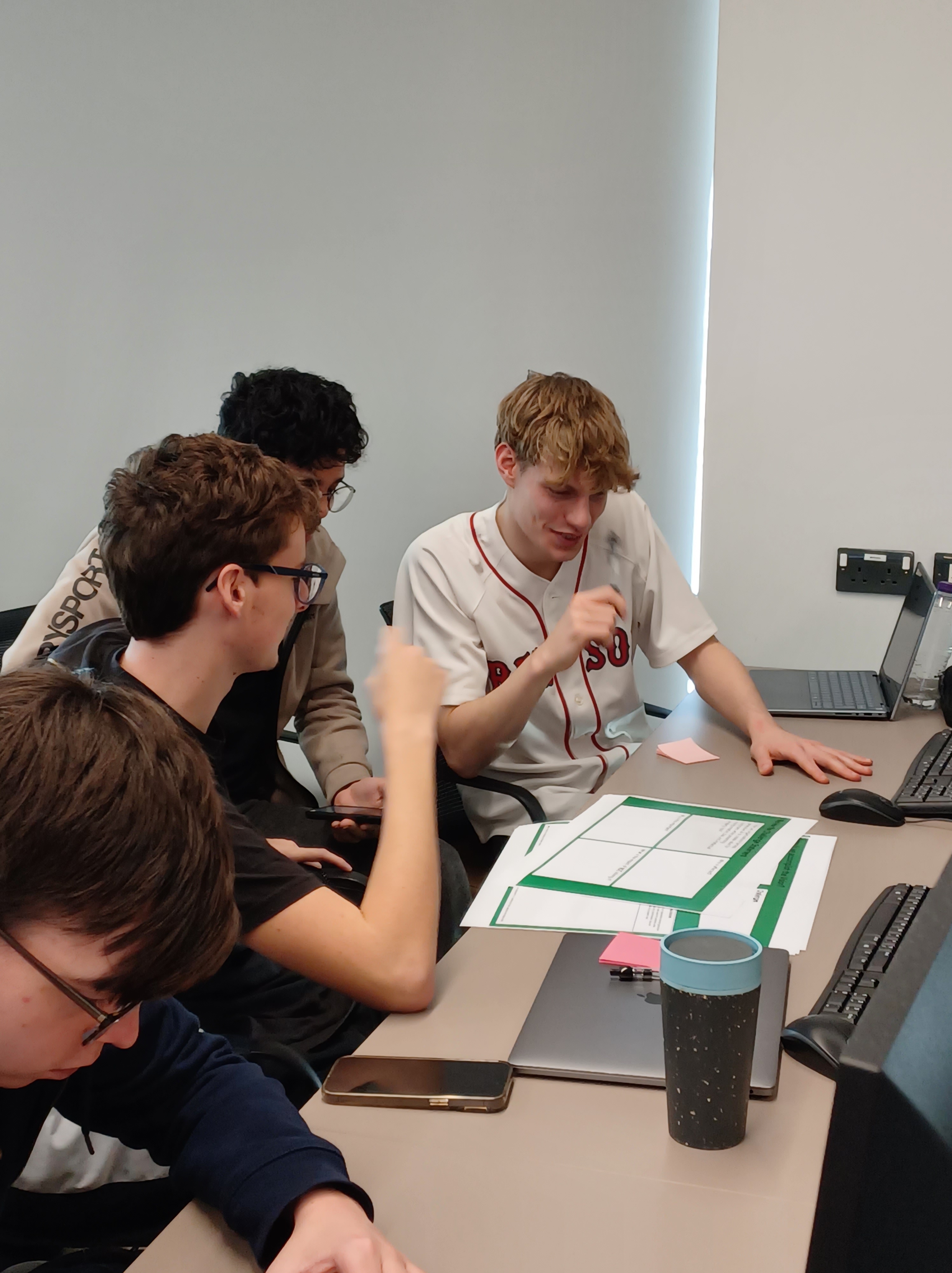
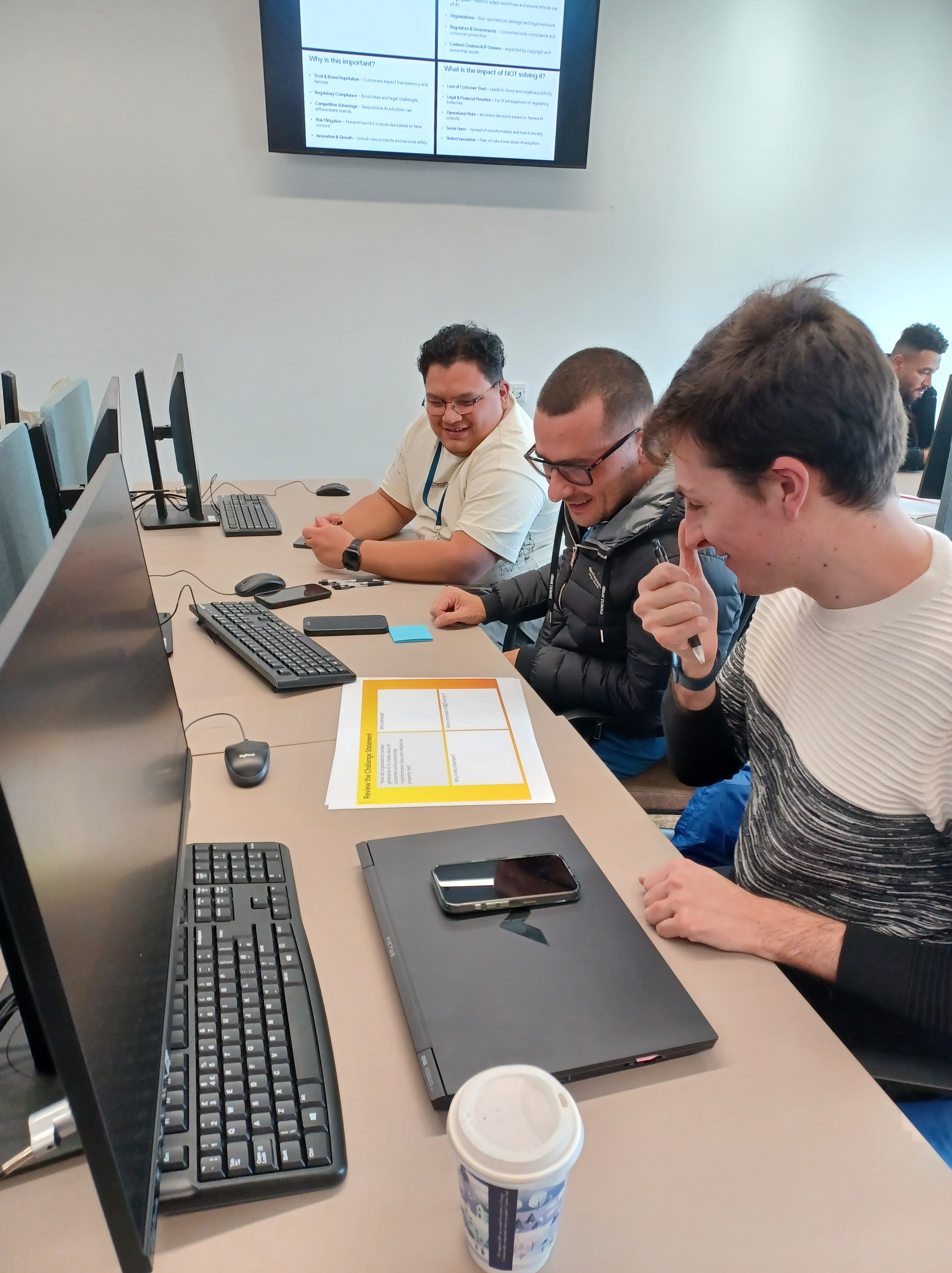
The Human Centric Design workshop provided students with a Challenge Statement: How can organisations harness Generative AI to create value for customers while preventing misinformation, bias, and intellectual property risks. It gave the students an opportunity to consider the introduction of AI into a company’s ecosystem and how they can work together to ideate and reach a consensus on what the key features and challenges are for ethical AI solutions.
“It was a pleasure to return to the place where it all began for me and give something back. I genuinely enjoyed the preparations, creation and delivery of both the talk and workshop and it was good to see the next generation of industry experts beginning their journey, there is much ahead of them, change is accelerating at a pace like we have never seen…” – David Jones
“Great to be back at the University of Wales Trinity Saint David (UWTSD) today speaking with first year Computing students. As a former student of the university, it’s special to return to the place that set me up for success and share the lessons I’ve learned along the way e.g. stay curious, build your network, and keep evolving/adapting – the technology industry never stands still!” – Geraint Williams
The Academic staff at UWTSD’s School of Applied Computing would like to thank David & Geraint for taking the time to come back to the University and share their invaluable experience, industry knowledge and insights. Diolch yn fawr iawn.
The University of Wales Trinity Saint David (UWTSD) hosted a pioneering workshop, titled ‘Soft Exoskeleton Robots and Digital Healthcare,’ bringing together experts from across disciplines to explore the future of rehabilitation technologies.
Held at the University’s IQ Building at its SA1 Swansea Waterfront campus, the event marked a significant moment in cross-sector collaboration aimed at co-designing innovative, patient-focused solutions.
Led by Dr Seena Joseph and Dr Tim Bashford from UWTSD, the workshop was part of the Soft Exoskeleton Robotics Project, a collaborative effort funded by the Wales Innovation Network (WIN). The project brings together partners from Cardiff Met ( Dr Wai Keung Fu), University of South Wales (Dr Leshan Uggalla) and Institute of Robotics, Bulgaria (Dr Tony Punnoose), all working together to advance rehabilitation technologies.
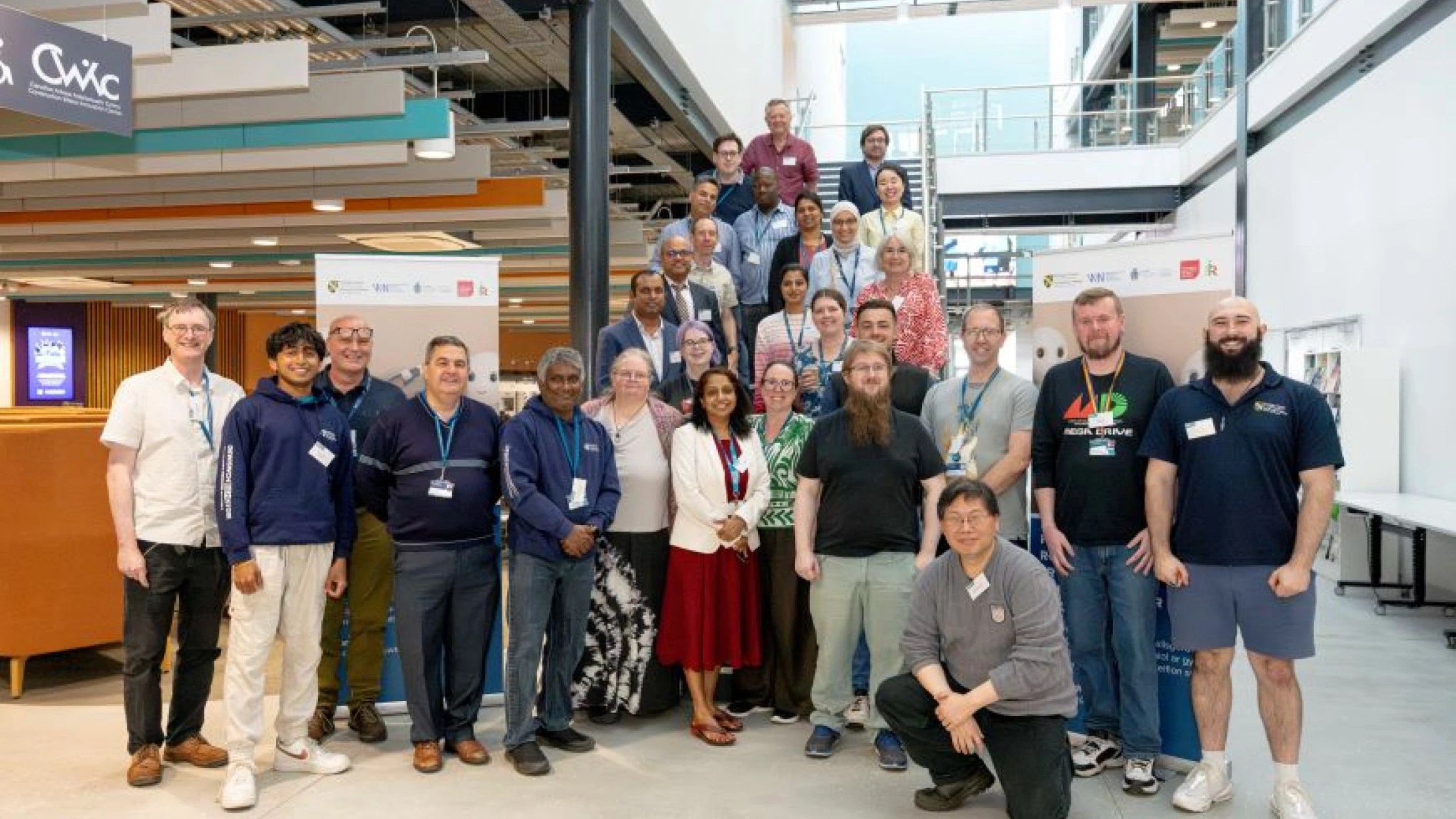
The full-day workshop convened leaders from robotics and engineering, healthcare and clinical practice, academia, and industry, sparking multidisciplinary dialogue on the development and real-world application of soft exoskeleton robots for rehabilitation. Attendees included academics, researchers, clinicians, innovators, and policy influencers, all united by a common goal: to shape more effective, accessible, and human-centred healthcare technologies.
Dr Kapilan Radhakrishan, UWTSD’s Academic Director (Applied Computing), delivered the welcome address and provided an overview of the project. He described the workshop as a valuable platform to introduce the project and set the stage of exploring new research ideas and to ignite meaningful collaborations with experts across disciplines in soft robotic and digital health.
Dr Mark Cocks, Dean of the University’s Wales Institute of Science and Art who opened the event said: “Collaboration is the buzzword, and it is more important than ever. In today’s complex and fast-changing landscape, working together across disciplines and sectors is essential to drive innovation and achieve meaningful outcomes. This workshop perfectly exemplifies how bringing experts from academic, industry and healthcare together can spark new ideas. We are proud to host such an impactful and forward-thinking event.”
Highlights included:
The workshop featured a series of compelling talks and a live demonstration of the prototype of soft exoskeleton robot for stroke rehabilitation developed by Dr Tony Punnoose (Institute of Robotics, Bulgaria), one of the team members.
Dr Fatma Layas and Dr Yajie Zhang (ATiC) presenting human-centred product evaluation approaches in healthcare.
“A Digital Healthcare Overview” was presented by Dr. Tim Bashford, one of the workshop organisers. His presentation provided a broad perspective on the evolving role of digital technologies in healthcare, setting the scene for the day’s discussions and highlighting opportunities for innovation and collaboration.
Dr Wai Keung Fung (Cardiff Metropolitan University) one of the co-organisers outlining core design principles of Soft Exoskeletons
Dr Gokul Kandaswamy (NHS Wales) delivered an exciting talk on how robotic technologies are transforming patient care, sparking meaningful discussions, and inspiring ideas for future collaborations
Dr Udayanga Galappaththi an industry partner from Far UK Ltd exploring the integration of sustainable materials in robotic hand exoskeletons.
Dr Seena Joseph delivered an presentation on “Recent Trends in Soft Robotic Exoskeletons: Insights from a Systematic Literature Review,” offering a comprehensive overview of global research developments, emerging technologies, and future directions in the field.
Additional highlights included the presentation from several experts: Prof Eggbeer, Dominic from Cardiff Met discussed the impact of lead users and 3D printing on advancing adaptive sports technology, while Dr Rajan Prasad, from Khalifa University, Abu Dhabi shared innovative simulation-based designs for cable-driven exoskeletons aiding post stroke gait recovery.
A live prototype demonstration by Dr Tony Punnoose (Institute of Robotics, Bulgaria), showcasing a bilateral soft exoskeleton robot for stroke rehabilitation. He underscored the importance of shifting research efforts toward developing small-scale, user-friendly parallel robotic systems that patients can take home, enabling more consistent, accessible, and effective rehabilitation beyond the clinical setting.
The event culminated in an energetic panel discussion, moderated by Dr Fung, with panellists diving into practical applications, ethical considerations, and future research directions for soft robotic solutions in health contexts. Looking back on the event, he said:
“Moderating the panel discussion reminded me that the future of rehabilitation isn’t just about smarter machines, it’s about deeper collaboration between engineers, clinicians, and users to co-create technologies that truly empower.”
The event also included a productive networking session, facilitated by Dr Leshan Uggalla (University of South Wales) from the project team. This session gave attendees a valuable opportunity to connect, exchange ideas, and foster potential collaborations in a relaxed and engaging environment.
The workshop not only reinforced UWTSD’s commitment to fostering interdisciplinary research and real-world innovation but also underscored its ambition to serve as a hub for cutting-edge dialogue that shapes the future of care and rehabilitation.
Project Title: Women in STEM Study Buddy – A Mobile Application for Academic Networking
Fig.: FemSTEMConnect
Project introduction: The motivation behind this project was to address the under-representation and isolation that many women in STEM fields experience during their academic journey. I wanted to create a platform that would allow female students to connect, support one another, and collaborate through shared academic interests. The project reflects both my technical interests and my desire to contribute to inclusion and equity in higher education.
Overview of the Practical implementation: The application was developed in Android Development Studiousing the Kotlinprogramming language, with FirebaseBackend-as-a-Service (BaaS) platform providing services for authentication, data storage, and real-time messaging.
Fig.: Kotlin | Android Studio | Firebase
Key features include:
Email link login (no passwords required)
Personalised academic profiles
Study partner matching using course and location filters
A Messaging system for real-time communication.
Fig: Coding
The project was tested on both emulator and physical Android devices for performance and usability.
Here are some screenshots from the final app up and working
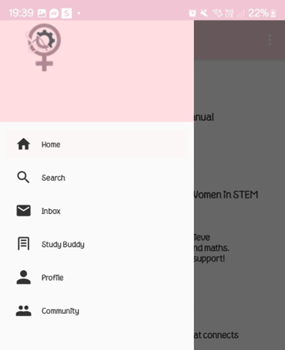
Fig.: Navigation screen
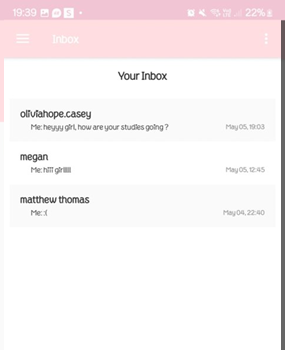
Fig.: Messaging inbox
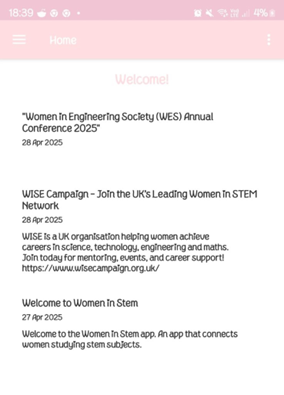
Fig.: Home screen & News feed
Conclusion: The final product successfully met the core functional goals. Users can register, create a profile, search for study partners, and communicate within the app. Although some features like the community forum were postponed, the application is stable, secure, and ready for future expansion. It represents a strong foundation for a peer-support platform specifically tailored to women in STEM.
What Career and job role are you hoping to move Into after Graduation? I’m planning to progress onto a Master’s degree and then move into a software engineering role, ideally within a company focused on education technology or socially impactful work.
Top Tips for Students interested in completing a University Degree: Don’t procrastinate. Choose a project that is manageable not just exciting. It’s better to complete something simple and solid than to get stuck in something too complex to finish on your own. Also, don’t be afraid to ask for help.
~
For further information on Computing courses at UWTSD, please click-here.
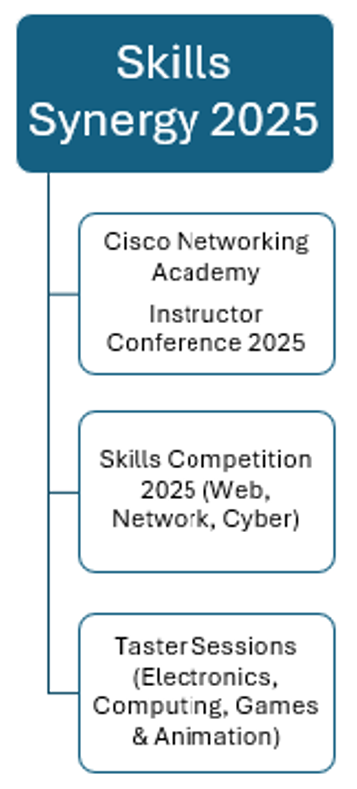
A dynamic day of learning, and competition for students and networking for Teachers. The student events are designed to inspire, challenge, and showcase skills in Web Technologies, Cybersecurity, and Network Systems Administration, tailored for Year 12, Year 13, and Further Education students.
Student Team Competitions:
A taster competition event to give an experience to the participants about the competitions and competition environment.
Students who are interested in one or more than one of the below domains are welcome to register. Students will get a taste of the competition with a briefing about competitions followed by a small competitive activity.
Schools/FE’s can register their students who are interested to get a taste on competitions like Web Technologies, Cybersecurity, and Network Systems Administration.
Limited Registrations. First come First Serve. Register immediately.
Taster Sessions for School Students:
Explore Computing (Cybersecurity, Digital Forensics, Software, Artificial Intelligence, Data Science), Electronics, and Games Design, Development, Animation, VFX in engaging hands-on sessions.
Cisco Instructors Conference:
A parallel session for Head Teachers, Teachers, Lecturers and Cisco Networking Academy Instructors to share best practices, network, and collaborate.
Event Details: Date: 26th March 2025 Time: 09:30 AM – 02.00 PM. Venue: Swansea Arena
For further information and inquiries, please contact Nitheesh Kaliyamurthy via email: n.kaliyamurthy@uwtsd.ac.uk
For further information about Computing & Computer Science courses at UWTSD Swansea, please click here.
Computing students from the University of Wales Trinity Saint David (UWTSD) have enjoyed the sights and sounds of Paris as part of an international learning journey. The students studied at the Institut Supérieur d’Electronique de Paris (ISEP).
Taith provides funding to enable education staff and learners to spend time abroad as part of their studies. It also brings learners and educators from around the world to Wales.
The programme, with Welsh Government funding of £65 million, launched in 2022 and offers life-changing opportunities to travel and learn for learners and staff in every part of Wales, and in every type of education.
The UWTSD partnership also coincided with the Welsh Government’s ‘Wales in France’ initiative, a year-long celebration of cultural, business and sporting events designed to strengthen existing links and forge new connections between the two countries.
The UWTSD students attended classes with French students and studied subjects similar to those that they study in Wales. Most of the classes at ISEP are delivered in English, so the students were easily able to join their French counterparts for studies.
Kath Griffiths, International Regional manager (North America and Outward Mobility), Wales Global Academy said : “We are delighted that students from a Welsh institution funded via Taith have spent two weeks in Paris. UWTSD is currently hosting 24 students from ISEP in Swansea.
“A key feature of the Taith programme is reciprocity; the ability to nurture and develop overseas partners who are already committing to reciprocal arrangements regarding student exchange. This approach through Taith enables high-quality placements and builds towards our aspiration to provide all domestic students with the opportunity to study internationally, ISEP which will strengthen our international profile and create opportunities for staff and students to pursue their interests with reciprocal opportunities for international learners here in Wales.
“This provides an excellent opportunity for students to experience living and studying in another country and to gain invaluable insight into international employment opportunities.”
Dr Kapilan Radhakrishnan, Academic Director, Applied Computing said: “Amidst the iconic landmarks and cultural marvels, our students delved deep into a world of academic exploration. From classroom experiences to dynamic engagements in extracurricular and social activities, each moment was a stepping stone towards personal and educational growth.
“This exchange not only broadened their academic horizons but also fostered a vibrant tapestry of cultural understanding and friendship. Interacting with students, academics, and professionals from diverse backgrounds exposes students to a variety of viewpoints and approaches, broadening their perspectives and critical thinking skills. Collaborating with classmates in unfamiliar settings fosters teamwork, communication, and interpersonal skills, strengthening bonds and creating lasting friendships.
“The study trip provided a rich and multifaceted learning experience that goes beyond traditional classroom settings, offering students a unique opportunity for personal, academic, and professional development. Our students have returned home enriched with a wealth of diverse perspectives and unforgettable memories.”






 UWTSD Applied Computing Blog