Turn On Your Future @ UWTSD's School of Applied Computing & Electronics

Posts tagged ‘CyberSecurity’

Skills Synergy 2025

The School of Applied Computing at University of Wales Trinity Saint David are thrilled to announce the annual ‘Skills Synergy 2025‘ event hosted at Swansea Arena.

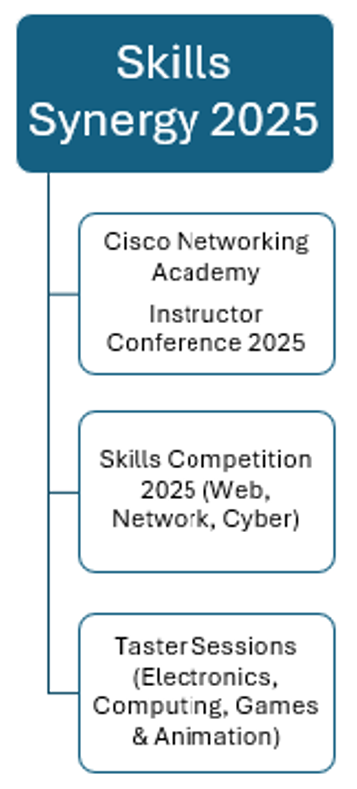
A dynamic day of learning, and competition for students and networking for Teachers. The student events are designed to inspire, challenge, and showcase skills in Web Technologies, Cybersecurity, and Network Systems Administration, tailored for Year 12, Year 13, and Further Education students.

Student Team Competitions:

A taster competition event to give an experience to the participants about the competitions and competition environment.

Students who are interested in one or more than one of the below domains are welcome to register. Students will get a taste of the competition with a briefing about competitions followed by a small competitive activity.

Schools/FE’s can register their students who are interested to get a taste on competitions like Web Technologies, Cybersecurity, and Network Systems Administration.

Limited Registrations. First come First Serve. Register immediately.

Taster Sessions for School Students:

Explore Computing (Cybersecurity, Digital Forensics, Software, Artificial Intelligence, Data Science), Electronics, and Games Design, Development, Animation, VFX in engaging hands-on sessions.

Cisco Instructors Conference:

A parallel session for Head Teachers, Teachers, Lecturers and Cisco Networking Academy Instructors to share best practices, network, and collaborate.

Event Details:
Date: 26th March 2025
Time: 09:30 AM – 02.00 PM.
Venue: Swansea Arena

For further information and inquiries, please contact Nitheesh Kaliyamurthy via email: n.kaliyamurthy@uwtsd.ac.uk

For further information about Computing & Computer Science courses at UWTSD Swansea, please click here.

– — — — — — — — –

Guest Lecture: Network Automation and CI/CD

Guest Lecturer:
Nagaraj Ravinuthala

This week, Nagaraj Ravinuthala, a DevOps trainer at HCL Technologies Limited and a specialised trainer for WorldSkills UK Squad on Infrastructure Automation, delivered a Guest Lecture on Network Automation and CI/CD to our students.

The lecture began with basic yet powerful concepts of deployment and CI/CD, connecting the dots between writing code, integrating APIs, and automating the process of pushing updates live. The session emphasized simplicity and clarity, presenting CI/CD as a pipeline that automates code testing, integration, and deployment to production environments.

“Think of CI/CD as a conveyor belt for your code,” explained Nagaraj. “You write it, test it, and deploy it—all in a streamlined process that ensures faster delivery and better reliability, which are essential in modern network automation workflows.”

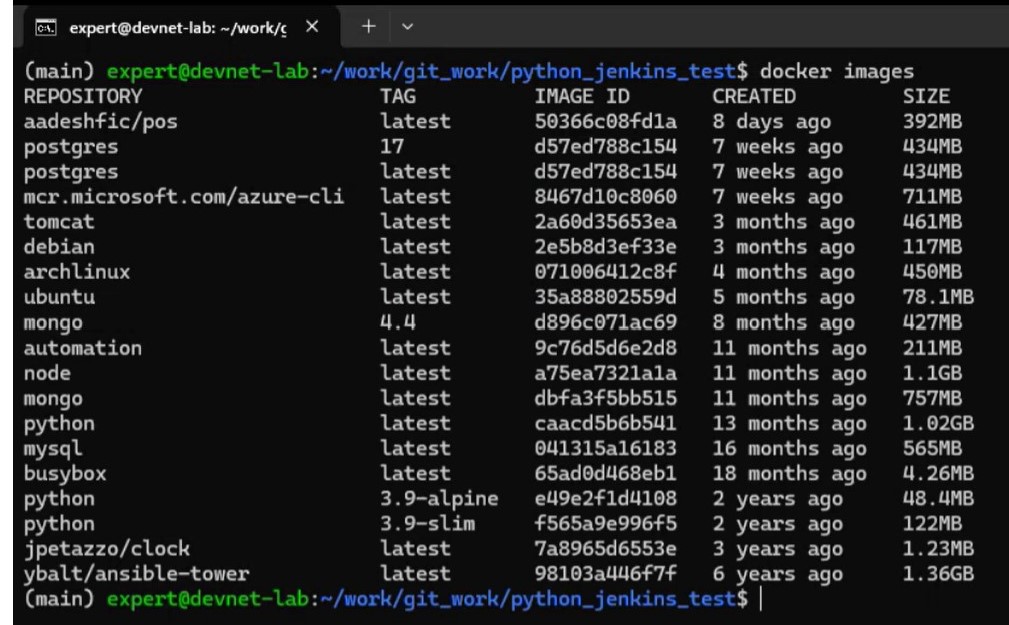
Students were introduced to tools and techniques aligned with Cisco’s CCNA DevNet, providing a glimpse into industry-standard practices. To make deployment relatable, the lecturer drew parallels with the earlier lectures on Python and API during their Network Programmability Module where the students integrated the OpenWeather API creating and running a Python script, and explaining that deployment involves taking code that works locally and making it accessible to users.

The session concluded with an interactive Q&A, where students enthusiastically asked about real-world applications of network automation and the career paths that mastery in CI/CD can unlock.

This guest lecture was an eye-opening experience for students, sparking curiosity and laying the foundation for further exploration in network automation. It was a step toward preparing them for the evolving demands of the industry.

We would like to thank Nagaraj Ravinuthala for taking time to speak and share valuable industry knowledge with our students.

For further information about our courses, please click-here.

MSc Project: Cyber Security

Student name:
Sakthi Sangeetha Kandaswamy

MSc Project title: Analysing risk in Vulnerability Assessment and Penetration Testing Methodology

Course: MSc Cybersecurity and Digital Forensics

Introduction/rationale:
The motivation behind choosing the project stemmed from the growing need for more structured and standardized approaches to penetration testing and vulnerability assessment. With cyberattacks becoming increasingly sophisticated, organizations struggle to identify and remediate vulnerabilities efficiently.

TECH TERM: Penetration testing, often referred to as ‘pen testing‘, is a cybersecurity practice where ethical hackers simulate cyberattacks on a computer system, network, or web application to identify vulnerabilities that could be exploited by malicious hackers. The main goals of penetration testing is to:
1. Identify security weaknesses
2. Assess the effectiveness of security measures
3. Improve overall security posture: By identifying and fixing vulnerabilities, organizations can strengthen their defenses against potential cyber threats.

The MITRE ATT&CK Framework provides a well-defined structure for understanding adversarial techniques and tactics, making it ideal for enhancing VAPT (Vulnerability Assessment and Penetration Testing) methodologies. This project aimed to leverage MITRE’s capabilities to analyze risk, improve testing scope, and ensure that testing efforts are comprehensive and aligned with real-world threats.

Project overview:
In this project, we integrated the MITRE ATT&CK Framework into the traditional VAPT methodology to refine the testing scope and increase effectiveness in detecting vulnerabilities. The steps involved included:

  • Defining the Scope: The project began by clearly defining the boundaries and goals of the penetration test. Using the MITRE Framework, specific attack vectors and techniques relevant to the organization’s environment were identified.
  • Conducting Vulnerability Scanning: Automated tools were used to perform initial vulnerability scans, identifying weak points that attackers might exploit.
  • Simulating Attacks Using MITRE Tactics: We designed attack scenarios based on the tactics and techniques outlined in MITRE ATT&CK, simulating adversarial behavior. This allowed us to target the actual risks that real attackers would exploit, rather than theoretical vulnerabilities.
  • Analyzing Results and Refining Scope: Post-attack analysis identified network gaps and weaknesses in current defenses. The scope of the testing was iteratively refined based on these findings.
  • Reporting and Remediation: Finally, comprehensive reports were generated, providing actionable insights for the security team, along with specific recommendations for closing vulnerabilities.

Visual Representation: A flow diagram illustrating the process of integrating MITRE with VAPT in Penetration Testing Stages, is located below:

Project outcome & conclusion:
The integration of the MITRE ATT&CK Framework significantly enhanced the scope and depth of the VAPT process. By aligning testing activities with real-world adversarial tactics, the project was able to identify previously overlooked risks and vulnerabilities. The methodology provided a more focused, risk-based approach to penetration testing, ensuring that organizations could better prepare for and mitigate threats. The project demonstrated that using MITRE not only strengthens the identification of vulnerabilities but also offers a more comprehensive understanding of the adversarial techniques that could affect critical systems.

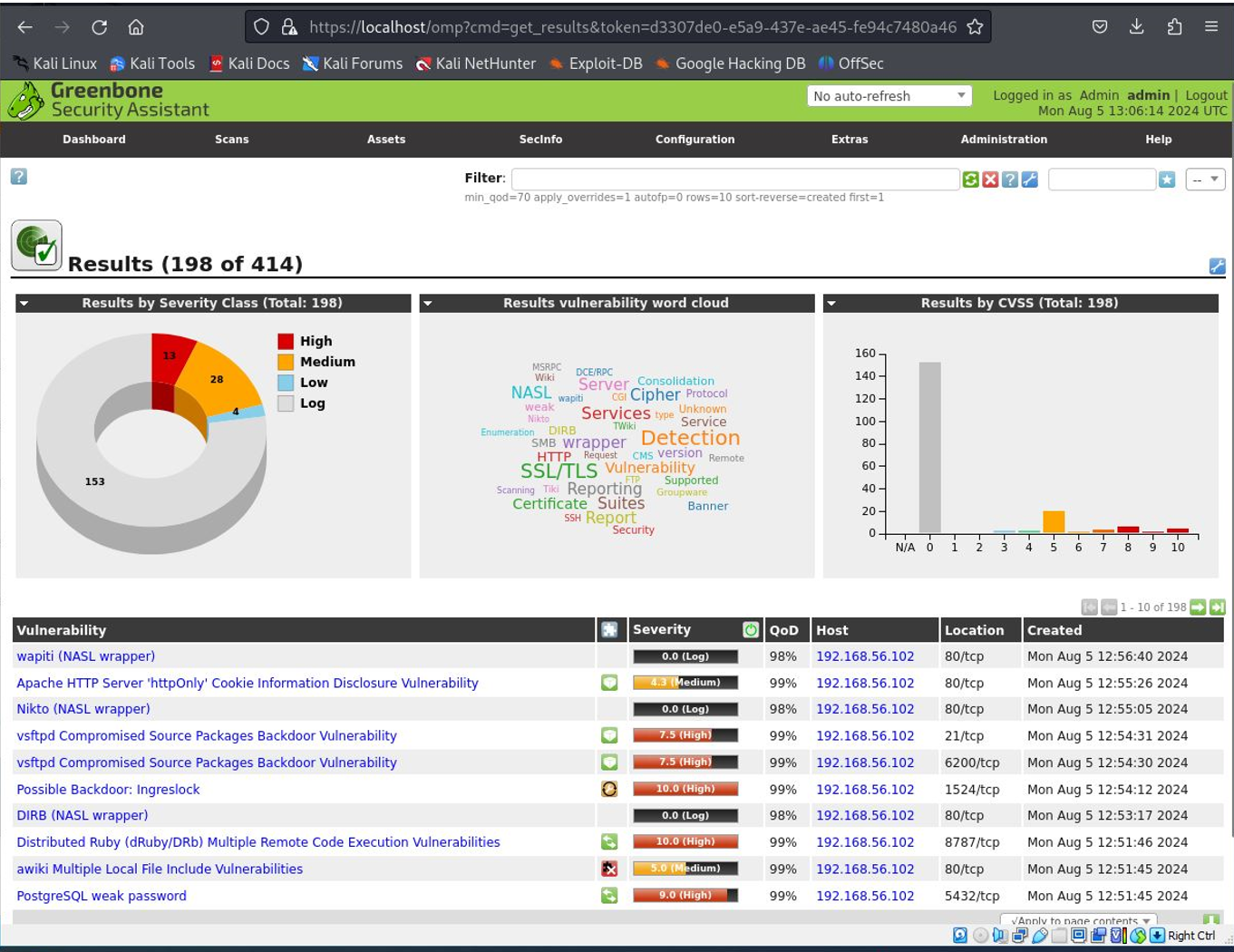
OpenVAS is a full-featured vulnerability scanning tool, that was used for this purposes of this project. An example output of vulnerability findings can be seen below:

Q. What Career and job role are you hoping to move into after graduation?
After graduation, I am hoping to pursue a career in cybersecurity, with a specific focus on roles like:

  • Penetration Tester: Using tools and methodologies (such as MITRE ATT&CK) to identify vulnerabilities in an organization’s IT infrastructure.
  • Cybersecurity Analyst: Monitoring, analyzing, and defending against cybersecurity threats.
  • Security Consultant: Advising organizations on how to improve their security posture by implementing effective VAPT practices.

These roles align with my passion for understanding and mitigating cyber risks, particularly in offensive security and ethical hacking.

Q. Please share a top tip/advice for students who are interested in completing a University Degree?
My top tip for students is to focus on practical applications of what you learn. Theoretical knowledge is important, but real growth happens when you apply it in real-world scenarios, whether through internships, projects, or labs. Hands-on experience not only solidifies your understanding but also makes you more marketable in the job market.

For further information about Computing courses at UWTSD, please click-here.

~