Turn On Your Future @ UWTSD's School of Applied Computing & Electronics

IMG_5569

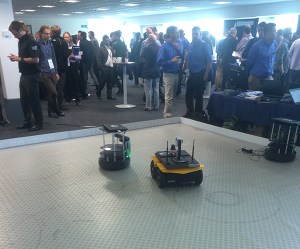
Representatives from Swansea’s School of Applied Computing (Arya, Carlene and Archie) recently visited the MATLAB EXPO in Silverstone.

MATLAB (matrix laboratory) is a multi-paradigm numerical computing environment and fourth-generation programming language that allows matrix manipulations, plotting of functions and data, implementation of algorithms, creation of user interfaces and is primarily used for numerical computing.

IMG_5633

Lecturer Dr Carlene Campbell finds the Simulink element of MathWorks-MATLAB useful in teaching Computer Networks & Internet Security:

I did enjoy the expo, especially the first speaker. The demonstration room allowed one to gain ideas for research projects and more…  – Carlene

While Phd student tutors Archie and Arya both use Matlab for their research:

I found the event very informative and rewarding, especially considering it was free to attend. The keynote was particularly good as it showed how Matlab is used across a diverse range of industries and the types of system it’s been involved with the development of, perhaps most notably the New Horizons Flight Software. The technical talks and demonstrations were also great; they also weren’t too long so it was easy to stay focused. Several sessions will be beneficial to my research and I’d strongly recommend the event to anyone in the faculty. – Archie.

The event was spectacular. I found most of the presentations, relevant and useful. The demonstrations were great. In particular, one of the exhibitions was so helpful that I might be adapting a similar approach in my PhD experiment. – Arya

To view the demonstrations please click the image below:

IMG_5570

For more information about the event please click-here. And for event proceedings  please click-here.

LM

UWTSD Computing Graduate Lewis Meehan tells us about his exciting new future at Virgin Media:

Q. What was your HE course?

A: BSc Computer Networks

Q. What is your job title and role?

A: Systems Integration Graduate

Q. Could you briefly describe the organization you work for?

A: Virgin Media – Data Services, owned by Liberty Global – the largest telecommunications company in the world.

Q. Which skills learned at University are helpful to you in your job?

A: Independent working/research and also the broad range of industry specific knowledge.

Q. Do you have a typical day and how would you describe it?

A: Every day is different. Some days I’ll be in my local office working furthering my HE studies towards certification [Cisco certifications: CCNA+CCNP+CCNA Specialisation+CCNP Specialisation], alongside providing standardised connection packages to small-medium businesses and assisting on larger  project based work for bespoke networking solutions. Other days I’ll be at a clients site and some might even be spent in hotels going segwaying, raft building or even just days out with the other Virgin Media graduates.

Q. What aspects of your job do you enjoy most?

A: Working with some awesome and expensive technology, which changes from day to day. Also the responsibility I’ve been giving from the start, Virgin Media put a lot of trust in their employees which creates a really nice environment to work in.

Q. Do you have any advice for students who would like to start a Career?

A: Make University a friendly competition; it’ll help both you and other people on your course at the end of it.

> For more information about Graduate positions at Virgin please click-here.

CarleneCompv5Dear All, You are all welcome on Wed, October 21, to the first FACE lunch-time Research Seminar for the academic year 2015/16. It will take place in MH503 (5th Floor Block H, Mount Pleasant).  A buffet lunch will be provided, starting at 1pm. 

Our Speakers will be Dr John Rees from School of Applied Computing and Komali Kantamaneni PhD Research student From School of Built and Natural Environment.

Dr. John Rees from Applied Computing has been invited to talk on “PhD Outcomes – Analysis and Characteristics of PhD Examiners’ Feedback”The intention of the seminar is to provide a broad guide to the kind of commentary associated with particular outcomes.  The evidence base shows characteristic patterns of conditions associated with the standard outcomes.  This is likely to offer benefits to those acting as internal or external doctoral examiners in gauging the award.

Dr Rees has a long interest in research degrees and research administration.  He chaired Staffordshire University’s Faculty RDC from 2002 – 2005; chaired Southampton Solent’s RDC from 2006 – 2012, and served on both Research Committee and Research and Enterprise Committee for those institutions over the same periods.

Komali Kantamaneni is a PhD research student based at the University of Wales Trinity Saint David, United Kingdom. Her research area primarily focuses on the United Kingdom, examining the fiscal costs incurred by coastal communities who face increasing vulnerability to coastal storm and sea level rise because of climate change.  Her talk will be  on Integrated Modelling and Coastal Vulnerability(Development of novel integrated model to evaluate fiscal coastal vulnerability of United Kingdom).

These research talks are open to every researchers, students interested in research or staff from any faculty. This is an opportunity to mix, meet and hear about research within schools.

Venue: MH503 (5th Floor Block H, Mount Pleasant).
Time: 1pm – A buffet lunch will be provided.

Looking forward to see you all!!!

adamv2

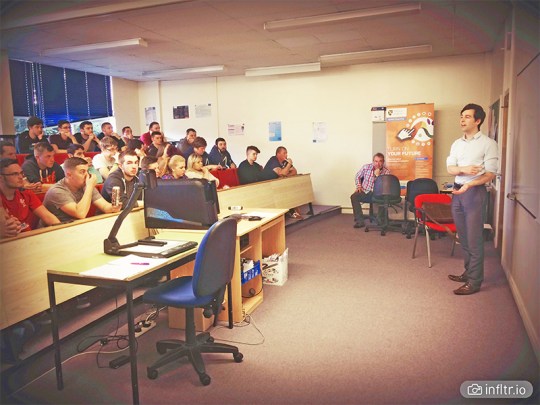
Adam Curtis, CEO of Hoowla & Software Development Agency ‘ClockWorkBear’ and Co-founder of TECHHUB Swansea visited UWTSD Swansea’s School of Applied Computing today to talk to Enterprise & Innovation students about Careers in Computing and Tech Start-Up opportunities.

The Student Group thoroughly enjoyed Adam’s talk and look forward to seeing him again at Start-Up Weekend Swansea next month.

talk

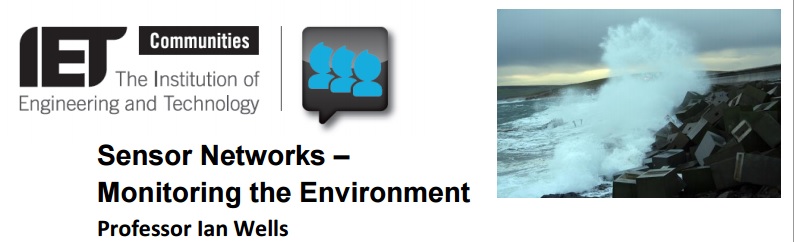
Tomorrow night (Thursday 15th October) from 6:30pm onwards in the Alex reading room (refreshments at 6:30pm lecture at 7:00pm) Professor Ian Wells will be delivering a Lecture address as the incoming chair of the IET Wales South West Local Network. The talk will be on the use of Sensor Networks for Environmental monitoring including the ASTEC project that was very revolutionary for its time, as it was the worlds first underwater network that used Radio Frequency communication.

Professor Ian Wells is Professor of Digital Signal Processing and Head of the School of Applied Computing at the University of Wales Trinity Saint David, Swansea. He has been a lecturer, researcher and manager for nearly 30 years. His current personal research interests include sensor networks (both terrestrial and underwater), ultrasonic non-destructive testing (NDT), medical signal processing, communication systems and computer networks.

Contact Name: Hugh Woodward (hwoodw2928@aol.com)
Date & Time: October 15th 2015 at 7.00pm, Refreshments from 6.30pm.
Venue: Alex Reading Room, Institute of Sustainable Design, UWTSD, Alexander Road, Swansea, SA1 5DX
Registration: Members of the public are warmly welcomed to this free event – registration is not essential but would be helpful: http://www.theiet.org/events/local/225957.cfm?nxtId=224579.

We’re Warming-up for Start-Up Weekend Swansea 2015 : o ) Co-founder Adam Curtis talks about the event in the video-clip below:

UWTSD Graduate Elliot Thomas talks about his journey to Winning last year’s event:

START-UP Weekend Swansea is Coming ;-). Below, SUW co-ordinator and Company Director Adam Curtis talks to UWTSD Computing students about the up-coming event:
Adam-Curtis2

For more information please click-here.

A CONFERENCE ON THE FUTURE OF THE ICT CURRICULUM IN WALES

cas

The School of Applied Computing at the University of Wales Trinity St David is hosting a half-day ‘Computing at Schools‘ Conference on the 7th October 2015 from 1pm to 5pm.

The Conference will be taking a look at recent changes in ICT affecting the curriculum for Key Stages 1 to 4, and in particular at the New Computing Progression Pathways. We’ll be hearing talks from:

  • CAS – Computing at Schools – Wales;
  • CISCO Networking Academy;
  • Birmingham City University representatives; and
  • An IT skills and career-building program for learning institutions and individuals worldwide.

Location: Cadogan Conference Room, Mount Pleasant Campus.
Time: Wednesday 7th October 2015, 1pm to  5pm.
Fee: Free of charge.
Facilities: Refreshments will be available. Limited number of free NCP car park spaces are available.

To register for this event please click-here: http://www.uwtsd.ac.uk/applied-computing-visit-days/. If you need any further details, please contact kapilan.radhakrishnan@uwtsd.ac.uk or telephone 01792 481192acuwtsd

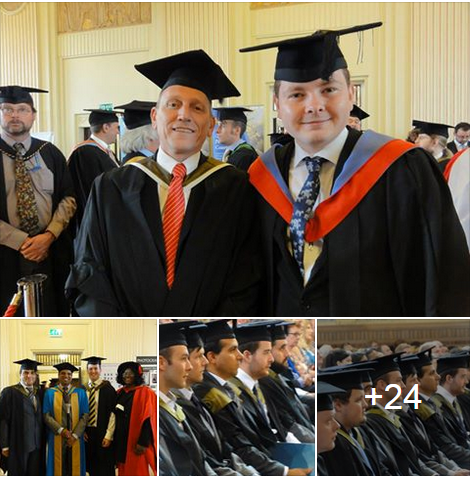
The Faculty of Architecture, Computing and Engineering which includes the School of Applied Computing was actively involved in the UWTSD Graduate Summer school programme for 2015 at Lampeter. We had Guest Keynote speaker Ian Stewart from Arqiva speaking to us on the Internet of Things (IoT).

Here are highlights of the activities from our School and Faculty:

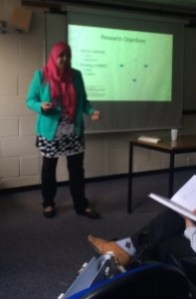
Thursday 2nd July 2015: Computing students present their research work and build a robot to climb unto a chair.
acs

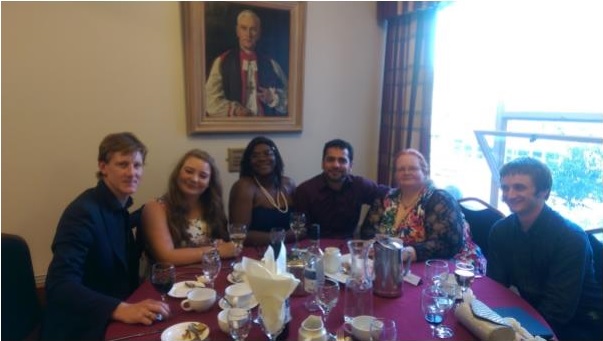
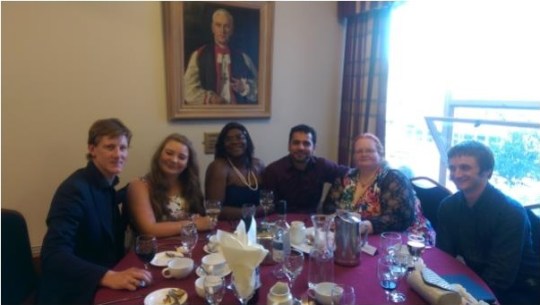
Thursday evening Formal Dinner at the Lloyd Thomas Dining Room:
acgroup

Friday 3rd, July 2015, Engineering Conference speakers highlights:

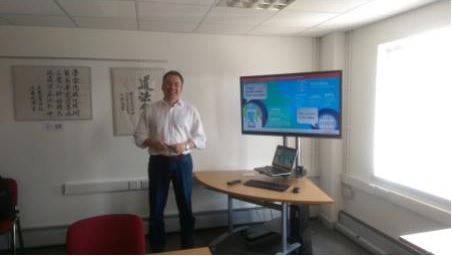
Session 1: IoT – Mr Ian Stewart
gspl

* Concept of IoT was outlined. “Connecting Digital lives and Services together”
* The vision (movement) was considered from multiple angles (i.e. economic, medicine, agriculture and etc.)
* One of the main points considered was the marketing aspect.
* Increase in use of sensor networks was outlined. By 2020 over 40% of Internet traffic will be generated by sensors.
* General information was provided about Arqiva and the nature of work they are involved with. (i.e. UK National television and radio broadcast, GSM infrastructure deployments and etc.)
* Involvement of Mr Stewart with multiple telecommunication companies across Europe in deployment and marketing aspects of their infrastructures.
* It was highlighted that “WE” (as individuals, academic institutions and corporate organizations) should have a strategy for surviving in the age of IoT (2020 – onwards).
* The scope of activities affected by IoT is vast and applications of such infrastructure are limitless.
* Mr Stewart also elaborated how in this day and age, we don’t necessarily need a significant amount of money to start a successful enterprise. It was highlighted that all the pieces are there, we just have to be clever in putting them together (i.e. Facebook).
* After the speech, possible research collaboration opportunities were discussed in brief. And such activities are to be scheduled for near future.

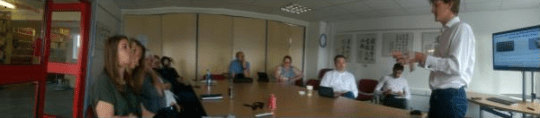
Session 2: FACE Research – Dr Caerwyn Ash
cae

* Speech was focused on Medical devices and their applications. A number of (Ideas/Developments) were outlined:
* Continuous improvement of some tools was discussed:

o Hearing aids: Electronics improvements
o Evolution of pacemakers

* iPhone as a medical device. (i.e. Monitoring health when running!)
* Particularly applicable to rural locations with lack of/limited access to healthcare systems.
* Monitoring patients via wristbands. Sensors to collect health data (i.e. heartbeat, blood pressure and …) to be analysed by healthcare professionals.
* Ideas as simple as pressing a button on a pill case to ensure elderly are taking their pills regularly.
* Asthma inhalers (regulated): monitoring usage to ensure proper administration of spray.
* Digital Stethoscopes to monitor patients better in harsh environments (i.e. WarZones)
* Ongoing research in muscular dystrophy. (aid of 3d printing)
* Ultraviolet blankets
* Skin Care products in general. (Skin Cancer detection from colour changes)
* Use of light to cure wounds which are not healing (i.e. in case of diabetic patients)

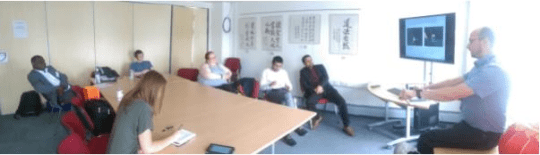
Session 3: Motorsport Research – Dr. Owen Williams
owen

* Involvement of FACE in motorsport research was outlined.
* A number of problems were identified such as:

o Difficulty in prediction of motorbike behaviour due to complex gyroscope physics.
o Lack of motorbike simulators.

* Use of sensors to collect data for each ride.
* Considerable differences were highlighted between motorbikes and other motor vehicles.
* Materials used in MotoGP was discussed.

A number of potential interdisciplinary research projects were identified:

o 100 channel logger at 1KHz.
o Fibre Optics for chassis parameter sensing.
o Built-in Eye-Tracker for bike helmets.
o Use of AI for simulator parameters identification.

grad15