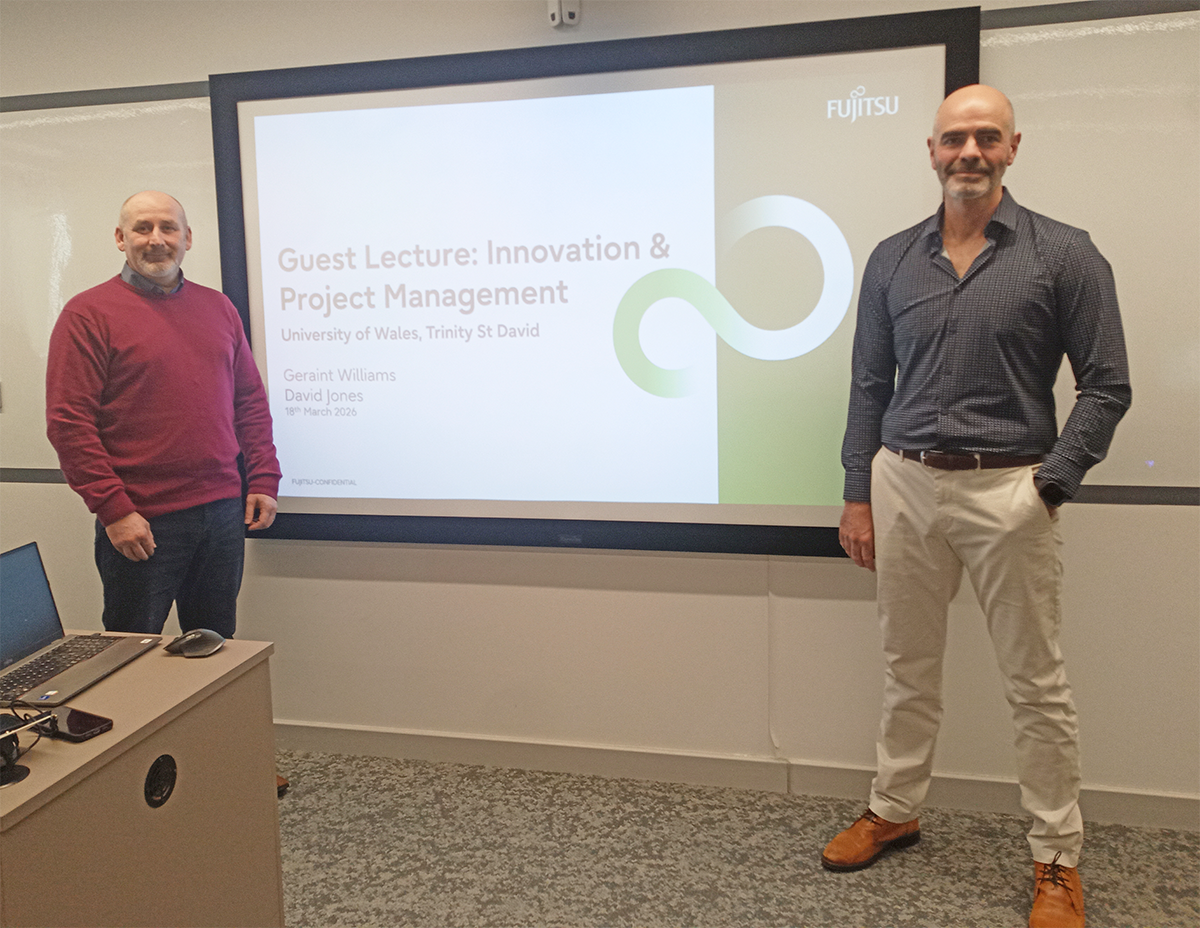
Geraint Williams (Director of Mission Control – left above) & David Jones (Principal Consultant – right above)
Many thanks to our industry partners from Fujitsu ‘David Jones‘ (Principal Consultant) and Geraint Williams (Director of Mission Control) for visiting the University again to speak with our students and share their valuable knowledge, skills, experience and insights.
Their industry guest Lecture titled ‘Innovation & Project Management‘, brought together decades of industry expertise, offering students a rare and valuable inside look into how innovation really happens within major organisations, and how modern project management brings ideas and solutions to life.
Drawing from Drucker, the UK Government, OECD, and their own experience, they showed that innovation is fundamentally about:
Doing something new that creates value
Improving outcomes, efficiency, effectiveness, and quality
Turning ideas into implemented change that benefits people and society
Innovation succeeds when it is: Novel, Implemented (not just imagined), Value-creating and Adaptable to changing needs.
They outlined different types of innovation and what drives Successful innovation. And that a sustainable innovation culture rests on four pillars:
Leadership that champions experimentation
Workforce empowerment and diverse skills
Processes that are agile and user‑centred
Partnerships across academia, industry, and civil society [
The second half of the session unpacked real-world project delivery, comparing traditional and modern AgileProject Management approaches.
Both speakers gave insights from major industry projects. They emphasised that innovation means nothing unless it can be delivered, and delivery fails without the ability to innovate. Students gained industry insights and a powerful, industry‑tested message: Technology, Solutions & Big ideas matter. Bold leadership matters. But People and the Social element are vital for success: Collaboration is what turns ideas into real positive impact and results.
Geraint Williams “Thoroughly enjoyed speaking with the students and sharing industry insights on driving successful innovation, along with the pros and cons of different project management methodologies.”
David Jones “It was a great opportunity to come back to UWTSD and bring some insights from working in a wide variety of roles through my career. Focusing on Innovation and Project Management, I was able to share real‑world perspectives on how organisations navigate change, deliver value, and harness creative thinking to solve complex challenges.”
We would like to thank both David & Geraint for taking the time to come back to the University again to share their valuable experience and expertise. And look forward to further collaboration in the future. Diolch yn fawr iawn.
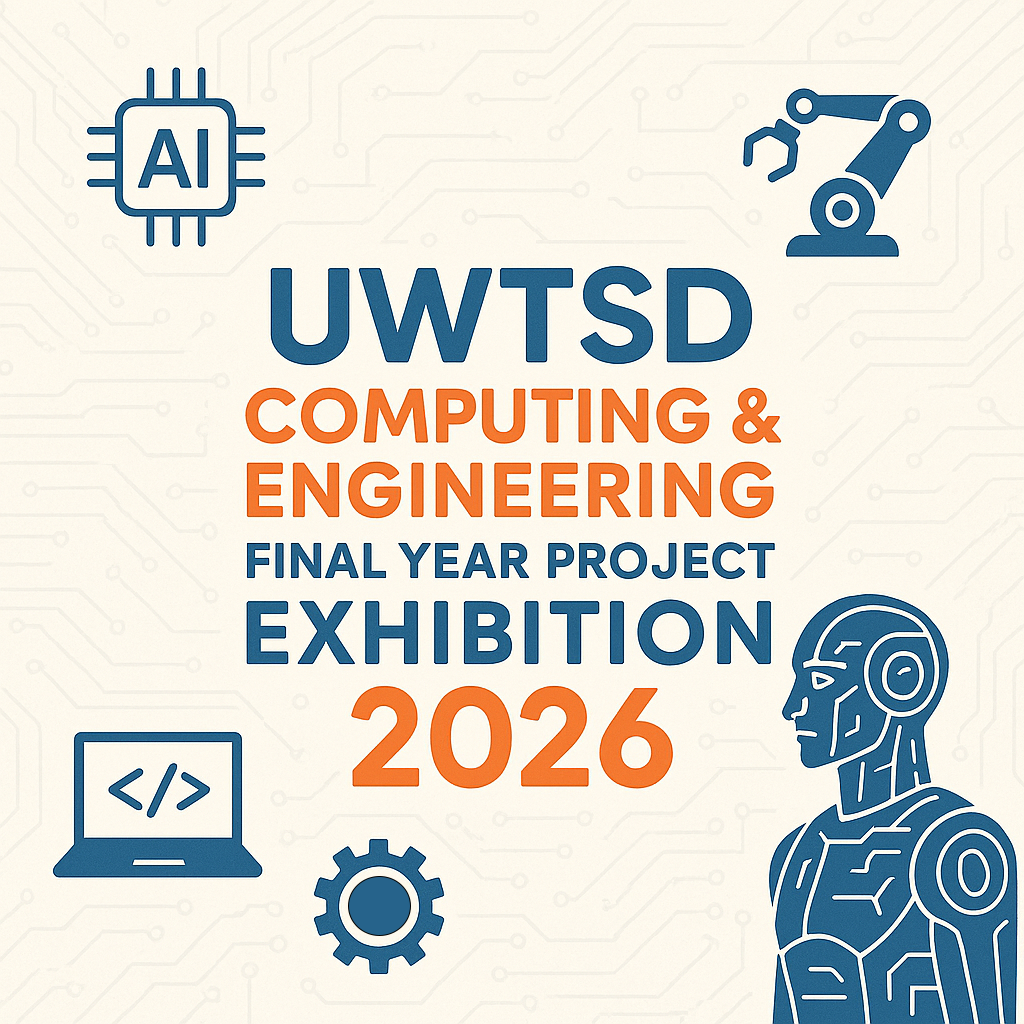
We’re excited to be hosting our Computing & Engineering Final Year Project Exhibition 2026, at our UWTSD SA1 Waterfront Campus in Swansea again this year. Where our final‑year students will showcase and demonstrate their final year independent projects from across our BEng and BSc programmes.
Our industry partners & employers are invited, this is a great opportunity for employers to: ✅ Meet and engage with final‑year talent ✅ Explore real‑world computing and engineering projects ✅ Share industry insights and shape future graduates
Exciting news: Final year student Orin McGinn has relaunched the UWTSD Esports Society 🎮😃. Message from Orin below:
Whether you’re a competitive gamer looking to represent the university in national leagues, or you just love gaming and want to meet like-minded people — this society is for you. We’re not just for hardcore competitive players. This is a space for everyone, regardless of skill level, course, or background. If you enjoy gaming in any form, you belong here.
And when we say gaming, we mean all of it. As much as we’re called the Esports Society, we’re really a gaming society in the broadest sense. Alongside online and competitive gaming, we’re also expanding into tabletop and board games — think Dungeons & Dragons, Magic: The Gathering, Warhammer, and pretty much anything else you can think of. If it involves a game, it’s welcome here.
🎮 What we offer: • Competitive teams entering NSE and NUEL university leagues • Casual gaming sessions open to all • Tabletop and board game sessions — D&D, Magic: The Gathering, Warhammer and more • A dedicated gaming room on campus with high-end setups • “Play Your Lecturer” — friendly gaming sessions where students take on university staff • A welcoming community to help you settle into university life.
💰 Membership: • Student Membership — £5 (casual play, community access) • Competitive Membership — £8 (competitive teams, university league entry)
Not sure which membership is right for you? No problem — our first session is completely free. Just fill in the sign-up form and come along. We’ll be going over both membership options on the day so you can get a proper feel for what the society is about and decide what suits you best. There’s no pressure and no commitment required just to come and see what we’re all about.
And this isn’t just for students. You won’t only be gaming with your fellow students — you’ll be getting involved with lecturers, researchers, and staff members from across the university. For any staff members reading this, we have a Staff Membership coming very soon at just £6, offering the same access as the Student Membership. Whether you want to get involved with your students, revisit the tabletop games you grew up with, or just fancy a game at lunch — there’ll be a place for you here too.
Stay in the loop: The best way to stay up to date with everything is to fill in the sign-up form and join our Discord server. That’s where we’ll be posting all future events, announcements and updates as they happen. We’ll also be keeping our Student Union page updated regularly, and we’ll be appearing on the university TVs very soon.
Celebrating a New Appointment: Elliott Atkins joins UWTSD as Professor of Practice in Applied Computing
We are delighted to announce the appointment of Elliott Atkins as a new Professor of Practice within the Applied Computing Academic Discipline at the University. This distinguished role recognises Elliott’s exceptional professional achievements and industry expertise he brings to our university community.
Speaking after his appointment, Elliott said “I’m delighted to have been appointed as a Professor of Practice at the University of Wales Trinity Saint David. I’m really looking forward to sharing real-world insights and experience with students, early-career academics and staff, as well as contributing to curriculum development across the Applied Computing, Cyber Security, and Digital Forensics programmes.”
With a career spanning nearly three decades at the forefront of global cyber security, incident response, and national digital resilience, Elliott’s appointment strengthens and will further enhance real‑world industry learning experiences for our students.
A Leader in National Cyber Security: Elliott is an internationally recognised leader in the field of cyber security. Over the course of his distinguished career, he has held several high-profile positions central to the UK’s national cyber resilience, including:
Managing Director of Exercise3: an NCSC‑assured provider of realistic cyber incident exercises, founded by Elliott in 2014 to prepare organisations for complex cyber crises using highly accurate scenario‑based training.
Head of the UK Government’s Computer Emergency Response Team (GovCertUK) at GCHQ, leading 24×7 national incident response operations.
Head of Cyber Intelligence at QinetiQ, contributing to defence and national security innovation.
Head of Incident Response at Nominet, the UK’s top‑level domain registry, overseeing the protection of critical national internet infrastructure.
Elliott’s influence also extends internationally, as he serves as the UK liaison member of FIRST, the global forum for incident response teams, helping shape standards and collaboration across more than 800 CSIRTs worldwide.
Royal Appointment: CISO to the Royal Household: A unique highlight in Elliott’s career is his appointment by Her Majesty Queen Elizabeth II as the Royal Household’s first Chief Information Security Officer in 2021. This role was created as part of a heightened national effort to strengthen the monarchy’s cyber security posture against increasingly sophisticated threats. His appointment was a key step in safeguarding sensitive digital assets across the Royal Household.
Honours, Fellowships, and Industry Recognition: Elliott is a Fellow of the British Computer Society, a recognition of his sustained contribution to the advancement of cyber security practice.
He also has a long record of community and charitable leadership. Outside the digital realm, Elliott is passionate about aviation heritage and serves as Chair of Trustees of the Panavia Tornado Preservation Group, a charity dedicated to preserving the iconic Tornado aircraft and inspiring future generations of engineers and aviators.
Elliott’s commitment to developing cyber resilience and technical capability aligns strongly with UWTSD’s mission to prepare graduates for critical roles in an increasingly digital world.
A Transformative Contribution to UWTSD: As a Professor of Practice, Elliott will play a significant role in enhancing the Applied Computing provision at the university. He brings world‑leading expertise and will help support our programmes in cyber security, digital forensics, and incident response. This is an extraordinary opportunity for students, staff, and partners alike to engage with one of the UK’s most experienced practitioner‑leaders in cyber security.
With gratitude, we warmly welcome Elliott to the university and look forward to the contribution he will bring to our community.
Today’s blog post features 2 inspiring UWTSD journeys, that show the power of creative and technical education in supporting and transforming peoples lives & futures.
Mia Harries is turning her passion for computer games into a creative career, growing in confidence and industry readiness through hands‑on learning, professional networking, and her long‑standing involvement with Yr Egin.
Meanwhile, Adam Moore has reshaped his career through UWTSD’s Digital Degree Apprenticeship in Computing, progressing from NHS data analyst to an emerging researcher developing AI tools that support clinical decision‑making. Together, their stories showcase how UWTSD empowers learners of all backgrounds to thrive, whether in the world of game design or Computer Science & groundbreaking healthcare innovation.
Mia Harries is turning a passion into a Creative Career. Mia’s time on UWTSD’s BA Computer Game Design course has helped her grow in confidence, creativity, and professional readiness.
Supported by a practical, industry‑focused learning environment, her wide-ranging course experience, combined with meaningful industry contact and her long-standing involvement with Yr Egin – where she has led workshops, built technical skills, and expanded her professional network, has shaped her into a confident emerging game designer. 🎮🎨
Mia now looks ahead to securing a role in a Welsh games studio while continuing freelance work, grateful for the skills, friendships, and guidance that have prepared her for the industry.
Adam Moore, a Data Scientist from Narberth, credits the University of Wales Trinity Saint David’s Digital Degree Apprenticeship in Computing (Data and Information Systems) with transforming his career and opening the door to advanced work in Artificial Intelligence (AI) and healthcare. While working at Hywel Dda University Health Board, Adam discovered a strong affinity for maths and data, and with encouragement from colleagues, he enrolled in the apprenticeship. This opportunity allowed him to study while working full‑time, supporting his family, and progressing professionally.
Throughout the four‑year programme, Adam successfully balanced academic study with full‑time employment, during which he got married, welcomed two children, and earned three promotions. The apprenticeship equipped him with the skills and confidence to excel in postgraduate study. Now undertaking doctoral research in AI and healthcare, he aims to contribute to innovations that enhance patient care and shape the future of digital health services.
Adam is a strong advocate for UWTSD’s apprenticeship route, praising it’s accessibility and the exceptional support offered by the university. UWTSD leaders emphasise how his journey reflects the programme’s impact across Wales, while colleagues at Hywel Dda describe him as a highly valued staff member whose AI work is already making a meaningful difference in clinical decision‑making.
“I want to play an active role in using AI to revolutionise healthcare and improve patient outcomes,” he said. “The apprenticeship was the foundation that made all of this possible.”
Adam continues to advocate for UWTSD’s Degree Apprenticeship route and encourages others to take advantage of the opportunity.
“It’s an incredible pathway for anyone looking to progress in their career,” he said. “It’s open to professionals of all ages who want to develop their skills and the support from the UWTSD team is exceptional.”
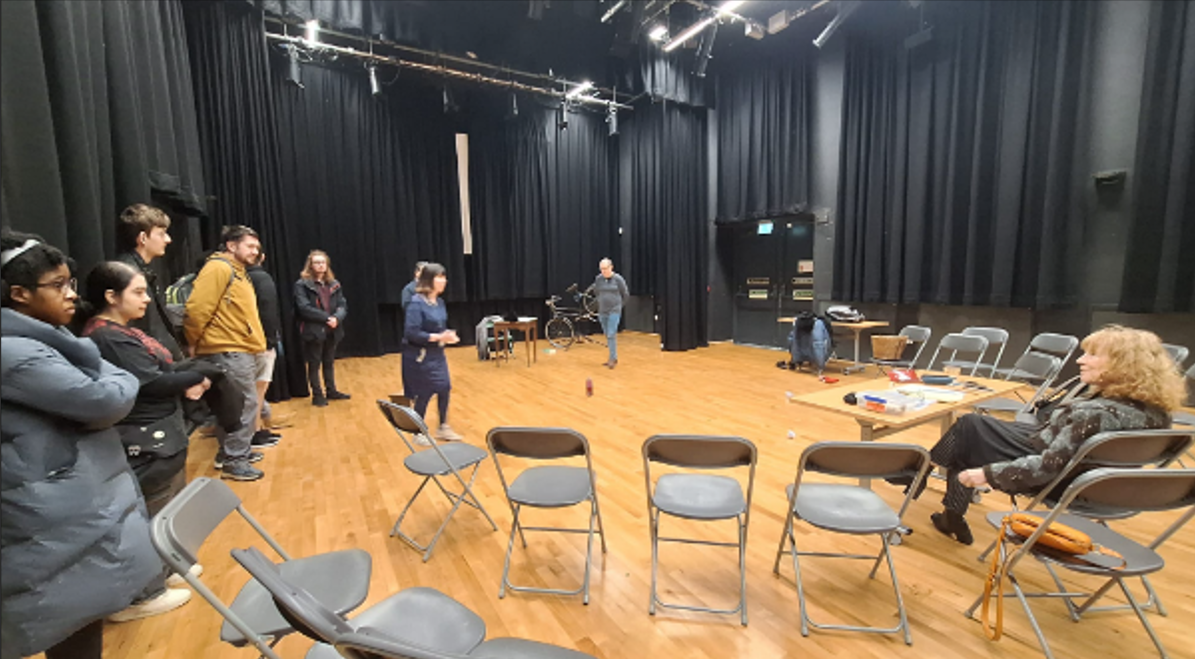
Our staff and students recently enjoyed an engaging and inspiring trip to Yr Egin in Carmarthen.
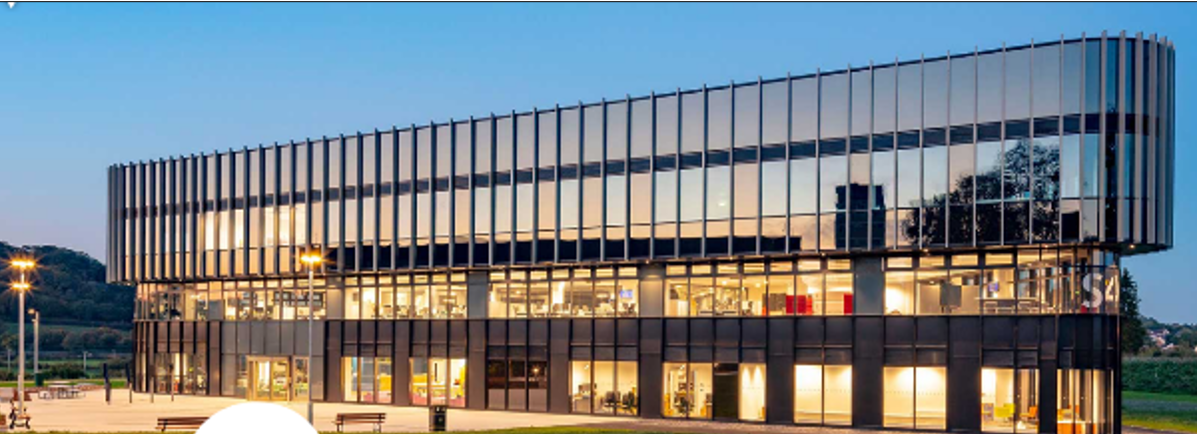
Yr Egin is a creative and digital hub located on the UWTSD Carmarthen campus, home to the Welsh‑language broadcaster S4C and a wide community of media, arts, and digital businesses. Designed to inspire creativity and nurture new talent, the centre provides state‑of‑the‑art production facilities, hot‑desking spaces, an auditorium, and a programme of cultural and industry events. Since opening in 2018, it has developed into a vibrant venue that supports collaboration between students, professionals, and local creatives while contributing significantly to the regional economy and strengthening the Welsh language through its cultural output.
Exploring Creativity and Careers: UWTSD Computing Visit to Yr Egin, Carmarthen
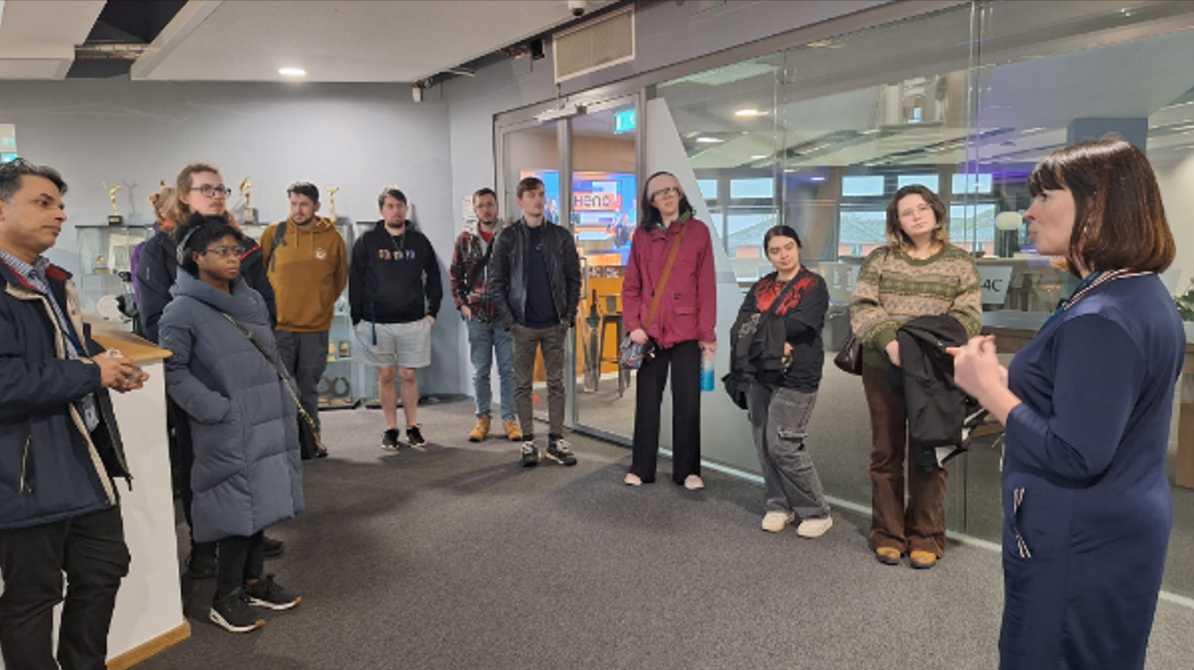
Recently, UWTSD Computing staff and students travelled to Yr Egin, the vibrant creative and digital centre based on the Carmarthen campus. Home to S4C, production companies, freelancers, and a growing community of digital talent, Yr Egin proved the perfect place for students to gain behind‑the‑scenes insights into animation, media production, education technology, and the realities of working in the creative industries. The day combined inspiring talks from industry professionals, a guided tour of S4C’s facilities, and an opportunity to see how creative ideas evolve from early sketches to polished on‑screen productions.
Twt Productions: Getting Started in the Creative Industries
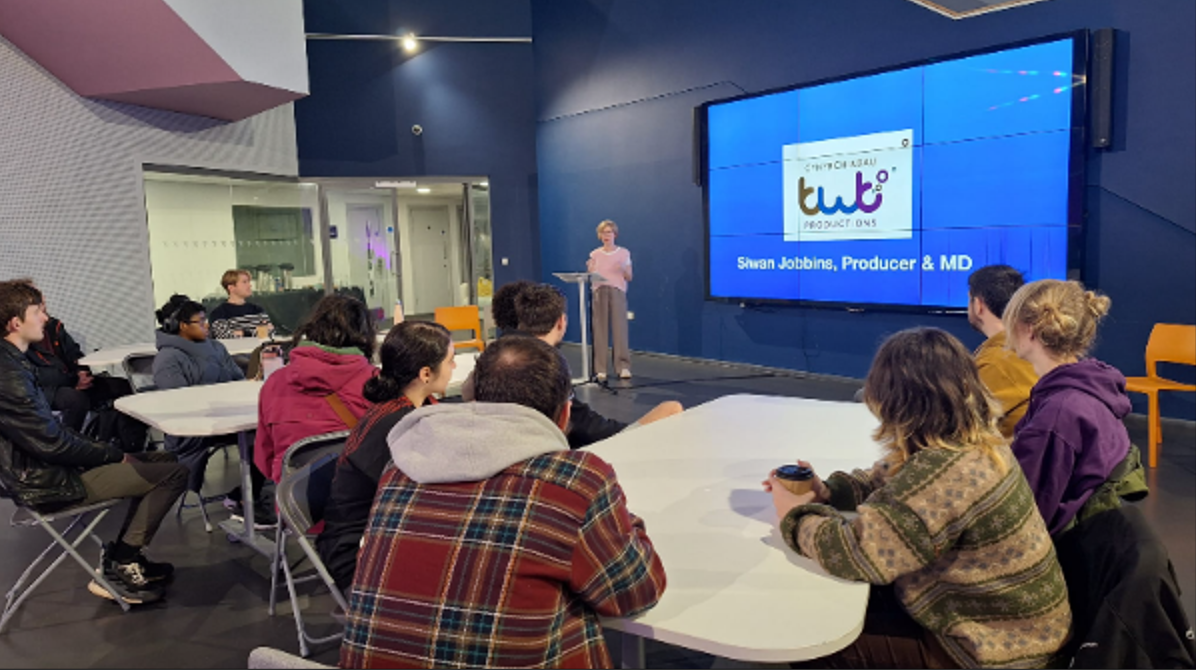
The first speaker of the day was Siwan Jobbins from Twt Productions, who offered practical guidance for students hoping to break into animation and media. Siwan emphasised the importance of keeping things simple when pitching ideas: if you can’t summarise your concept in one clear sentence, it’s not ready yet. She also stressed how crucial strong visuals and a realistic budget are when presenting a project.
Students were given a useful roundup of upcoming festivals, networking events, and industry platforms—from the Cardiff Animation Festival to tender portals such as S4C Production Tenders, BBC Education Commissioning, and Sell2Wales. For graduates, Siwan encouraged maintaining momentum: keep learning, keep applying, and keep refining your skills. Early in your career, she explained, you may need to give up some rights to get your name out there, but as you gain experience you’ll have more influence and ownership over your work.
Cloth Cat: Craft, Creativity and Career Longevity
Next, the group heard from Jon Rennie of Cloth Cat Animation, whose talk blended humour, honesty, and invaluable advice. Jon reinforced the importance of LinkedIn and social media for building visibility in the industry. He encouraged students to develop original showreels—avoiding overused film clips—and to pay attention to how other animators solve problems under tight budgets. Sometimes, he noted, creativity is about making smart compromises, such as omitting footprints in a snowy scene when deadlines are tight.
Jon urged students to constantly update their skills, be adaptable, and above all be reliable: in animation, meeting deadlines is just as important as artistic flair.
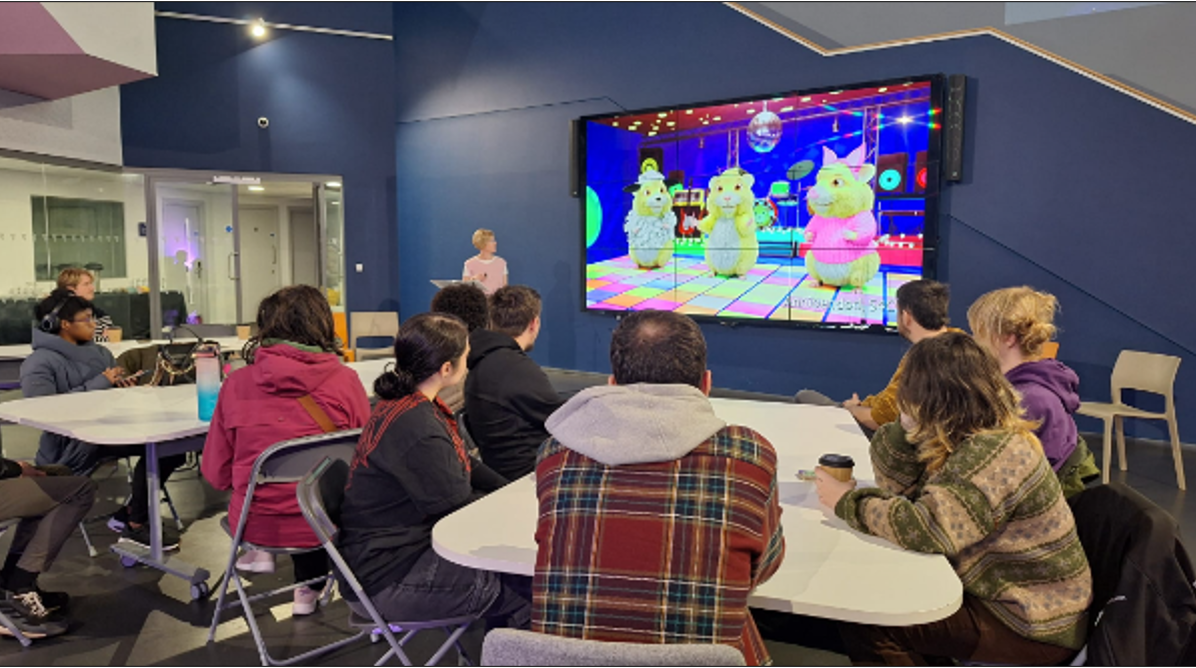
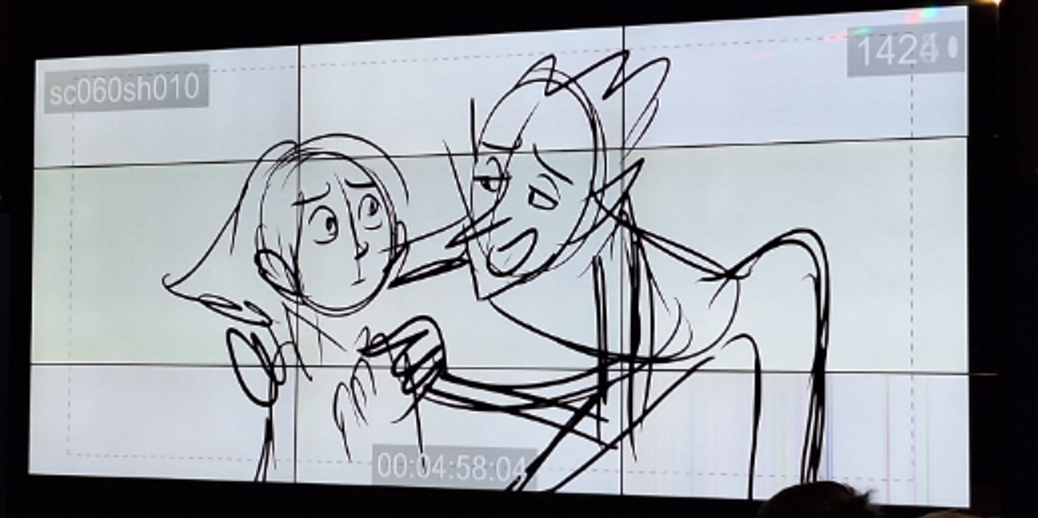
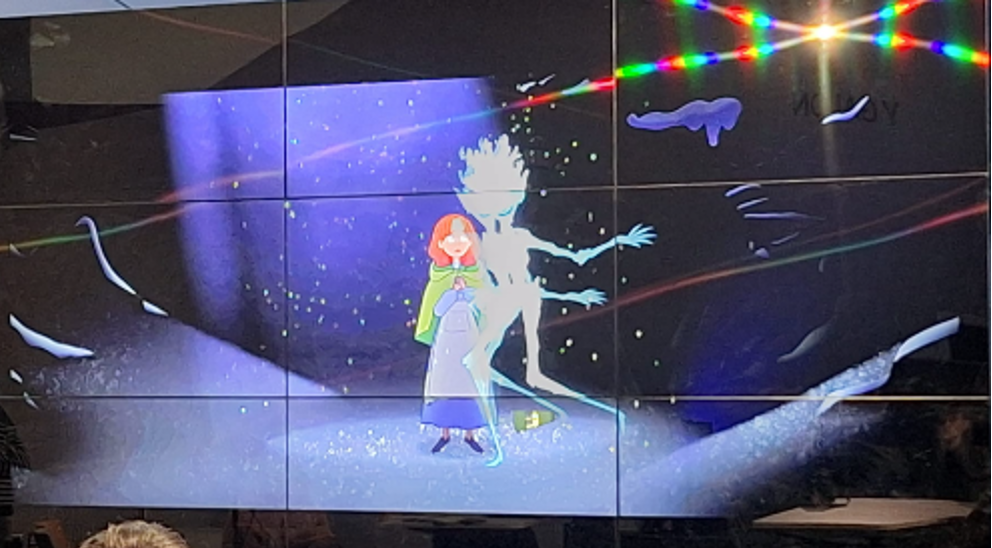
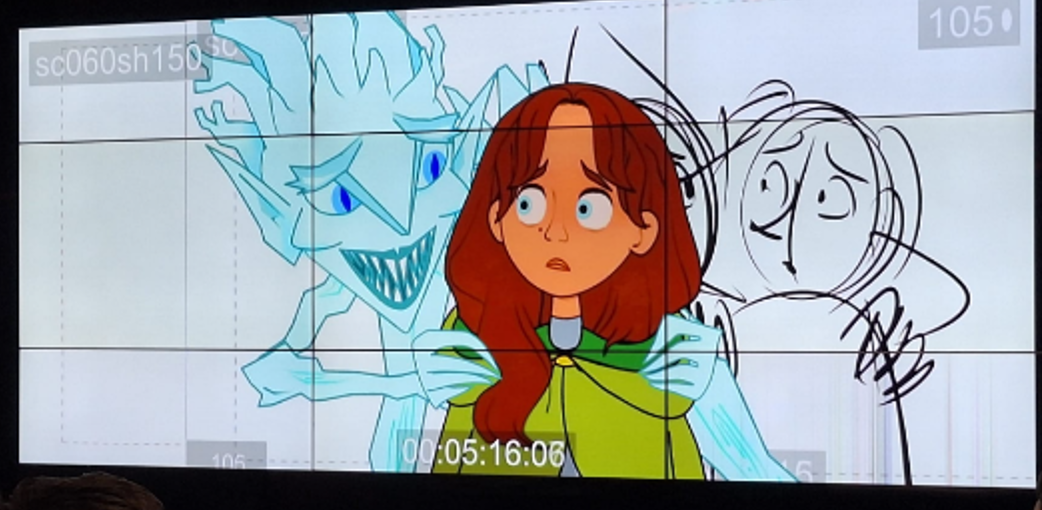
He also shared insights from his project “The Ghost of Midwinter / Ysbryd yr Oerfel,” a bilingual S4C Christmas animation produced in just six months. Students watched how a short sequence developed across four stages: from storyboards, to character animation, to effects, and finally to fully rendered backgrounds. It was a clear, fascinating demonstration of the full animation pipeline.
Inside S4C: Touring the Creative Spaces of Yr Egin
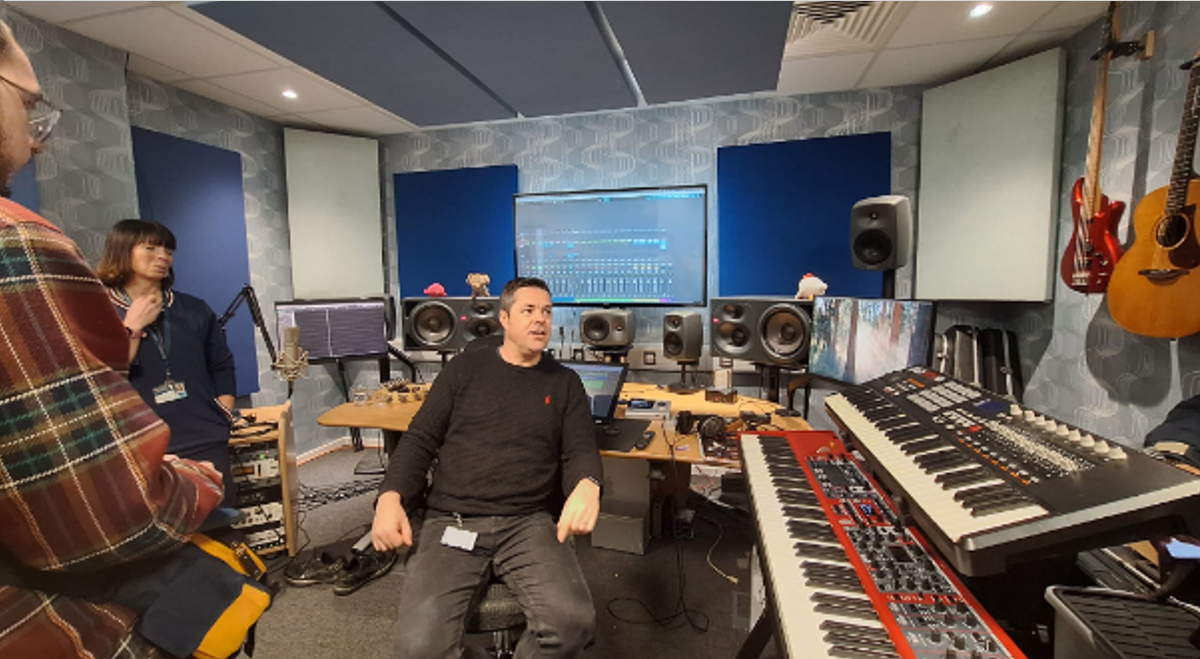
The tour of Yr Egin gave students a glimpse into live studios, editing suites, and the collaborative workspaces used by media professionals. The group met Steffan Rhys Williams, a music producer and composer who has contributed to S4C for more than 20 years. Steffan discussed the realities of composing for television, explaining how he sometimes outsources parts of the process so he can focus on creative direction.
Students also visited the hot‑desking area, which UWTSD graduates can use for six months after completing their studies—a valuable opportunity to network, start freelance work, or collaborate with the industry professionals based in the building.
Antur Amser: Blending Animation, Gaming and Education
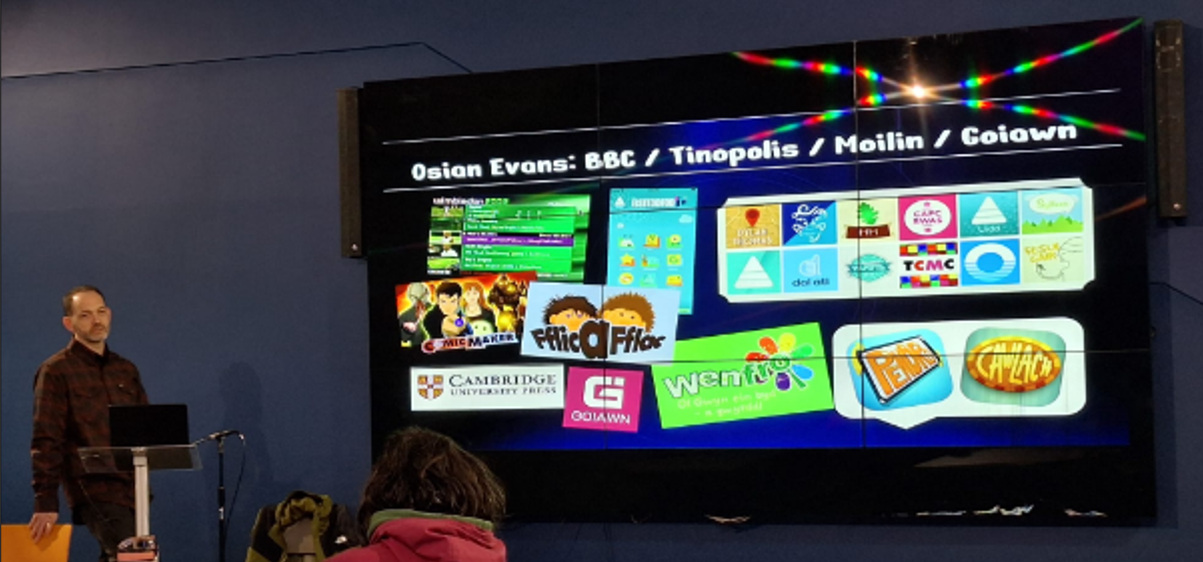
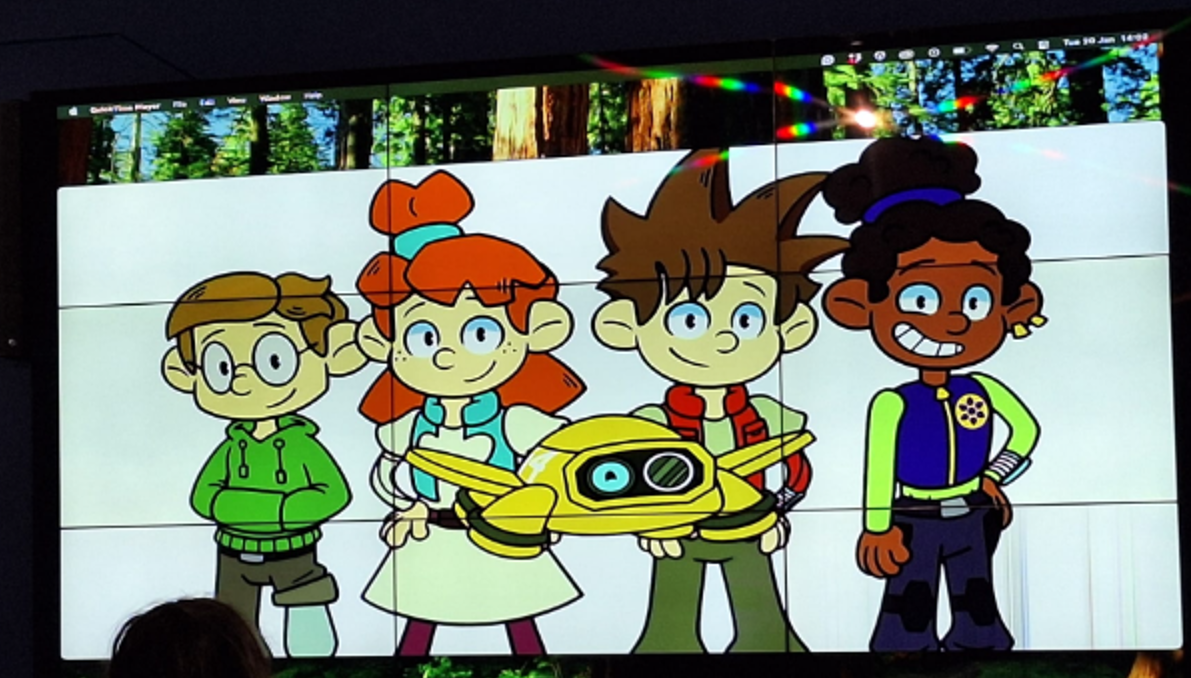
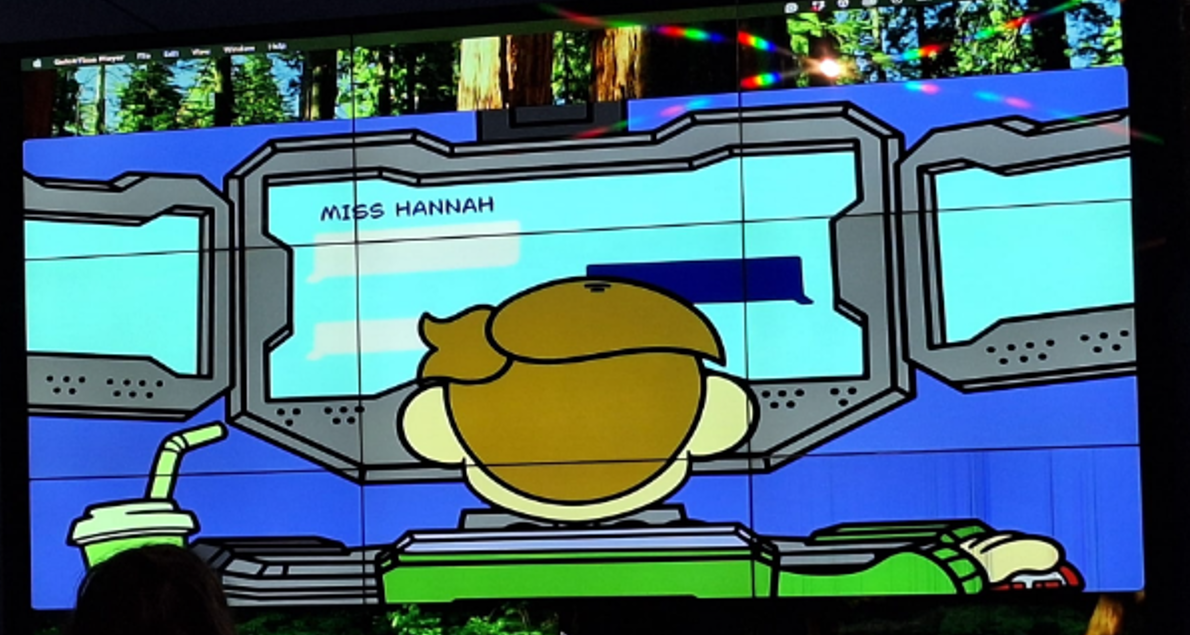
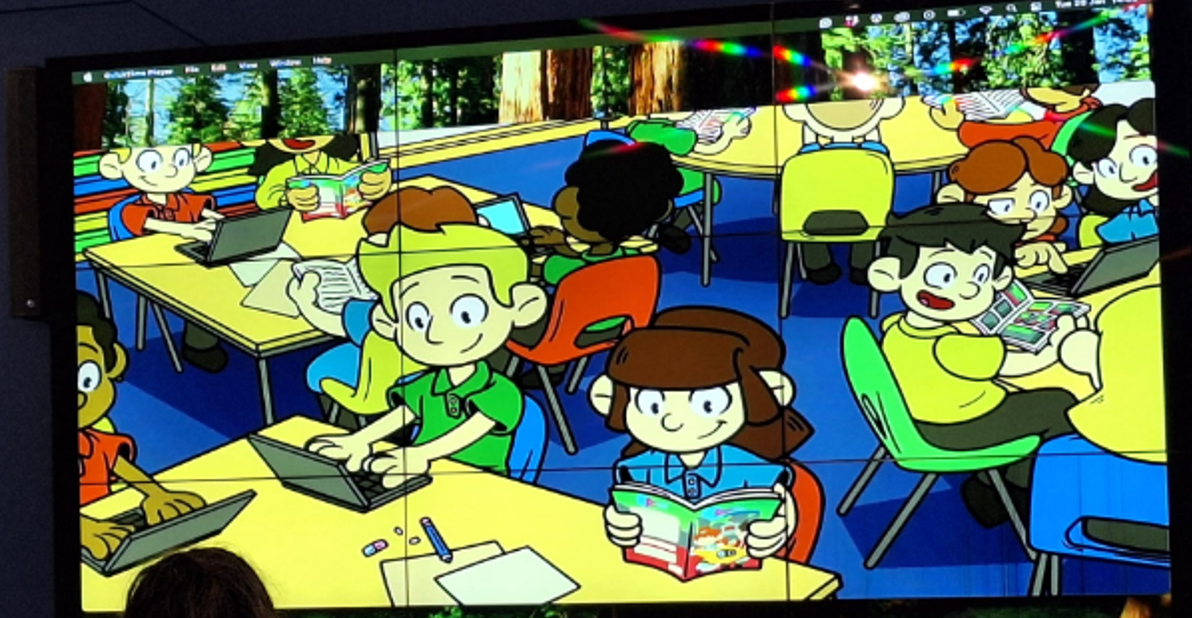
The final speaker, Osian Evans, shared insights from Antur Amser, an ambitious educational entertainment project that follows a group of children from the year 2174 who travel back to different eras in Earth’s history. The characters act as a creative gateway into subjects such as science, history, and geography, blending classroom learning with storytelling and interactive media.
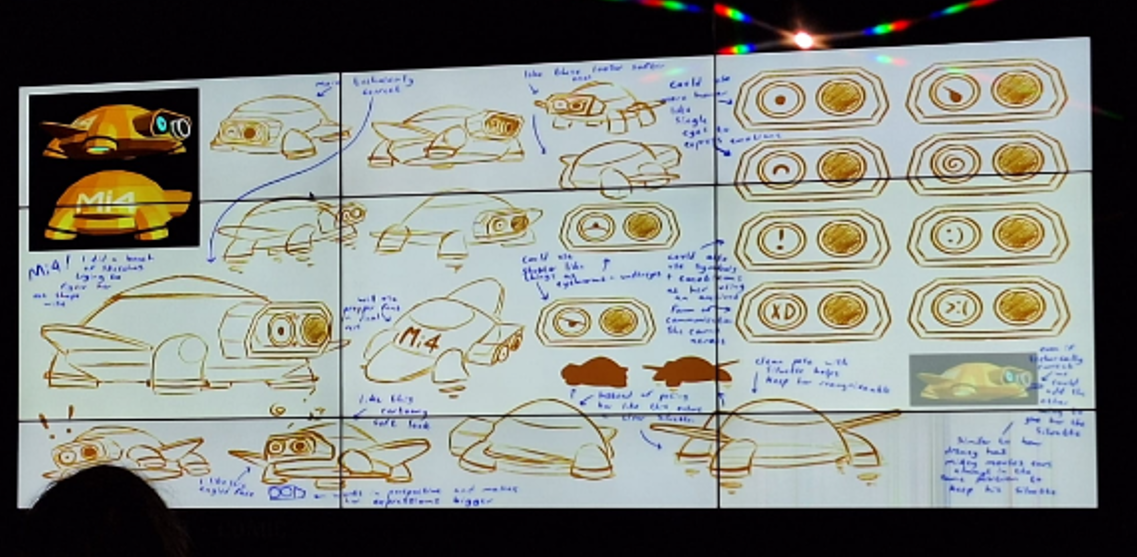
Osian explained the iterative design process behind the characters and emphasised the importance of giving animators precise instructions—highlighted by the time a “robot with anti‑gravity technology” accidentally ended up flapping wings because directions were unclear.
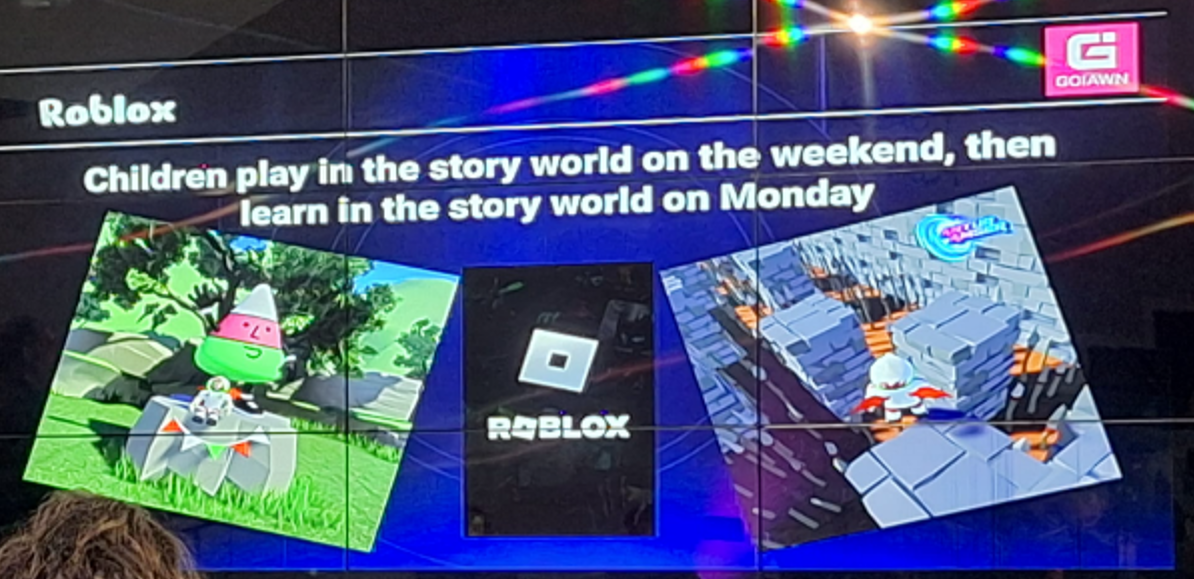
He also discussed the balance between gaming and learning, and how using existing platforms like YouTube and Roblox helps reach young audiences more effectively than trying to build entirely new ecosystems. Where possible, the team uses pre‑built assets, reserving bespoke modelling for niche cases—an essential strategy for meeting deadlines and budgets.
Where AI Fits In: Not a Replacement, but a Team Member
Osian also spoke about the role of AI‑assisted animation, emphasising that AI complements human creativity rather than replacing it. While AI can accelerate early drafts, improve workflow capacity, and support low‑budget productions like vodcasts, it is not suitable for areas like scripting. Instead, he described AI as a “first draft collaborator”: useful for rough animation tests before the real artistry begins. Tools such as HeyGen are now commonly used for rapid prototyping, helping creators gather feedback earlier and refine their ideas faster.
A Day of Inspiration and Industry Insight
The visit to Yr Egin offered our Computing students a rich, realistic look at the creative industries—highlighting both the opportunities available and the hard work and adaptability required to thrive in them. From pitching and production pipelines to character design and the role of AI, the day showcased the many pathways open to students interested in animation, digital creativity, and media technology.
Most importantly, the trip demonstrated just how connected UWTSD students are to Wales’ creative sector. Yr Egin isn’t just a building—it’s a collaborative hub where ideas grow, careers begin, and the next generation of digital storytellers can find their place.
We would like thank all the staff and industry experts from Yr Egin who made the day so enjoyable and inspiring for us all. Diolch yn fawr iawn i chi.
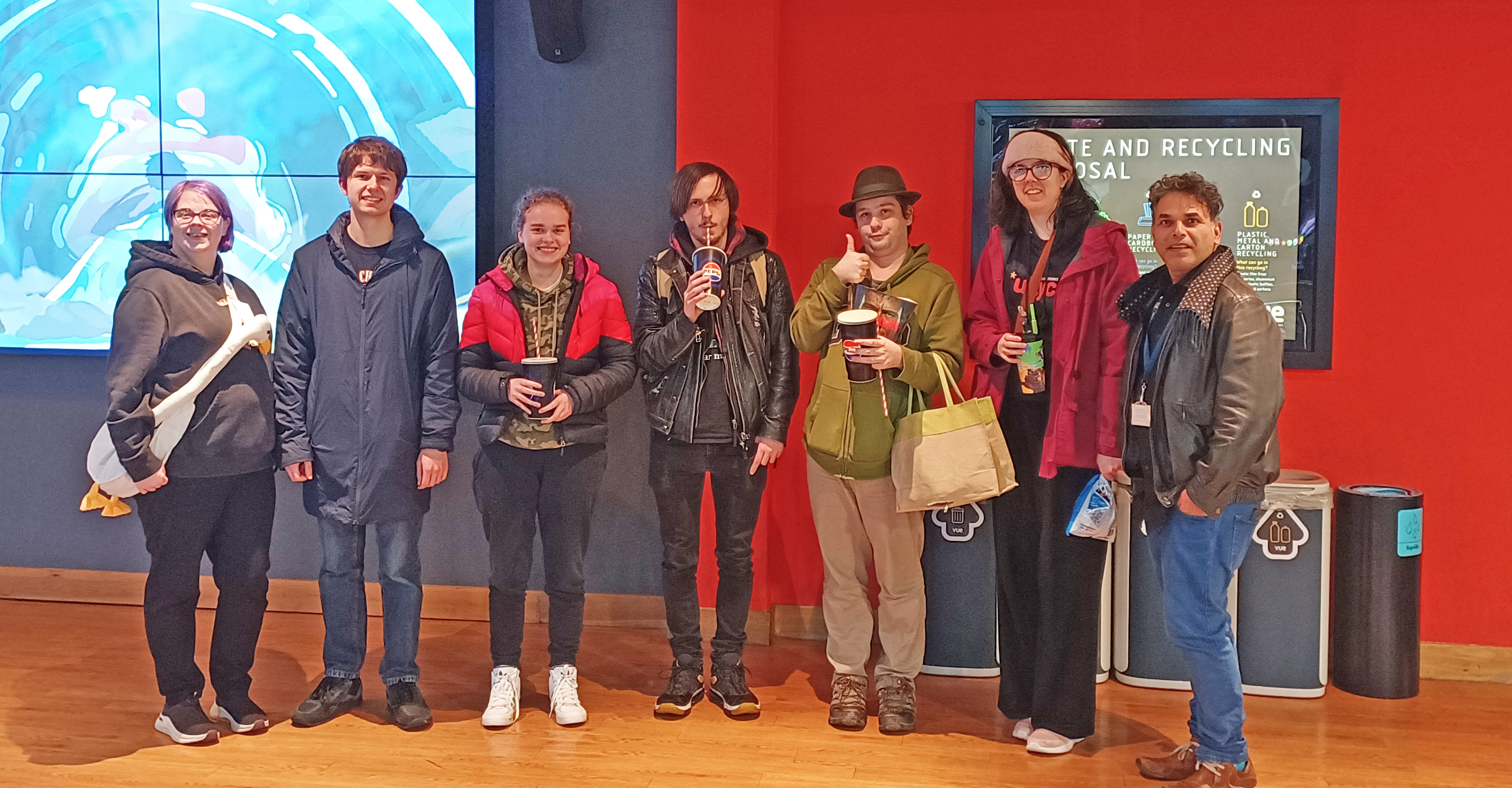
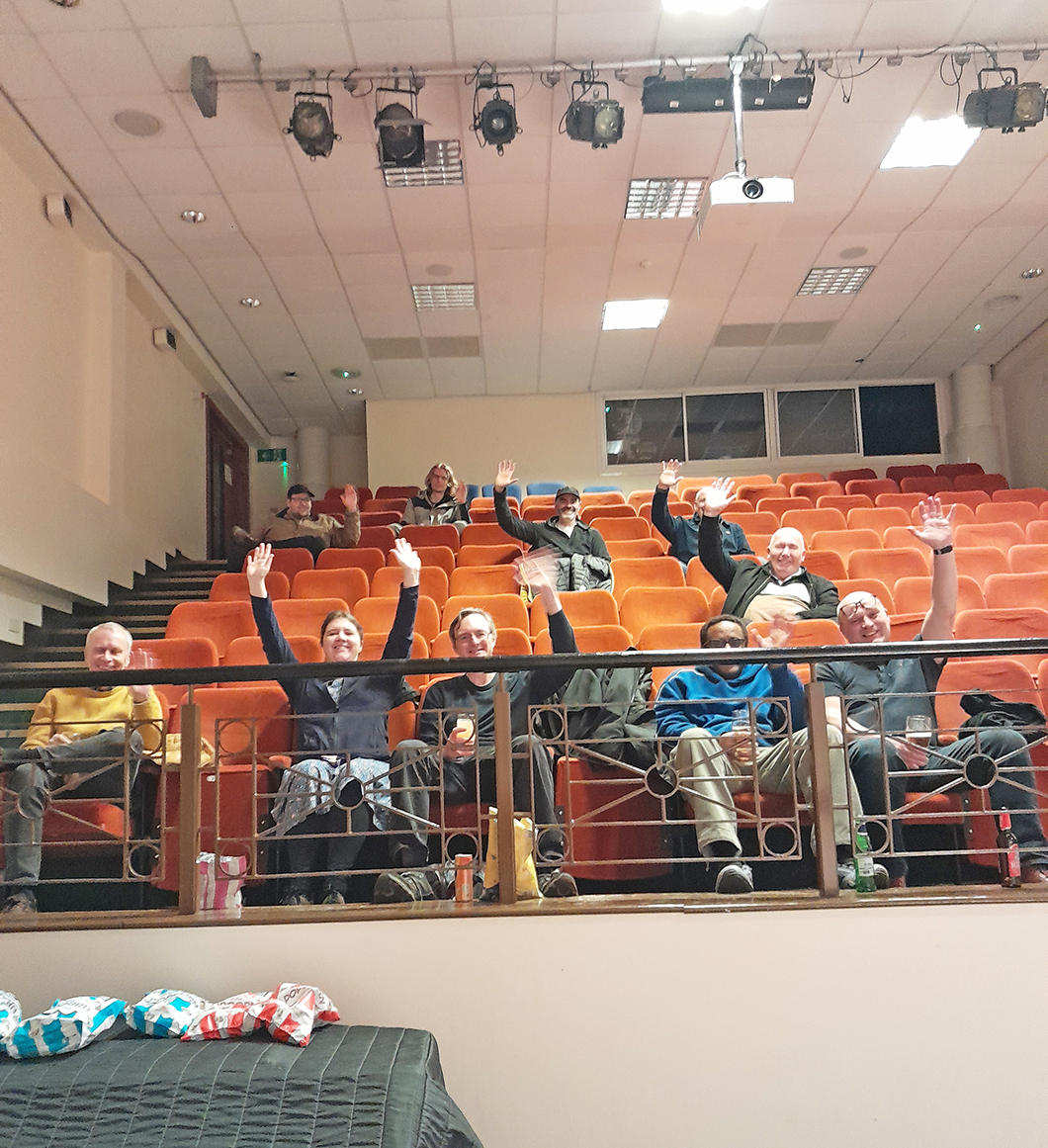
Our students, staff and alumni have recently enjoyed a film night, a movie night and lots of popcorn 🍿:), that allowed them to learn more about Animation and the creation of the PC industry with the founding and rivalry of Apple & Microsoft.
Educational Film Night: Five Nights at Freddy’s
The Educational Film Night showed a viewing of Five Nights at Freddy’s, a film that provides valuable insights for students across Animation, Visual Effects, and Games. The production incorporated a sophisticated combination of practical animatronics and CGI, illustrating how physical creature effects can be seamlessly integrated with digital animation to produce convincing and engaging character performances. Additionally, the film makes effective use of atmospheric VFX, stylised lighting, and environmental design to establish tone, tension, and narrative impact.
The animatronic characters provide a strong case study in how movement, timing, weight, and subtle micro-behaviours can communicate personality and emotional presence, even when working with characters that have limited facial articulation or mechanical constraints. Additionally, the film’s use of lighting and rendering techniques such as controlled shadow placement, colour temperature, and reflective surface management enhances mood, tension, and realism. Analysing how the film’s performers, puppeteers, and animators work together to convey intention, threat, and believability will deepen your understanding of character psychology, cinematic lighting, and visual storytelling.
Movie Night: Pirates of Silicon Valley
The Movie night showed a viewing of ‘Pirates of Silicon Valley’,a fast-paced, dramatic retelling that explores the fierce rivalry between Steve Jobs and Bill Gates, and the scrappy early days of Apple and Microsoft. Packed with ambition, ego, betrayal, and breakthrough ideas, Pirates of Silicon Valley shows how a handful of visionaries rewrote the rules of technology—and changed the world forever. A must-watch for anyone curious about innovation, startups, or the real stories behind today’s tech giants.
Graduate profile for Dale Warner, a Solutions Engineer at Cisco.
"Exposure to new and challenging events is critical. Everyone is winging it; no one can know it all."

"Creativity requires play, and play can be messy. Embrace the cluttered desk!"

"My days can range from face-to-face customer meetings across the UK, building high level plans/designs/BoMs from my home office, or turning my time to study so I can stay on-top of the latest technology trends."
Q. Job title and role? Solutions Engineer at the Central Government Team at Cisco
Q. Briefly describe the organization you work for? Cisco are the market leader when it comes to networking. They also provide cutting edge technologies and services across a wide range of areas; Security, collaboration, observability, to name a few.
Q. Which skills learned at university are helpful to you in your job? While at university the most important skill I learned was how to concisely present a complex idea or solution. Being able to do so allows me to talk and explain new products and ideas to customers, cutting out all the unnecessary fluff.
Q. A typical day and how would you describe it? Like any engineer, two days are very rarely the same. But I talk with customers about their technical issues and look to provide Cisco solutions to bridge the gap. This requires me having a board understanding of a range of technologies and where/how Cisco products can be used. My days can range from face-to-face customer meetings across the UK, building high level plans/designs/BoMs from my home office, or turning my time to study so I can stay on-top of the latest technology trends.
Q. What aspects of your job do you enjoy most? I enjoy meeting customers, understanding their needs, and proposing suitable solutions. This, alongside learning on the latest technologies and having a future vision of the technology industry.
Q. Advise for students who would like to start a Career? It’s okay not to have an end goal, so long as you know what you want to do next. When your end destination isn’t set you can put all your effort into achieving your next goal. Exposure to new and challenging events is critical. Everyone is winging it; no one can know it all.
Q. A quote that you like / live by / inspires you? My favorite quote is a quip from Albert Einstein “if a cluttered desk is a sign of a cluttered mind, of what, then, is an empty desk a sign?” I’d like to add – creativity requires play, and play can be messy. Embrace the cluttered desk!
Thank you for your profile Dale, it will help to inspire current and future students. We are most grateful. We hope to see you at future alumni events. Well done and Congratulates on your success Dale. Da iawn a llongyfarchiadau Dale













 UWTSD Applied Computing Blog
Written by jameswilliams
on 2026
Leave a comment