Turn On Your Future @ UWTSD's School of Applied Computing & Electronics

Posts tagged ‘UWTSD’

Echoes of Absence by Jon Frise

Q.  Name & Course? Jonathan A. Frise, BA (Hons) Animation & VFX at UWTSD

Q.  Project overview & introduction?

Echoes of Absence, production title The Bunker. Is a short characterless 3D animated environment piece, about three minutes. I built it to test whether lighting and sound design alone can make an audience feel like something happened in a place before the camera ever got there. Pipeline was Blender for asset creation and block out, this was my pre-production predominant phase including early testing and pre-viz, Unreal Engine 5 for lighting and final render, DaVinci Resolve for edit, grade and sound.

Q.  What was the motivation for choosing the project?

I’ll be honest, this project started out way bigger than what it ended up being, and that’s actually the most important part of the story. I’d been watching a lot of “liminal space” stuff online, think the Backrooms, POOLS, The Exit 8, that whole corner of the internet, and I kept getting stuck on the same question: why does an empty room unsettle people more than a monster jumping out at them? No character, no dialogue, sometimes barely any visuals at all, and somehow, it works better than most horror films manage.

That question became my dissertation hypothesis: “To what extent can lighting and sound design alone shape an audience’s interpretation of a preceding event in a characterless 3D animated environment?”

Originally this was going to be a proper first-person sci-fi piece, following a character called Jim and a little robot called Chips. Halfway through planning I made the call to cut the character completely. Not because the idea was bad, but because I realised I was about to spend a whole year juggling character animation, rigging, performance, environment art and sound design, and something was going to suffer for it. So I cut it back to the one thing I actually cared about most, and the project got better for it, not worse.
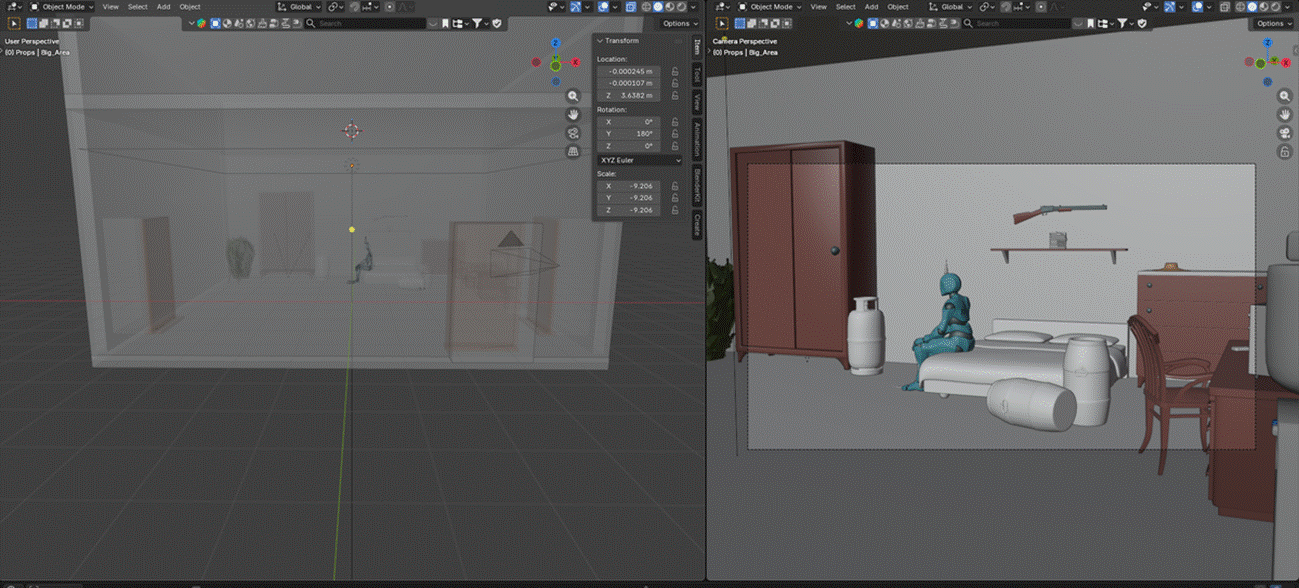
Fig.: Jim, before I cut him: An early blockout in Blender and Unreal, back when this still had a character in it.

Q.  Overview of the practical implementation?

The whole film hangs off one contrast. A flashing red alarm light throws long shadows down a corridor while Harry Nilsson’s relentlessly upbeat “Gotta Get Up” loops on a dying radio in the room beyond, happy sound against a horrible scene. I didn’t just trust that it would work though, I actually ran the experiment first. I stripped the audio off WALL-E’s opening in Adobe Audition and rebuilt it twice: once with nothing but wind and dust, once with the cheerful music dropped back in. Silence made it horror. Music made it tragic. That one test is basically why the whole radio idea survived into the final film.

Fig.: The radio itself. Everything in this film is built around this prop.
Fig.: The radio’s material graph. That worn black and orange finish didn’t happen by accident.

The radio sits at the centre of the film, but it only works because the room around it feels real. I didn’t just invent the bunker layout, I researched actual Cold War bunker floor plans and based the whole thing on one, keeping the same room logic: dorms, control room, comms room, rec and dining, a generator room, filtration and decontamination.

Fig.: The real Cold War bunker schematic I based the layout on.

The first version genuinely felt like a normal hallway, not a bunker, so I dropped in a 1.8m human reference cube and rebuilt everything around it, lowering ceilings and narrowing corridors until it actually felt claustrophobic instead of game-like. I sourced some assets ethically from FAB, Freesound and Pixabay rather than modelling everything from scratch, so I could spend more time on the two things the project was actually about: lighting and sound.
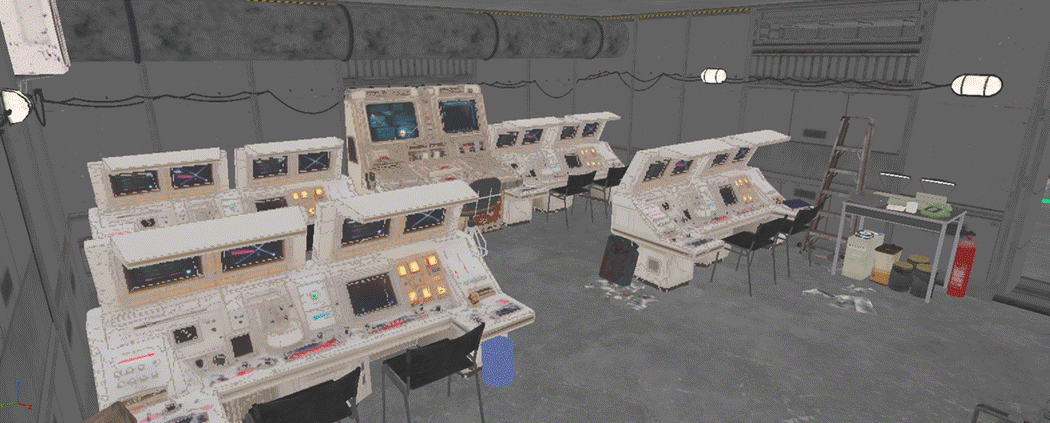
Fig.: The control room, built out one shift at a time

Q.  Most significant challenges and how you overcame them?

Two problems nearly wrecked it. First, Lumen’s global illumination really doesn’t like low-light scenes, and my dark corners came out grainy and unstable. I fixed it with a post-process volume, manually clamped the exposure, and bumped up the final gather quality until the shadows actually looked intentional instead of broken. Second, the radio’s sound was passing straight through solid walls, which killed the “finding the source” tension the whole scene depends on. I tried two fixes side by side, tweaking Unreal’s attenuation and occlusion settings versus building the spatial audio properly in DaVinci’s Fairlight, and ended up shifting the mix into post because it gave me way finer control.

I also kept everything religiously organised in the outliner and content browser as it grew. On a solo project, if a file goes missing or a save corrupts, there’s no one else around to bail you out.

Fig.: The actual outliner. Every room gets its own folder, nothing left loose.

Q.  Most significant features?

My conclusion, honestly? Yeah, it held up. Sound and lighting on their own genuinely carried the weight of a missing character, to a significant extent anyway. I’m not going to pretend it’s bulletproof, the technique still needed some visual context, the physical bunker itself, to actually land. I’m also proud that I didn’t invent the bunker layout, I matched a real one room for room, and that I had the discipline to cut the project’s scope down to the one thing that mattered most instead of spreading myself across character animation, world-building and sound all at once.

Separately, before I cut the character, I actually built a physical prototype of Chips. I started with a cheap retro desk toy called LankyBot, stripped it right down and repainted it into a dull, aged copper finish instead of the factory chrome, then rebuilt the inside properly: real capacitors, exposed wiring with spade connectors, an old multimeter dial bolted to the side, a coiled copper aerial sticking out the top, and a dead iPhone mounted behind the screen panel as its actual display. It never made it into the final film, but it’s still sat on my desk, and I want to 3D scan it for a future project.
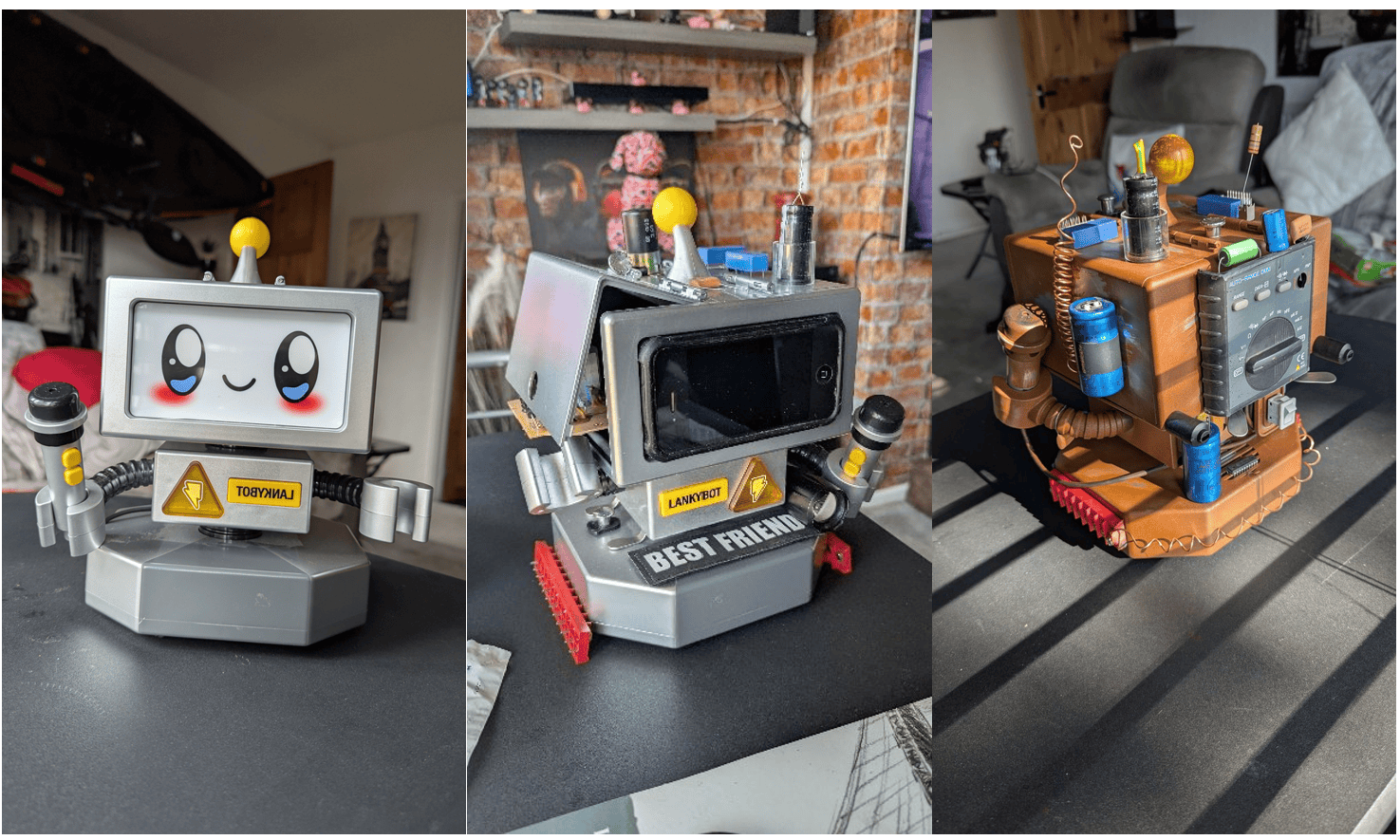
Fig.: Chips, the physical prototype I hand-built before cutting the character. Real electronics, real wear, real weight to it

Q.  Does your project have an online presence?

Yes. The final film, “The Bunker: ECHOES OF ABSENCE,” is on my YouTube channel JAF Games: https://youtube.com/watch?v=8BzGyFVEwbY. The full project write-up and blog also lives on a Notion page I built. You can also read the full dissertation this project came out of here (PDF).

Q.  Top tip/advice for students interested in completing a project?

Cut your scope before it cuts you. I started this project trying to do character animation, world-building and sound design all at once, from a much bigger concept, I even went as far as writing full feature-length scripts covering all sorts of facets. The second I admitted that was too much and dropped the character entirely, the project actually got good. It narrowed down into a specific area I could test methodically and actually had time to iterate on. Pick the one thing you care about most and go deep on that, it’ll show.

Stay open-minded, learn from others, and give it your all, because as cheesy as it sounds, that’s all any of us can do. And on AI specifically: I used it for structure and research, never for the actual creative thinking. If you can’t explain why you made a decision in your own words, you haven’t actually made the decision.

~

For more information about Computing & Digital courses at UWTSD please click-here.

🏆 Celebrating Our Innovation Competition Winners 2026

Last week we were delighted to bring together UWTSD Computing students, staff and industry partners for our Changemakers Innovation Competition 2026 Award Presentation, followed by a Movie Night at the UWTSD Dylan Thomas Centre on our SA1 Campus in Swansea.

Organised by James Williams (Senior Lecturer at the School of Applied Computing) the evening provided a wonderful opportunity to celebrate the creativity, innovation and achievements of our students, recognise the invaluable contribution of our industry partners, and then relax together 😊 with a movie, popcorn and treats 🍿🎬

💡 Celebrating Innovation and Positive Social Impact

The Changemakers Innovation Competition forms part of our Year 2 Changemakers: Creativity & Value Creation module across our Computing programmes (The module is taught by Computing Lecturers James Williams & Ewa Kazimierska). The module encourages students to develop innovative ideas and practical solutions that create a Positive Social Impact (PSI), while developing the technical, professional and ethical skills they will need throughout their future careers.

“Our students demonstrate the remarkable potential of human creativity and technology to make a positive contribution to society, and this year’s projects were another fantastic example of that potential come to life. The competition was completed by all Year 2 students split into 2 groups, with industry representatives helping us identify and celebrate the strongest projects from across the cohorts.” – James Williams

Group 1 Winners:

🥇 1st Place: Tonio George

Project: CyberGuard Pro: Network Security Tool – Tonio developed a network security and analysis tool capable of directly identifying vulnerabilities and providing evidence of security risks. The project demonstrated strong technical understanding, effective problem solving and excellent technical delivery.
Award: Changemakers Networking & Cybersecurity Innovation Award
Prize: £750 + Award Certificate

Tonio George & David Jones (Fujitsu)

🥈 2nd Place: Olivia Collins

Project: Wear the Weather / WearWise AI – Olivia produced a highly polished, tested and fully functioning system with a very clear concept and strong implementation. The project was recognised as the most complete and well-engineered system within its group.
Award: Changemakers Development Innovation Award
Prize: £500 + Award Certificate


Olivia Collins & David Jones (Fujitsu)

🥉 3rd Place: Daniel Leone

Project: The Human Firewall: An Educational Cybersecurity Themed Game – Daniel’s project used gamification to address the increasingly important real-world challenge of cybersecurity awareness. The project was particularly recognised for its excellent structure, analysis and consideration of social impact.
Award: Changemakers Social Impact Innovation Award
Prize: £250 + Award Certificate

Daniel Leone & David Jones (Fujitsu)

Group 2 Winners

🥇 1st Place: Edward Lloyd

Project: NHS Future Workforce Simulator – Edward developed a workforce forecasting solution designed to support longer-term NHS workforce planning. The project demonstrated an outstanding end-to-end development lifecycle, progressing from a clearly defined organisational challenge through to a technically sophisticated solution supported by quantitative validation and analytical thinking. The project demonstrated the highest level of technical depth and academic rigour within the group.
Award: Changemakers Innovation Award
Prize: £750 + Award Certificate

Edward Lloyd & David Jones (Fujitsu)

🥈 2nd Place: Molly Thomas

Project: Intelligent Knowledge Base Helpdesk Agent for IT Service Desk Support – Molly addressed a highly relevant workplace challenge through an innovative application of Artificial Intelligence. Her solution demonstrated a mature and realistic approach to enterprise AI, alongside careful consideration of governance, support processes and longer-term deployment. It was recognised as the group’s strongest business-ready AI solution.
Award: Changemakers Innovation Award
Prize: £500 + Award Certificate

Molly Thomas & David Jones (Fujitsu)

🥉 3rd Place: Tia Willock

Project: Trackogram: A Mobile Health and Wellbeing Application – Tia’s project combined physical health tracking with mental wellbeing support within a single platform. Her work demonstrated strong practical development skills, testing across different device sizes, troubleshooting and effective use of feedback to continually refine the application. It was recognised as the strongest mobile application prototype within the group.
Prize: £250 + Award Certificate

Congratulations to Tonio, Olivia, Daniel, Edward, Molly and Tia 👏🎉

SHIPMAX Professional Innovation Award⚙️🏆

There was one further Professional Industry Award to present on the evening by our industry partner Phil Rees, CEO of ShipMax Ltd, who selected:

🌟 Tonio George: CyberGuard Pro

as the winner of the SHIPMAX Professional Innovation Award 2026.

The project was recognised for its stakeholder engagement, user-centred design, technical implementation and realistic commercial potential, together with Tonio’s ability to reflect professionally on the challenges and lessons encountered during development.

The award included: Industry work experience, an Amazon voucher and a LinkedIn recommendation

Tonio George & Phil Rees (CEO SHIPMAX Ltd)

Congratulations again to Tonio on receiving this additional industry recognition.

🤝 A Huge Thank You to Our Industry Partners

An important part of the Changemakers module is giving students opportunities to engage directly with successful and professional people working within industry. We are extremely grateful to the industry representatives who have generously shared their time, professional experience, knowledge and advice with our students:

  • Adam Curtis, CEO of Hoowla
  • Edd Turtle, Senior Software Developer at Hoowla
  • David Jones, Principal Consultant at Fujitsu
  • Geraint Williams, Director of Mission Control at Fujitsu
  • Phil Rees, CEO of ShipMax Ltd
  • Mathew Marl, Executive Head of IT Systems at UWTSD

A particular thank you goes to David Jones and Geraint Williams from Fujitsu, who have supported our students through a series of guest lectures and direct support for their projects, and who helped us present the winning awards on the evening.

We are also extremely grateful to Phil Rees CEO of ShipMax Ltd for his continued support through guest lectures, work experience and internship opportunities, mentoring and student prizes.

🌟 A Special ‘Thank You’ to ESBF

A very special thank you goes to the Engineers and Scientists in Business Fellowship (ESBF) for generously supporting the Changemakers Innovation Competition and providing the funding for our student prizes. Their support helps us encourage our students to develop the enterprise, business and leadership skills that can help them take innovative ideas beyond university, into wider society and to become the Leaders of tomorrow and to make a positive difference in the world.

Thank you for your continued support of our students.

🎬 And Then… Movie Time! 🍿

After all the awards, applause and photographs, it was time to relax. Students, staff, alumni, friends and industry colleagues settled down together for our Computing Movie Night, complete with popcorn, sweets and drinks. Events like this are not only about recognising academic achievement. They also give our Computing community an opportunity to come together, celebrate, socialise and have a bit of fun at the beginning of a new academic year.

👏 Diolch & Da Iawn i Chi

Selecting winners from such a strong range of projects is never easy, and the innovation, creativity and technical ability demonstrated across both cohorts gives us plenty to be excited about for their futures. A Well done to all of our students who took part in the competition. Technology continues to evolve at an incredible pace, but ultimately it is human creativity, imagination and our ability to use technology positively that will determine the difference it makes in the world. Our students have already demonstrated their potential to be part of that future. 💡🚀

A huge thank you and congratulations to all of our: 🎓 Students, 👨‍🏫 Academic colleagues & 🤝 Industry representatives and partners, who contributed to the Changemakers Innovation Competition and Award Presentation.

Da iawn chi bawb! Well done everyone! ❤️🎉

For further information about our Computing courses please click-here.

UWTSD Computing Students visit Google

Computing Students rewarded with Exclusive Google visit following Project Success

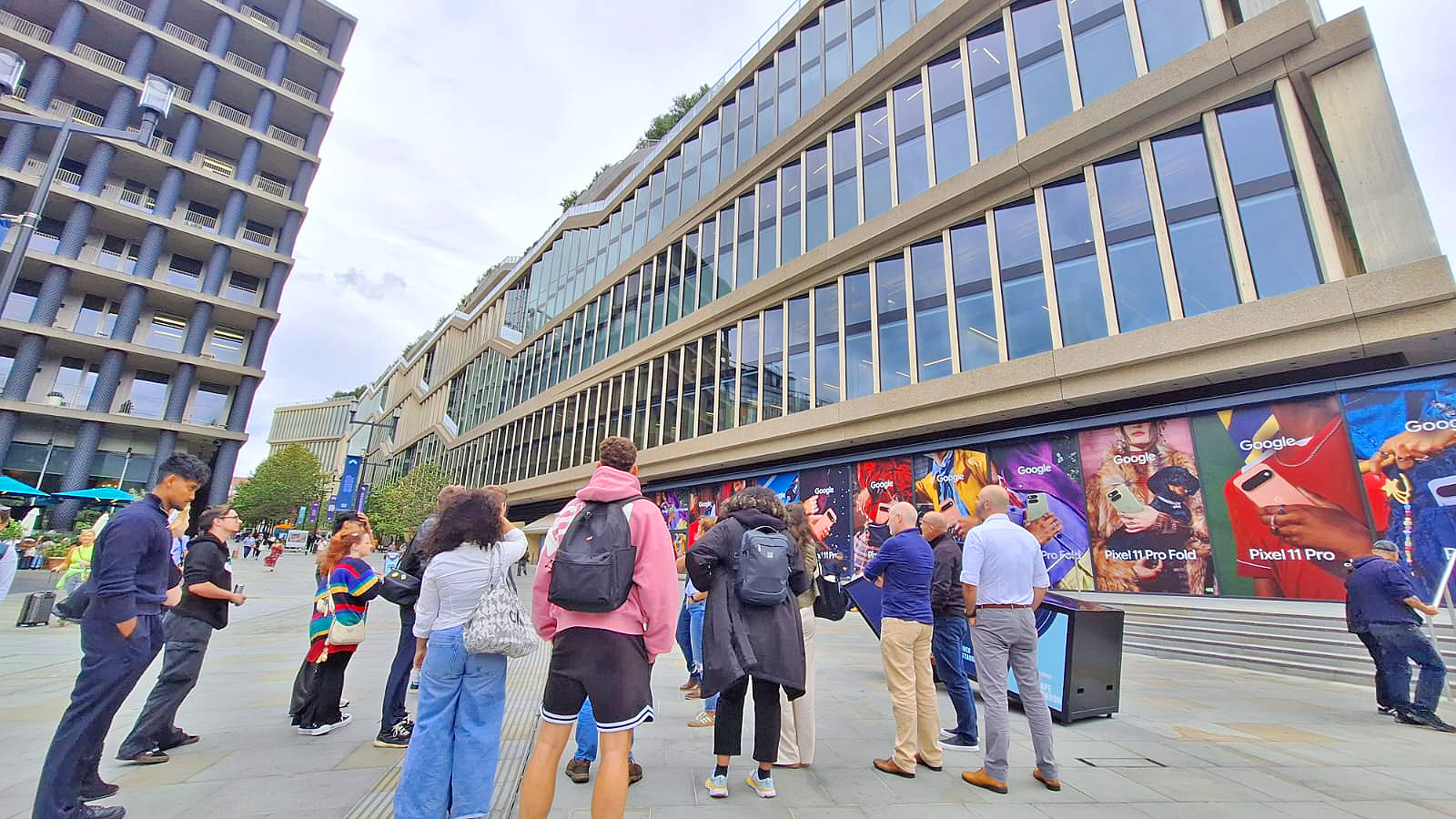
The University of Wales Trinity Saint David (UWTSD) School of Applied Computing recently celebrated the excellent achievements of its Computing students by rewarding competition winners and the best final year students with an exclusive educational visit to Google’s London headquarters at King’s Cross.

The trip was organised by UWTSD Computing Lecturer James Williams, in collaboration with Dafydd Moore (Chief Information Officer at Superdry) and Leah Shergold (Google Account Executive). The visit recognised students who had demonstrated outstanding innovation, creativity and academic excellence during their course.

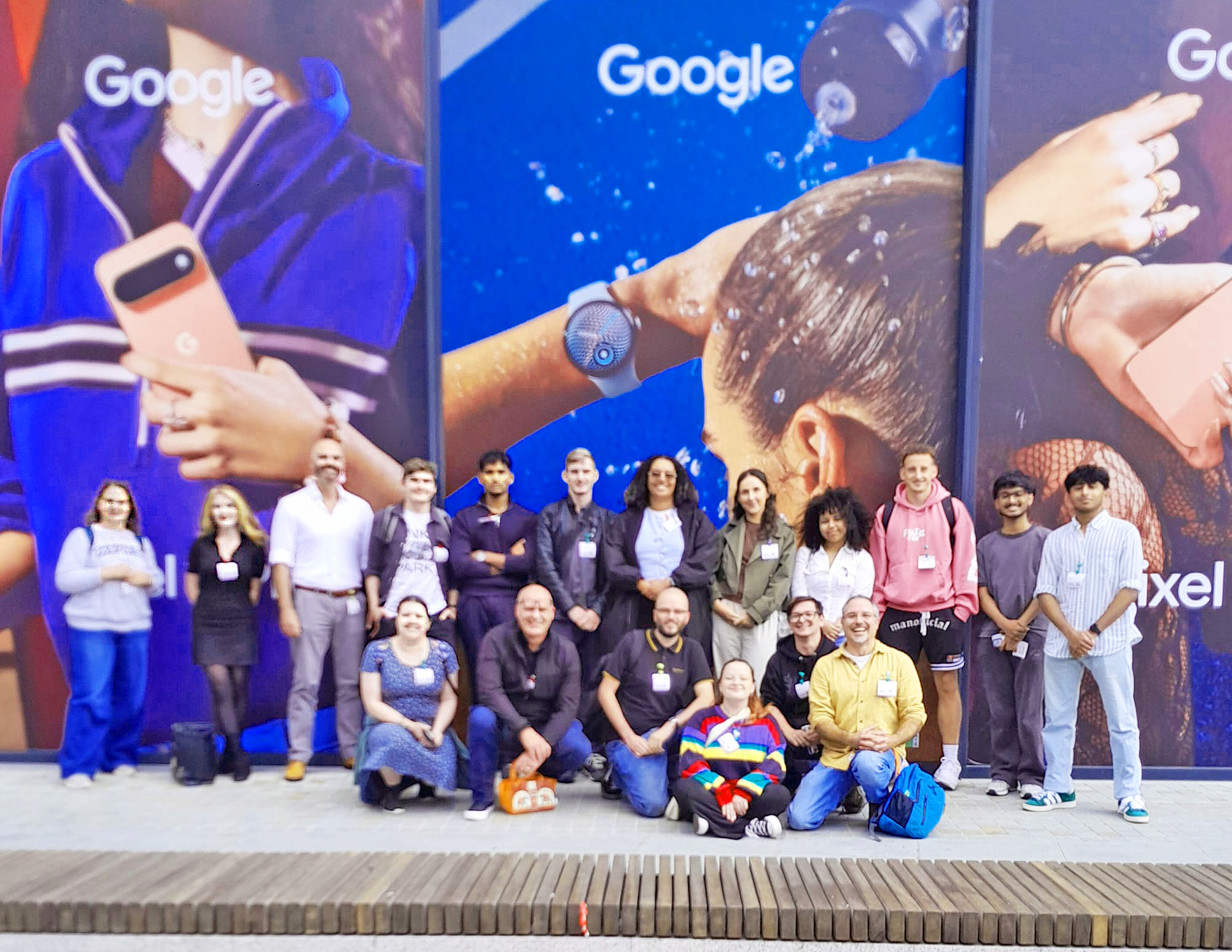
Fourteen students were invited to attend, including winners of the Year 2 Changemakers Innovation Competition, Year 3 Emerging Trends Competition, and recipients of Best and Award-Winning Final Year Projects.

SOAC SUPERSTARS: 🌟Tonio George, 🌟Olivia Collins, 🌟Kieran Brown, 🌟Max Beasley, 🌟Ashanti Mighten, 🌟Jonathan Frise, 🌟Serena Jonathan, 🌟Max Jones, 🌟Sohaan Sureshkumar, 🌟Rehan Joseph, 🌟Tia Willock, 🌟Molly Thomas, 🌟Edward Lloyd, 🌟 Daniel Leone

Accompanying the students were UWTSD Computing lecturers James Williams, Ewa Kazimierska, Gaynor Thomas and Mark Huntly.

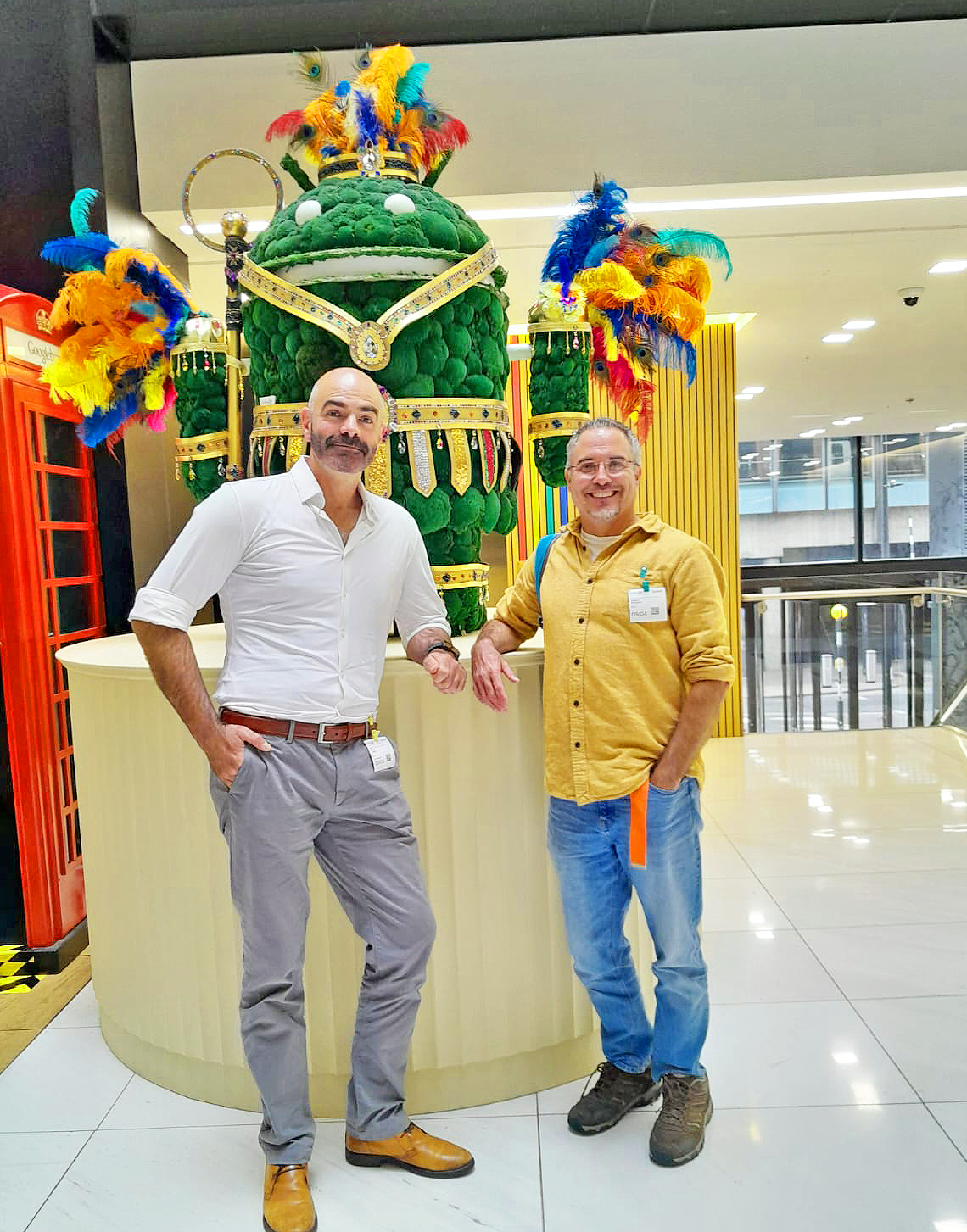
Alongside industry representatives from Fujitsu, who have actively supported the Changemakers Innovation module throughout the year by providing valuable industry insights and expertise included David Jones (Principal Consultant) – pictured below alongside UWTSD Senior Lecturer James Williams. Geraint Williams (Director of Mission Control at Fujitsu) has also been invaluable in supporting UWTSD students in the module this year.

David Jones & James Williams

Inspiring Industry Insights from Google and Superdry

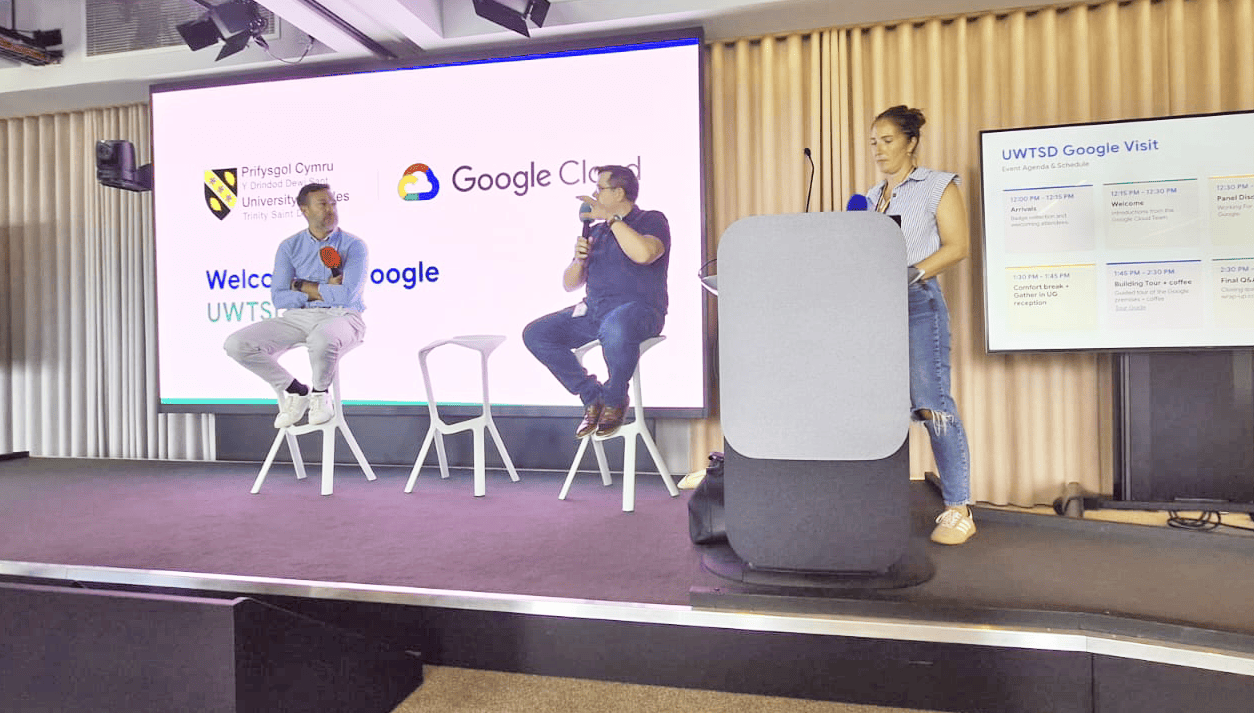
The visit featured engaging talks from Neil Rutherfoord (Google Cloud Architect) and Dafydd Moore (CIO at Superdry) who shared their professional journeys, experiences and insights into the rapidly evolving technology sector.

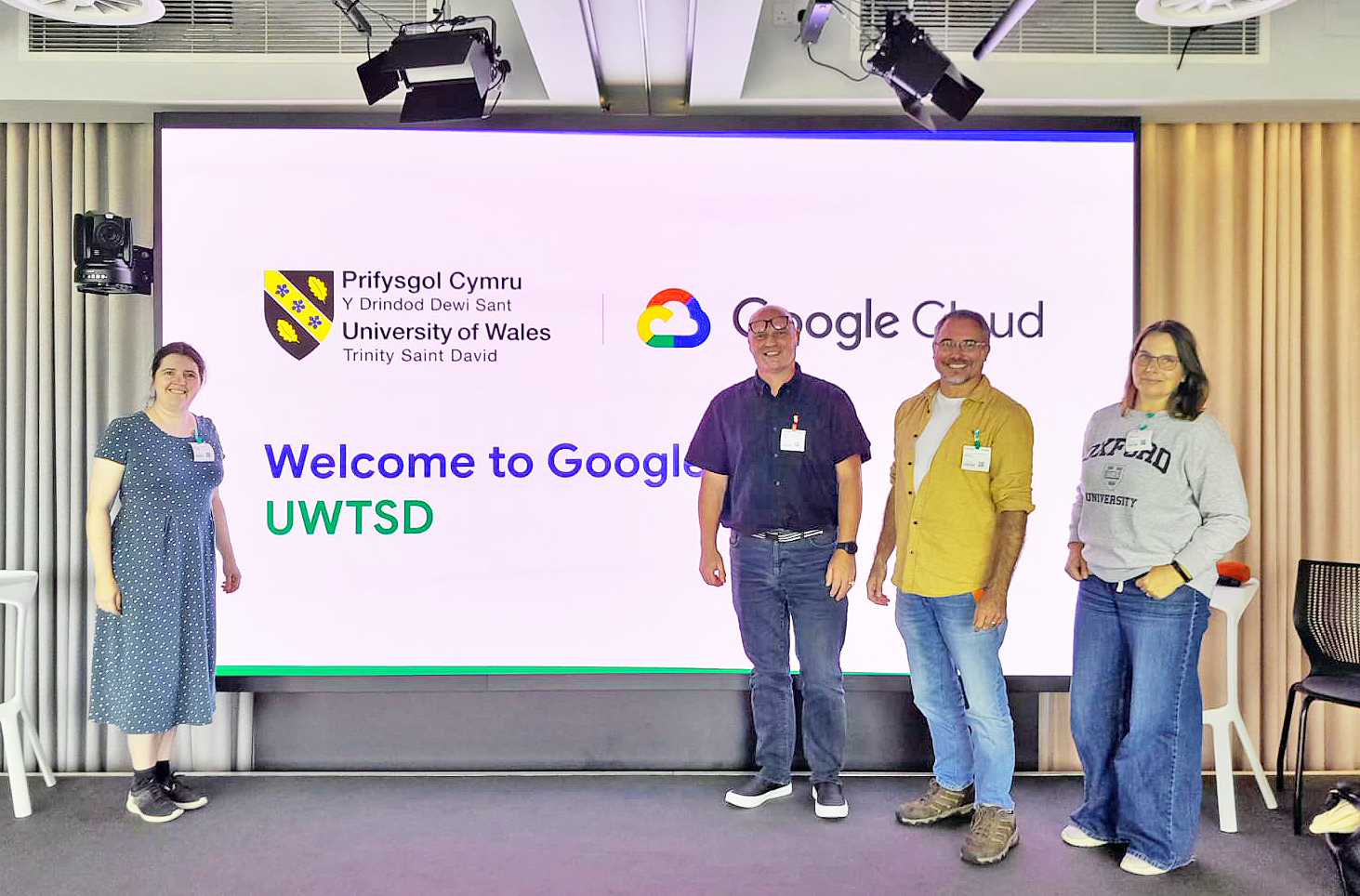
Left: Dafydd Moore (CIO at Superdry), Middle: Neil Rutherfoord (Google Cloud Architect), Right: Leah Shergold (Google Account Executive)

A particularly inspiring moment came from Dafydd, who graduated from the School of Applied Computing approximately 25 years ago. Reflecting on his time at UWTSD, he praised the University’s strong focus on industry-relevant applied learning, highlighting how it provided an excellent foundation for his successful career as a Business and Technology Transformation Leader. And encouraged the students and Graduates to recognise and value their education.

During his career, Dafydd has worked at senior executive levels within internationally recognised organisations, including Dyson and Superdry, while also partnering with the world’s largest and most innovative technology companies such as Google.

Both speakers provided students with valuable insights into current technological developments and emerging trends, with a particular focus on Artificial Intelligence (AI) and the opportunities it is creating across industries.

One of the key messages shared throughout the day was that technology continues to be a powerful force for good. While AI will undoubtedly bring disruption to some aspects of society and employment, it is also helping people and organisations enhance productivity, accelerate innovation and create new opportunities. Students were encouraged to view technological change as an opportunity and to position themselves to thrive within an increasingly digital future.

Preparing Students for Successful Careers

In addition to discussing technology and industry developments, Neil and Dafydd shared practical advice on how graduates can successfully begin and develop their careers. A recurring theme was that while technical knowledge and digital skills remain important, employers increasingly value strong communication, collaboration, adaptability, problem-solving ability and a positive mindset. Students were encouraged to continually learn, remain curious, build professional networks, embrace opportunities throughout their careers and to back themselves.

Reflecting on the attitudes and behaviours that have helped shape their successful careers, Dafydd and Neil shared a simple but powerful message with students:

“Nobody knows everything. Everyone is doing the best they can, and everyone makes mistakes. Stay positive, work collaboratively with others to solve problems, and focus on solutions rather than blame.

Be yourself. Be honest, authentic and care about the people around you. When you build trust and genuinely support others, people will always be more willing to work with you, help you and support you when you need it most.

When you get stuck, take a break, ask for help, and come back to the problem with a fresh, clear mind. Very often, that’s when the solution reveals itself.”

The message resonated strongly with students, reinforcing the importance of resilience, collaboration, authenticity and continuous learning. While technical knowledge and digital skills remain important, Dafydd and Neil highlighted that qualities such as integrity, empathy, communication and a positive mindset are often what distinguish great people, professionals and leaders. Their advice offered students not only practical guidance for building successful careers, but also a valuable framework for navigating challenges and opportunities throughout life.

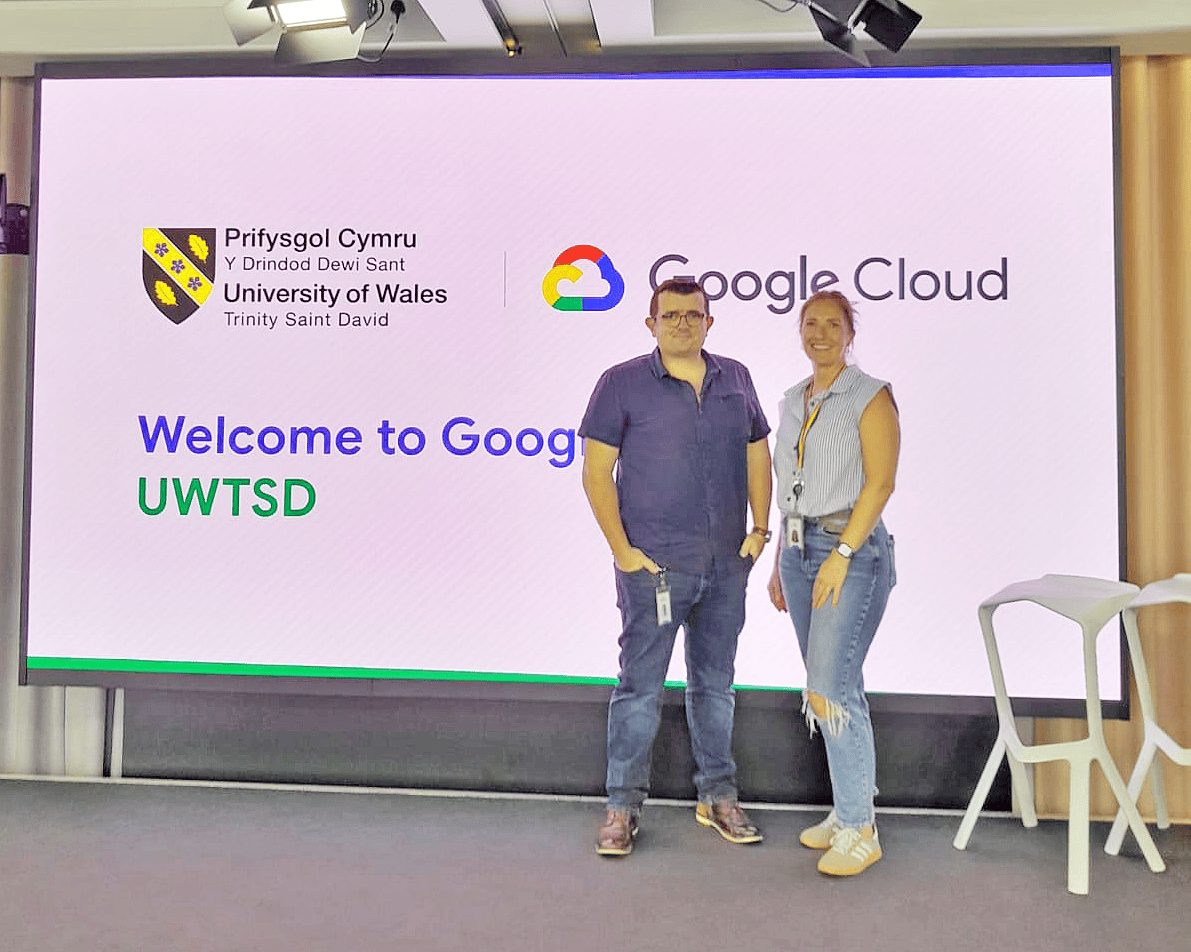
Neil Rootherfoord & Leah Shergold

Throughout the presentations, students and staff had the opportunity to ask questions and engage directly with the speakers. The discussions were expertly facilitated by Leah Shergold, who also shared her own experiences, expertise and practical advice regarding careers, technology and the evolving digital landscape.

Behind the Scenes at Google

The visit provided insights into Google’s operations at the Google campus in London, including information about activities taking place within Google’s existing offices at Pancras Square and the Platform 37 development.

Following the presentations and Q&A session, students and staff were given a guided tour of Google’s impressive facilities at King’s Cross. The tour provided a fascinating insight into Google’s workplace culture and innovative working environment. Attendees explored various collaborative spaces, learned more about how Google’s teams work, and enjoyed views from the building’s impressive rooftop terrace. The group also had the opportunity to visit the Google café and experience first-hand one of the world’s most innovative technology workplaces.

On Our way to Google: Seeing the Future of AI today

Adding to what was already shaping up to be an inspiring day, students and staff experienced an unexpected and fitting moment on their journey into London when they spotted a WAYMO fully autonomous taxi car operating on the streets. As one of the world’s most advanced examples of real-world Artificial Intelligence and autonomous driving technology, it provided a tangible glimpse into the future that many of the day’s discussions would later explore.

The sighting felt particularly serendipitous. Here was a group of UWTSD’s most creative, innovative and successful Computing students, travelling to one of the world’s leading technology companies to celebrate their achievements, while witnessing first-hand a cutting-edge AI innovation that only a few years ago would have seemed like science fiction. The moment served as a powerful reminder of how rapidly technology is evolving and how today’s students have the opportunity to contribute to shaping the innovations of tomorrow.

Celebrating Student Achievement

The visit represented more than simply a reward for academic success. It demonstrated the strong links UWTSD continues to build with leading industry organisations and highlighted the University’s commitment to providing students with meaningful real-world experiences that complement their studies. By connecting students directly with industry leaders, technology experts and successful alumni, UWTSD continues to prepare graduates with the skills, knowledge and confidence needed to succeed in a rapidly changing digital economy.

Congratulations to all of our students who earned their place on this memorable visit through their outstanding achievements in the Changemakers Innovation Competition, Emerging Trends Competition, and through producing Award-winning Industry-relevant Final year projects. Their success reflects the creativity, innovation and dedication that continues to thrive within the School of Applied Computing at UWTSD.

We would like to thank Google‘s Leah Shergold & Neil Rutherfoord, Digital Transformation Executive Dafydd Moore and our industry partners at Fujitsu David Jones & Geraint Williams for helping create such an inspiring and valuable experience for our students. And to Gaynor Thomas & Mark Huntly for transporting us in the SOAC FunBus from one side of the country to the other and back 😊 to South Wales’s Silicon Valley. Diolch yn fawr iawn i ti

~

Bringing Plato’s Cave to Life with Immersive Technology

Bringing Plato’s Cave to Life: UWTSD Students Transform Ancient Philosophy Through Immersive Technology

How do you teach a 2,400-year-old philosophical thought experiment to a generation raised on digital technology?

At the University of Wales Trinity Saint David (UWTSD), the answer has been to step beyond the traditional classroom and into an immersive digital world.

A team of Games Design students has developed an innovative interactive recreation of Plato’s Cave, one of philosophy’s most famous and enduring thought experiments. The project brings together expertise from philosophy, games design, applied computing, and immersive technologies to create a learning experience that allows students to explore philosophical ideas in a completely new way.

Reimagining a Timeless Philosophical Concept:

Plato’s Allegory of the Cave has been used for centuries to explore questions about reality, perception, knowledge, and truth. Traditionally encountered through textbooks and classroom discussion, the allegory challenges learners to consider how much of what they perceive is genuine reality and how much may simply be a shadow of something deeper.

Summary: Plato’s Allegory of the Cave
Plato’s Allegory of the Cave is a powerful philosophical story about the difference between appearance and reality. In the allegory, prisoners spend their lives chained inside a cave, seeing only shadows on a wall and believing those shadows to be the whole of reality. When one prisoner escapes and discovers the world outside, he realises that what he once accepted as truth was only a limited representation of a much greater reality.

The allegory is often understood as a metaphor for education and personal growth. Plato suggests that true learning is not simply about acquiring information, but about transforming the way we see the world. It encourages us to question assumptions, challenge accepted beliefs, and seek a deeper understanding of truth rather than accepting appearances at face value.

On a deeper level, the allegory can also be viewed as a journey of awakening. The cave represents limited awareness, the shadows symbolise misconceptions and conditioned beliefs, and the journey into the light represents the pursuit of wisdom, knowledge, and greater consciousness. Its enduring message is that growth begins when we are willing to move beyond the familiar and explore a fuller understanding of reality.

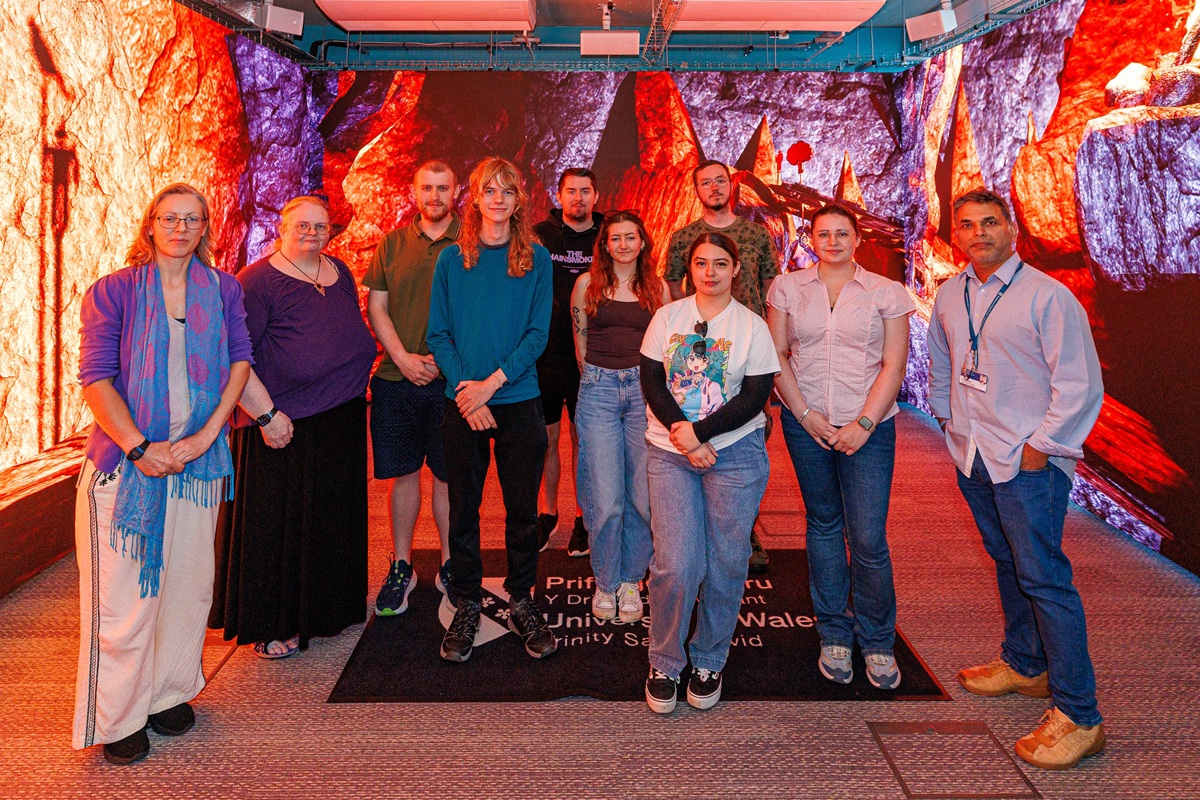
Now, UWTSD students have transformed this ancient philosophical narrative into a fully immersive digital experience within the University’s Interactive Room at Y Fforwm in Swansea. Working with academic staff from the School of Applied Computing, seven Games Design students recreated Plato’s Cave using professional game development technologies and production techniques.

A Truly Interdisciplinary Project:

One of the most exciting aspects of the project is its collaborative and interdisciplinary nature. Students took on specialist industry-style roles including:

  • 3D Modelling
  • Animation
  • Sound Design
  • Texturing
  • Lighting
  • Unreal Engine Development

By mirroring professional creative industry workflows, the project provided students with valuable real-world experience while contributing to an innovative educational resource for the University. The initiative demonstrates how authentic learning experiences can simultaneously support student professional development and enhance teaching and learning across disciplines.

Technology Enhancing Learning:

While the project is rooted in philosophy, its impact reaches much further. The immersive experience has been designed not only for philosophy teaching but also for subjects such as media studies, semiotics, digital humanities, art, and creative technologies. The resource offers educators an engaging way of exploring abstract concepts through experiential learning, enabling students to move beyond passive observation and actively engage with complex ideas.

Importantly, the experience is available in both Welsh and English, making it one of the first immersive philosophy teaching resources of its kind to offer bilingual delivery. This reflects UWTSD’s commitment to accessibility, inclusivity, and innovation in education.

Student Learning Beyond the Classroom:

The project formed part of a student internship initiative, giving participants the opportunity to work on a genuine educational brief with a lasting impact. Beyond developing technical expertise, students strengthened key employability skills including:

  • Teamwork
  • Communication
  • Creative problem solving
  • Project management
  • Cross-disciplinary collaboration

Student participant Joshua Platt highlighted how the experience enabled the team to combine technology, creativity, and education while developing valuable professional capabilities for their future careers.

Professor Nik Whitehead emphasised the significance of bringing together philosophy, games design, and immersive technology to create an educational experience that reaches broader audiences, with the bilingual approach helping to maximise accessibility.

The Future of Immersive Education:

Projects such as this highlight the growing potential of immersive technologies in education. Rather than simply reading about concepts, learners can increasingly experience them, creating deeper engagement and understanding.

The Plato’s Cave project represents more than a technological achievement. It demonstrates how universities can blend Humanities and Digital Technologies to create powerful learning experiences that prepare students for future careers while enriching the educational experience for others.

As higher education continues to explore new approaches to teaching and learning, UWTSD’s immersive interpretation of Plato’s Cave provides an inspiring example of how ancient ideas can find new life through modern technology.

The shadows on the cave wall may be ancient, but the future of learning is anything but.

To learn more about UWTSDs Computing courses please click-here.

Visit to MIT AI Conference 2026

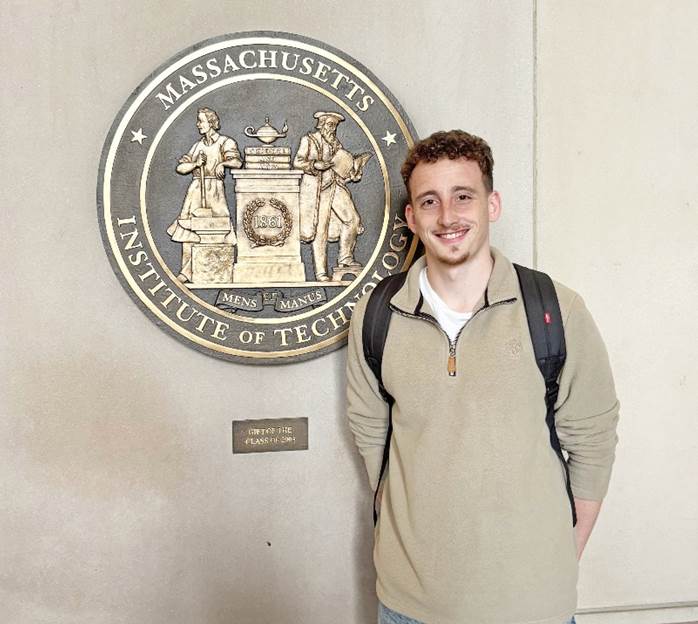
Fig.: Kieran Brown

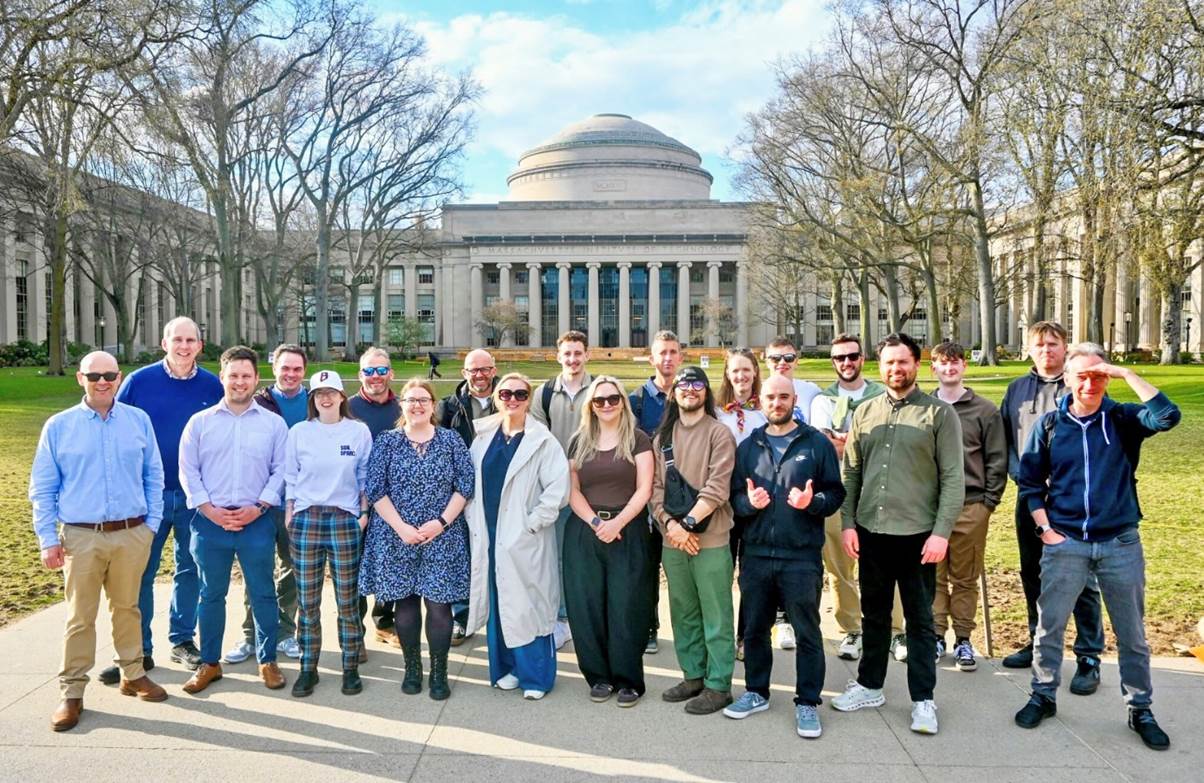
One of our final year students ‘Kieran Brown’ pictured above, recently visited the MIT Industrial Liaison Program (ILP) Conference 2026 in Boston Massachusetts, held from 12–16 April 2026.

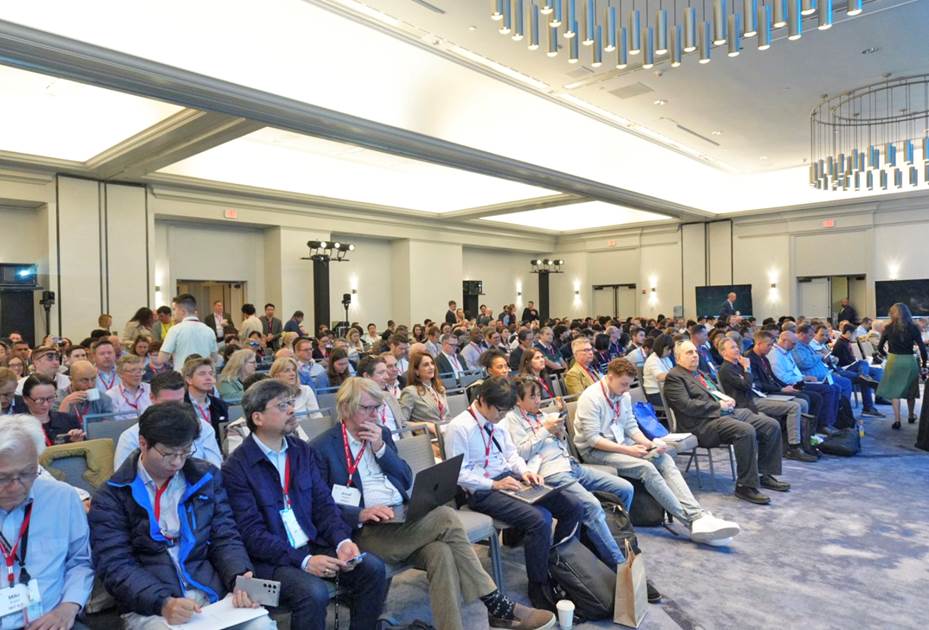
The Conference brought together industry leaders, researchers, and innovators to engage with cutting‑edge developments emerging from the Massachusetts Institute of Technology. The conference also served as a forum for collaboration between academia and industry, supporting the translation of the latest research into practical, real‑world applications.

Massachusetts Institute of Technology (MIT) is a world‑leading private research university located in Cambridge, Massachusetts, founded in 1861 with a mission to advance knowledge and educate students in science, technology, engineering, and other fields to address global challenges. Renowned for its emphasis on hands‑on learning, innovation, and interdisciplinary research, MIT has made significant contributions across areas such as artificial intelligence, engineering, economics, climate science, and entrepreneurship, and maintains close partnerships with industry, government, and international institutions.

MIT Motto: Mens et Manus (Latin for: “Mind and Hand”)

Kieran provides a wonderful overview of the trip below:

“From April 12th–16th, I had the opportunity to attend the MIT Industrial Liaison Program Conference 2026 in Boston, an experience part-funded by the Welsh Government in collaboration with my current internship company, SHIPMAX.

The programme connects businesses with MIT’s world-leading research, startup ecosystem, and innovation networks, giving companies insight into emerging technologies and future industry challenges. During the conference, MIT graduates, alumni, lecturers, and industry professionals shared valuable insights into the startups they have founded and the transformative role of AI within their businesses.

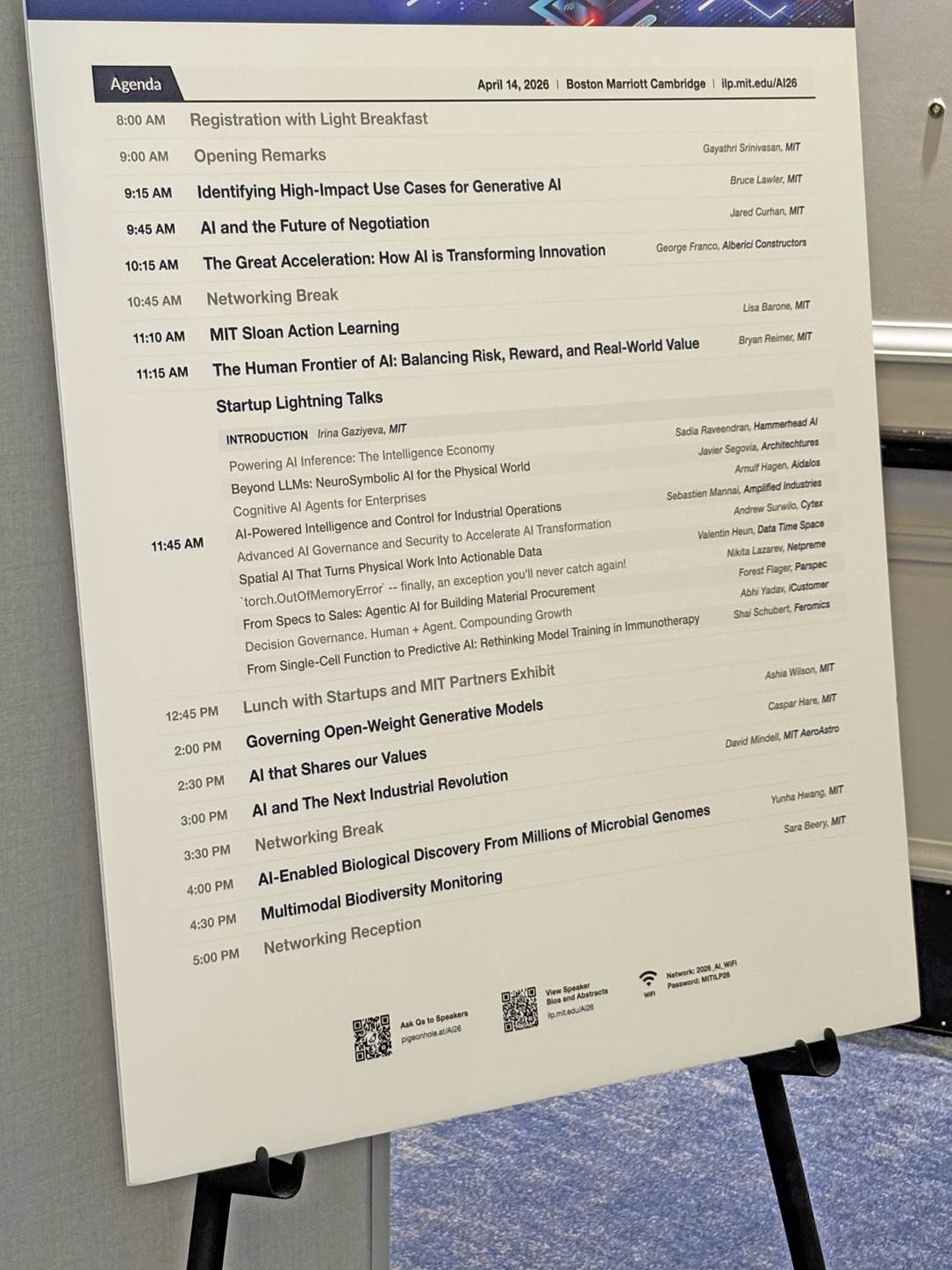
Through a series of talks and lectures (some of which are outlined below), we explored emerging trends in artificial intelligence and gained exposure to practical tools and recommendations shaping the future of the field.

The experience connected Welsh businesses with world-leading innovation and gave me a broader perspective on how AI can be applied in industry. As a result, I am now applying the knowledge and insights gained at MIT within my role at SHIPMAX, and I am pleased to have secured a full-time position with the company, which I will begin upon completion of my Applied Computing degree in June 2026.”

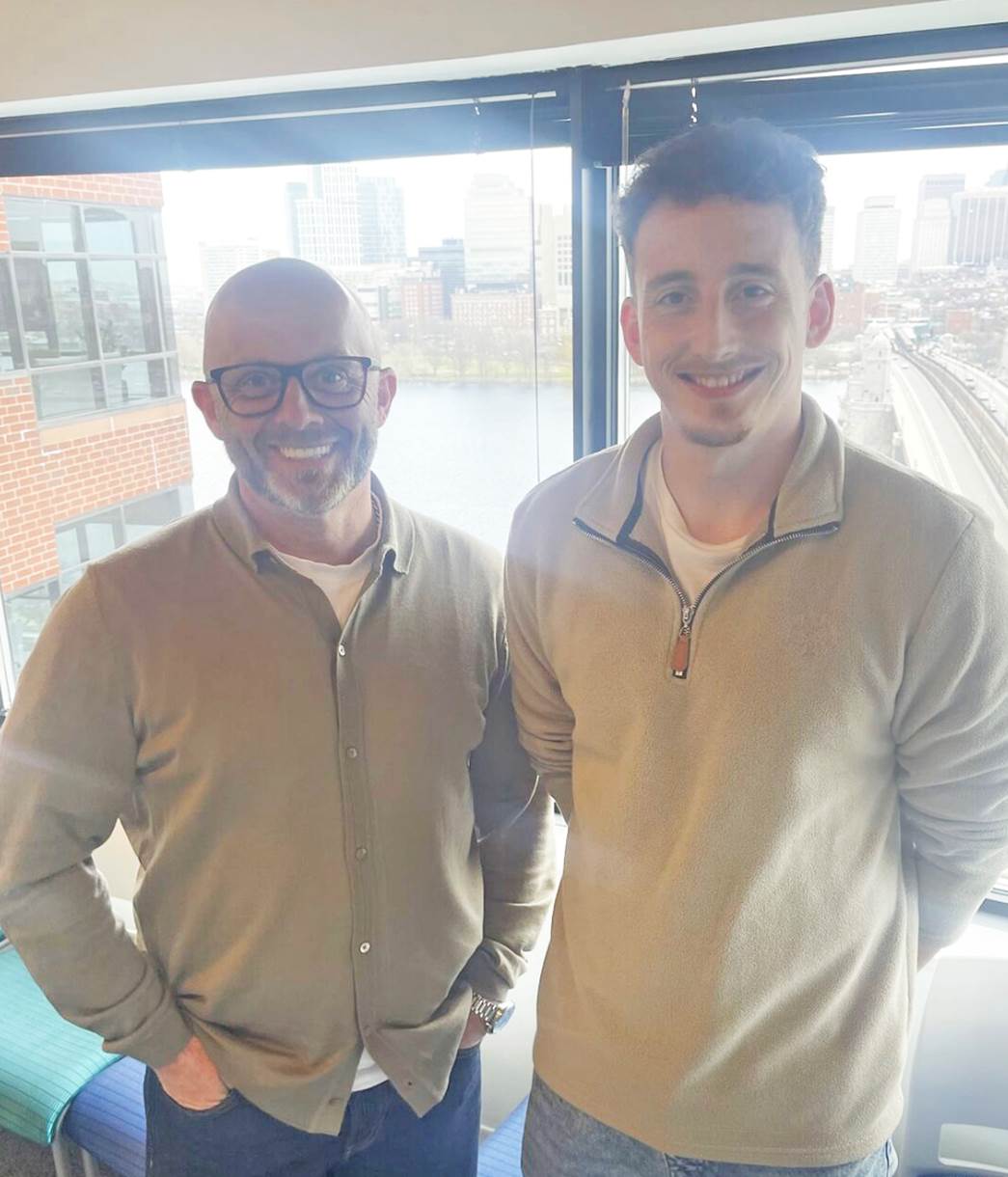
Fig.: Phil Rees (CEO of SHIPMAX Ltd.) & Kieran Brown (UWTSD Final Year student)

Nice to see that Kieran was also able to enjoy the sites and have some fun too (below:)

AI insights from UWTSD’s Tim Bashford

UWTSD’s Associate Professor Dr. Tim Bashford, research Lead at the Wales Institute of Digital Information (WIDI), is a prominent voice in artificial intelligence approaches across public services, healthcare, and education. With his background spanning digital innovation, applied research, and skills development, Tim’s work bridges the gap between policy, practice, and emerging technology.

Tim recently contributed to a podcast for Business News Wales, expanding on themes from his guest column ‘AI Readiness Depends on Scale, Not Sector‘. Below is a summary of the ideas underpinning the discussion.

AI Readiness: A Question of Scale and Maturity:
Tim highlight’s the narrative that the public sector lags behind the private sector in AI adoption simply doesn’t hold up under scrutiny. Instead, the real divide lies between: Large, digitally mature, well‑resourced organisations, and Everyone else, particularly smaller organisations with limited capability. This insight reframes the conversation: readiness for AI is not determined by sector, but by institutional scale, digital maturity, and capacity to invest. Contrary to popular belief, Wales’ public services demonstrate:

  • More mature governance structures for AI
  • Better‑established support frameworks
  • Growing cross‑sector collaboration, particularly through partnerships with WIDI and the Welsh NHS.

However, legacy systems and uneven digital capability remain ongoing challenges. While some large Fintech and Medtech companies are rapidly advancing, many SMEs are no more AI‑ready than the least mature public organisations. They often struggle with:

  • Skills shortages
  • Investment barriers
  • Limited digital foundations
  • Unclear adoption pathways

Tim argues that this ‘long tail’ of SME under‑preparedness is one of the biggest obstacles to Wales’ overall digital readiness. Tim goes on to emphasise that universities are not just “homes of the complex algorithmic work”, that their most significant contribution may actually be:

  • Skills development
  • Upskilling the workforce
  • Helping organisations adopt AI safely and confidently
  • Supporting responsible innovation across Wales

This positions institutions like WIDI and UWTSD as central pillars of Wales AI ecosystem.

To hear Tim expand on these themes, explore practical implications for organisations, and discuss how Wales can build AI capability across sectors, listen to the podcast here: Public Sector Social Value Podcast Guide.

To explore more about Tim’s work and background please visit:
* UWTSD News (AI Edu. Conference 2025): https://www.uwtsd.ac.uk/news/uwtsd-host-welsh-collective-ai-education-conference-2025
* ResearchGate: https://www.researchgate.net/profile/Tim-Bashford

~


Industry Lecture: Innovation & Project Management (Fujitsu)

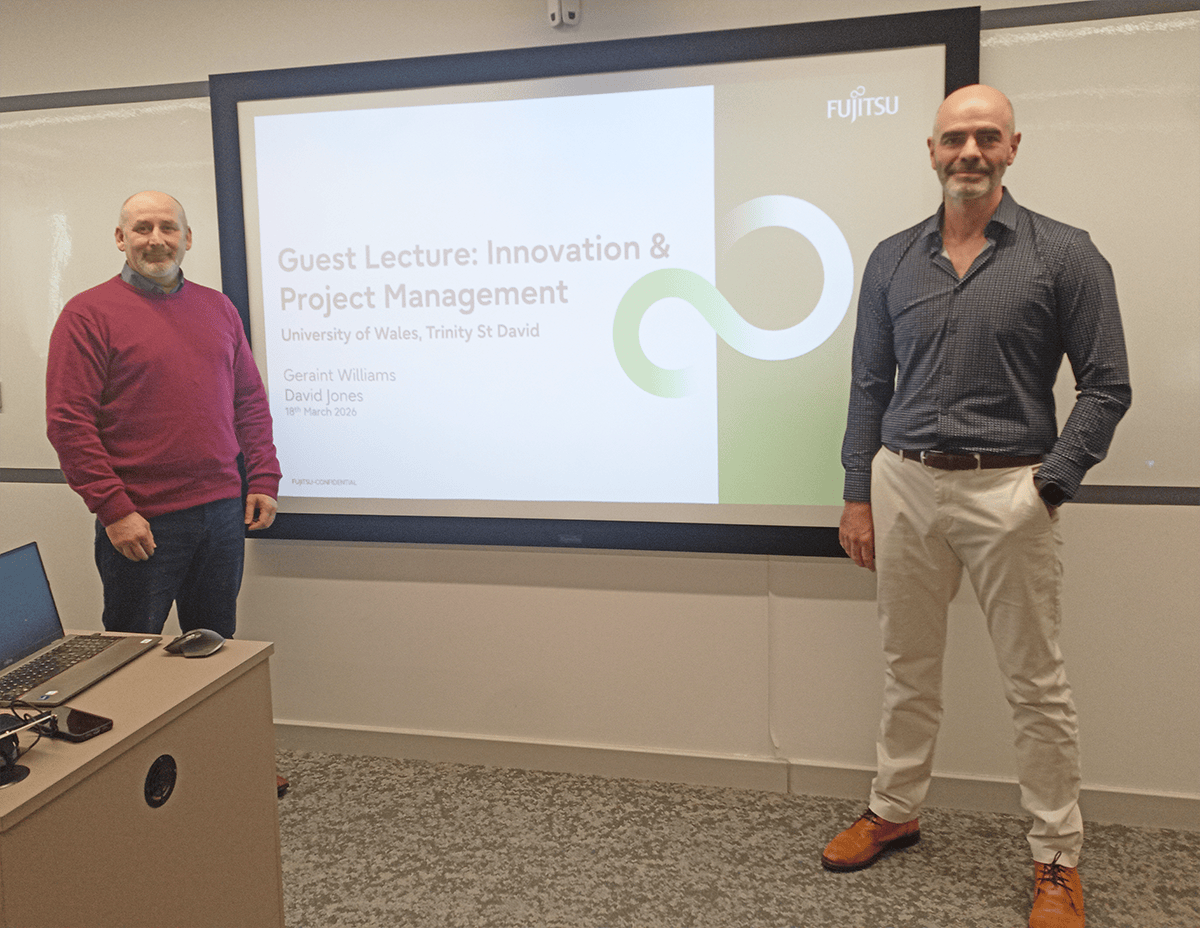
Geraint Williams (Director of Mission Control – left above) & David Jones (Principal Consultant – right above)

Many thanks to our industry partners from Fujitsu ‘David Jones‘ (Principal Consultant) and Geraint Williams (Director of Mission Control) for visiting the University again to speak with our students and share their valuable knowledge, skills, experience and insights.

Their industry guest Lecture titled ‘Innovation & Project Management‘, brought together decades of industry expertise, offering students a rare and valuable inside look into how innovation really happens within major organisations, and how modern project management brings ideas and solutions to life.

Drawing from Drucker, the UK Government, OECD, and their own experience, they showed that innovation is fundamentally about:

  • Doing something new that creates value
  • Improving outcomes, efficiency, effectiveness, and quality
  • Turning ideas into implemented change that benefits people and society

Innovation succeeds when it is: Novel, Implemented (not just imagined), Value-creating and Adaptable to changing needs.

They outlined different types of innovation and what drives Successful innovation. And that a sustainable innovation culture rests on four pillars:

  1. Leadership that champions experimentation
  2. Workforce empowerment and diverse skills
  3. Processes that are agile and user‑centred
  4. Partnerships across academia, industry, and civil society [

The second half of the session unpacked real-world project delivery, comparing traditional and modern Agile Project Management approaches.

Both speakers gave insights from major industry projects. They emphasised that innovation means nothing unless it can be delivered, and delivery fails without the ability to innovate. Students gained industry insights and a powerful, industry‑tested message: Technology, Solutions & Big ideas matter. Bold leadership matters. But People and the Social element are vital for success: Collaboration is what turns ideas into real positive impact and results.

Geraint Williams “Thoroughly enjoyed speaking with the students and sharing industry insights on driving successful innovation, along with the pros and cons of different project management methodologies.”

David Jones “It was a great opportunity to come back to UWTSD and bring some insights from working in a wide variety of roles through my career. Focusing on Innovation and Project Management, I was able to share real‑world perspectives on how organisations navigate change, deliver value, and harness creative thinking to solve complex challenges.”

We would like to thank both David & Geraint for taking the time to come back to the University again to share their valuable experience and expertise. And look forward to further collaboration in the future. Diolch yn fawr iawn.

~

Exciting news: UWTSD Esports Society 🎮😃

Exciting news: Final year student Orin McGinn has relaunched the UWTSD Esports Society 🎮😃. Message from Orin below:

Whether you’re a competitive gamer looking to represent the university in national leagues, or you just love gaming and want to meet like-minded people — this society is for you.  We’re not just for hardcore competitive players. This is a space for everyone, regardless of skill level, course, or background. If you enjoy gaming in any form, you belong here.
And when we say gaming, we mean all of it. As much as we’re called the Esports Society, we’re really a gaming society in the broadest sense. Alongside online and competitive gaming, we’re also expanding into tabletop and board games — think Dungeons & Dragons, Magic: The Gathering, Warhammer, and pretty much anything else you can think of. If it involves a game, it’s welcome here.

🎮 What we offer:
• Competitive teams entering NSE and NUEL university leagues
• Casual gaming sessions open to all
• Tabletop and board game sessions — D&D, Magic: The Gathering, Warhammer and more
• A dedicated gaming room on campus with high-end setups
• “Play Your Lecturer” — friendly gaming sessions where students take on university staff
• A welcoming community to help you settle into university life.

💰 Membership:
• Student Membership — £5 (casual play, community access)
• Competitive Membership — £8 (competitive teams, university league entry)

Not sure which membership is right for you? No problem — our first session is completely free. Just fill in the sign-up form and come along. We’ll be going over both membership options on the day so you can get a proper feel for what the society is about and decide what suits you best. There’s no pressure and no commitment required just to come and see what we’re all about.

And this isn’t just for students. You won’t only be gaming with your fellow students — you’ll be getting involved with lecturers, researchers, and staff members from across the university. For any staff members reading this, we have a Staff Membership coming very soon at just £6, offering the same access as the Student Membership. Whether you want to get involved with your students, revisit the tabletop games you grew up with, or just fancy a game at lunch — there’ll be a place for you here too.

Stay in the loop:
The best way to stay up to date with everything is to fill in the sign-up form and join our Discord server. That’s where we’ll be posting all future events, announcements and updates as they happen. We’ll also be keeping our Student Union page updated regularly, and we’ll be appearing on the university TVs very soon.

🔗 Links:
• Sign up here: https://forms.cloud.microsoft/e/VbY9UJxcLr
• Join our Discord: https://discord.gg/bRqfNfF3cv
• Find us on the SU website: https://www.uwtsdunion.co.uk/groups/uwtsd-esports-society

If you have any questions feel free to reach out. We’d love to have you on board. Let’s build something great together.

Orin McGinn
Society President, UWTSD Esports Society

New Appointment: Elliott Atkins – Professor of Practice in Applied Computing

Celebrating a New Appointment:
Elliott Atkins joins UWTSD as Professor of Practice in Applied Computing

We are delighted to announce the appointment of Elliott Atkins as a new Professor of Practice within the Applied Computing Academic Discipline at the University. This distinguished role recognises Elliott’s exceptional professional achievements and industry expertise he brings to our university community.

Speaking after his appointment, Elliott said “I’m delighted to have been appointed as a Professor of Practice at the University of Wales Trinity Saint David. I’m really looking forward to sharing real-world insights and experience with students, early-career academics and staff, as well as contributing to curriculum development across the Applied Computing, Cyber Security, and Digital Forensics programmes.”

With a career spanning nearly three decades at the forefront of global cyber security, incident response, and national digital resilience, Elliott’s appointment strengthens and will further enhance real‑world industry learning experiences for our students.

A Leader in National Cyber Security:
Elliott is an internationally recognised leader in the field of cyber security. Over the course of his distinguished career, he has held several high-profile positions central to the UK’s national cyber resilience, including:

  • Managing Director of Exercise3: an NCSC‑assured provider of realistic cyber incident exercises, founded by Elliott in 2014 to prepare organisations for complex cyber crises using highly accurate scenario‑based training.
  • Head of the UK Government’s Computer Emergency Response Team (GovCertUK) at GCHQ, leading 24×7 national incident response operations.
  • Head of Cyber Intelligence at QinetiQ, contributing to defence and national security innovation.
  • Head of Incident Response at Nominet, the UK’s top‑level domain registry, overseeing the protection of critical national internet infrastructure.

Fig.: Exercise3

Elliott’s influence also extends internationally, as he serves as the UK liaison member of FIRST, the global forum for incident response teams, helping shape standards and collaboration across more than 800 CSIRTs worldwide.

Royal Appointment: CISO to the Royal Household:
A unique highlight in Elliott’s career is his appointment by Her Majesty Queen Elizabeth II as the Royal Household’s first Chief Information Security Officer in 2021. This role was created as part of a heightened national effort to strengthen the monarchy’s cyber security posture against increasingly sophisticated threats. His appointment was a key step in safeguarding sensitive digital assets across the Royal Household.
Honours, Fellowships, and Industry Recognition:
Elliott is a Fellow of the British Computer Society, a recognition of his sustained contribution to the advancement of cyber security practice.

He also has a long record of community and charitable leadership. Outside the digital realm, Elliott is passionate about aviation heritage and serves as Chair of Trustees of the Panavia Tornado Preservation Group, a charity dedicated to preserving the iconic Tornado aircraft and inspiring future generations of engineers and aviators.

Elliott’s commitment to developing cyber resilience and technical capability aligns strongly with UWTSD’s mission to prepare graduates for critical roles in an increasingly digital world.

A Transformative Contribution to UWTSD:
As a Professor of Practice, Elliott will play a significant role in enhancing the Applied Computing provision at the university. He brings world‑leading expertise and will help support our programmes in cyber security, digital forensics, and incident response. This is an extraordinary opportunity for students, staff, and partners alike to engage with one of the UK’s most experienced practitioner‑leaders in cyber security.

With gratitude, we warmly welcome Elliott to the university and look forward to the contribution he will bring to our community.

~

Two inspiring UWTSD journeys

Today’s blog post features 2 inspiring UWTSD journeys, that show the power of creative and technical education in supporting and transforming peoples lives & futures.

Mia Harries is turning her passion for computer games into a creative career, growing in confidence and industry readiness through hands‑on learning, professional networking, and her long‑standing involvement with Yr Egin.

Meanwhile, Adam Moore has reshaped his career through UWTSD’s Digital Degree Apprenticeship in Computing, progressing from NHS data analyst to an emerging researcher developing AI tools that support clinical decision‑making. Together, their stories showcase how UWTSD empowers learners of all backgrounds to thrive, whether in the world of game design or Computer Science & groundbreaking healthcare innovation.

Mia Harries
> BA Computer Game Design

Mia Harries is turning a passion into a Creative Career. Mia’s time on UWTSD’s BA Computer Game Design course has helped her grow in confidence, creativity, and professional readiness.

Supported by a practical, industry‑focused learning environment, her wide-ranging course experience, combined with meaningful industry contact and her long-standing involvement with Yr Egin – where she has led workshops, built technical skills, and expanded her professional network, has shaped her into a confident emerging game designer. 🎮🎨

Mia now looks ahead to securing a role in a Welsh games studio while continuing freelance work, grateful for the skills, friendships, and guidance that have prepared her for the industry.

To read the full article, please click here:
* https://www.uwtsd.ac.uk/news/mia-harries-turns-passion-creative-career

To learn more about the University’s Computer Games Design Degree please click here.

\/

Adam Moore
> Digital Degree Apprenticeship

Adam Moore, a Data Scientist from Narberth, credits the University of Wales Trinity Saint David’s Digital Degree Apprenticeship in Computing (Data and Information Systems) with transforming his career and opening the door to advanced work in Artificial Intelligence (AI) and healthcare. While working at Hywel Dda University Health Board, Adam discovered a strong affinity for maths and data, and with encouragement from colleagues, he enrolled in the apprenticeship. This opportunity allowed him to study while working full‑time, supporting his family, and progressing professionally.

Throughout the four‑year programme, Adam successfully balanced academic study with full‑time employment, during which he got married, welcomed two children, and earned three promotions. The apprenticeship equipped him with the skills and confidence to excel in postgraduate study. Now undertaking doctoral research in AI and healthcare, he aims to contribute to innovations that enhance patient care and shape the future of digital health services.

Adam is a strong advocate for UWTSD’s apprenticeship route, praising it’s accessibility and the exceptional support offered by the university. UWTSD leaders emphasise how his journey reflects the programme’s impact across Wales, while colleagues at Hywel Dda describe him as a highly valued staff member whose AI work is already making a meaningful difference in clinical decision‑making.

“I want to play an active role in using AI to revolutionise healthcare and improve patient outcomes,” he said. “The apprenticeship was the foundation that made all of this possible.”

Adam continues to advocate for UWTSD’s Degree Apprenticeship route and encourages others to take advantage of the opportunity.

“It’s an incredible pathway for anyone looking to progress in their career,” he said. “It’s open to professionals of all ages who want to develop their skills and the support from the UWTSD team is exceptional.”

To read the full article, please click here:
* UWTSD Degree Apprenticeship Launches Pembrokeshire Data Scientist on Groundbreaking AI Career Path

To learn more about the University’s Degree Apprenticeships please click here:
* UWTSD Degree Apprenticeship programmes in Computing  

~