Turn On Your Future @ UWTSD's School of Applied Computing & Electronics

Posts tagged ‘Computer Science’

Project profile: Tyler Williamson

Name: Tyler Williamson 

Course: BSc (Hons) Data and Information Systems (Degree Apprenticeship – Applied Data Science Stream) 

Project Title: A Holistic Neurodiversity Framework and AI Driven Dashboard for Neurodivergent Students

What was the reason / motivation for choosing the project: This project was driven directly by my lived experience as a neurodivergent individual (Autism/ADHD). Navigating education and the transition into adult life, I experienced first-hand the strong disconnect between traditional support systems and the reality of neurodivergent conditions. Support is too often treated as a rigid, one-size-fits-all tick-box exercise, but that is simply not how neurodiversity works, everyone’s sensory triggers, executive function, and daily challenges are unique and can fluctuate day to day.

When you are already experiencing burnout or executive dysfunction, having to repeatedly ask for help or navigate complex administrative forms creates a massive barrier. I wanted to build a personalised, low-demand technical solution that bridges the post-16 support “cliff-edge”, shifts the focus away from trying to “fix” the individual, and provides authentic insight into removing real-world environmental barriers, moving from reactive to proactive support.

There is enormous potential for modern technology to bridge this gap. The real question is how we advance data infrastructure and usability to create proactive, modular solutions that can adapt and evolve over time to genuinely support people.

Brief overview of the practical implementation:

Following Peffers’ Design Science Research Methodology (DSRM), I engineered a proof-of-concept four-tier cloud and database platform:

  1. Front-End Interface (Tier 1)
  2. Integration and AI Layer (Tier 2)
  3. Hybrid Security Layer (Tier 3)
  4. Data Persistence and Analytics (Tier 4)

The implementation of each layer is briefly described and illustrated below:

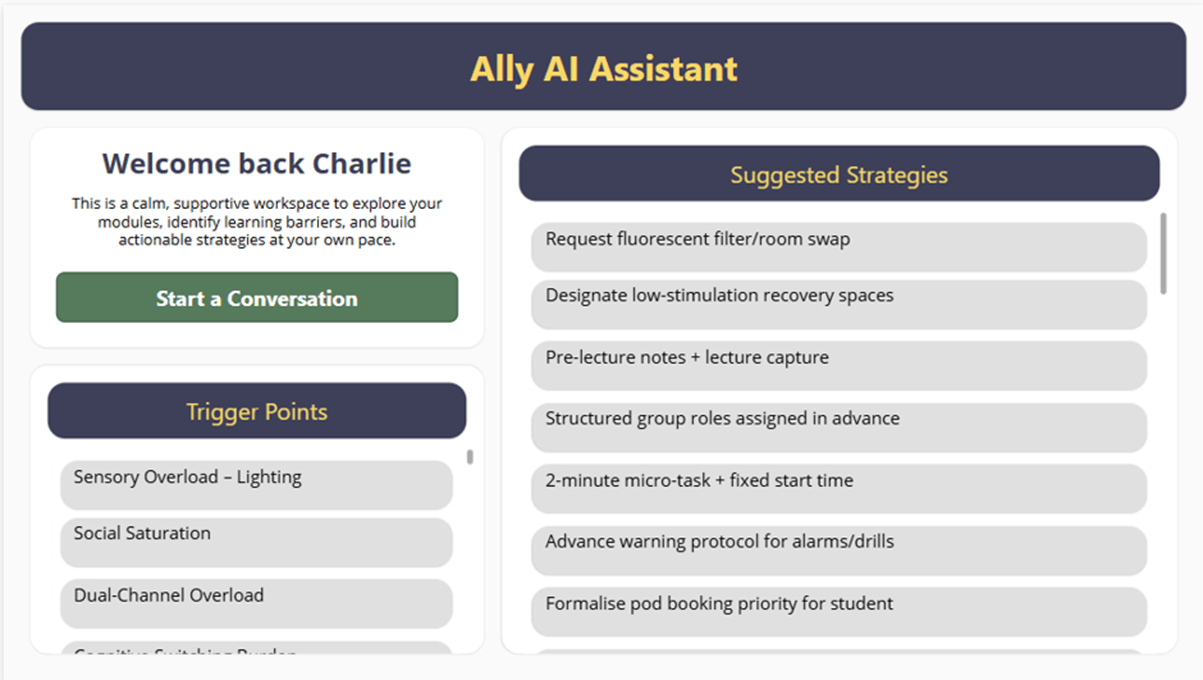
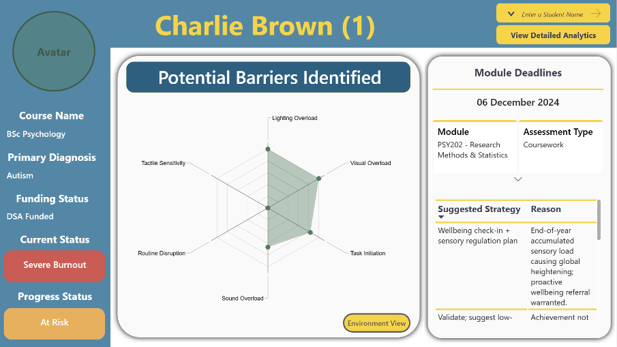
  • Front-End Interface (Tier 1): Built an accessible Power Apps Canvas App (Ally) strictly evaluated against WCAG 2.1 AA guidelines, providing 24/7 low-demand micro-step coping strategies for task initiation and emotional regulation without sensory overload.
  • Integration and AI Layer (Tier 2): Configured automated Power Automate cloud flows to process structured intervention logic, trigger generative AI prompts, and categorise barrier telemetry.
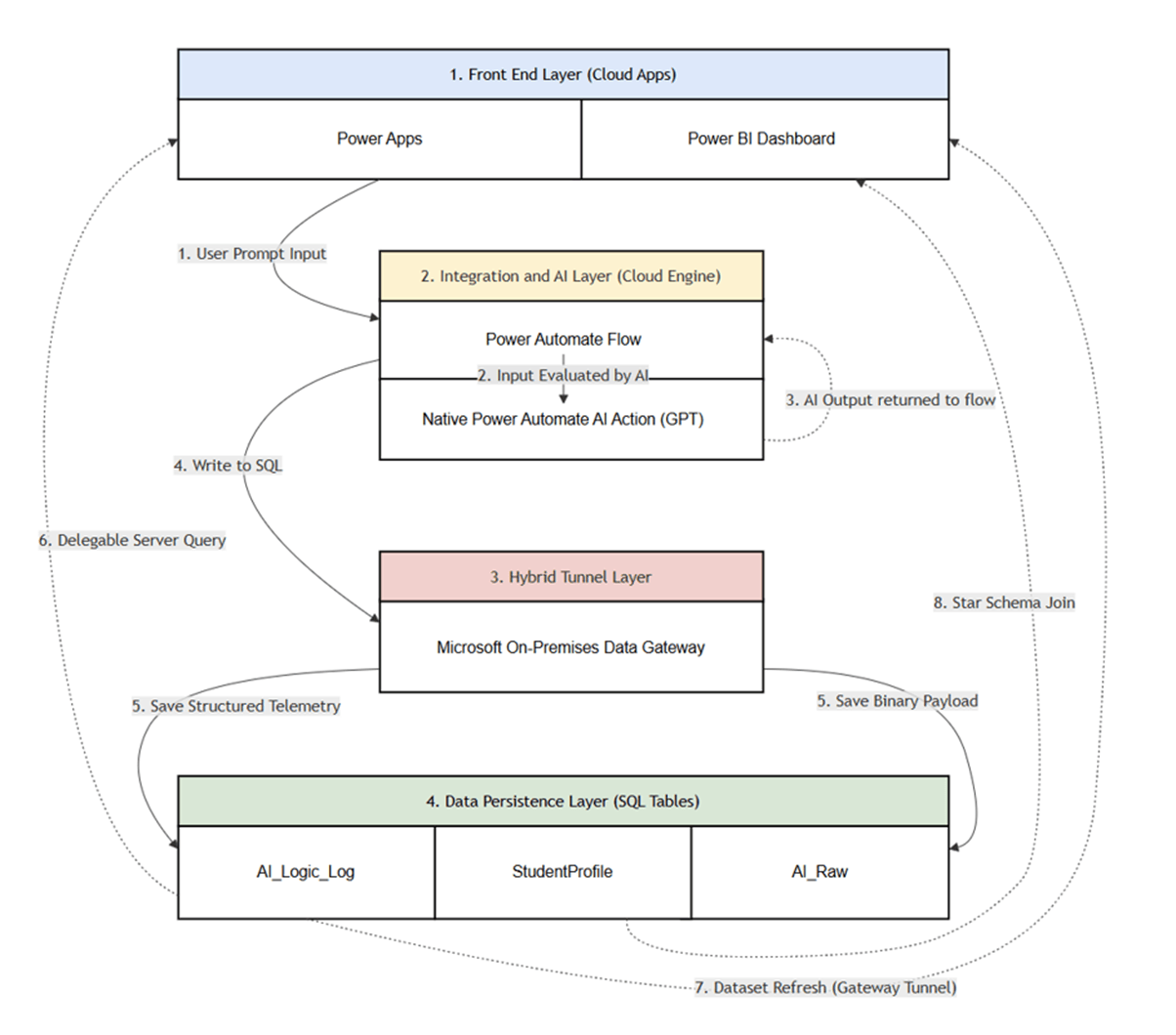
  • Hybrid Security Layer (Tier 3): Deployed a Microsoft On-Premises Data Gateway establishing an outbound-only HTTPS reverse-proxy tunnel to securely communicate with backend infrastructure without opening public firewall ports.
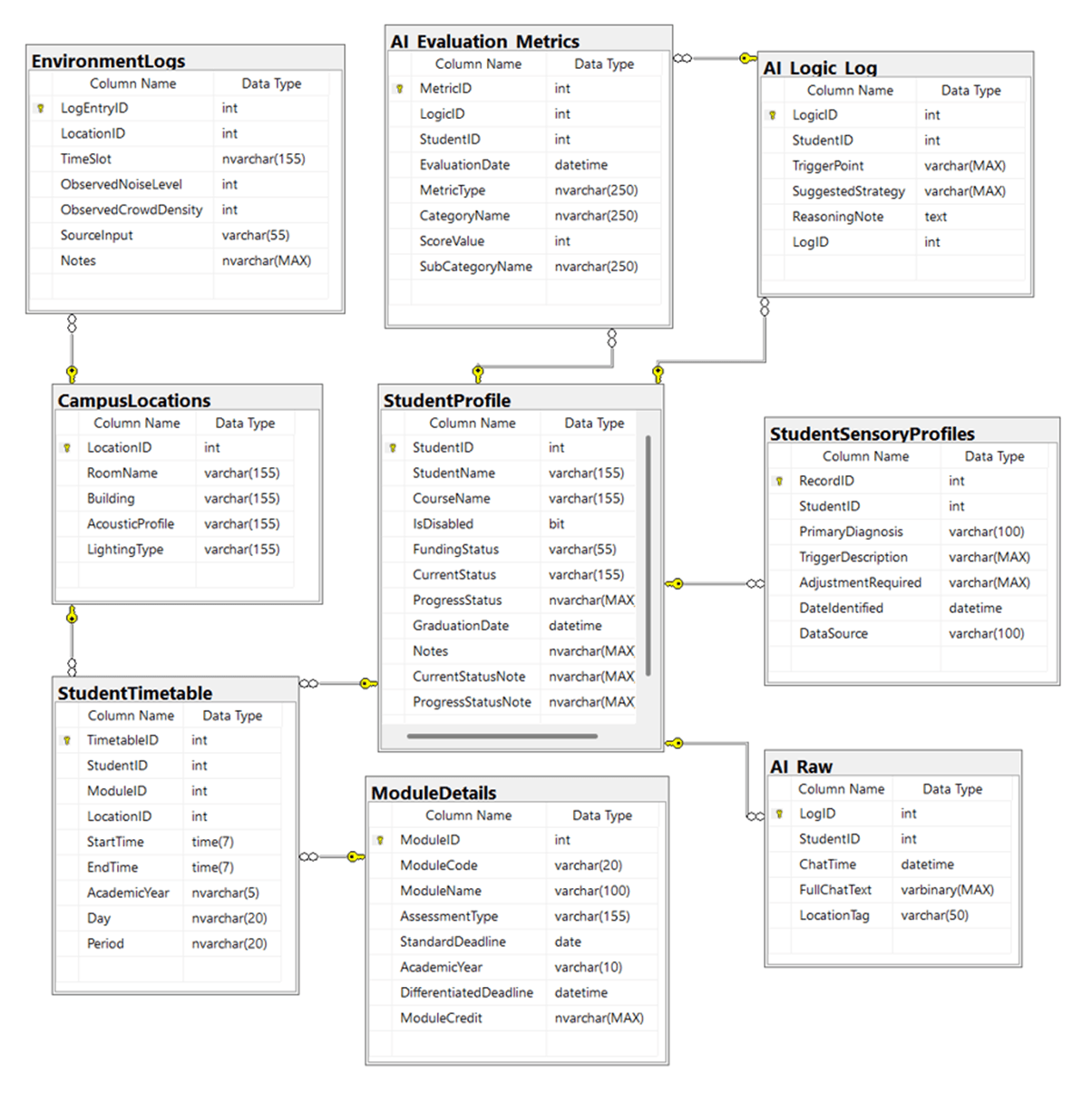
  • Data Persistence and Analytics (Tier 4): Designed a relational SQL Server database enforcing Privacy-by-Design by storing binary-encoded raw chat logs decoupled from aggregate barrier metrics. An executive Power BI suite visualises these barrier radar trends for support teams while keeping personal student narratives completely anonymous.
Overview of the outcome / conclusion: The platform demonstrated that enterprise low-code tools, combined with robust relational database engineering and privacy-first design, can effectively mitigate cognitive overload. Through the empirical evaluation of this project it yielded an 80% pass rate for functional stability, an average stakeholder concept rating of 4.82/5.00, and 90.9% agreement that the system fosters autonomous self-advocacy without creating digital dependency. The final project and viva itself were notably described as “potentially socially ground-breaking.”  Looking ahead, the long-term vision is to scale this framework beyond higher education into workplaces and healthcare systems as a preventative mental health tool, gathering real lived-experience telemetry to proactively adapt physical and digital environments. Future work also includes integrating W3C Verifiable Credentials to create a lifelong, portable “support passport” that individuals can carry between education, employment, and health services without having to repeatedly re-prove their difficulties or relive past challenges.

Top tip/advice for students: Completing a university degree has been both challenging and deeply rewarding. The feeling of finishing each module never failed to make me smile. On my first day, I felt like a deer in headlights, I had no idea how to write an academic paper, didn’t understand referencing, and having been out of education for 10 years, I genuinely felt out of my league. That couldn’t have been further from the truth; I did far better than I ever expected and surprised even myself. I am so proud to have completed the programme and learned so much about my own capabilities as well as learned a whole new set of skills.

My advice is to choose a project that you have a genuine passion for, rather than just picking a generic brief that is already existing. When you solve a real, meaningful challenge, navigating technical roadblocks, complex architecture, and rigorous academic research becomes far more engaging and rewarding. Focus on your primary goal early: identify what your friction points are from day one of your course and use that insight to innovate and develop a purposeful project you will be proud of for years to come. Be transparent about your project’s constraints and trade-offs, academic rigour is about critical self-awareness and solid engineering principles, not absolute perfection of execution. It is about the ability to reflect honestly on shortcomings and demonstrate how to overcome them in future work.

A great bit of advice is this: “Deadlines measure time, but momentum defines progress. If you can do it today, don’t leave it to tomorrow.”

This mindset influences my approach to both my studies and my professional work.

Don’t hold back from pursuing a bold idea. Pick a degree subject that truly interests you, find and create a project you can sink your teeth into, and build something that truly matters to you.

~

Da iawn Tyler!
For more information about Computing courses at UWTSD please click here or email: Computing@uwtsd.ac.uk
Bringing Plato’s Cave to Life with Immersive Technology

Bringing Plato’s Cave to Life: UWTSD Students Transform Ancient Philosophy Through Immersive Technology

How do you teach a 2,400-year-old philosophical thought experiment to a generation raised on digital technology?

At the University of Wales Trinity Saint David (UWTSD), the answer has been to step beyond the traditional classroom and into an immersive digital world.

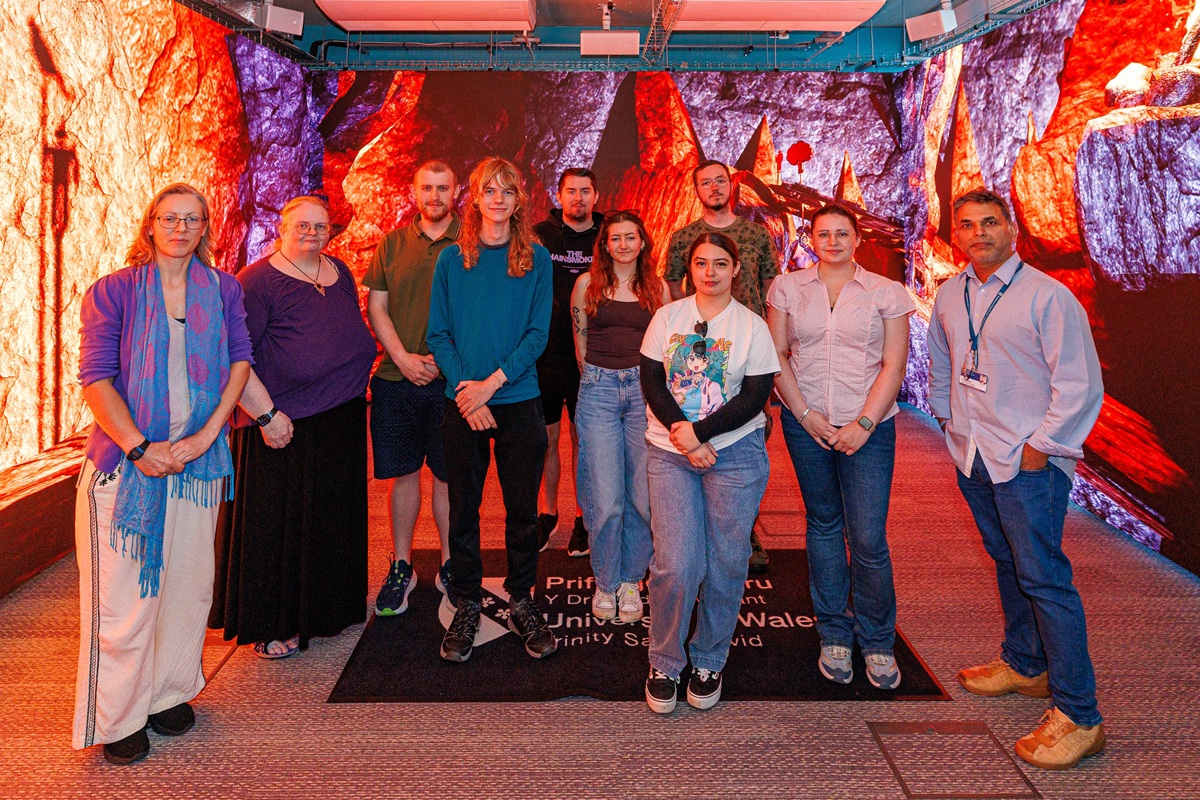
A team of Games Design students has developed an innovative interactive recreation of Plato’s Cave, one of philosophy’s most famous and enduring thought experiments. The project brings together expertise from philosophy, games design, applied computing, and immersive technologies to create a learning experience that allows students to explore philosophical ideas in a completely new way.

Reimagining a Timeless Philosophical Concept:

Plato’s Allegory of the Cave has been used for centuries to explore questions about reality, perception, knowledge, and truth. Traditionally encountered through textbooks and classroom discussion, the allegory challenges learners to consider how much of what they perceive is genuine reality and how much may simply be a shadow of something deeper.

Summary: Plato’s Allegory of the Cave
Plato’s Allegory of the Cave is a powerful philosophical story about the difference between appearance and reality. In the allegory, prisoners spend their lives chained inside a cave, seeing only shadows on a wall and believing those shadows to be the whole of reality. When one prisoner escapes and discovers the world outside, he realises that what he once accepted as truth was only a limited representation of a much greater reality.

The allegory is often understood as a metaphor for education and personal growth. Plato suggests that true learning is not simply about acquiring information, but about transforming the way we see the world. It encourages us to question assumptions, challenge accepted beliefs, and seek a deeper understanding of truth rather than accepting appearances at face value.
On a deeper level, the allegory can also be viewed as a journey of awakening. The cave represents limited awareness, the shadows symbolise misconceptions and conditioned beliefs, and the journey into the light represents the pursuit of wisdom, knowledge, and greater consciousness. Its enduring message is that growth begins when we are willing to move beyond the familiar and explore a fuller understanding of reality.

Now, UWTSD students have transformed this ancient philosophical narrative into a fully immersive digital experience within the University’s Interactive Room at Y Fforwm in Swansea. Working with academic staff from the School of Applied Computing, seven Games Design students recreated Plato’s Cave using professional game development technologies and production techniques.

A Truly Interdisciplinary Project:

One of the most exciting aspects of the project is its collaborative and interdisciplinary nature. Students took on specialist industry-style roles including:

  • 3D Modelling
  • Animation
  • Sound Design
  • Texturing
  • Lighting
  • Unreal Engine Development

By mirroring professional creative industry workflows, the project provided students with valuable real-world experience while contributing to an innovative educational resource for the University. The initiative demonstrates how authentic learning experiences can simultaneously support student professional development and enhance teaching and learning across disciplines.

Technology Enhancing Learning:

While the project is rooted in philosophy, its impact reaches much further. The immersive experience has been designed not only for philosophy teaching but also for subjects such as media studies, semiotics, digital humanities, art, and creative technologies. The resource offers educators an engaging way of exploring abstract concepts through experiential learning, enabling students to move beyond passive observation and actively engage with complex ideas.

Importantly, the experience is available in both Welsh and English, making it one of the first immersive philosophy teaching resources of its kind to offer bilingual delivery. This reflects UWTSD’s commitment to accessibility, inclusivity, and innovation in education.

Student Learning Beyond the Classroom:

The project formed part of a student internship initiative, giving participants the opportunity to work on a genuine educational brief with a lasting impact. Beyond developing technical expertise, students strengthened key employability skills including:

  • Teamwork
  • Communication
  • Creative problem solving
  • Project management
  • Cross-disciplinary collaboration

Student participant Joshua Platt highlighted how the experience enabled the team to combine technology, creativity, and education while developing valuable professional capabilities for their future careers.

Professor Nik Whitehead emphasised the significance of bringing together philosophy, games design, and immersive technology to create an educational experience that reaches broader audiences, with the bilingual approach helping to maximise accessibility.

The Future of Immersive Education:

Projects such as this highlight the growing potential of immersive technologies in education. Rather than simply reading about concepts, learners can increasingly experience them, creating deeper engagement and understanding.

The Plato’s Cave project represents more than a technological achievement. It demonstrates how universities can blend Humanities and Digital Technologies to create powerful learning experiences that prepare students for future careers while enriching the educational experience for others.

As higher education continues to explore new approaches to teaching and learning, UWTSD’s immersive interpretation of Plato’s Cave provides an inspiring example of how ancient ideas can find new life through modern technology.

The shadows on the cave wall may be ancient, but the future of learning is anything but.

To learn more about UWTSDs Computing courses please click-here.

Project Profile: Farley Staines

Name: Farley Staines

Course: BSc (Hons) Computing (Data and Information Systems)

Project title: A comparative analysis of driving performance and styles across simulators and real-world scenarios

Brief overview: The project focused on creating a telemetry program that can display and overlap data from both the car simulator and real-life cars.

Key term: Telemetry is the automated, remote collection and wireless transmission of data from sensors to a central system for monitoring, analysis, and optimization. It is widely used across aerospace, IT, healthcare, and manufacturing to track metrics like temperature, speed, or system performance, enabling real-time decision-making. [r: ibm.com]

The project was written in Python and contains multiple user interfaces for different functionality. It supports both real-world and simulator data sources from Motec and ViGrade formats. It imports this data as a CSV and converts it into an SQLite database.

Key term: Motec (MoTeC) and VI-grade (ViGrade) represent two different, often complementary, sides of automotive simulation and data analysis, specializing in data logging and virtual testing.
 * MoTeC is a world leader in motorsport data acquisition (loggers, ECUs, dash displays). Their data format is designed to record vehicle performance data in real-time. MoTeC creates proprietary “log files” (usually with .ld or .ldx extensions) generated by their i2 (Interpreted) Data Analysis software.
 * VI-grade is a leading company specializing in driving simulators and virtual testing solutions for the transportation industry. VI-grade provides software for offline simulation (predicting performance) and real-time simulators (driver-in-the-loop). Their formats are designed for high-performance vehicle modelling (handling, ride, NVH), enabling engineers to simulate cars and race tracks before building a physical prototype.

The project’s program features include displaying data on various types of graphs (click below to enlarge), identifying and visualising specific laps from the data, being able to group similar data together and plotting them onto the same graph, and supporting multiple databases being loaded at the same time.

Project Conclusion: Based on the feedback received, the strengths include effectively managing multiple sources of data, custom grouping capabilities, improved workflow, all packaged in a single file.

After graduation: After graduation I aim to move into a motorsports career as a Data Engineer.

Key term: A ‘Data Engineer’ builds and maintains a data infrastructure including the pipelines, databases, and processing computer systems, that converts raw data into actionable information. A Data Engineer ensures the data is accessible, clean, and secure, utilizing tools such as SQL, Python, and cloud platforms (AWS, Azure) to aid decision-making.

A top tip/advice for students: Manage your work by doing little bits at a time and not leaving it right to the end.

For further information about Computing courses at UWTSD, please click-here.

~

Graduate profile: Dale Warner

Graduate profile for Dale Warner, a Solutions Engineer at Cisco.

"Exposure to new and challenging events is critical. Everyone is winging it; no one can know it all."

"Creativity requires play, and play can be messy. Embrace the cluttered desk!"

"My days can range from face-to-face customer meetings across the UK, building high level plans/designs/BoMs from my home office, or turning my time to study so I can stay on-top of the latest technology trends."

Q. Name: Dale Warner

Q. What was your university course: BSc (Hons) Computer Networks

Q. Job title and role? Solutions Engineer at the Central Government Team at Cisco

Q. Briefly describe the organization you work for? Cisco are the market leader when it comes to networking. They also provide cutting edge technologies and services across a wide range of areas; Security, collaboration, observability, to name a few.

Q. Which skills learned at university are helpful to you in your job? While at university the most important skill I learned was how to concisely present a complex idea or solution. Being able to do so allows me to talk and explain new products and ideas to customers, cutting out all the unnecessary fluff.

Q. A typical day and how would you describe it? Like any engineer, two days are very rarely the same. But I talk with customers about their technical issues and look to provide Cisco solutions to bridge the gap. This requires me having a board understanding of a range of technologies and where/how Cisco products can be used. My days can range from face-to-face customer meetings across the UK, building high level plans/designs/BoMs from my home office, or turning my time to study so I can stay on-top of the latest technology trends.

Q. What aspects of your job do you enjoy most? I enjoy meeting customers, understanding their needs, and proposing suitable solutions. This, alongside learning on the latest technologies and having a future vision of the technology industry.

Q. Advise for students who would like to start a Career? It’s okay not to have an end goal, so long as you know what you want to do next. When your end destination isn’t set you can put all your effort into achieving your next goal. Exposure to new and challenging events is critical. Everyone is winging it; no one can know it all.

Q. A quote that you like / live by / inspires you?
My favorite quote is a quip from Albert Einstein “if a cluttered desk is a sign of a cluttered mind, of what, then, is an empty desk a sign?” I’d like to add – creativity requires play, and play can be messy. Embrace the cluttered desk!


Thank you for your profile Dale, it will help to inspire current and future students.
We are most grateful. We hope to see you at future alumni events.
Well done and Congratulates on your success Dale.
Da iawn a llongyfarchiadau Dale

~

Project profile: James Frew

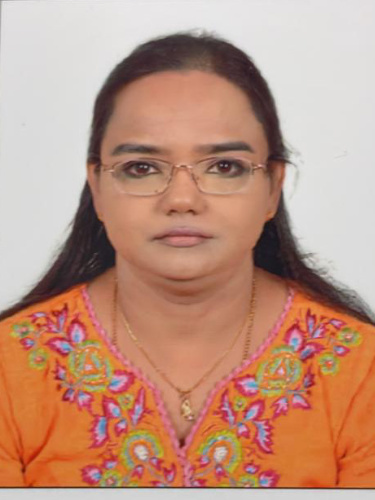
Fig.: James Frew

Name: James Frew

Course: BSc (Hons) Software Engineering

Project Title: An affordable device for monitoring noise levels in home studio environments to warn users of duration-based hearing damage.

Purpose: As a drummer and someone who regularly practises in home studio environments, I quickly became aware of how easily you can be exposed to loud sounds for long periods. Many people only think about hearing damage in terms of volume, but in fact, long durations of noises that aren’t excessively loud can be just as dangerous. I wanted to build a simple and affordable device that could help raise awareness of this overlooked danger and help people protect their hearing.

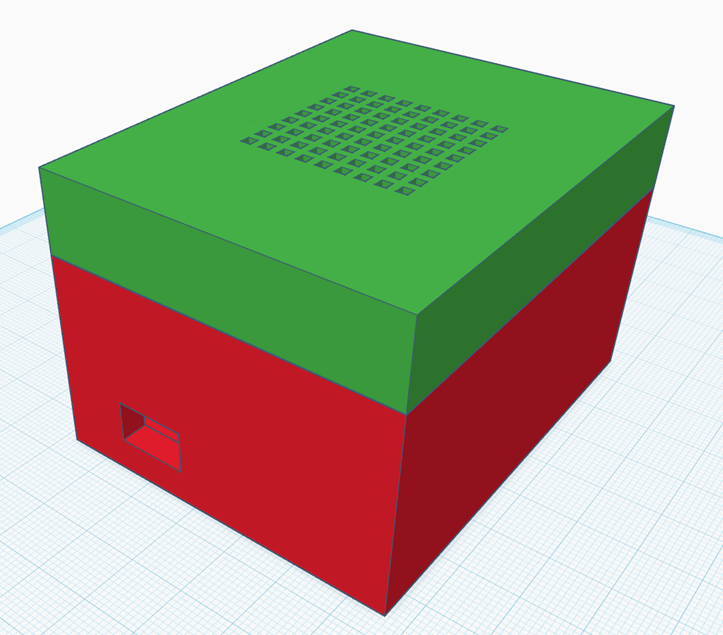
Fig.: Design

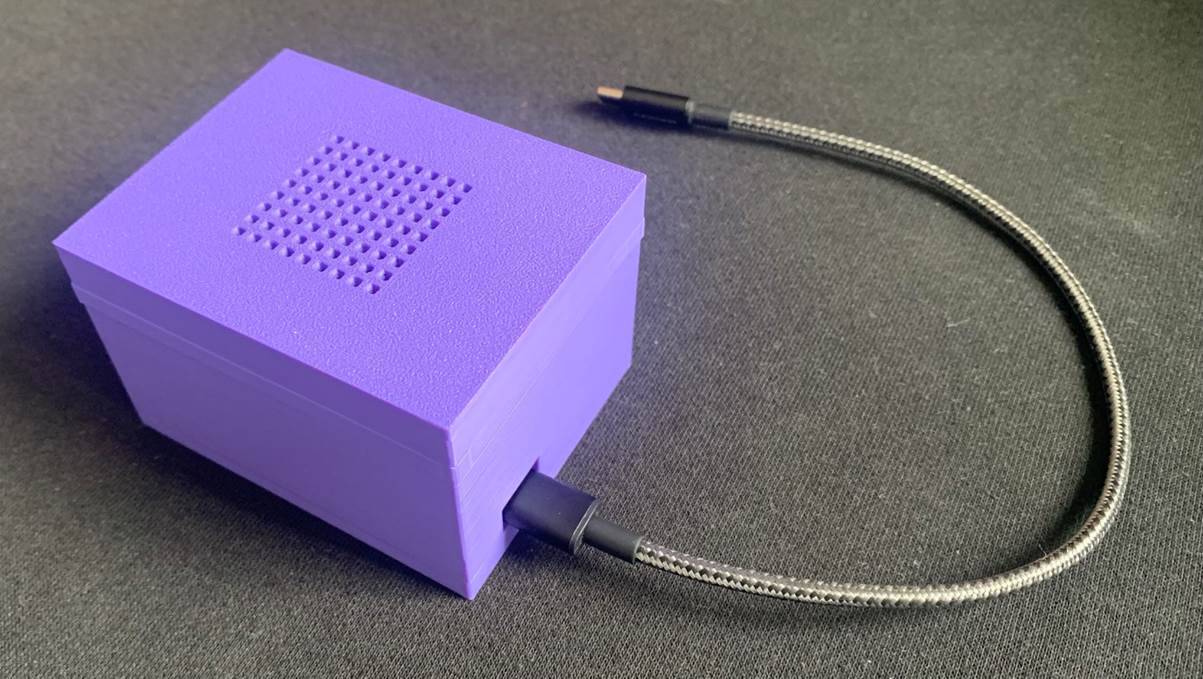
Implementation: The system consists of a small microphone and microcontroller, both housed in a compact 3D-printed case. The device connects to a desktop application built in Python. It monitors the noise in the room in real time, calculates how long it’s safe to be in that environment based on the current sound levels, and sends a warning when the average noise levels since starting the application reach a point where it becomes dangerous to continue listening.

Fig.: Case implementation

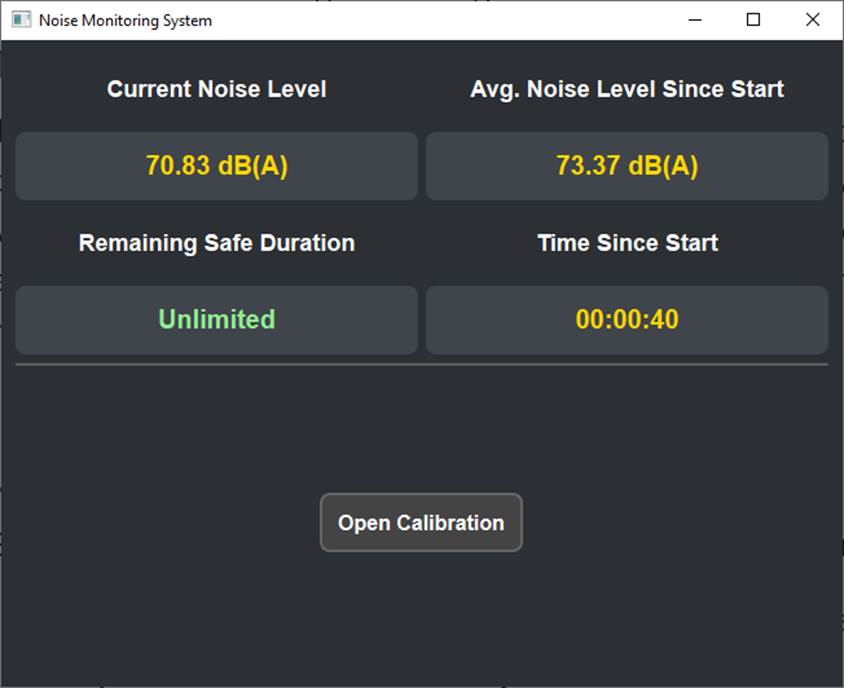
The GUI displays current noise levels, the average levels since starting, the time remaining before risk becomes high, and how long the app has been running. The system was built for under £20 and was tested with real users, receiving very positive feedback for its usability and clarity.

Fig.: Application

Conclusion:
The final product was a reliable, accurate tool that helped users understand their sound environment better. It successfully raised awareness of long-term hearing risks and provided clear, real-time feedback. The project met all its core goals and achieved an excellent System Usability Scale (SUS) score of 89.5. It also received valuable suggestions from users, which could shape future improvements, such as wearable versions and mobile app integration.

Next steps: I’m hoping to move into a role that allows me to work with people and ideally in music or creative environments. I’m particularly interested in opportunities that combine practical problem-solving with collaboration. My degree in Software Engineering has given me a strong foundation in project planning, technical thinking, and building things that work in the real world – skills that will be useful in many industries, not just computing.

Advice for students: Your time and energy are limited, so it’s important to prioritise your studies and project work, especially in your final year. Balancing other commitments is part of life, but giving focused attention to your degree when it counts will really pay off. Also, don’t be afraid to use the tools available to you – make use of AI, but without breaching academic standards. Do use it to help guide research and explore ideas related to your studies, don’t use it as a copy-and-paste tool to blindly research information. AI isn’t going to go away, so it’s important you learn how to use it to assist your studies as early as possible in your degree. Good luck with your studies!

~

For further information about Computing & Computer Science courses at UWTSD, please click here.

Project profile: Kelly Casey

Name: Kelly Casey

Course: BSc (Hons) Software Engineering

Project Title: Women in STEM Study Buddy – A Mobile Application for Academic Networking

Logo
Fig.: FemSTEMConnect

Project introduction:
The motivation behind this project was to address the under-representation and isolation that many women in STEM fields experience during their academic journey. I wanted to create a platform that would allow female students to connect, support one another, and collaborate through shared academic interests. The project reflects both my technical interests and my desire to contribute to inclusion and equity in higher education.

Overview of the Practical implementation:
The application was developed in Android Development Studio using the Kotlin programming language, with Firebase Backend-as-a-Service (BaaS) platform providing services for authentication, data storage, and real-time messaging.

Kotlin, Android Studio and Firebase image
Fig.: Kotlin | Android Studio | Firebase

Key features include:

  • Email link login (no passwords required)
  • Personalised academic profiles
  • Study partner matching using course and location filters
  • A Messaging system for real-time communication.
Fig: Coding

The project was tested on both emulator and physical Android devices for performance and usability.

Here are some screenshots from the final app up and working

Fig.: Navigation screen
Messaging inbox
Fig.: Messaging inbox
Fig.: Home screen & News feed

Conclusion: The final product successfully met the core functional goals. Users can register, create a profile, search for study partners, and communicate within the app. Although some features like the community forum were postponed, the application is stable, secure, and ready for future expansion. It represents a strong foundation for a peer-support platform specifically tailored to women in STEM.

What Career and job role are you hoping to move Into after Graduation? I’m planning to progress onto a Master’s degree and then move into a software engineering role, ideally within a company focused on education technology or socially impactful work.

Top Tips for Students interested in completing a University Degree: Don’t procrastinate. Choose a project that is manageable not just exciting. It’s better to complete something simple and solid than to get stuck in something too complex to finish on your own. Also, don’t be afraid to ask for help.

~

For further information on Computing courses at UWTSD, please click-here.

Graduate profile: Myles Anderson

Fig.: Graduate – Myles Anderson

Q. Name: Myles Alexander Anderson

Q. University course: BSc (Hons) Business Computing at UWTSD

Q. Job title and role: BT Group (EE/BT) Team Lead

Additional Occupation: Redevelopment Business Director

Q. The organisation you work for?

The BT and EE group is the UK’s largest residential Internet Service Provider, in addition to being the UK’s largest mobile phone network provider.

cc-fig.: BT EE

Additionally, I am the director of my own company, focusing on the redevelopment of properties and converting them into environmentally conscious, sustainable student lets. (Known officially as HMOs, Houses of Multiple Occupation.) 


Fig.: Pre-renovation

Fig.: Post-renovation

Q. Which skills learned at University are helpful to you in your job?

As part of my undergraduate degree, I undertook modules such as ‘Managing People and Change’ and ‘Usability Engineering’. These modules provided me with real-world insight into how to lead and manage teams of individuals in my professional career. Additionally, usability engineering directly aided me in developing contemporary business plans and product/marketing strategies.

Q. What aspects of your job do you enjoy most?

Money.. Jokes aside, there is something incredibly satisfying in helping others achieve heights they once thought impossible. Turning low-confidence, underperforming team members into smiling, highly productive employees helps both the individual and the wider business achieve the goals and targets set before them.

The same satisfaction is directly correlated to the real-estate projects, as turning unloved, dilapidated properties into homes for multiple students allows me not only to see a project develop from its infancy until its final stage, but it also provides high-quality, lower-cost accommodation for individuals who are trying to achieve more for themselves. 

Q. What opportunities has University opened up and supported you in pursuing?

Upon my graduation, the university kindly offered me the opportunity to pursue further study, such as PHD Doctoral support, and whilst at this stage I have not taken up this offer, the fact that this is available for high-achieving graduates illustrates how UWTSD is willing to invest and support in home-grown talent.

In addition, the network I built during my time at the university has proved invaluable, with friends who have become Mortgage Brokers (aided in real estate) and Openreach Engineers (Helped in my BT teams roll-out of FTTP in South Wales).

cc-fig.: BT Towers in Swansea (Wales) & London (England)

Q. Do you have any advice for students who would like to start a Career?

Do not be afraid to take risks. Through personal travel, I have visited nations where ‘real’ abject poverty is unavoidable. This reality check gave me a major perspective shift on the country we call home. 

We are incredibly lucky to live in a country with such a strong safety net, so if you’re ambitious and have a business idea you really want to try, plan it out properly and then give it a go! Worst case scenario, you’re back where you started. Best case? Skies the limit.

Fig.: Myles Anderson – 12,000ft above Sea-level in Taiwan.

Q. A Quote that sums up your time at the University?

“Do. Or do not. There is no try.” – Yoda

cc-fig: Yoda
(Legendary Jedi Master)

~

For more information about Computing courses at UWTSD click-here.

Guest Lecture: Network Automation and CI/CD

Guest Lecturer:
Nagaraj Ravinuthala

This week, Nagaraj Ravinuthala, a DevOps trainer at HCL Technologies Limited and a specialised trainer for WorldSkills UK Squad on Infrastructure Automation, delivered a Guest Lecture on Network Automation and CI/CD to our students.

The lecture began with basic yet powerful concepts of deployment and CI/CD, connecting the dots between writing code, integrating APIs, and automating the process of pushing updates live. The session emphasized simplicity and clarity, presenting CI/CD as a pipeline that automates code testing, integration, and deployment to production environments.

“Think of CI/CD as a conveyor belt for your code,” explained Nagaraj. “You write it, test it, and deploy it—all in a streamlined process that ensures faster delivery and better reliability, which are essential in modern network automation workflows.”

Students were introduced to tools and techniques aligned with Cisco’s CCNA DevNet, providing a glimpse into industry-standard practices. To make deployment relatable, the lecturer drew parallels with the earlier lectures on Python and API during their Network Programmability Module where the students integrated the OpenWeather API creating and running a Python script, and explaining that deployment involves taking code that works locally and making it accessible to users.

The session concluded with an interactive Q&A, where students enthusiastically asked about real-world applications of network automation and the career paths that mastery in CI/CD can unlock.

This guest lecture was an eye-opening experience for students, sparking curiosity and laying the foundation for further exploration in network automation. It was a step toward preparing them for the evolving demands of the industry.

We would like to thank Nagaraj Ravinuthala for taking time to speak and share valuable industry knowledge with our students.

For further information about our courses, please click-here.

MSc Project: Cyber Security

Student name:
Sakthi Sangeetha Kandaswamy

MSc Project title: Analysing risk in Vulnerability Assessment and Penetration Testing Methodology

Course: MSc Cybersecurity and Digital Forensics

Introduction/rationale:
The motivation behind choosing the project stemmed from the growing need for more structured and standardized approaches to penetration testing and vulnerability assessment. With cyberattacks becoming increasingly sophisticated, organizations struggle to identify and remediate vulnerabilities efficiently.

TECH TERM: Penetration testing, often referred to as ‘pen testing‘, is a cybersecurity practice where ethical hackers simulate cyberattacks on a computer system, network, or web application to identify vulnerabilities that could be exploited by malicious hackers. The main goals of penetration testing is to:
1. Identify security weaknesses
2. Assess the effectiveness of security measures
3. Improve overall security posture: By identifying and fixing vulnerabilities, organizations can strengthen their defenses against potential cyber threats.

The MITRE ATT&CK Framework provides a well-defined structure for understanding adversarial techniques and tactics, making it ideal for enhancing VAPT (Vulnerability Assessment and Penetration Testing) methodologies. This project aimed to leverage MITRE’s capabilities to analyze risk, improve testing scope, and ensure that testing efforts are comprehensive and aligned with real-world threats.

Project overview:
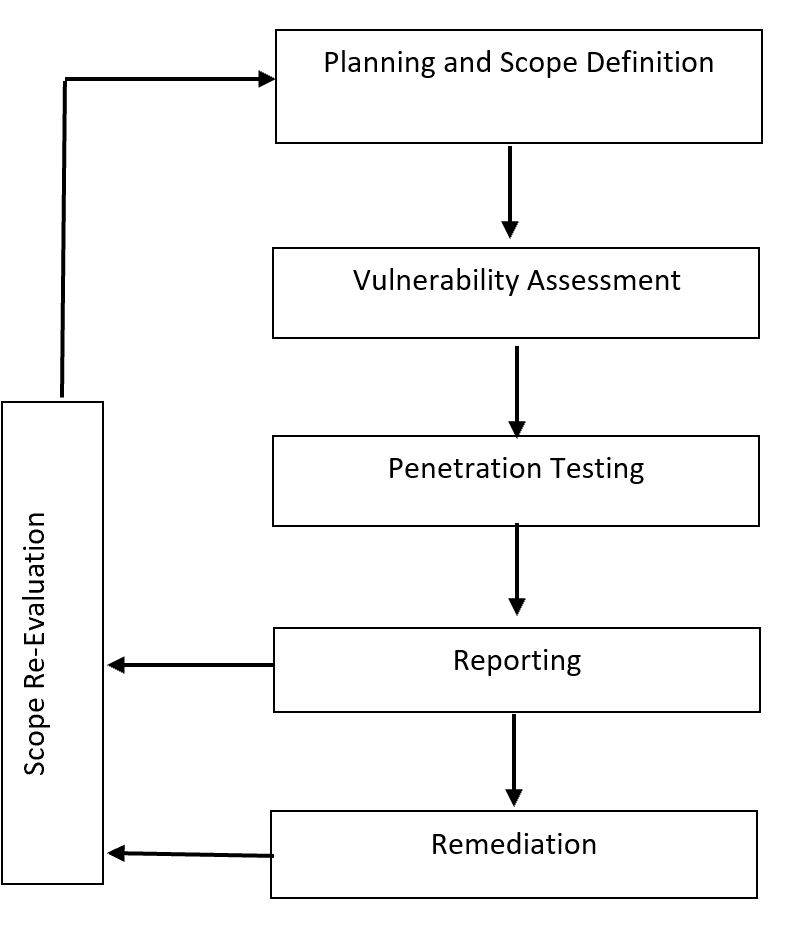
In this project, we integrated the MITRE ATT&CK Framework into the traditional VAPT methodology to refine the testing scope and increase effectiveness in detecting vulnerabilities. The steps involved included:

  • Defining the Scope: The project began by clearly defining the boundaries and goals of the penetration test. Using the MITRE Framework, specific attack vectors and techniques relevant to the organization’s environment were identified.
  • Conducting Vulnerability Scanning: Automated tools were used to perform initial vulnerability scans, identifying weak points that attackers might exploit.
  • Simulating Attacks Using MITRE Tactics: We designed attack scenarios based on the tactics and techniques outlined in MITRE ATT&CK, simulating adversarial behavior. This allowed us to target the actual risks that real attackers would exploit, rather than theoretical vulnerabilities.
  • Analyzing Results and Refining Scope: Post-attack analysis identified network gaps and weaknesses in current defenses. The scope of the testing was iteratively refined based on these findings.
  • Reporting and Remediation: Finally, comprehensive reports were generated, providing actionable insights for the security team, along with specific recommendations for closing vulnerabilities.

Visual Representation: A flow diagram illustrating the process of integrating MITRE with VAPT in Penetration Testing Stages, is located below:

Project outcome & conclusion:
The integration of the MITRE ATT&CK Framework significantly enhanced the scope and depth of the VAPT process. By aligning testing activities with real-world adversarial tactics, the project was able to identify previously overlooked risks and vulnerabilities. The methodology provided a more focused, risk-based approach to penetration testing, ensuring that organizations could better prepare for and mitigate threats. The project demonstrated that using MITRE not only strengthens the identification of vulnerabilities but also offers a more comprehensive understanding of the adversarial techniques that could affect critical systems.

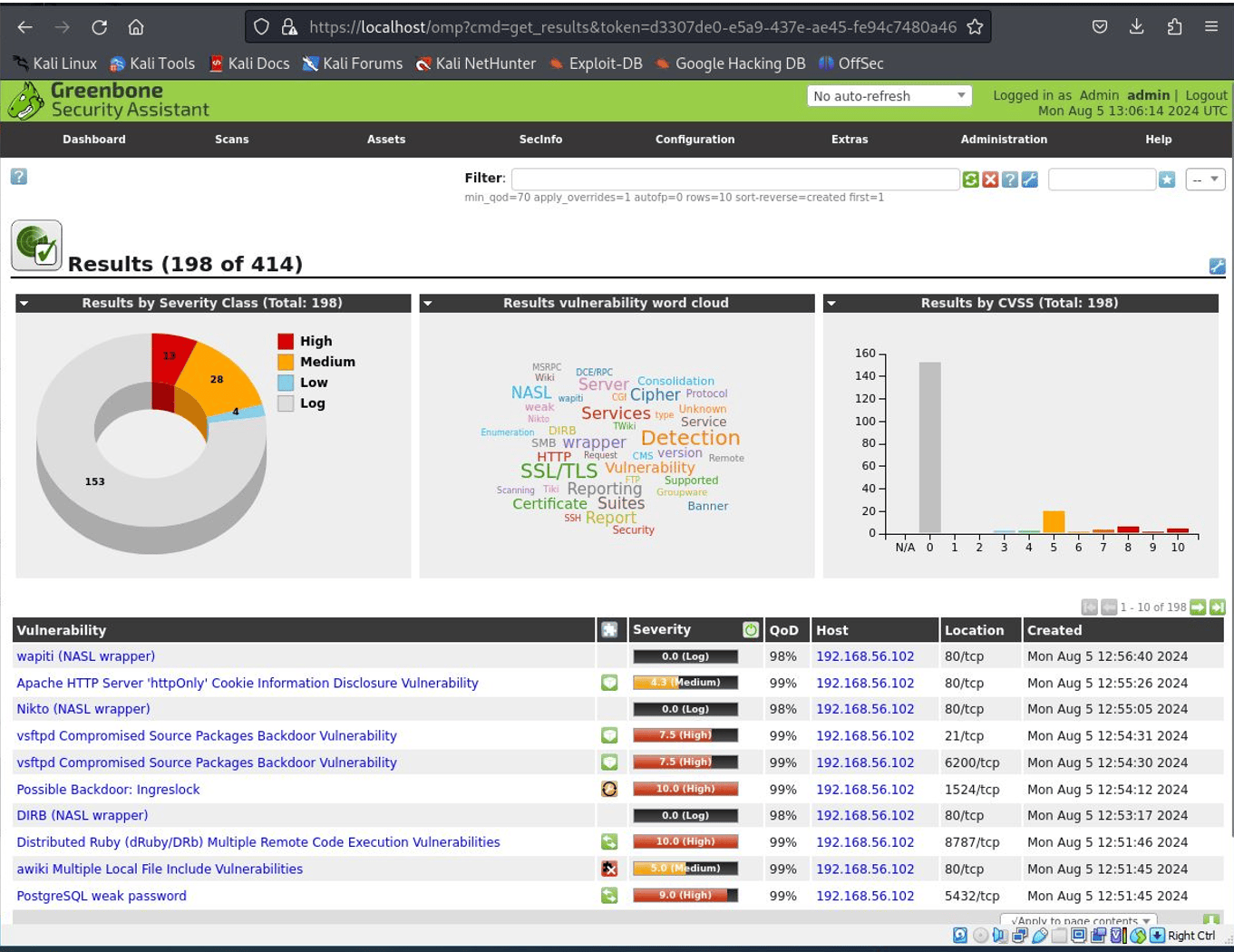
OpenVAS is a full-featured vulnerability scanning tool, that was used for this purposes of this project. An example output of vulnerability findings can be seen below:

Q. What Career and job role are you hoping to move into after graduation?
After graduation, I am hoping to pursue a career in cybersecurity, with a specific focus on roles like:

  • Penetration Tester: Using tools and methodologies (such as MITRE ATT&CK) to identify vulnerabilities in an organization’s IT infrastructure.
  • Cybersecurity Analyst: Monitoring, analyzing, and defending against cybersecurity threats.
  • Security Consultant: Advising organizations on how to improve their security posture by implementing effective VAPT practices.

These roles align with my passion for understanding and mitigating cyber risks, particularly in offensive security and ethical hacking.

Q. Please share a top tip/advice for students who are interested in completing a University Degree?
My top tip for students is to focus on practical applications of what you learn. Theoretical knowledge is important, but real growth happens when you apply it in real-world scenarios, whether through internships, projects, or labs. Hands-on experience not only solidifies your understanding but also makes you more marketable in the job market.

For further information about Computing courses at UWTSD, please click-here.

~

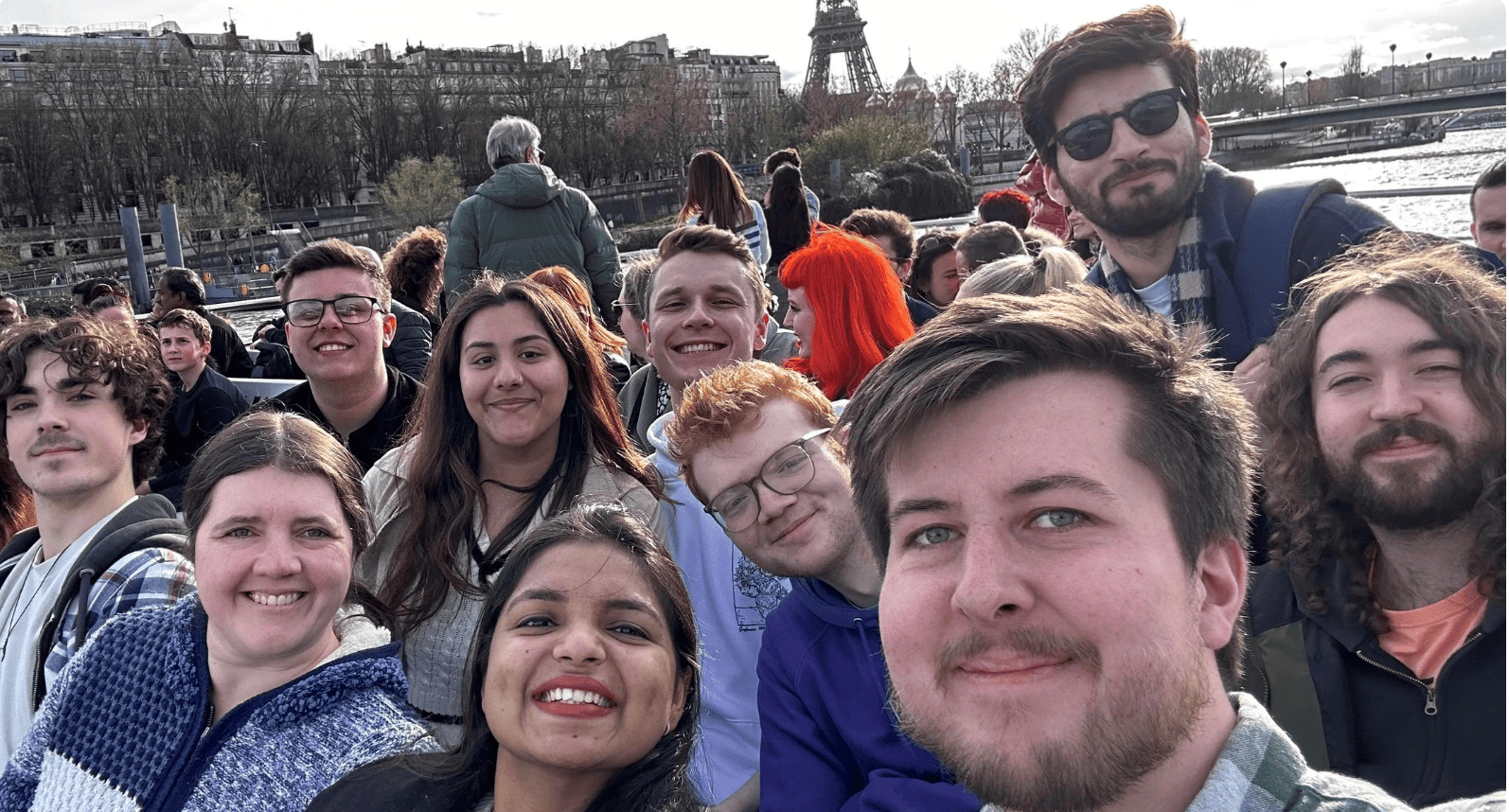
UWTSD Computing students take their learning journey to Paris

Computing students from the University of Wales Trinity Saint David (UWTSD) have enjoyed the sights and sounds of Paris as part of an international learning journey. The students studied at the Institut Supérieur d’Electronique de Paris (ISEP).

Taith provides funding to enable education staff and learners to spend time abroad as part of their studies. It also brings learners and educators from around the world to Wales.

The programme, with Welsh Government funding of £65 million, launched in 2022 and offers life-changing opportunities to travel and learn for learners and staff in every part of Wales, and in every type of education.

The UWTSD partnership also coincided with the Welsh Government’s ‘Wales in France’ initiative, a year-long celebration of cultural, business and sporting events designed to strengthen existing links and forge new connections between the two countries. 

The UWTSD students attended classes with French students and studied subjects similar to those that they study in Wales. Most of the classes at ISEP are delivered in English, so the students were easily able to join their French counterparts for studies. 

Kath Griffiths, International Regional manager (North America and Outward Mobility), Wales Global Academy said : “We are delighted that students from a Welsh institution funded via Taith have spent two weeks in Paris. UWTSD is currently hosting 24 students from ISEP in Swansea. 

“A key feature of the Taith programme is reciprocity; the ability to nurture and develop overseas partners who are already committing to reciprocal arrangements regarding student exchange. This approach through Taith enables high-quality placements and builds towards our aspiration to provide all domestic students with the opportunity to study internationally, ISEP which will strengthen our international profile and create opportunities for staff and students to pursue their interests with reciprocal opportunities for international learners here in Wales. 

“This provides an excellent opportunity for students to experience living and studying in another country and to gain invaluable insight into international employment opportunities.”

Dr Kapilan Radhakrishnan, Academic Director, Applied Computing said: “Amidst the iconic landmarks and cultural marvels, our students delved deep into a world of academic exploration. From classroom experiences to dynamic engagements in extracurricular and social activities, each moment was a stepping stone towards personal and educational growth. 

“This exchange not only broadened their academic horizons but also fostered a vibrant tapestry of cultural understanding and friendship. Interacting with students, academics, and professionals from diverse backgrounds exposes students to a variety of viewpoints and approaches, broadening their perspectives and critical thinking skills. Collaborating with classmates in unfamiliar settings fosters teamwork, communication, and interpersonal skills, strengthening bonds and creating lasting friendships.

“The study trip provided a rich and multifaceted learning experience that goes beyond traditional classroom settings, offering students a unique opportunity for personal, academic, and professional development. Our students have returned home enriched with a wealth of diverse perspectives and unforgettable memories.”

Source: https://www.uwtsd.ac.uk/news/uwtsd-students-take-their-learning-journey-paris-part-welsh-governments-taith-programme-0
For further information: Contact Executive Press and Media Relations Officer, Rebecca Davies rebecca.davies@uwtsd.ac.uk.