Echoes of Absence by Jon Frise
Q. Name & Course? Jonathan A. Frise, BA (Hons) Animation & VFX at UWTSD
Q. Project overview & introduction?
Echoes of Absence, production title The Bunker. Is a short characterless 3D animated environment piece, about three minutes. I built it to test whether lighting and sound design alone can make an audience feel like something happened in a place before the camera ever got there. Pipeline was Blender for asset creation and block out, this was my pre-production predominant phase including early testing and pre-viz, Unreal Engine 5 for lighting and final render, DaVinci Resolve for edit, grade and sound.
Q. What was the motivation for choosing the project?
I’ll be honest, this project started out way bigger than what it ended up being, and that’s actually the most important part of the story. I’d been watching a lot of “liminal space” stuff online, think the Backrooms, POOLS, The Exit 8, that whole corner of the internet, and I kept getting stuck on the same question: why does an empty room unsettle people more than a monster jumping out at them? No character, no dialogue, sometimes barely any visuals at all, and somehow, it works better than most horror films manage.
That question became my dissertation hypothesis: “To what extent can lighting and sound design alone shape an audience’s interpretation of a preceding event in a characterless 3D animated environment?”
Originally this was going to be a proper first-person sci-fi piece, following a character called Jim and a little robot called Chips. Halfway through planning I made the call to cut the character completely. Not because the idea was bad, but because I realised I was about to spend a whole year juggling character animation, rigging, performance, environment art and sound design, and something was going to suffer for it. So I cut it back to the one thing I actually cared about most, and the project got better for it, not worse.
Q. Overview of the practical implementation?
The whole film hangs off one contrast. A flashing red alarm light throws long shadows down a corridor while Harry Nilsson’s relentlessly upbeat “Gotta Get Up” loops on a dying radio in the room beyond, happy sound against a horrible scene. I didn’t just trust that it would work though, I actually ran the experiment first. I stripped the audio off WALL-E’s opening in Adobe Audition and rebuilt it twice: once with nothing but wind and dust, once with the cheerful music dropped back in. Silence made it horror. Music made it tragic. That one test is basically why the whole radio idea survived into the final film.


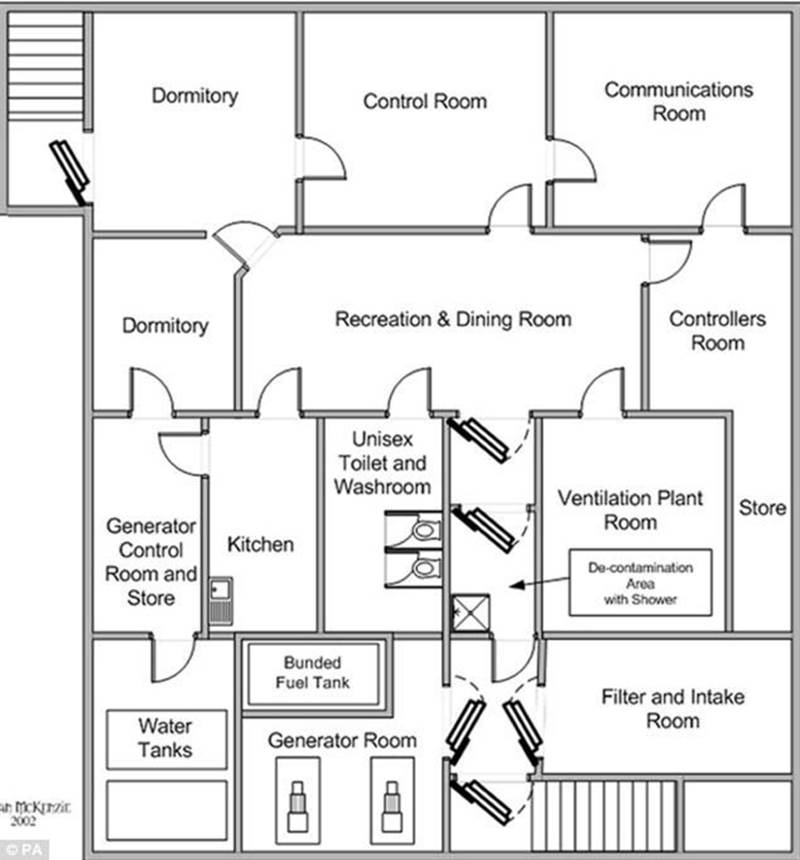
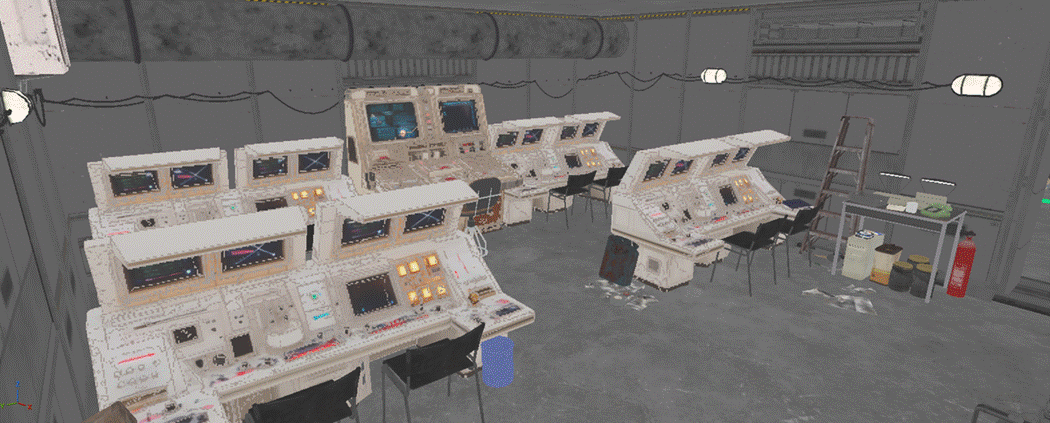
The radio sits at the centre of the film, but it only works because the room around it feels real. I didn’t just invent the bunker layout, I researched actual Cold War bunker floor plans and based the whole thing on one, keeping the same room logic: dorms, control room, comms room, rec and dining, a generator room, filtration and decontamination.
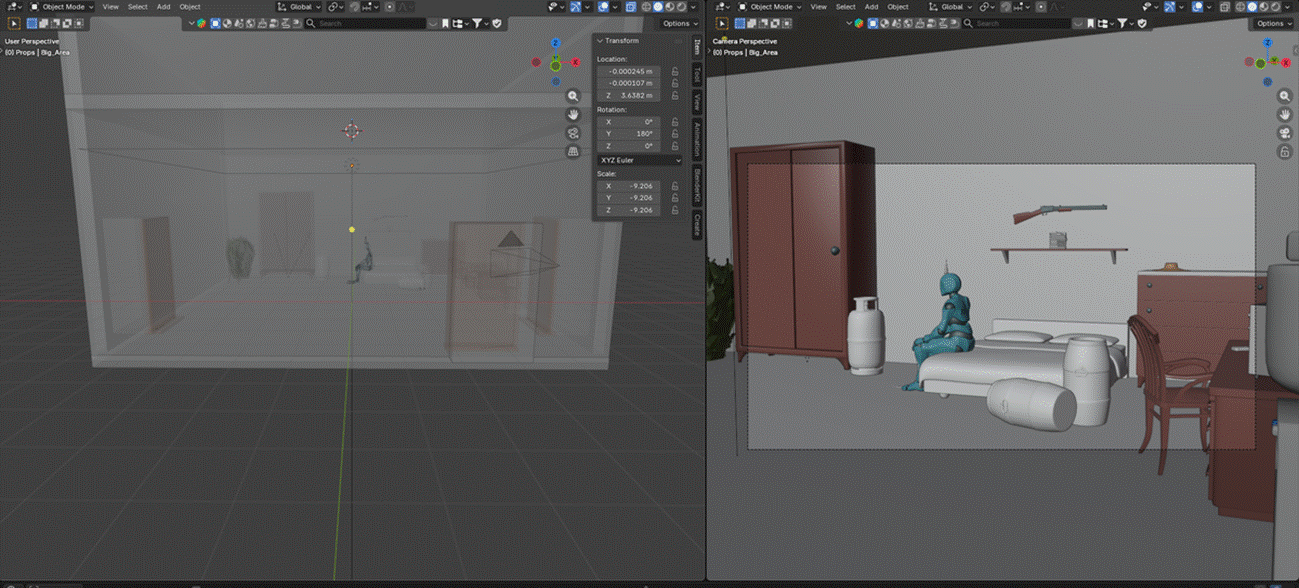
The first version genuinely felt like a normal hallway, not a bunker, so I dropped in a 1.8m human reference cube and rebuilt everything around it, lowering ceilings and narrowing corridors until it actually felt claustrophobic instead of game-like. I sourced some assets ethically from FAB, Freesound and Pixabay rather than modelling everything from scratch, so I could spend more time on the two things the project was actually about: lighting and sound.
Q. Most significant challenges and how you overcame them?
Two problems nearly wrecked it. First, Lumen’s global illumination really doesn’t like low-light scenes, and my dark corners came out grainy and unstable. I fixed it with a post-process volume, manually clamped the exposure, and bumped up the final gather quality until the shadows actually looked intentional instead of broken. Second, the radio’s sound was passing straight through solid walls, which killed the “finding the source” tension the whole scene depends on. I tried two fixes side by side, tweaking Unreal’s attenuation and occlusion settings versus building the spatial audio properly in DaVinci’s Fairlight, and ended up shifting the mix into post because it gave me way finer control.
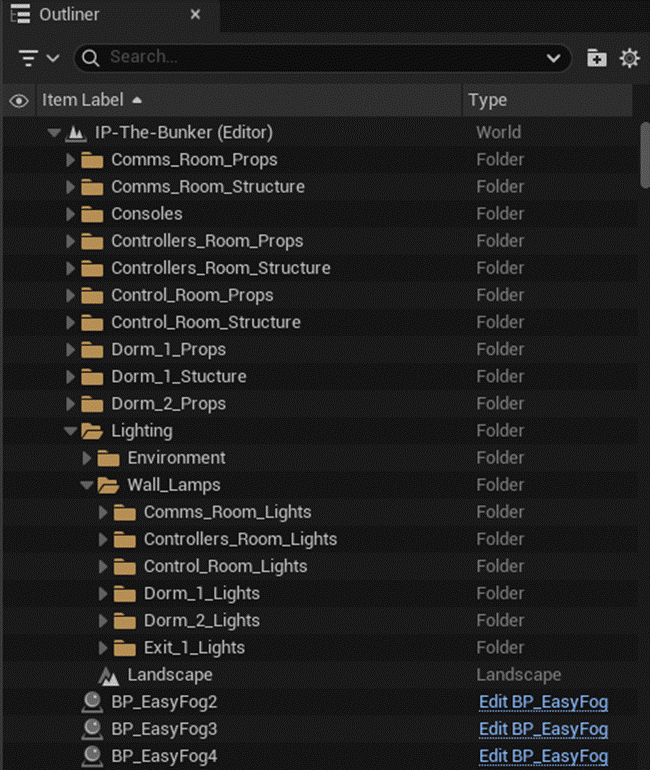
I also kept everything religiously organised in the outliner and content browser as it grew. On a solo project, if a file goes missing or a save corrupts, there’s no one else around to bail you out.
Q. Most significant features?
My conclusion, honestly? Yeah, it held up. Sound and lighting on their own genuinely carried the weight of a missing character, to a significant extent anyway. I’m not going to pretend it’s bulletproof, the technique still needed some visual context, the physical bunker itself, to actually land. I’m also proud that I didn’t invent the bunker layout, I matched a real one room for room, and that I had the discipline to cut the project’s scope down to the one thing that mattered most instead of spreading myself across character animation, world-building and sound all at once.
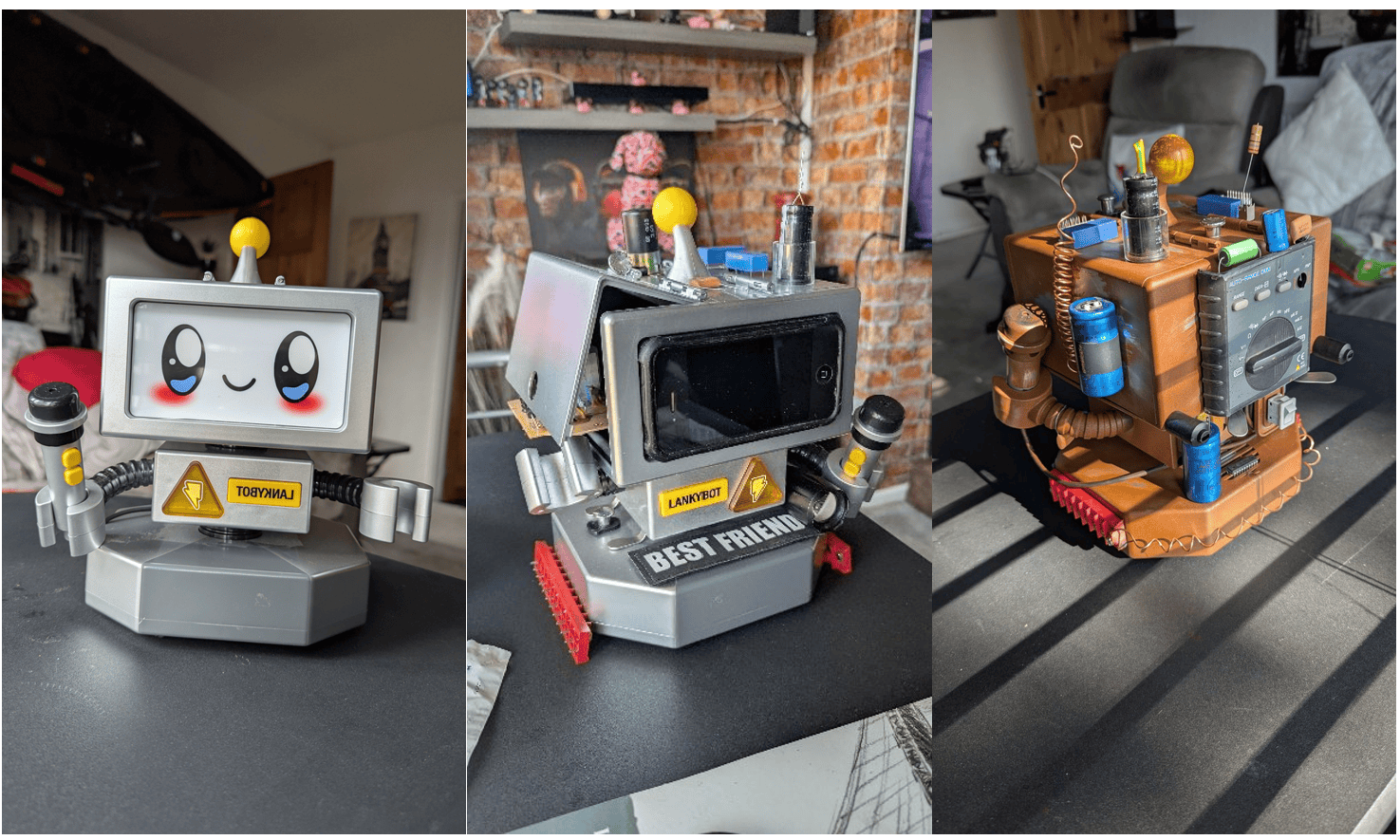
Separately, before I cut the character, I actually built a physical prototype of Chips. I started with a cheap retro desk toy called LankyBot, stripped it right down and repainted it into a dull, aged copper finish instead of the factory chrome, then rebuilt the inside properly: real capacitors, exposed wiring with spade connectors, an old multimeter dial bolted to the side, a coiled copper aerial sticking out the top, and a dead iPhone mounted behind the screen panel as its actual display. It never made it into the final film, but it’s still sat on my desk, and I want to 3D scan it for a future project.
Q. Does your project have an online presence?
Yes. The final film, “The Bunker: ECHOES OF ABSENCE,” is on my YouTube channel JAF Games: https://youtube.com/watch?v=8BzGyFVEwbY. The full project write-up and blog also lives on a Notion page I built. You can also read the full dissertation this project came out of here (PDF).
Q. Top tip/advice for students interested in completing a project?
Cut your scope before it cuts you. I started this project trying to do character animation, world-building and sound design all at once, from a much bigger concept, I even went as far as writing full feature-length scripts covering all sorts of facets. The second I admitted that was too much and dropped the character entirely, the project actually got good. It narrowed down into a specific area I could test methodically and actually had time to iterate on. Pick the one thing you care about most and go deep on that, it’ll show.
Stay open-minded, learn from others, and give it your all, because as cheesy as it sounds, that’s all any of us can do. And on AI specifically: I used it for structure and research, never for the actual creative thinking. If you can’t explain why you made a decision in your own words, you haven’t actually made the decision.
~
For more information about Computing & Digital courses at UWTSD please click-here.