The University of Wales Trinity Saint David (UWTSD) hosted a pioneering workshop, titled ‘Soft Exoskeleton Robots and Digital Healthcare,’ bringing together experts from across disciplines to explore the future of rehabilitation technologies.
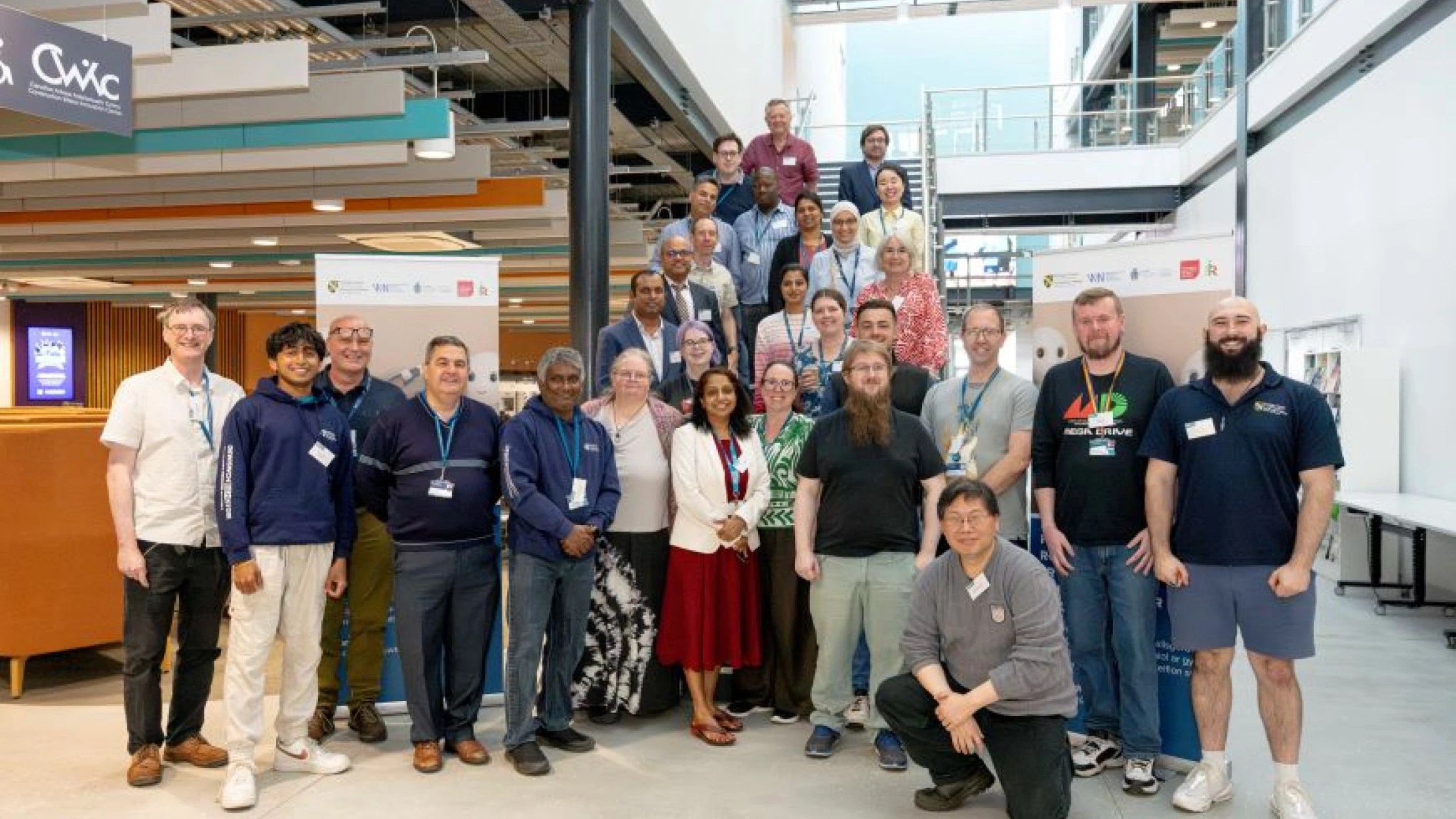
Held at the University’s IQ Building at its SA1 Swansea Waterfront campus, the event marked a significant moment in cross-sector collaboration aimed at co-designing innovative, patient-focused solutions.
Led by Dr Seena Joseph and Dr Tim Bashford from UWTSD, the workshop was part of the Soft Exoskeleton Robotics Project, a collaborative effort funded by the Wales Innovation Network (WIN). The project brings together partners from Cardiff Met ( Dr Wai Keung Fu), University of South Wales (Dr Leshan Uggalla) and Institute of Robotics, Bulgaria (Dr Tony Punnoose), all working together to advance rehabilitation technologies.
The full-day workshop convened leaders from robotics and engineering, healthcare and clinical practice, academia, and industry, sparking multidisciplinary dialogue on the development and real-world application of soft exoskeleton robots for rehabilitation. Attendees included academics, researchers, clinicians, innovators, and policy influencers, all united by a common goal: to shape more effective, accessible, and human-centred healthcare technologies.
Dr Kapilan Radhakrishan, UWTSD’s Academic Director (Applied Computing), delivered the welcome address and provided an overview of the project. He described the workshop as a valuable platform to introduce the project and set the stage of exploring new research ideas and to ignite meaningful collaborations with experts across disciplines in soft robotic and digital health.
Dr Mark Cocks, Dean of the University’s Wales Institute of Science and Art who opened the event said: “Collaboration is the buzzword, and it is more important than ever. In today’s complex and fast-changing landscape, working together across disciplines and sectors is essential to drive innovation and achieve meaningful outcomes. This workshop perfectly exemplifies how bringing experts from academic, industry and healthcare together can spark new ideas. We are proud to host such an impactful and forward-thinking event.”
Highlights included:
The workshop featured a series of compelling talks and a live demonstration of the prototype of soft exoskeleton robot for stroke rehabilitation developed by Dr Tony Punnoose (Institute of Robotics, Bulgaria), one of the team members.
Dr Fatma Layas and Dr Yajie Zhang (ATiC) presenting human-centred product evaluation approaches in healthcare.
“A Digital Healthcare Overview” was presented by Dr. Tim Bashford, one of the workshop organisers. His presentation provided a broad perspective on the evolving role of digital technologies in healthcare, setting the scene for the day’s discussions and highlighting opportunities for innovation and collaboration.
Dr Wai Keung Fung (Cardiff Metropolitan University) one of the co-organisers outlining core design principles of Soft Exoskeletons
Dr Gokul Kandaswamy (NHS Wales) delivered an exciting talk on how robotic technologies are transforming patient care, sparking meaningful discussions, and inspiring ideas for future collaborations
Dr Udayanga Galappaththi an industry partner from Far UK Ltd exploring the integration of sustainable materials in robotic hand exoskeletons.
Dr Seena Joseph delivered an presentation on “Recent Trends in Soft Robotic Exoskeletons: Insights from a Systematic Literature Review,” offering a comprehensive overview of global research developments, emerging technologies, and future directions in the field.
Additional highlights included the presentation from several experts: Prof Eggbeer, Dominic from Cardiff Met discussed the impact of lead users and 3D printing on advancing adaptive sports technology, while Dr Rajan Prasad, from Khalifa University, Abu Dhabi shared innovative simulation-based designs for cable-driven exoskeletons aiding post stroke gait recovery.
A live prototype demonstration by Dr Tony Punnoose (Institute of Robotics, Bulgaria), showcasing a bilateral soft exoskeleton robot for stroke rehabilitation. He underscored the importance of shifting research efforts toward developing small-scale, user-friendly parallel robotic systems that patients can take home, enabling more consistent, accessible, and effective rehabilitation beyond the clinical setting.
The event culminated in an energetic panel discussion, moderated by Dr Fung, with panellists diving into practical applications, ethical considerations, and future research directions for soft robotic solutions in health contexts. Looking back on the event, he said:
“Moderating the panel discussion reminded me that the future of rehabilitation isn’t just about smarter machines, it’s about deeper collaboration between engineers, clinicians, and users to co-create technologies that truly empower.”
The event also included a productive networking session, facilitated by Dr Leshan Uggalla (University of South Wales) from the project team. This session gave attendees a valuable opportunity to connect, exchange ideas, and foster potential collaborations in a relaxed and engaging environment.
The workshop not only reinforced UWTSD’s commitment to fostering interdisciplinary research and real-world innovation but also underscored its ambition to serve as a hub for cutting-edge dialogue that shapes the future of care and rehabilitation.
Adapted from original post & source here: https://www.uwtsd.ac.uk/news/uwtsd-hosts-workshop-soft-exoskeleton-robots-and-digital-healthcare
 UWTSD Applied Computing Blog
Written by jameswilliams
Leave a comment